
Polygon After Purley: Did the Upgrade Really Make POL Safer?

 Prefer us on Google



The Polygon Purley upgrade matters because it touches the part of a blockchain most users rarely see: validator operations, consensus reliability, and how securely the network keeps running after token and staking changes. That is why the market paid attention when POL migration and native staking went live around the same period. For beginners, the key question is simple: did Purley actually make Polygon safer, or did it mainly improve backend operations while traders priced in the story ahead of time?
The Big Picture
- Purley was designed as an operational and security-focused network upgrade, not as a token burn or supply-cut event for the POL token.
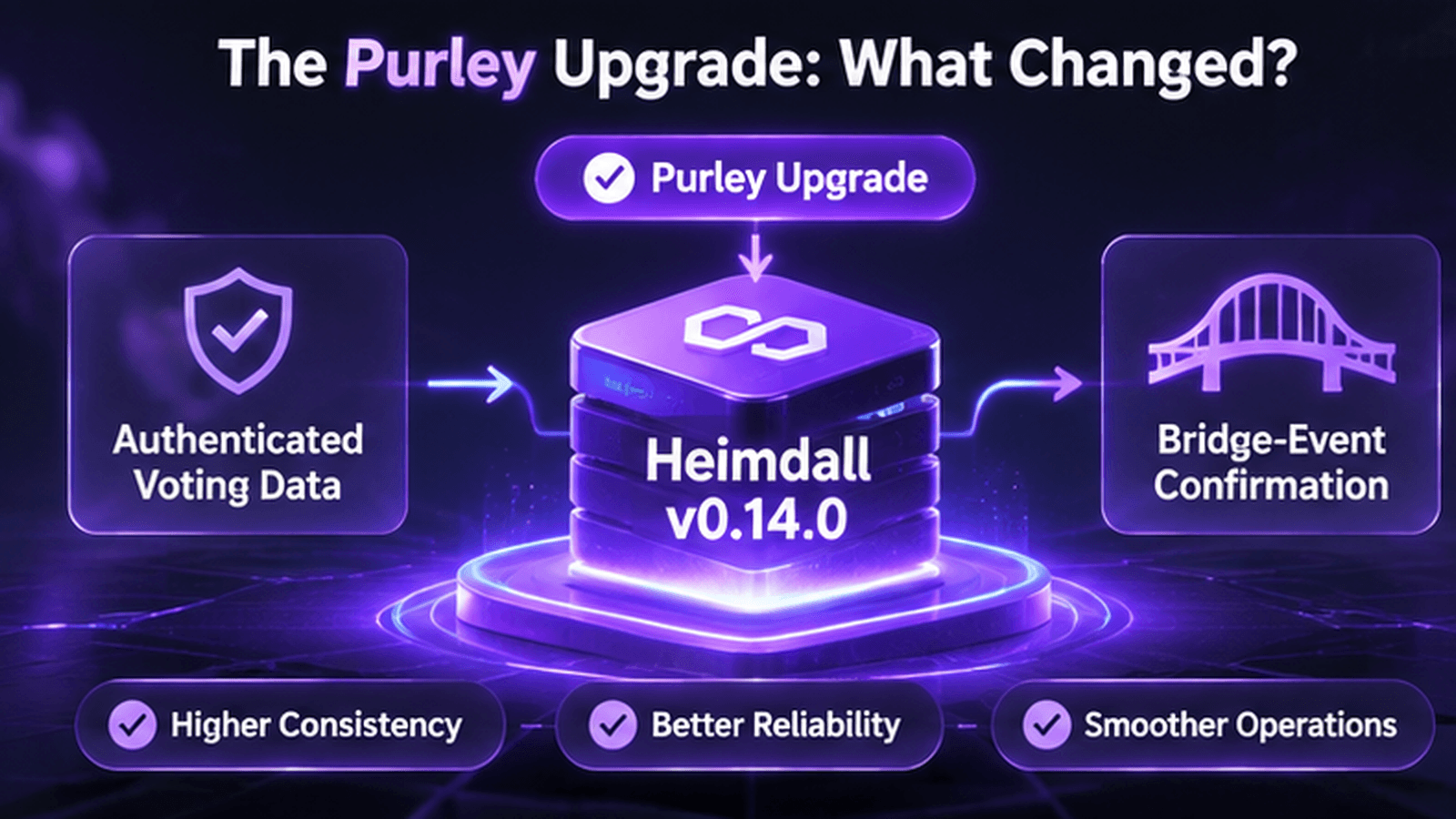
- Available reporting links Purley with better handling of authenticated voting data, bridge-event confirmation, and validator-side execution reliability.
- POL trading volume topped $631 million on September 1, 2024, while price briefly neared $0.29 before stabilizing around $0.28 after confirmation, according to Yahoo Finance citing CoinGecko data.
- The main uncertainty is execution: older clients can fall out of consensus after hard forks, so validator migration and software updates matter as much as the upgrade design itself.
What happened in the Polygon Purley upgrade?
The Polygon Purley upgrade was presented as a hard fork focused on protocol operations rather than tokenomics. Based on reporting from WEEX coverage of the Purley hard fork, the changes were tied to authenticated voting data, bridge-event confirmation, and validator-related execution flow. In plain English, this means the upgrade aimed to make the Polygon PoS network run more consistently and reduce operational weak points around how validators process and confirm network activity.
That distinction matters. Many traders hear “hard fork” and immediately look for a supply shock, a burn mechanism, or a token split. Purley was not that kind of event. Available source material does not show a new burn feature, a direct cut in circulating POL, or a redesign of POL issuance. So if you are evaluating the POL token, Purley should be viewed first as infrastructure work, not as a direct price catalyst built into token supply.
Supporting data and key figures
| Item | Confirmed Detail | Why It Matters |
|---|---|---|
| Upgrade focus | Protocol operations, validator security processes, and bridge-event confirmation | Points to reliability improvements rather than tokenomics changes |
| Supply impact | No source material shows a new burn event or direct supply reduction from Purley | Limits any simple “upgrade equals scarcity” thesis for POL |
| Validator requirement | Validators and full nodes must update clients to remain on the canonical chain after relevant fork heights | Security gains depend on real migration, not only the announcement |
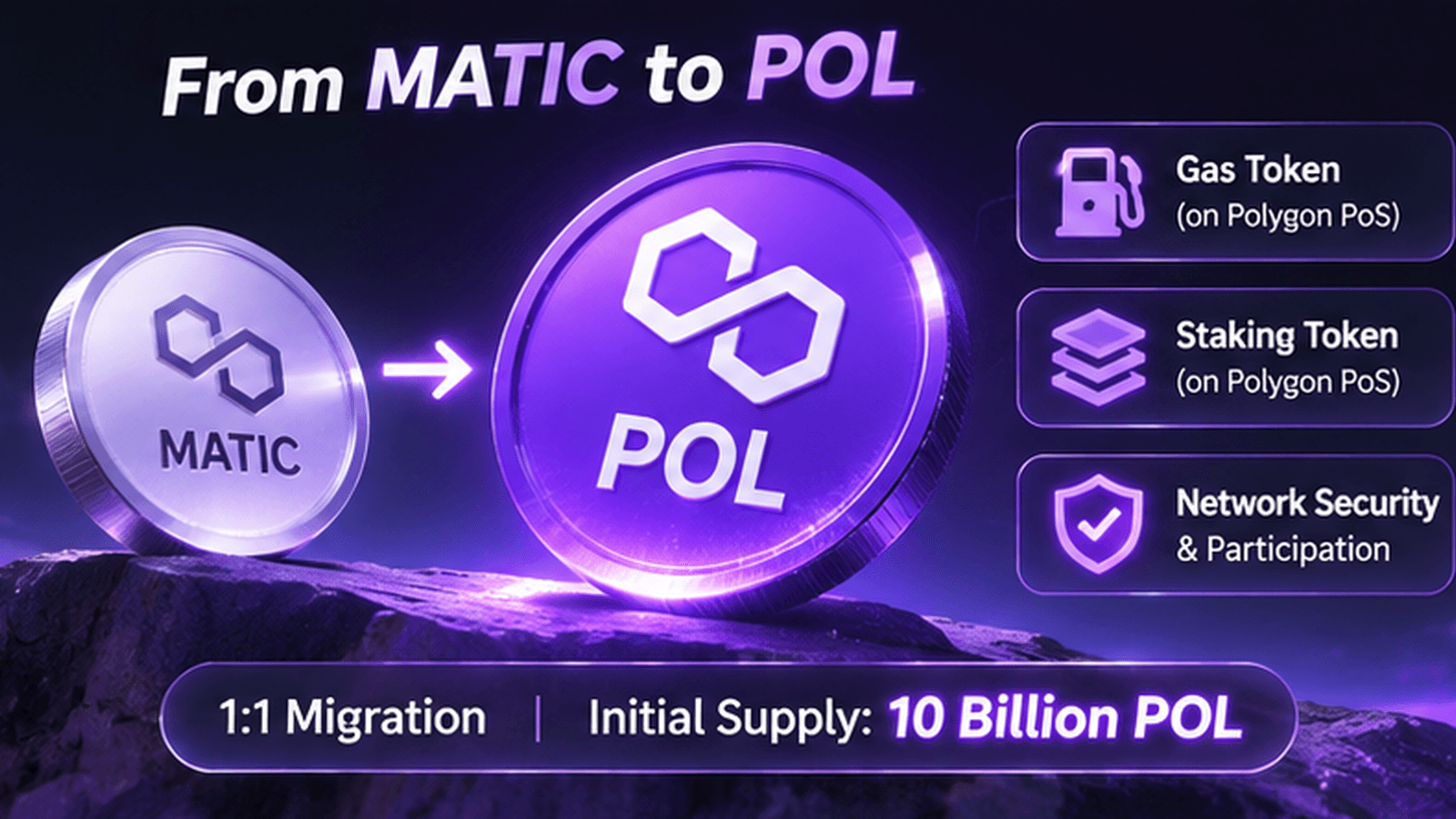
| Staking context | Native POL staking on Ethereum went live after the migration | Gives POL holders a clearer way to participate in network security |
Source context: WEEX article citing Polygon Labs Heimdall announcement; Yahoo Finance; TradingView reporting on Polygon security disclosures.
The table shows why Purley should be read as a systems upgrade. It can improve how the network functions, but it does not automatically rewrite POL tokenomics. That is a more modest, but still important, kind of development.
Did Purley really improve Polygon security?
Yes, but the improvement appears narrower than some headlines suggested. The best-supported interpretation is that Purley strengthened operational security around validators and protocol processing. That is meaningful because Polygon has already disclosed bugs affecting the Bor and Heimdall clients, including denial-of-service risks, validator resource exhaustion, and checkpoint or milestone processing flaws, according to TradingView’s summary of Polygon Labs disclosures.
Those earlier disclosures give Purley more context. They show that Polygon security is not just about smart contracts or bridges in isolation. Client software, validator behavior, and node maintenance are part of the real attack surface. If an upgrade improves authenticated voting flows or event confirmation, it can reduce failure points that matter to consensus and chain reliability.
Still, “safer” does not mean “risk-free.” The available material does not support the idea that Purley eliminated all network vulnerabilities or solved every bridge risk. Bridge security, client diversity, node operations, and smart-contract code remain separate risk layers. For beginners, the clean takeaway is this: Purley likely improved how Polygon PoS operates under the hood, but no single hard fork removes every kind of blockchain risk.
How Purley compares with what traders often expect
| Common Market Assumption | What the Sources Support | Investor Reading |
|---|---|---|
| Upgrade should make POL surge because supply gets tighter | No direct supply-cut mechanism is described for Purley | Price impact is more narrative-driven than mechanical |
| Security upgrade solves all Polygon vulnerabilities | Purley appears to improve operations, not erase every bridge or software risk | Useful upgrade, but not a blanket security fix |
| Validators benefit automatically | Validators must update clients and complete migration steps | Execution risk remains critical |
| Staking alone guarantees strong price action | Staking can support participation, but price still depends on broader market demand | Helpful for ecosystem alignment, not a guarantee |
Source context: WEEX analysis; Yahoo Finance; TradingView coverage of Polygon Labs security updates.
-- Price
Why did the POL token react so strongly?
The strongest market signal around the Polygon Purley upgrade came from trading activity before and around confirmation. Yahoo Finance reported that POL trading volume exceeded $631 million on September 1, 2024, citing historical CoinGecko data. The same report said POL approached $0.29 on September 2 and then consolidated around $0.28 after confirmation on September 3.
That pattern looks like a classic buy-the-rumor setup. Traders often bid ahead of an anticipated milestone, especially when a network event is paired with a cleaner staking story. In this case, the completion of migration and the launch of native staking for POL on Ethereum gave holders a more direct way to earn validator rewards. That made the narrative easier to understand: upgraded infrastructure plus staking utility equals a potentially stronger medium-term ecosystem case.
But price action after confirmation also showed restraint. If the market had believed Purley fundamentally changed POL token supply or near-term revenue flows, the reaction might have looked much more explosive. Instead, the consolidation around $0.28 suggests much of the optimism had already been priced in before the event became official.
Main drivers and relevant market data
| Observation | Reported Figure | Date / Timing |
|---|---|---|
| POL trading volume peak | More than $631 million | September 1, 2024 |
| POL local high before confirmation | Nearly $0.29 | September 2, 2024 |
| Post-confirmation price area | Around $0.28 | September 3, 2024 |
| Staking change | Native POL staking enabled on Ethereum | After migration finalized |
Source context: Yahoo Finance report on POL migration and staking, citing CoinGecko historical data.
A practical note for readers: if you are using price data from this period, treat it as a historical snapshot tied to specific reporting dates. It should not be read as current live market pricing in November 2026.
Why validator changes matter more than many retail traders think
Validator changes are not flashy, but they often matter more than headline token narratives. In proof-of-stake systems, validators are the operators who keep consensus working. If those operators fail to update software after a fork, they can fall out of consensus and stop following the accepted chain. TradingView’s coverage of Polygon security disclosures made exactly this point when discussing previous Bor and Heimdall upgrades.
That is why the Polygon Purley upgrade should be judged partly by adoption quality. A good upgrade on paper still depends on validators installing the right client versions, following migration instructions, and staying synchronized with the network. If that rollout is uneven, the practical benefits can be delayed or weakened.
For POL holders, this link between validators and staking is becoming more direct. Native staking makes network security a more visible part of the token’s value proposition. Polygon’s later launch of sPOL in 2026, according to Polygon-related knowledge-base materials, also points to a broader strategy: make staked POL more capital-efficient without forcing users to choose between security participation and DeFi liquidity. That does not prove Purley drove adoption by itself, but it does show how Polygon has kept building around staking after the migration era.
What risks should investors still watch?
First, exchange support and user experience can lag behind chain-level progress. Binance.US said during the migration window that users should not deposit POL until support was officially opened. That may sound operational, but it matters in practice. A technically successful upgrade can still create short-term friction if custodians, exchanges, and wallet providers are not fully synchronized.
Second, the available materials do not provide complete official chain statistics for post-Purley validator counts, staking participation, or delegation growth. That means one of the most interesting questions remains partly unanswered: did the upgrade measurably increase validator participation, or did it mainly improve the framework for future participation?
Third, investors should separate network improvements from price certainty. Better operations can strengthen confidence, but crypto valuations still depend on liquidity, risk appetite, broader market conditions, and competitive positioning across the Layer 2 and multichain ecosystem.
How to Buy or Trade POL on WEEX
Step 1: Access the relevant trading market
Log in to WEEX and search for POL in the spot or derivatives market directory, depending on whether you want direct token exposure or a trading contract. If you are unsure about the difference, start with spot so you are buying the actual asset rather than a leveraged product. You can also review educational material such as what staking means in crypto if you want to connect POL’s utility with the network-security story.
Step 2: Prepare funds and review the order
Fund your account with the supported settlement asset shown on the POL market page, then choose an order type such as market or limit. For spot trading, focus on the token pair, liquidity, and the price you are willing to pay. For futures, check leverage, margin requirements, and funding mechanics carefully because futures do not give you ownership of the underlying POL token.
Step 3: Place an order and manage risk
Before you confirm a trade, review size, slippage, and your exit plan. If you are trading around network news like the Polygon Purley upgrade, remember that narrative-driven rallies can reverse quickly after the event. Many traders also track broader Polygon ecosystem developments through educational coverage like Polygon hard fork analysis on WEEX Learn and general market explainers such as how market cap works in crypto.
What the upgrade means now
The Polygon Purley upgrade looks more important as a network operations milestone than as a direct tokenomics event. It likely improved validator-side reliability and supported the broader shift toward POL-based staking, but the available evidence does not show a built-in supply shock or a universal security fix. For traders, that explains why excitement showed up first in volume and positioning rather than in a lasting post-announcement breakout. For longer-term investors, the better question is not whether Purley alone made POL safer, but whether Polygon continues turning technical upgrades into stronger validator participation, smoother staking, and more dependable network performance over time.
FAQ
1. Did the Purley upgrade reduce the supply of POL?
No confirmed source in the provided materials shows that Purley introduced a new burn mechanism or directly reduced circulating POL. The upgrade was described mainly as a protocol-operations and validator-security improvement, not a tokenomics redesign.
2. Why did POL price rise around the upgrade?
The price move appears to have been driven by anticipation. Yahoo Finance reported that POL trading volume exceeded $631 million on September 1, 2024, and price neared $0.29 before confirmation, then stabilized around $0.28 after the news was official. That behavior fits a buy-the-rumor pattern.
3. Does Purley mean Polygon is now fully secure?
No. Purley may have improved consensus-related operations and validator execution safety, but blockchain security has multiple layers. Client software, bridges, smart contracts, node maintenance, and validator behavior all still matter. A useful upgrade is not the same as eliminating every risk.
4. Why are validator changes important for regular token holders?
Validators help secure the network and process consensus. If they fail to upgrade properly after a hard fork, they can fall out of consensus. Because POL staking is tied to validator rewards, operational quality at the validator level directly affects the broader security story around the token.
5. What should beginners watch after an upgrade like this?
Focus on three things: whether validators successfully migrate, whether staking participation grows over time, and whether exchanges and wallets fully support the token after the transition. Those signals often matter more than the first price spike around the announcement.
This content is provided for general informational purposes only and doesn't constitute financial, investment, legal, or tax advice. Any events, rewards, online promotions, or related information mentioned herein should not be considered a recommendation, solicitation, or invitation to purchase, sell, trade, or otherwise deal in any crypto assets. Crypto assets are highly volatile and may result in loss. The availability of WEEX services, products, and related events may vary by region. You are responsible for ensuring that your participation is in accordance with applicable local laws and regulations.
You may also like
View moreWhat Is Moonriver (MOVR)? WEEX Spot Market
Beginner3 minWhat Is SoSoValue (SOSO)? WEEX Spot Market
Beginner3 minJensen Huang Returns—and AI Stocks Explode: Can the Rally Last?
Beginner8 minWhat Is DigiByte (DGB)? WEEX Spot Market
Beginner3 minNVIDIA Rehires Jensen Huang Just 11 Days Later: What Changed Behind the Scenes?
Beginner7 minWEEX Product GuideNVDA Stock Surges 31% as Jensen Huang Returns: Can the Rally Last?
Beginner9 min
Contents
Popular coins
Latest articles


