
BPI Becomes The Finney Foundation For Open Technology

 Prefer us on Google


The Bitcoin Policy Institute announced Tuesday that it is now the Finney Foundation for Open Technology, a new parent organization whose brief spans open-source artificial intelligence, digital cash and encrypted messaging. The institute's bitcoin work continues inside the foundation, and bitcoin remains a primary focus.
The name honors Hal Finney (1956-2014), a cryptographer and software developer who helped build the email encryption program PGP, ran one of the first anonymous remailers and received the first bitcoin transaction from Satoshi Nakamoto in January 2009. In a November 1992 essay, Finney wrote that the computer "can be used as a tool to liberate and protect people, rather than to control them." He was diagnosed with ALS the same year he received that first transaction and died in 2014.
The Foundation's case for open systems
Washington is now writing the rules for artificial intelligence, the foundation said, and fear drives much of that debate. As the Bitcoin Policy Institute did for bitcoin, the Finney Foundation said it will argue that open systems outcompete closed ones, that individuals should control the tools they rely on, and that American strength comes from building in the open.
"We set out to make Washington think about Bitcoin differently --- to educate them on the importance of open monetary networks," said David Zell, president of the Finney Foundation. "Our fellows now serve in congressional offices for both parties and in the executive branch. Our ideas have shaped discourse and policy. Our expansion will help us stay at the forefront of today's most consequential policy debates, especially those around open source AI."
That argument was already on stage in September at Freedom Tech DC, the institute's Washington summit, formerly the Bitcoin Policy Summit. The invite-only gathering put open-source and open-weight AI, data centers and energy infrastructure on the agenda alongside bitcoin and dollar-backed stablecoins.
Block co-founder Jack Dorsey said there that "the next and probably largest element [of freedom technology] is open intelligence and making sure that it's not locked up in the hands of any one government or any one company... that's where we're going to get the best outcomes."
A declaration and a new class of fellows
Alongside the new name, the foundation published an Open Technology Declaration, titled "For Us, Not Over Us," which argues for machines that serve people rather than rule over them. The text takes up Finney's line about computers as tools of liberation and says the foundation will offer research, policy ideas and educational programs aimed at that goal. It asks who the new machines are for and who is in control of them, and it calls for people to build the tools they need without waiting for permission.
It is also launching an inaugural class of Finney Fellows, researchers with expertise spanning machine intelligence, free speech, national security, biotechnology and space. The foundation says that cohort will be named Wednesday at 10 a.m. ET. A separate roster of Bitcoin Policy Institute fellows remains listed on the same page.
Bitcoin work continues in Washington
The shift does not retire the institute's bitcoin brief. The Bitcoin Policy Institute, founded in 2022, has run a congressional fellowship program to place bitcoin specialists in congressional offices, joined the State Department's Freedom Tech Excellence Program as a founding partner, and urged Congress to include bitcoin in proposed de minimis tax relief. In August, it named Conner Brown executive director as it expanded its leadership team.
The Finney Foundation describes itself as a nonpartisan, nonprofit 501(c)(3) think tank in Washington, D.C. Zell is president. Brown remains executive director on the new staff list. For now, the bitcoin think tank still exists, just under a wider roof, with a new class of fellows due to be named in the morning.
-- Price
This content is provided for general informational purposes only and doesn't constitute financial, investment, legal, or tax advice. Any events, rewards, online promotions, or related information mentioned herein should not be considered a recommendation, solicitation, or invitation to purchase, sell, trade, or otherwise deal in any crypto assets. Crypto assets are highly volatile and may result in loss. The availability of WEEX services, products, and related events may vary by region. You are responsible for ensuring that your participation is in accordance with applicable local laws and regulations.
You may also like

Big Short Names Apple, Costco, and Walmart as Early Safe-Haven Targets Amid Market Collapse

Should You Buy XRP (Ripple) While It's Below $1? The Answer Might Surprise You.

a16z: Do Mathematicians Still Have a Place When AI Solves Centuries-Old Mathematical Problems?
Sandisk Just Split Its Stock 8-for-1. Is It Time to Buy?

XRP Ledger lending upgrade just 5 votes away from approval

Media: Jensen Huang and His Wife Have Accumulated Vast Wealth

Is the AI bubble bursting? Dell and Workday set to disclose earnings
Stock Market Sell-Off: Here's My Honest Take On What Every Long-Term Investor Should Do Right Now

The Scarce Dividend in the Autonomous Taxi Race: Supporting Service Stations

FFR Digital Assets Reduced to $2 by End of September
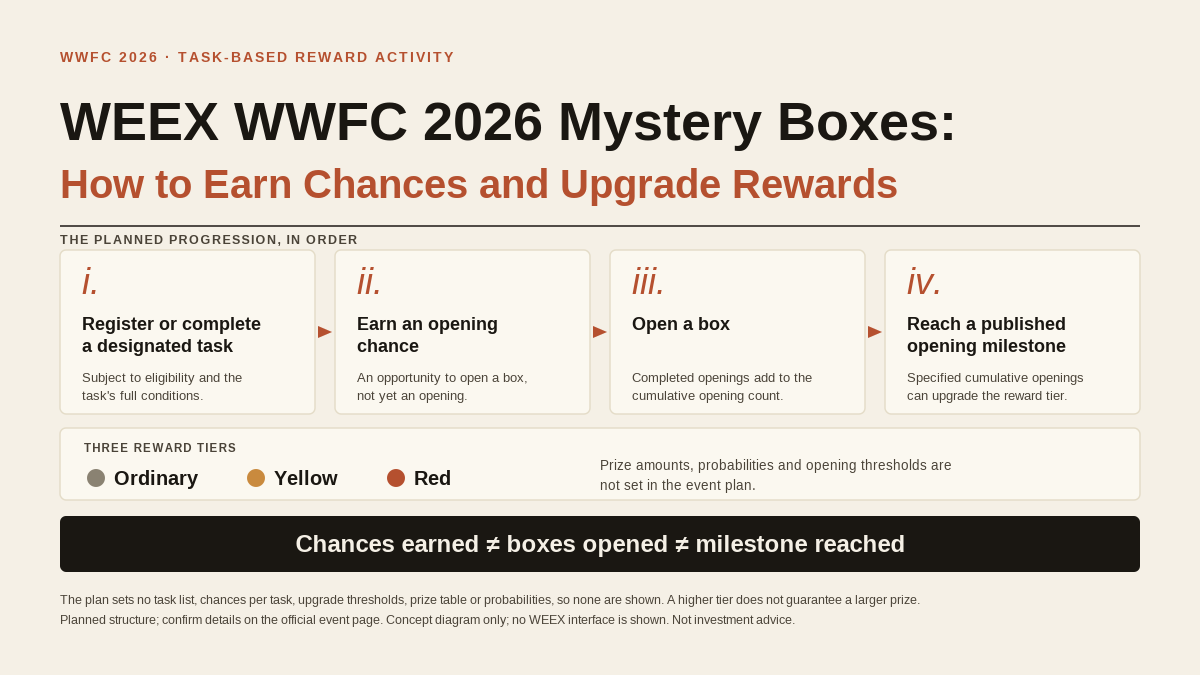
WEEX WWFC 2026 Mystery Boxes: How to Earn Chances and Upgrade Rewards
Explore WEEX WWFC 2026 mystery boxes: how to earn opening chances, understand three reward tiers, and track cumulative openings toward reward upgrades.

Trump Willing to Collaborate with Democrats to Set Limits on Credit Card Rates and Fees

How Novig Became the Third Largest Prediction Market in Just Three Months

Research on 83 Token Buyback Dividends: Which Mechanism Can Drive Prices Up the Most?

Is the Real Use of Bitcoin Payments 'Coffee and Meals'? Revealed by Square's Data

What Happens to the US Stock Market After the Fear and Greed Index Falls into Extreme Fear?
AI to Conquer Cancer in Five to Ten Years? Novartis CEO: Unlikely
A Safe Haven in Space? Wall Street: SpaceX Stock Still Worth Buying

US Stocks Enter Correction Phase Ahead of Thanksgiving Holiday: What Should Investors Prepare For?

More Profitable than Tokenization: Is the RWA Sector Shifting Towards 'Lending Against Assets'?

Financing Weekly Report | On-chain Derivatives Protocol Variational Completes $110 Million Series B Financing; Tether Invests in Four Deals, Expanding Financial Infrastructure
Digital Asset Basic Law Government Proposal to be Released Tomorrow... Four Key Points to Watch

If Gold Drops Another 17%, USDT Could Really Face a Crisis
Meta's Chief AI Officer Alexandr Wang: Superintelligence is Here, But We Cannot Hand Society Over to AI

Citigroup Raises SpaceX Target Price After Successful Starship Recovery: Launch Advantage 'Is Expanding into a 20-Year Gap', Starlink to Become Core of Value Realization

Down 75%, SoundHound AI Stock Needs This 1 Thing to Happen by 2027

Why Apple is Involved in the Slowdown of Google's Search Advertising Growth

Can AI Earnings Reports and Black Friday Retail Data Save the US Stock Market After Tech Stock Plunge?

3 AI Hardware Stocks Down More Than 30% From Their Records to Buy Now and Hold Through 2030

U.S. Treasury Secretary Scott Bessent Just Delivered Great News to Former Nvidia CEO Jensen Huang. Should You Buy Nvidia Stock Before Nov. 25?
Big Short Names Apple, Costco, and Walmart as Early Safe-Haven Targets Amid Market Collapse
Should You Buy XRP (Ripple) While It's Below $1? The Answer Might Surprise You.
a16z: Do Mathematicians Still Have a Place When AI Solves Centuries-Old Mathematical Problems?
Sandisk Just Split Its Stock 8-for-1. Is It Time to Buy?
XRP Ledger lending upgrade just 5 votes away from approval
Media: Jensen Huang and His Wife Have Accumulated Vast Wealth
Latest articles




Latest coin listings on WEEX


