

Live UMA price
UMA price chart
UMA (UMA) price details
UMA price history
 Download dataDownload data
UMA technical analysis
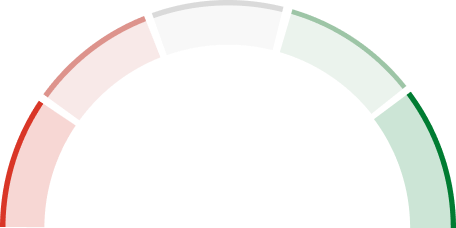
UMA (UMA) sentiment
About UMA
What Is UMA
Definition of UMA
UMA is a decentralized protocol that enables the creation of synthetic assets and provides an optimistic oracle system for verifying data on the blockchain.Origin and Background
Launched in 2018 by Hart Lambur, a former Goldman Sachs trader, UMA stands for Universal Market Access. It emerged to address limitations in traditional finance by allowing anyone to create and trade synthetic assets representing real-world values, built on the Ethereum blockchain. The project gained traction during the DeFi boom, focusing on permissionless financial contracts.Core Concept and Ecosystem
At its heart, UMA facilitates the building of decentralized derivatives without relying on centralized oracles. Its ecosystem includes tools for developers to deploy synthetic tokens, governance through UMA tokens, and integrations with protocols like Across for cross-chain bridging. The community-driven oracle resolves disputes via token holder votes, promoting trustless data verification.How Does UMA Work
Blockchain and Consensus Mechanisms
UMA operates on the Ethereum blockchain, leveraging its proof-of-stake consensus for security and scalability. This setup ensures transactions are validated through staking rather than energy-intensive mining.Smart Contracts and Technical Principles
Smart contracts power UMA's synthetic asset creation, where users collateralize positions to mint tokens. The optimistic oracle assumes proposed data is correct unless disputed, using public and private keys for secure interactions—public keys verify ownership, while private keys authorize actions.Key Operational Mechanisms
In disputes, token holders vote within 48 hours across phases: open voting, reveal, and reward claiming. Successful voters gain compounded rewards, enhancing voting power and incentivizing accurate resolutions.How Is New UMA Created
Issuance Method
UMA tokens are primarily issued through an initial distribution and ongoing rewards, with no ongoing mining like Bitcoin.Mining/Staking Mechanisms
New UMA isn't mined via proof-of-work; instead, holders stake tokens to participate in oracle voting, earning rewards for correct dispute resolutions. This staking model encourages network security.Inflation Model and Supply Limits
UMA has a total supply cap, designed to be deflationary over time through burns and rewards. Inflation is controlled via governance, with rewards distributed from a fixed pool to voters, preventing excessive issuance.The Use Cases of UMA
DeFi and Synthetic Assets
UMA enables creating synthetic assets that track stocks, commodities, or indices, allowing DeFi users to gain exposure without owning the underlying asset.Governance and Oracles
Token holders govern protocol upgrades and resolve oracle disputes, ensuring reliable data for smart contracts in applications like insurance or prediction markets.Cross-Chain and Other Applications
It's used for cross-border transfers via bridged assets and supports NFTs or tokenized real-world assets, expanding beyond traditional crypto payments.Buy, Send, or Store UMA
Purchasing Channels
Buy UMA on exchanges like WEEX, which offers a trusted platform for trading. Register on WEEX to earn a free 20 USDT bonus and start trading seamlessly. https://www.weex.com/how-to-buyWallet Types and Storage
Store UMA in hot wallets like MetaMask for quick access or cold wallets like Ledger for enhanced security. Always enable two-factor authentication.Common Operational Processes
To send, connect your wallet, input the recipient's address, and confirm the transaction on Ethereum. For buying, deposit fiat or crypto on an exchange, then trade for UMA.Pros & Cons / Risks
Advantages
- High decentralization through community-driven oracles. - Strong security with audits by firms like OpenZeppelin. - Fast dispute resolution, often within 48 hours. - Versatile for creating custom financial products.Risks and Disadvantages
- Price volatility common in crypto markets. - Regulatory uncertainties in DeFi spaces. - Technical risks like smart contract bugs. - Dependence on Ethereum's scalability issues.Comparison
UMA vs. Bitcoin
Unlike Bitcoin's focus on digital gold and proof-of-work, UMA emphasizes synthetic assets and oracles, making it more DeFi-oriented but less established as a store of value.UMA vs. Ethereum
UMA builds on Ethereum but specializes in optimistic oracles, differing from Ethereum's general smart contract platform by targeting financial derivatives.Conclusion / Next Steps
Future Potential
UMA holds promise in expanding DeFi with reliable oracles and synthetics, potentially growing amid blockchain adoption. Its focus on developer tools could drive innovation.Practical Suggestions
Review UMA's whitepaper and roadmap for deeper insights. Join the community on social platforms to stay updated, and consider staking to participate actively.Market & Ecosystem
Market Cap & Trading Volume
As of September 8, 2025, UMA's market cap stands at $122,184,015 USD, with a 24-hour trading volume of $9,375,298 USD and a slight 0.05% price increase.Exchanges Where It’s Listed
UMA is available on major platforms, including WEEX for secure trading. Check listings for liquidity.Community Size & Activity
The UMA community is active on Twitter, Reddit, and Telegram, with discussions on governance and updates fostering engagement.Ecosystem Growth
Partnerships with protocols like Across boost cross-chain capabilities, while high developer activity in oracle and synthetic tools signals strong growth.Official links
 Website
 Whitepaper
 GitHub
Social media and community
 X(Twitter)
FAQ
1. What is the current price of UMA (UMA) in USD?
2. What is the market capitalization of UMA (UMA)?
3. What is the circulating supply of UMA (UMA)?
4. What factors influence the price of UMA (UMA)?
5. Is UMA (UMA) a good investment?
6. Where can I buy UMA (UMA)?
7. What are the typical fees when buying UMA (UMA)?
8. What are some technical indicators used for analyzing UMA (UMA)?
Currency price converter
Popular







Global prices
How to buy


UMA news
After Covering 'Half of Brazil', Nu Introduces Stablecoins into Nu Global Accounts
Polymarket - Presidential Election 2027: $128M Bet, Blocked in France
How to Play Event Contracts? Comparison of 4 Popular Platforms
Polymarket: The private key rotation has been completed, and the private key is planned to be migrated to a key management service
The person in charge of the prediction market Polymarket stated that the recent security incident was caused by the leakage of a private key that had been in use for six years. This private key was used for internal recharge configuration, and some funds consequently flowed to related addresses.The ...
Polymarket: The security incident reported by ZachXBT is due to the leakage of the internal operational wallet's private key, but user funds and market settlements are safe
Polymarket staff Shantikiran Chanal posted on platform X that they have noted a security report related to reward distribution, and user funds and market settlements are in a secure state. The investigation points to a wallet used for internal operations experiencing a private key leak, rather than ...
The Polymarket private key leak incident has frozen $164,000 in funds
According to Polymarket's Vice President of Engineering Josh Stevens, with the assistance of ZachXBT, BitcoinVN, and ChangeNOW, $164,000 in funds have been frozen in the Polymarket private key leak incident, accounting for approximately 28.6% of the total amount transferred, which is $573,200. Josh ...
View more
View more


