
Binance Hack Scams: How to Spot Fake Refund and Recovery Offers

 Prefer us on Google

The biggest risk for most crypto users after the Binance hack is not the theft itself. It is the scam wave that follows. Binance says it will cover all losses from the October 29, 2026 incident, so no user needs to fill in a "compensation form," pay a "recovery fee," or connect a wallet to get money back. This guide breaks down the five Binance hack scams most likely to appear this week, the red flags that give each one away, and a short verification routine that works on any exchange.
Large exchange incidents create perfect conditions for fraud. Users are anxious, withdrawals are paused, and official updates arrive in pieces. Scammers fill that gap with messages that look urgent and helpful. Binance itself has warned users not to trust unofficial links, messages, or requests for account information while it investigates.
Why Binance Hack Scams Spike After a Major Incident
Three things change the moment a large exchange is hit.
First, there is a real story to borrow. The Binance incident has an estimated impact of about $6.3 billion, according to Binance, and about $3 billion has been frozen. Scammers attach real figures like these to fake messages because accurate numbers make a lie feel credible.
Second, users expect contact. When withdrawals are paused, people wait for an email or notification telling them service is back. A fake "withdrawals reopened" message arrives at exactly the moment a user is primed to click.
Third, the promise of a refund lowers guard. Binance has said it will cover all losses, so a message about compensation sounds plausible. The difference is that a genuine refund from an exchange covering its own losses does not require you to do anything.
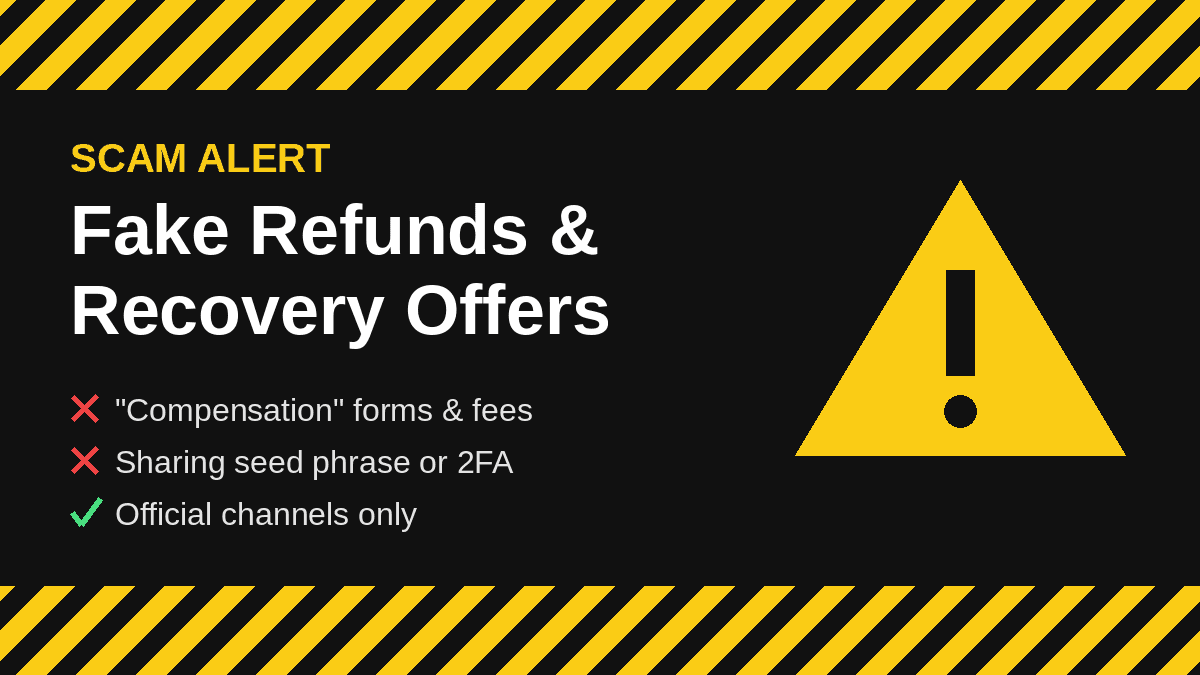
Five Binance Hack Scams to Watch For
- Fake compensation claims. A message, email, or ad says affected users must "register for compensation" through a form or website. The form asks for your login, 2FA code, seed phrase, or a wallet connection. Binance has said it will absorb losses itself; there is no claim process that requires your credentials.
- "Withdrawals reopened" phishing. A link promises early or priority withdrawal access. It leads to a cloned login page that captures your password and 2FA code in real time.
- Fake support agents. Someone in a Telegram group, X reply, or DM claims to be Binance support and offers to "check your account." Genuine exchange support does not open conversations in your DMs and never asks for your password, 2FA code, or seed phrase.
- Fund recovery services. Accounts advertise that they can "trace and recover" funds lost in the hack for an upfront fee. User balances were not stolen from individual accounts, so there is nothing for a third party to recover on your behalf.
- Fake token airdrops and claim sites. A "goodwill airdrop" or "hack relief token" asks you to connect a wallet and sign a transaction. That signature can grant a malicious contract permission to drain your wallet.
How to Verify Any Exchange Message in 60 Seconds
Use this routine for any message about the Binance incident, or any exchange notice at all:
- Do not click the link. Open the exchange app or type the website address yourself from a bookmark.
- Check the official account. Compare the claim with the exchange's verified X account and its announcements page. If it is not there, treat it as false.
- Look for your anti-phishing code. Many exchanges let you set a personal code that appears in every genuine email. An email without it is not from the exchange.
- Never share three things. Your password, your 2FA code, and your seed phrase. No support agent, refund process, or recovery service needs them.
- Read before you sign. If a site asks your wallet to sign something, check what you are approving. "Set approval for all" or unlimited token allowances should stop you cold.
WEEX users can set up an anti-phishing code, authenticator-app 2FA, and a withdrawal address whitelist by following the WEEX account security guide. The same three settings are available on most major exchanges, and they are worth enabling wherever you hold funds.
-- Price
What to Do If You Clicked a Scam Link
Speed matters more than embarrassment. If you entered details on a suspicious page or signed something you did not understand:
- Change your exchange password immediately from the official app, and reset 2FA if you typed a code into the fake page.
- Revoke active sessions and any API keys you did not create.
- If you connected a wallet and signed an approval, revoke it using a token approval checker, then move remaining funds to a fresh wallet.
- If you shared a seed phrase, assume that wallet is compromised. Move funds to a new wallet with a new seed phrase right away.
- Contact the exchange through its official in-app support, and report the scam site or account on the platform where you saw it.
The Takeaway on Binance Hack Scams
The Binance hack scams circulating this week rely on one trick: they make you act before you verify. A real refund needs nothing from you, and a real withdrawal reopening will show up inside the official app, not in a DM. Keep your password, 2FA code, and seed phrase to yourself, enable an anti-phishing code, and check every claim against the exchange's verified channels before you click anything.
FAQ
1. Do I need to apply for Binance hack compensation?
No. Binance has said it will cover all losses from the incident using its SAFU fund and company funds. Any form or website asking you to register for compensation with your login details or wallet should be treated as a scam.
2. How can I tell if a Binance email is real?
Check that it contains the anti-phishing code you set in your account settings, and confirm the information on Binance's verified X account or announcements page. Do not use links inside the email to log in.
3. Can a recovery service get back funds lost in the Binance hack?
The stolen funds came from Binance's own wallets, not from individual user accounts, and Binance is covering the losses. Services charging upfront fees to recover hack losses are a well-known scam pattern.
4. What should I do if I entered my password on a fake Binance site?
Change your password from the official app, reset 2FA, sign out all sessions, delete unknown API keys, and contact Binance support through the official app as soon as possible.
This content is provided for general informational purposes only and doesn't constitute financial, investment, legal, or tax advice. Any events, rewards, online promotions, or related information mentioned herein should not be considered a recommendation, solicitation, or invitation to purchase, sell, trade, or otherwise deal in any crypto assets. Crypto assets are highly volatile and may result in loss. The availability of WEEX services, products, and related events may vary by region. You are responsible for ensuring that your participation is in accordance with applicable local laws and regulations.
You may also like
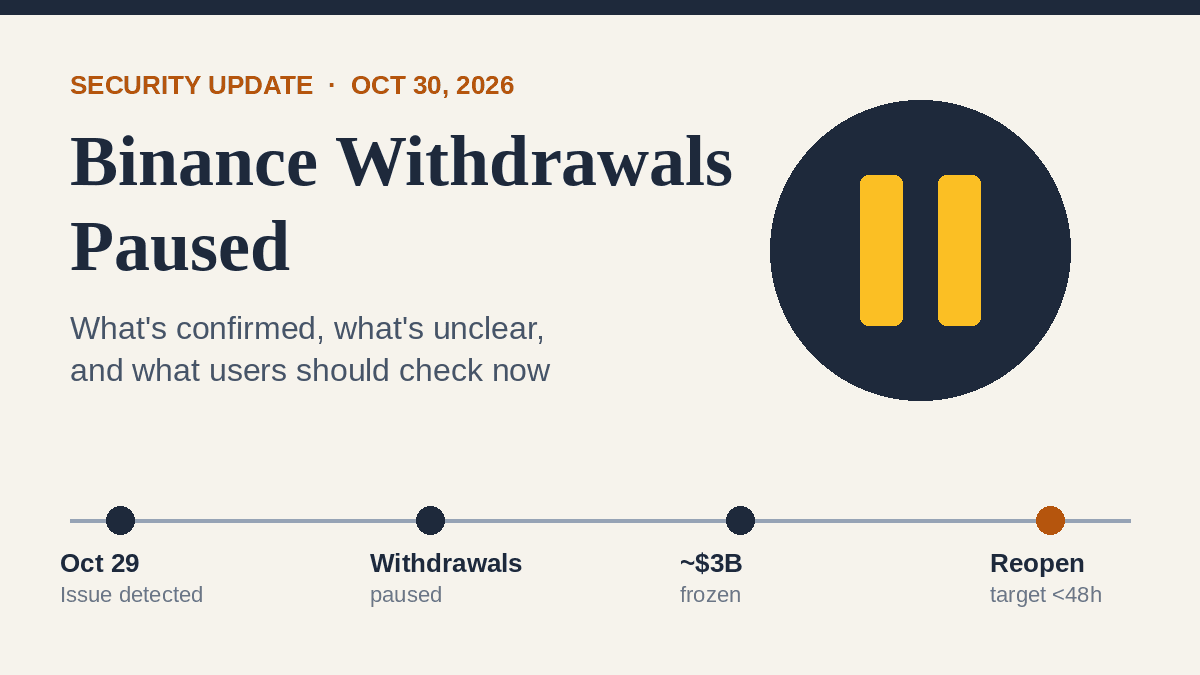
Binance Withdrawals Paused: What Users Should Check Right Now
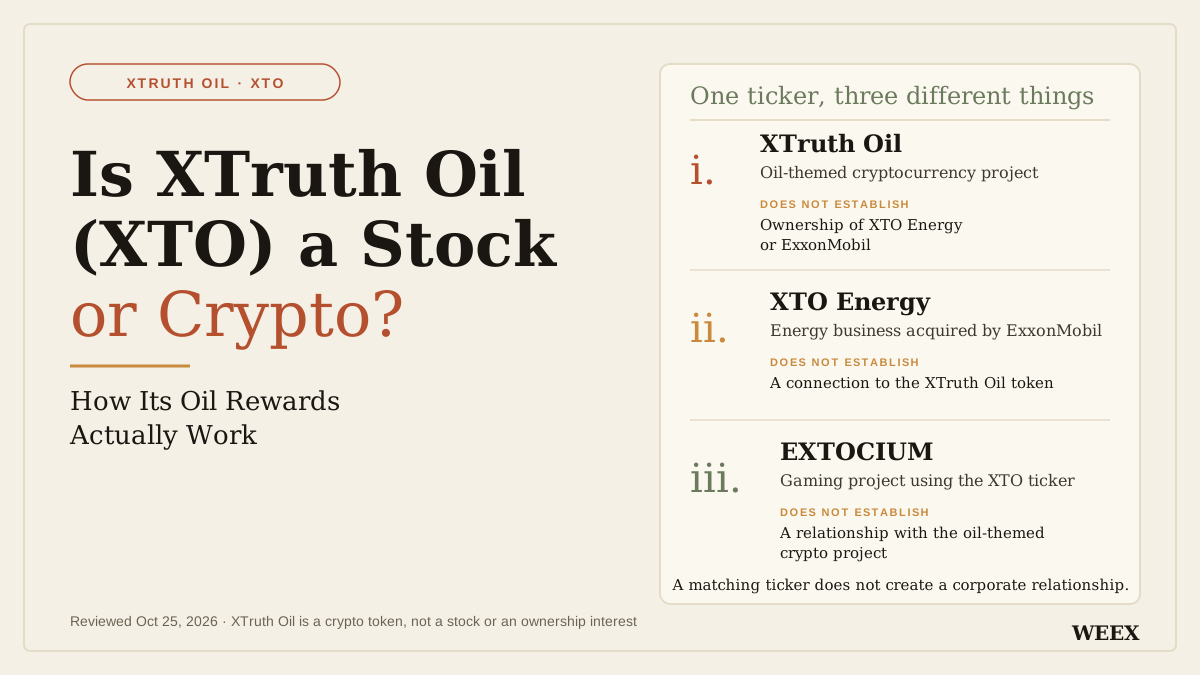
Is XTruth Oil (XTO) a Stock or Crypto? How Its Oil Rewards Actually Work
Which Cryptocurrencies Can You Convert on WEEX? How to Check Supported Assets
Macro Protocol (MTP): Listing Status and a Safe Verification Guide

What Is ArithFi (ATF)? Why It Is Not Listed on WEEX
What Is Trust Wallet? A Complete Beginner's Guide
Hunter Biden's Laptop Token Is Now Live on Base: Watch Out for Copycat Tokens
What Is DGrid AI (DGAI)? A Guide to the Decentralized AI Network and Its Token
What Is Niulai Coin? How a 342 Yuan Chinese Animated Film Spawned a Viral BNB Chain Meme Token

What is BINANCELIFE (BINANCELIFE) Coin?
What is BNB SZN (SZN) Coin?
What is BNB SZN (SZNBSC) Coin?
What is BNB Upside Down (PUP) Coin?
With OpenClaw taking the world by storm, what can the Agentic economy bring to Web3?
What Is Audiera (BEAT)? Audiera (BEAT) Price Prediction 2025–2030
What is OASIS Coin? OASIS Price Analysis
What is AgentLISA (LISA) and How Does It Work?
What Is Lucidum (LUCIC)?
What is 黄果之年 (YEAROFYELLOWFRUIT)? The New Trending Chinese Meme Coin
ASTER Airdrop on WEEX Exchange: Claim Your Share of 50,000 USDT in the New User Welcome Reward
What Is APRO (AT) and How Does It Work?
What Is Interlink (ITLG) and How Does It Work?
What Is Lorenzo Protocol (BANK) and How Does It Work?
What Is Maxi Doge (MAXI)? A Complete Guide to $MAXI Token
Binance Withdrawals Paused: What Users Should Check Right Now
Is XTruth Oil (XTO) a Stock or Crypto? How Its Oil Rewards Actually Work
Which Cryptocurrencies Can You Convert on WEEX? How to Check Supported Assets
Macro Protocol (MTP): Listing Status and a Safe Verification Guide
What Is ArithFi (ATF)? Why It Is Not Listed on WEEX
What Is Trust Wallet? A Complete Beginner's Guide


