
Why Did the CLARITY Act Fail in the Senate, and What Happens Next for Crypto Regulation?

 Prefer us on Google


The CLARITY Act stalled because its supporters could not secure the 60 Senate votes needed to end debate and begin formal consideration. The September 15 procedural vote finished 49–50, with Democrats and four Republicans voting no. The result did not permanently kill the bill, but it exposed unresolved disputes over political conflicts of interest, bank competition, investor protection, and the division of authority between the SEC and CFTC. In the near term, agencies can still issue rules and guidance, but only Congress can create a durable national market-structure framework.
The Big Picture
- The Senate rejected cloture on the motion to proceed, not the CLARITY Act on final passage.
- The official result was 49 yeas, 50 nays, and one senator not voting; 60 votes were required.
- Ethics rules, competition with banks, investor protections, and the SEC–CFTC boundary prevented a bipartisan deal.
- Congress can reconsider or rewrite the bill, while the SEC and CFTC continue acting under existing authority.
- The setback extends regulatory uncertainty; it does not end the effort to create federal crypto market-structure rules.
The vote failed before the Senate debated the bill itself
The most important distinction is procedural. Senators did not hold a final vote on whether to enact the Digital Asset Market Clarity Act. They voted on cloture for the motion to proceed to H.R. 3633—in plain English, whether to end preliminary debate and move the bill onto the Senate floor.
The official Senate roll call records the vote at 2:19 PM Eastern Time on September 15, 2026. Cloture required three-fifths of the Senate, normally 60 votes. The final tally was 49 yeas, 50 nays, and one senator not voting, so the motion was rejected. Republican Senators Susan Collins, Josh Hawley, Jerry Moran, and Thom Tillis joined the no side; Senator Chris Coons did not vote.
That final 49–50 count needs context. Reuters reported that Tillis changed his vote for procedural reasons, preserving a route for the motion to be reconsidered. The recorded result therefore does not mean every “nay” represented outright opposition to the policy. It does mean supporters were well short of the bipartisan coalition required to advance it.
Why did the CLARITY Act fail?
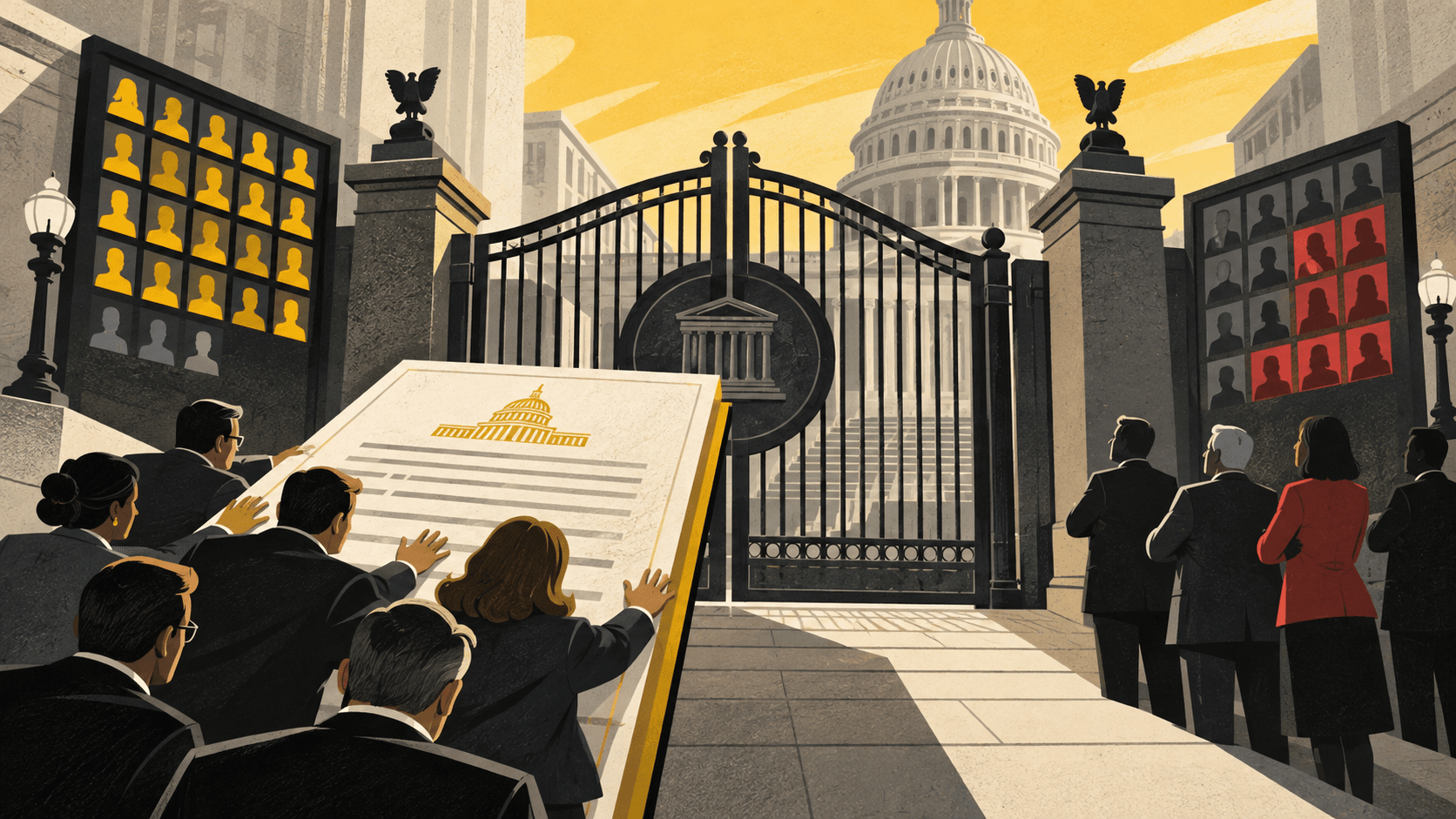
No single disagreement defeated the bill. Four pressure points converged at the same time.
1. The bill never solved its ethics problem for Democrats
The decisive obstacle was the lack of Democratic support. Senate Banking Committee Ranking Member Elizabeth Warren argued before the vote that the bill’s new ethics language did not adequately prevent a sitting president or other senior officials from benefiting from crypto holdings or affiliated ventures.
Supporters had revised the text shortly before the vote. Reuters reported that the final package incorporated many Democratic requests and strengthened restrictions on officials profiting from crypto ventures. But the changes arrived too late—or remained too limited—to produce the roughly dozen Democratic votes needed for cloture.
This matters beyond partisan messaging. When legislation assigns market value to regulatory classifications, lawmakers’ personal exposure to the affected assets becomes part of the bill’s legitimacy. A compromise that looks sufficient to one party may still look unenforceable to the other if enforcement rests with politically appointed officials or contains exceptions.
2. Community banks feared a new fight for deposits
The bill also ran into resistance from parts of the banking sector. Banks have long worried that crypto platforms, stablecoin issuers, or affiliated products could offer yield-like rewards that function as deposit substitutes without carrying equivalent prudential obligations.
That issue is easy to misread as a simple “banks versus crypto” conflict. It is really a perimeter question: when does a digital-asset product begin to perform the economic role of a bank account, and which capital, liquidity, insurance, disclosure, or consumer-protection rules should follow? Lawmakers did not reach a stable answer before the floor vote.
3. The SEC–CFTC boundary remained politically costly
The CLARITY Act aimed to define when a digital asset falls under securities law and when it should be treated as a digital commodity. It also sought to establish a clearer registration and disclosure framework involving both the Securities and Exchange Commission and the Commodity Futures Trading Commission.
For the industry, that division promises predictable rules. For critics, shifting assets or transactions away from securities regulation could weaken protections that attach to public capital formation. The dispute is therefore not only about which agency gets jurisdiction. It is about what issuers must disclose, which intermediaries must register, how conflicts are policed, and what remedies investors retain.
4. Election timing destroyed the room for another negotiation cycle
The vote occurred as Congress was moving toward the 2026 midterm elections. A complex market-structure bill needs floor time, amendment negotiations, coordination with the House, and eventually presidential approval. Once cloture failed, the calendar became almost as important as the policy disagreements.
The bill can be reconsidered, revised, or reintroduced. But each path becomes harder as lawmakers leave Washington, campaigns dominate attention, and the expected composition of the next Congress becomes uncertain.
-- Price
Primary-document check: what the bill was designed to change
The Senate Banking Committee’s published draft describes a system for regulating offers and sales of digital commodities through the SEC and CFTC. Among other provisions, the text addresses disclosure for certain “ancillary assets,” registration pathways, joint SEC–CFTC coordination, and treatment of digital-asset intermediaries.
This confirms that the proposal was broader than a narrow token-classification bill. It attempted to create an operating framework for issuance, trading, custody, disclosures, and federal oversight. That breadth increased its potential value—but also multiplied the number of constituencies with reasons to demand changes.
| Policy question | What the bill tried to resolve | Why disagreement remained |
|---|---|---|
| Asset classification | Separate digital commodities from assets governed as securities | Critics feared gaps or opportunities to evade securities protections |
| Agency authority | Divide and coordinate SEC and CFTC responsibilities | Jurisdiction determines registration, disclosure, and enforcement standards |
| Trading platforms | Create clearer federal pathways for intermediaries | Lawmakers differed over consumer safeguards and regulatory equivalence |
| Bank competition | Address interaction between digital assets and regulated finance | Banks worried crypto rewards could pull deposits outside bank-style rules |
| Official conflicts | Restrict political officials from profiting from covered ventures | Democrats argued the late ethics language still contained weak points |
The source text is dated, but the Senate Banking Committee page does not provide an exact publication time. The source did not provide an exact data timestamp.
What happens next for U.S. crypto regulation?
Path 1: Senate leaders rewrite the coalition, not just the text
A future vote would require more than cosmetic drafting changes. Supporters need a package that can hold nearly all Republicans while winning a meaningful bloc of Democrats. That probably means renewed negotiation on ethics, illicit finance, investor protection, state enforcement, and the treatment of yield or reward products.
Tillis’s procedural maneuver leaves reconsideration technically possible. Yet technical eligibility is not the same as political viability. Unless Senate leaders can identify where the missing votes will come from, another vote risks producing the same result.
Path 2: Congress tries again after the midterms
If no agreement emerges quickly, market-structure legislation may roll into the next Congress. Bills do not automatically continue from one Congress to the next, so lawmakers may need to reintroduce text and repeat parts of the committee process. Election results could make the coalition easier or harder to assemble.
The House-passed foundation and months of Senate negotiations would still matter as policy groundwork. But names, committee leadership, priorities, and bargaining power can change.
Path 3: The SEC and CFTC use existing authority
The SEC and CFTC do not stop regulating because cloture failed. They can pursue rulemaking, interpretations, exemptions, registrations, enforcement priorities, and interagency coordination under existing statutes. Courts will also continue to shape the boundary between securities and commodities through individual disputes.
The limitation is durability. Agency rules must fit existing statutory authority, survive administrative-law challenges, and can be revised by a future administration. A congressional statute can settle questions that regulators may only address incrementally.
Path 4: States and courts continue filling the vacuum
Without a comprehensive federal framework, companies must keep navigating a patchwork of federal enforcement, state licensing and consumer-protection rules, court decisions, and sector-specific laws. Stablecoins may operate under a different framework from spot token markets; a token’s treatment may depend on how it is issued, marketed, or sold.
That patchwork is workable for large firms with substantial legal resources. It is less friendly to smaller issuers, developers, and platforms that need a predictable route to market.

What the setback means for traders and crypto businesses
The immediate market reaction showed that investors had assigned value to legislative certainty. Reuters reported sharp declines in Bitcoin and in shares of major crypto-linked companies after the vote. Those moves should not be treated as a pure referendum on the bill: broader market conditions can amplify or offset policy news, and short-term prices do not measure the long-term probability of regulation.
For traders, the practical implications are more specific:
- Headline risk remains elevated. New drafts, agency proposals, court decisions, and election outcomes can move assets exposed to U.S. regulation.
- Token classification remains case-sensitive. The legal status of one asset or transaction does not automatically transfer to another.
- Exchange and custody rules remain fragmented. Compliance obligations may differ by product, customer location, and platform structure.
- Regulatory optimism needs a time horizon. A future compromise is possible, but a procedural path does not guarantee a near-term vote.
For businesses, the setback delays the possibility of one federal rulebook. Compliance teams should plan around laws and guidance currently in force rather than building solely around an unenacted bill.
WEEX editorial view: the vote was a coalition failure, not a verdict on regulation
Calling the result “the Senate rejecting crypto regulation” would be inaccurate. Both supporters and prominent opponents said the United States needs rules for digital assets. The fight concerned the content, enforcement, and political legitimacy of those rules.
The bill’s central weakness was strategic: negotiators tried to solve too many high-stakes questions while depending on a supermajority during an election season. Market structure, bank competition, presidential ethics, national security, and investor protection each can derail legislation on its own. Bundled together, they require trust that was not present by September 15.
The most credible route forward is a narrower bargain with enforceable ethics provisions and explicit protections against regulatory arbitrage. That may produce a less industry-friendly bill than some advocates want, but legislation that survives changes in political control would be more valuable than temporary clarity created only through agency discretion.
A short timeline of the CLARITY Act setback
| Date and time | Event | Why it matters |
|---|---|---|
| May 12, 2026 | Senate Banking Committee leaders released updated market-structure text ahead of markup | The draft reflected months of negotiations and stakeholder input |
| May 14, 2026 | The Senate Banking Committee advanced the proposal 15–9 | Committee passage demonstrated some bipartisan potential |
| September 14, 2026 | Supporters released final text with revised ethics provisions | Last-minute changes attempted to address Democratic objections |
| September 15, 2026, 2:19 PM ET | Senate cloture vote failed, 49–50; 60 votes were required | The Senate did not proceed to debate and amend the bill |
| After September 15, 2026 | Reconsideration, redrafting, post-election legislation, or agency action remain possible | The framework is stalled, not legally extinguished |
The bottom line
The CLARITY Act failed at a procedural gate because its supporters did not build a 60-vote coalition. Ethics concerns, bank-industry resistance, investor-protection disputes, and the approaching midterms all contributed. The bill can return, but not simply on the strength of industry demand or a narrow majority.
Until Congress reaches a durable compromise, U.S. crypto regulation will continue to develop through SEC and CFTC action, court decisions, existing federal law, and state rules. For market participants, the key distinction is between temporary regulatory direction and statutory certainty: agencies can move the first, but Congress must deliver the second.
FAQ
Did the Senate permanently kill the CLARITY Act?
No. The Senate rejected cloture on the motion to proceed, not the bill on final passage. Leaders may seek reconsideration, negotiate new text, or reintroduce legislation later. The failed vote makes near-term passage harder but does not legally erase the proposal.
Why were 60 votes required?
The vote concerned cloture, the Senate procedure used to limit debate. Under the rule applied to this motion, three-fifths of senators duly chosen and sworn—normally 60—were required.
What was the official vote count?
The official Senate record shows 49 yeas, 50 nays, and one senator not voting at 2:19 PM Eastern Time on September 15, 2026.
Can the SEC and CFTC regulate crypto without the CLARITY Act?
Yes, within powers granted by existing law. They can issue rules, guidance, exemptions, and enforcement decisions, but they cannot independently create every part of the comprehensive statutory framework contemplated by the bill.
What should crypto traders watch next?
Watch for a motion to reconsider, revised bipartisan text, post-midterm legislative plans, and SEC or CFTC rulemaking. Traders should distinguish official actions from political statements and avoid assuming that one draft will become law unchanged.
Sources
- U.S. Senate Roll Call Vote 234, 119th Congress, 2nd Session — official vote, threshold, timestamp, and senator-by-senator positions.
- U.S. Senate Banking Committee: Market Structure Bill Text Ahead of Markup — legislative purpose, negotiation history, and bill documents.
- U.S. Senate Banking Committee: Warren Remarks Ahead of the Procedural Vote — principal Democratic objections stated on September 15, 2026.
- Reuters: U.S. Senate Fails to Advance Sweeping Cryptocurrency Bill — independent reporting on negotiations, procedural strategy, market reaction, and potential next steps.
This content is provided for general informational purposes only and doesn't constitute financial, investment, legal, or tax advice. Any events, rewards, online promotions, or related information mentioned herein should not be considered a recommendation, solicitation, or invitation to purchase, sell, trade, or otherwise deal in any crypto assets. Crypto assets are highly volatile and may result in loss. The availability of WEEX services, products, and related events may vary by region. You are responsible for ensuring that your participation is in accordance with applicable local laws and regulations.
You may also like

Airdrops This Week (September 17-23, 2026): Official Conditions and Safety Checks
Senate CLARITY Act Cloture Vote Today: Can Trump's Ethics Compromise Get 60 Votes?

USDC on Arc: What Circle's Mainnet Launch Changes for Holders
Oracle Stock Futures After Earnings: How Leverage Got Liquidated

MU Stock Reclaims $1,000 Again: What's Actually Different This Time

XST Coin Price Fell Over 40% for Two Straight Days: What That Pattern Actually Means
Is The US Becoming The Crypto Capital? Brad Garlinghouse's Bold Predictions Explained

GPT-6 Astra and Crypto: The AI Token Bid and the Cyber Risk

Nike Is Being Removed From the S&P 100: What a 12 Year Low Actually Means for the Stock
Lululemon Stock Crashes to an 8 Year Low Right Before Its New CEO Even Starts

PONS Robinhood Chain Token: What the Buyback Rally Rests On

Dell Stock Surges 9.4% After Smashing Earnings Estimates: What Drove the AI Server Beat

SQQQ Explained: Why the 3x Inverse Nasdaq ETF Bleeds Value

How Safe Are the Crypto Exchanges Pakistani Traders Actually Use? A Security Comparison
XST Coin Price Crosses Into Deep Capitulation Territory: What a 90%+ Decline Actually Signals
Crypto Futures Liquidation in Pakistan: How It Works and How to Manage Risk
XPL/USDT After the August 25 Unlock: Will Ecosystem Incentives Create Demand or Selling Pressure?

SPCX Stock Keeps Swinging Around Its $135 IPO Price : What the Lockup Schedule Still Ahead Actually Means
Best Futures Exchange in Pakistan for 2026? What Leverage, Liquidity, and Liquidation Risk Actually Require
Crypto P2P Trading in Pakistan: Which Exchange Has the Best PKR Marketplace in 2026
Best Crypto Exchange in Pakistan for 2026: What You Need to Know Before Choosing
How to Earn WXT Rewards with WEEX Trade to Earn S6 Event
Adobe Stock Jumps After BlackRock Raises Stake to Over 10%: What an $8.4 Billion Bet Actually Signals
Before Swapping XSolut (XST): How to Check Liquidity, Price Impact, and Failed-Trade Risk 2026
MU Stock and the Apple CXMT Test: What Replacing Micron With Chinese Memory Actually Means
SPCX Stock Price Rebounds 16% From Its All Time Low: Is the Worst Finally Over for SpaceX
Is the Nikkei stock a Buy After Falling 10% From Its 2026 High? What Japanese Stocks Need to Recover
Gold Forum: Where the Polish Discussion Actually Happens — and the Question It Argues About Most
Samsung Stock Price Prediction 2026-2027: Can Samsung Reach $250 After the July Selloff?
SPCX Stock Price and the $116 Billion Lockup Expiry Tomorrow: What Actually Happens on August 6
Airdrops This Week (September 17-23, 2026): Official Conditions and Safety Checks
Senate CLARITY Act Cloture Vote Today: Can Trump's Ethics Compromise Get 60 Votes?
USDC on Arc: What Circle's Mainnet Launch Changes for Holders
Oracle Stock Futures After Earnings: How Leverage Got Liquidated
MU Stock Reclaims $1,000 Again: What's Actually Different This Time
XST Coin Price Fell Over 40% for Two Straight Days: What That Pattern Actually Means


