
2024 Airdrop Big Revealing: Exploring Wealth-Building Opportunities and Avoiding Risk Traps

Original Author: 0x Lao Dong
2024 Airdrop Rankings
• Day 1 Fully Diluted Valuation (FDV) Top: StarkNet, $19.2 billion.
• Highest Airdrop Value: Hyperliquid, $2.613 billion, averaging 28,000 U per address.
• Largest Airdrop in USD: Movement, $734.8 million airdrop.
• Most Airdrop Addresses: HMSTR, 1.29 billion TG accounts, averaging 3U.
• Top Gainer: UXLINK, 15x ATH compared to closing price on listing day.
• Top Loser: HLG, 90.66% price drop in 30 days.
Key Insights
· Emerging Narrative Tracks Rise, Traditional Hot Tracks Cool Down
The 30-day average price change of traditional hot tracks (Infrastructure, Layer2, GameFi) is -1.34%, while emerging narrative tracks like DEPIN, RWA, AI have an average increase of 41.98% over 30 days, suggesting investors should focus on emerging tracks.
· High Valuations in 2024 Projects, Market Expectations Bullish
On listing day, the FDV/raise ratio of 79 projects averages 103.9x, indicating that the overall 2024 project valuations are high, with a relatively bullish market expectation, but a potential bubble may exist.
· Frequent Early Speculative Trading, Significant Price Volatility
40% of projects hit their all-time high on the first day, while 1% hit their all-time low. This indicates that most projects face significant sell pressure early on, with many investors tending to engage in speculative trading in the initial listing period, causing potential rapid price retracements after reaching highs.
· Most Projects Show Noticeable Short-term Price Declines
62% of projects exhibit a downtrend within the first 7 days, and 65% within 30 days, with most projects showing a price decline trend shortly after Token Generation Event (TGE), and over time, both the proportion and magnitude of declines increase.
· Projects with a Larger Distribution Ratio and Fewer Lock-up Mechanisms Perform Better
Projects with a larger distribution ratio tend to be more stable and perform well, with a 30-day average increase of 16.66%. Tokens with lock-up mechanisms perform poorly, with a 30-day average decline of -43.73%.
· More Platforms Bring More Recognition
With the increasing number of exchange listings, the average project funding amount and FDV have significantly increased, indicating that market recognition and liquidity have increased, and risk tolerance has also improved
Foreword
2024 is a year of bull-bear alternation and unusually volatile in the cryptocurrency market. BTC broke through its all-time high from the year's low of $38,500, soaring to over $100,000. Meanwhile, as the market heats up, project activities have gradually become more frequent.
Compared to the 270 TGE projects in 2023, this number surged to 731 in 2024, a growth rate of 170%. Among these numerous projects, only a few are "large-cap" and "mid-cap," while the majority are still "small-cap" and "micro-cap." How have these projects performed after launch?
To answer this question, Lao Dong selected 100 relatively hot and representative projects in 2024, conducted a systematic analysis combining key data such as funding scale, price performance, distribution rules, etc., to reveal the trends and patterns of current airdrop projects. This article will speak through data to help readers understand the airdrop project situation in 2024.
Data Table
This article does not provide any investment advice but only objective data statistics and analysis
Data Analysis
I. 2024 TGE Track Analysis
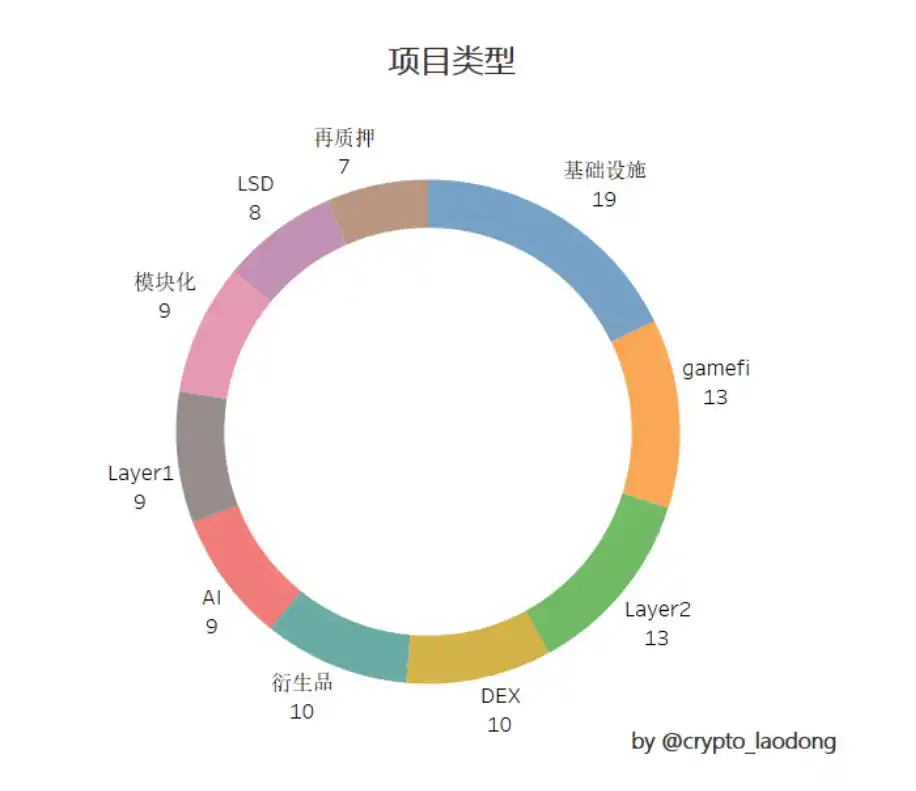
The chart shows the distribution of project types in 2024. It can be seen that 2024's VC coin TGEs are mainly concentrated in traditional popular tracks such as infrastructure, GameFi, Layer2. Projects in these tracks usually require a longer development cycle, with many projects actually being developed in the past few years and only going live in 2024.
· Infrastructure projects: 19, with a 30-day average increase of 12.18%
· Layer2 Projects: 12, Average 30-Day Price Change -0.2%
· Gamefi Projects: 12, Average 30-Day Price Change 2.3%
This year, the primary emerging narrative revolves around topics such as DEPIN, RWA, AI, etc. While the overall number of TGE (Token Generation Event) projects is not high, the performance of these types of projects is quite remarkable. There may continue to be a breakout in the future.
· AI Projects: 3, Average 30-Day Price Change 24.56%
· DEPIN Projects: 3, Average 30-Day Price Change 53.56%
· RWA Projects: 3, Average 30-Day Price Change 42.17%
Traditional popular tracks are gradually cooling down, while new emerging narratives are rapidly rising. Focusing on new narrative tracks may be a more promising investment direction.
II. Funding Situation and FDV Analysis
· Out of 100 projects, 79 have disclosed their funding, with an average funding amount of $38.91 million.
There are 8 projects with funding exceeding $100 million.
· The largest proportion of projects, 44 in total, fall within the $10 million to $100 million range.
· There are 26 projects in the $2 million to $10 million range.
VC (Venture Capital) firms usually conduct rigorous due diligence on projects, reflecting the market's level of acceptance of the projects. Generally, a larger funding amount indicates a stronger confidence from investors in its future development. Through funding frequency, one can also gauge changes in track popularity and the direction of capital attention. However, funding amount alone cannot fully determine the quality of a project; a multidimensional analysis is required.
FDV (Fully Diluted Valuation) is an indicator used to assess a project's potential future value. FDV is influenced by various factors before a project goes live, including funding amount, initial circulating supply, market sentiment, narrative direction, track popularity, liquidity, and trading depth, among others.
To more objectively evaluate the relationship between a project's initial valuation and actual funding, we use the FDV/Funding ratio based on the closing price of the day to divide into ranges and analyze the market performance of projects in different ranges:
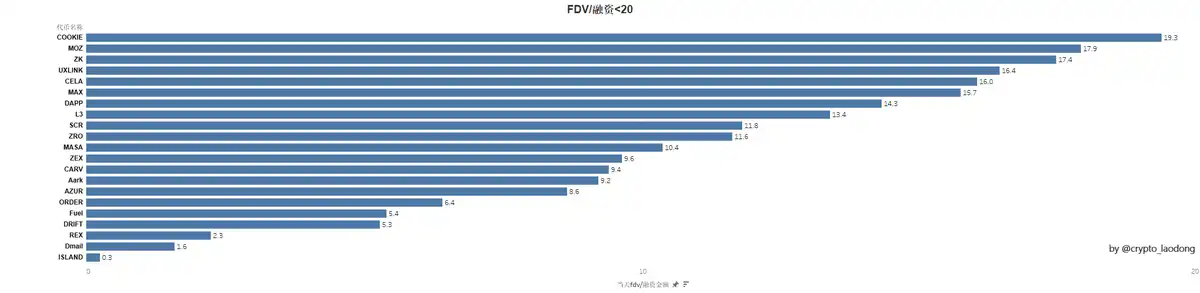
· FDV/Funding Range 0-20: Reasonable or Conservative
In this range, there are a total of 21 projects with an average funding amount of $48.83 million. The data shows that 57% of the projects did not exceed the closing price on the day within 7 and 30 days. Compared to other ranges, these projects have a more stable market expectation, relatively reasonable valuation, and lower investment risk.
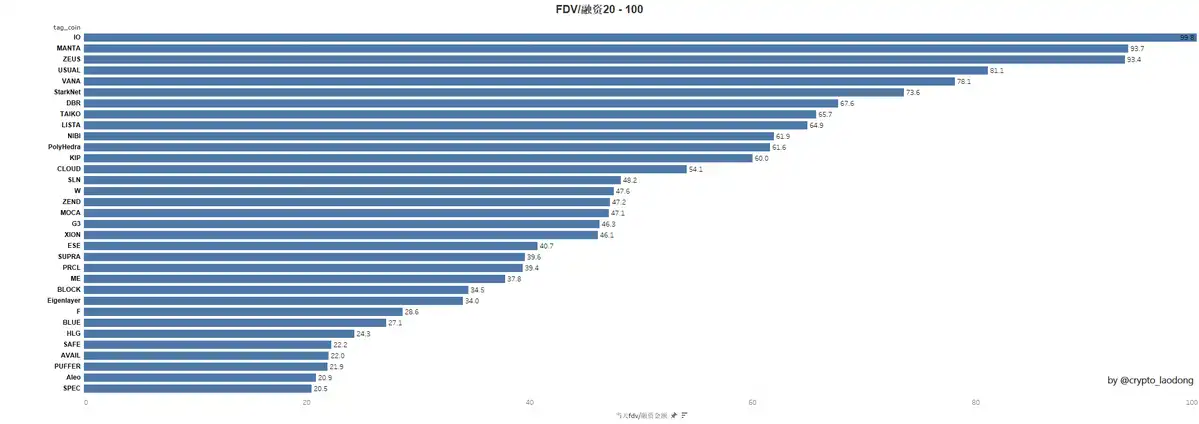
· FDV/Funding 20-100 Range: High Expectation
There are 33 projects in this range with an average funding amount of $51.64 million. Statistics show that 63.6% of the projects experienced price weakness within 7 days, and this percentage increased to 75.8% after 30 days. This indicates that investors had higher initial expectations for these projects, but prices experienced significant corrections in the short term, presenting a certain level of volatility risk.
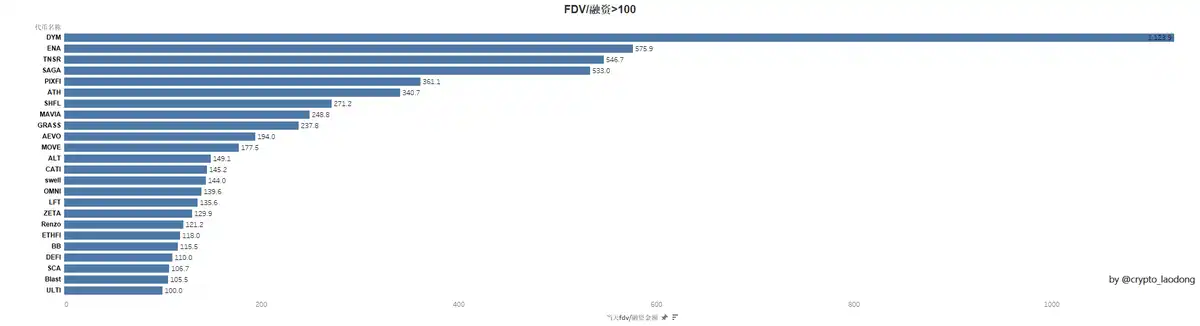
· FDV/Funding 100 and above Range: High-Risk Speculation
This range contains 24 projects with an average funding amount of $12.72 million. These projects are mostly small-scale projects with no projects funded over a billion. The data shows that 70.8% of the projects experienced price weakness after 7 days, and this percentage decreased to 54.2% after 30 days. These projects are mostly concentrated in hot sectors such as infrastructure, GameFi, and LSD.
Among the 79 projects analyzed, the average FDV/Funding ratio was 103.9x, indicating that the overall valuation of 2024 projects is relatively high, and market expectations are optimistic.
III. ATH vs ATL Analysis
Analyzing ATH (All-Time High) and ATL (All-Time Low) can help us fully understand the overall performance of a project in the market and the level of investor recognition. Analyzing ATH/Today's Price and Today's Price/ATL can evaluate a project's profit potential and selling pressure risk, providing data support for assessing the project's stability in the early stages, reasonable valuation, and investment timing.
Price trends of 100 projects were analyzed, and as of today, 40% of the projects reached their ATH on the first day, while 1% of the projects hit ATL on the same day.
· Price Trend Analysis of 100 Projects: 40% of the projects reached their ATH on the first day. 1% of the projects hit ATL on the first day.
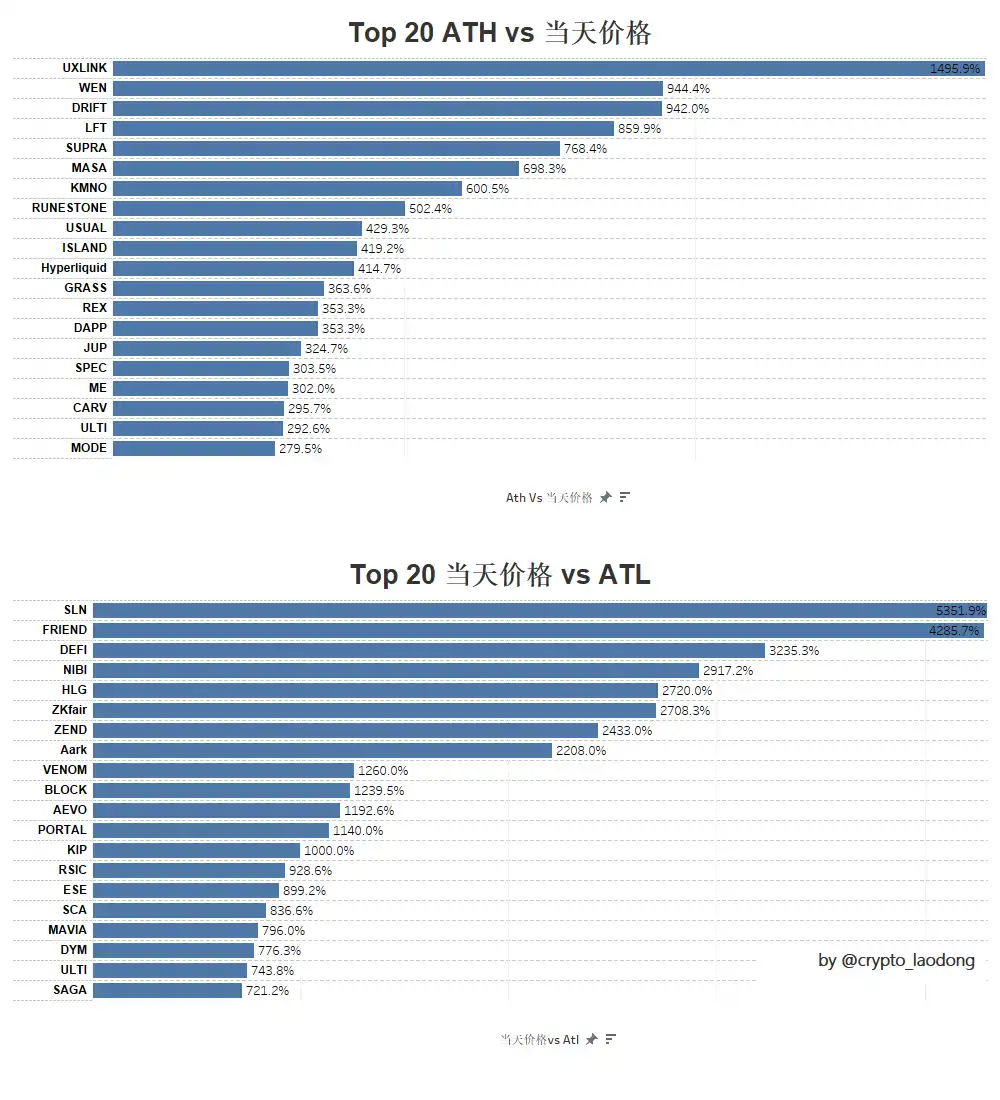
· ATH vs. Same-Day Price averages 245.22%, indicating that the same-day price has a 2.45x potential increase from the all-time high (ATH). The top-performing projects include UXLINK, WEN, DRIFT
· Same-Day Price vs. ATL averages 633.52%, meaning that the price would need to increase by 6.34x from the all-time low (ATL) to reach the same-day closing price. The worst-performing projects are SLN, FRIEND, DEFI
The market shows a strong speculative sentiment, with 40% of projects reaching their ATH on the first day. This indicates that many investors tend to engage in speculative trading early in the project's listing, which may subsequently lead to a rapid price decline.
The 245.22% ATH increase compared to the 633.52% ATL decrease highlights that the market's selling pressure risk is much higher than the project's profit potential. This data reflects that during the initial listing phase, investors are more likely to see rapid price increases driven by high market sentiment. However, this may be followed by a quick price drop due to selling pressure or factors such as token unlocks.
IV. Short-Term Project Performance Comparison
The main purpose is to analyze the short-term performance of projects. By comparing the closing price on the listing day with prices after 7 days and 30 days, we can gain a clearer understanding of the project's short-term performance and trends.
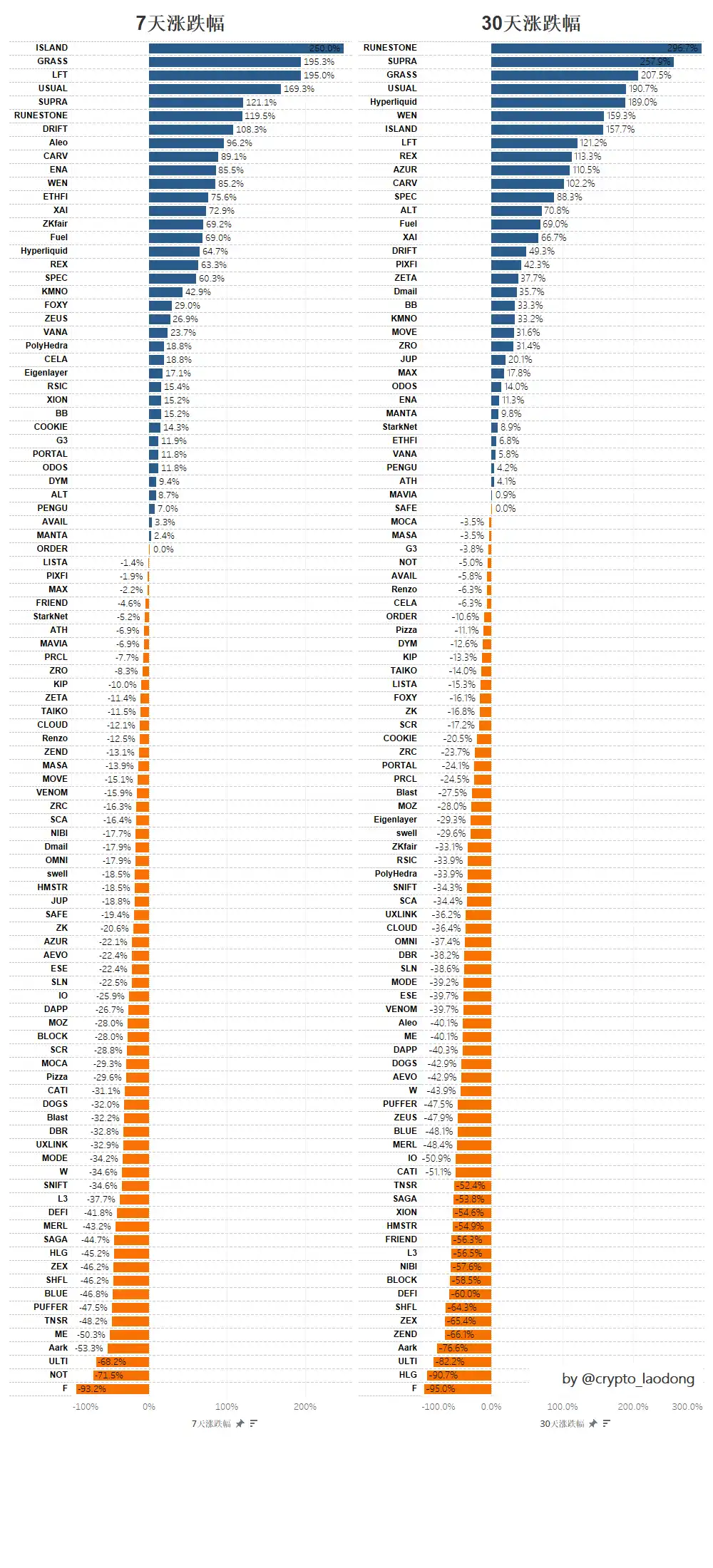
From the chart, it can be observed:
· Day 7:
62% of projects have a price lower than the closing price on the listing day, with an average decrease of 27.03%.
38% of projects have a price higher than the closing price on the listing day, with an average increase of 60.34%.
· Day 30:
65% of projects have a price lower than the closing price on the listing day, with an average decrease of 37.42%.
35% of projects have a price higher than the closing price on the listing day, with an average increase of 74.26%.
Most projects face a downward price trend shortly after their TGE, with the magnitude of the decline increasing over time.
While the majority of projects experience price drops, there are still a few projects that perform exceptionally well after their TGE, with significant price increases. Some high-quality projects can gain higher market recognition in the short term and achieve notable price growth.
Among them, ISLAND GRASS RUNESTONE performed well, while F AARK HLG performed the worst.
Possible reasons for short-term price increases:
1. Strong Fundamentals: Projects with strong technical support, clear use cases, or innovative business models can attract long-term investor attention, thereby driving price increases.
2. Narrative-Driven: Projects that capitalize on current market trends (such as GameFi, meme, DEPIN, RWA, etc.) are easily able to attract market inflows, leading to price increases.
3. Strong Community Consensus: Community consensus can increase a project's visibility and demand in the market, driving price increases. Furthermore, ongoing community support can alleviate selling pressure, enhancing the project's long-term stability.
4. Good Liquidity: Adequate liquidity helps stabilize project prices and boost investor confidence.
Possible reasons for short-term price decreases:
1. Cooling Market Sentiment: The price on the TGE day is often driven by FOMO (Fear of Missing Out) sentiment, which may be higher than the reasonable price. As the hype subsides, the price will revert to rational levels.
2. Increased Selling Pressure: After TGE, investors, especially airdrop participants or short-term investors, may choose to cash out profits, leading to increased selling pressure and price declines.
3. Token Unlocking Mechanism: Many VC coins adopt a long-term release mechanism. As tokens unlock, early investors (such as private sale participants and the team) may choose to realize profits, adding to the market's selling pressure.
4. Inadequate Liquidity: Some projects post-TGE may suffer from insufficient liquidity and limited trading depth. Once a large sell order occurs, the price can quickly drop, intensifying volatility.
5. Distribution Ratio's Impact on Price
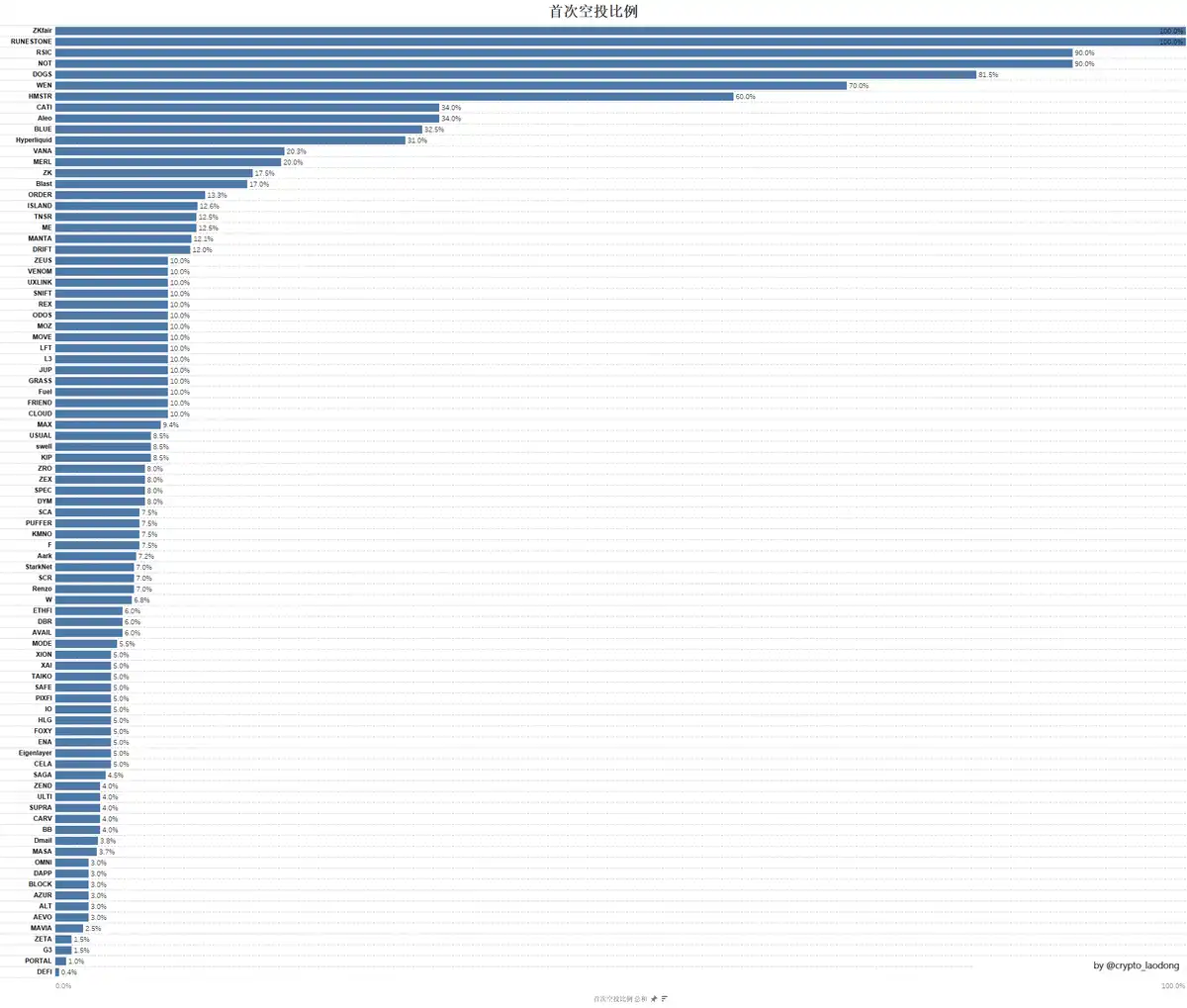
· Projects with a **distribution ratio greater than 15%**: 15 projects, with an average 7-day price change of 11.87% and an average 30-day price change of 16.66%.
· Projects with a **distribution ratio less than 15%**: 76 projects, with an average 7-day price change of 8.31% and an average 30-day price change of 3.36%.
· Projects with a lock-up mechanism: 10 projects, with an average 7-day price change of -16.68% and an average 30-day price change of -43.73%.
The data indicates that projects with a larger distribution ratio tend to have more stable short-term performance, while projects with a strong lock-up mechanism do not perform as expected and experience larger price fluctuations.
6. Exchange Selection and Project Performance
Being listed on different exchanges or multiple exchanges can have varying impacts on the market. To better understand the overall performance of projects listed on major exchanges, Lao Dong has compiled data on several key exchanges, including the number of listings, price fluctuations, and the effect on FDV liquidity. This helps in understanding how projects on different exchanges perform and making wiser investment decisions.
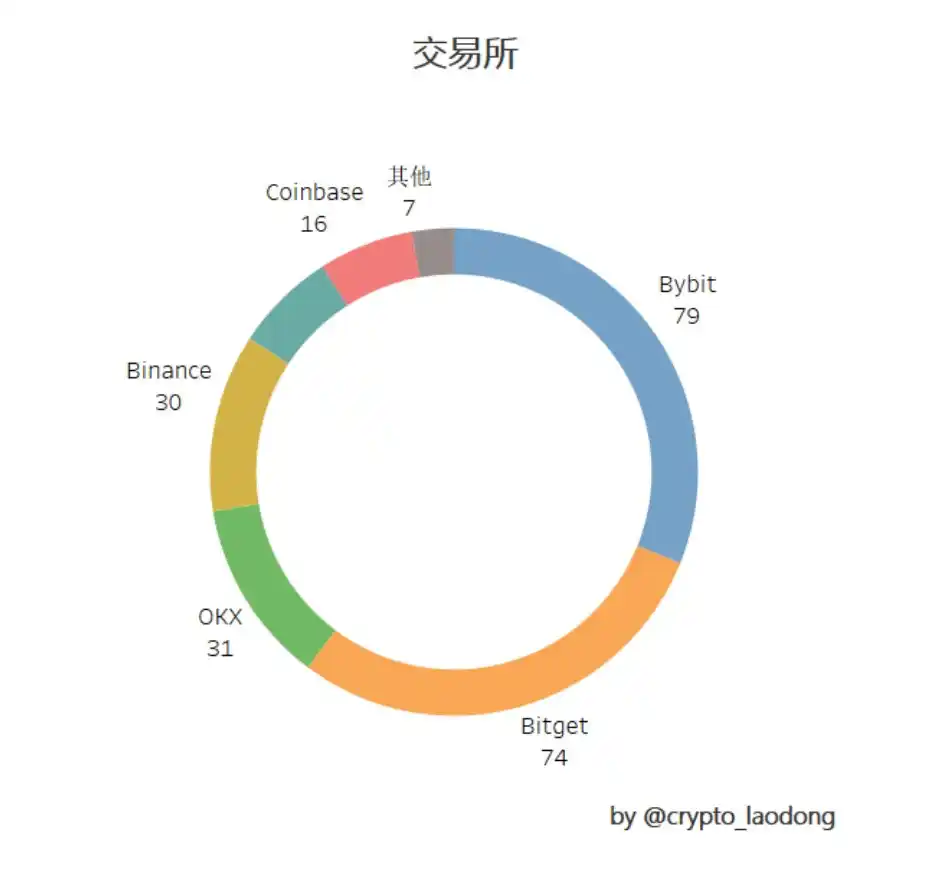
· Binance: 30 listed projects, with a 7-day price change of -0.02%, 12 projects that have seen an increase (40%), a 30-day price change of -4.57%, and 12 projects that have seen an increase (40%).
· OKX: 31 listed projects, with a 7-day price change of -13.06%, 7 projects that have seen an increase (22.58%), a 30-day price change of -18.75%, and 10 projects that have seen an increase (32.26%).
· Bybit: 79 listed projects, with a 7-day price change of +2.27%, 29 projects that have seen an increase (36.7%), a 30-day price change of -4.65%, and 28 projects that have seen an increase (35.44%).
· Bitget: 74 listed projects, with a 7-day price change of +6.57%, 26 projects that have seen an increase (35.14%), a 30-day price change of +3.3%, and 28 projects that have seen an increase (37.84%).
· Coinbase: Listed 16 projects, 7-day price change -3.68%, 3 projects up (18.75%), 30-day price change +26.64%, 6 projects up (37.5%)
· Upbit: Listed 17 projects, 7-day price change -5.05%, 3 projects up (17.65%), 30-day price change +2.94%, 9 projects up (52.94%)
Based on the Number of Listings
Coinbase and Upbit have relatively fewer listings, as they tend to carefully select projects focusing more on long-term stability and compliance to avoid listing projects still in the experimental stage or high-risk.
Bybit and Bitget have more listings and are more aggressive, as these exchanges aim to attract users by frequently listing new projects to expand their market share. This strategy helps them rapidly grow in the market, attracting significant trading volume and liquidity.
Based on Short-Term Project Performance
· Bitget and Bybit have shown relatively good performance in the 7-day and 30-day periods, especially Bitget, with positive price changes in both the 7-day and 30-day periods and a high percentage of projects in the green.
· Coinbase has performed well, particularly with a +26.64% price change in the 30-day period and a higher number of projects in the green (37.5%).
· OKX and Binance have both experienced some decline in the past 30 days, especially OKX, which has seen a significant decrease of about -18.75%.
· Upbit has shown some recovery in the 30-day period with a price increase of +2.94% and 52.94% of projects in the green, indicating a good performance.

· Other Exchanges: 7 projects, average funding $6.5 million, average FDV $290 million on the same day
· Listed on 1 Exchange: 20 projects, average funding $28.86 million, average FDV on listing day $9.81 billion
· Listed on 2 Exchanges: 33 projects, average funding $20.68 million, average FDV on listing day $10.7 billion
· Listed on 3 Exchanges: 12 projects, average funding $24.57 million, average FDV on listing day $30.97 billion
· Listed on 4 Exchanges: 17 projects, average funding $31.67 million, average FDV on listing day $17.83 billion
· Listed on 5 Exchanges: 9 projects, average funding $152.15 million, average FDV on listing day $63.13 billion
· Listed on 6 Exchanges: 2 projects, average funding $95.20 million, average FDV on listing day $64.89 billion
As the number of exchanges a project is listed on increases, the average funding amount and the FDV on listing day significantly increase. This indicates high market recognition, improved liquidity, increased resilience to risk, and the ability to attract more investors.
You may also like

Pantera Capital Partner: How Tokenization is Restructuring the Private Equity and Early Investment Ecosystem?

New York Proposes Stricter Stablecoin Issuer Rules Aligned With Federal GENIUS Act
NYDFS proposed stricter stablecoin issuer rules aligned with the GENIUS Act, covering reserves, custody, redemption timelines, audits, and capital buffers.
Every exchange is a "Universal Exchange."

The counterattack of traditional finance: Alliance chains are quietly reviving

CryptoQuant Says Bitcoin Profitable Supply Is Near 45% Pressure Zone as On-Chain Data Points to Market Repricing
CryptoQuant said Bitcoin’s profitable supply is nearing the 45% pressure zone, signaling rising market stress, unrealized losses, and a possible on-chain repricing phase.

Bitcoin Falls Below 200-Week Moving Average as On-Chain Data Shows Over Half of Supply in Loss
Bitcoin dropped below its 200-week moving average as on-chain data showed over 50% of circulating supply is now in loss, signaling rising market stress.

CFTC Reportedly Plans New Prediction Market Rules Focused on Manipulation Risk and Public Interest Review
The CFTC is reportedly preparing new prediction market rules focused on manipulation risk, public interest review, and retail trader protections.

Meet the new WEEX trial fund—your gateway to greater profits

WEEX Labs Lands at Dutch Blockchain Week: A Disruptive Crypto × AI Conversation Sets Sail in Amsterdam

SK Hynix Reportedly Plans U.S. ADR Listing as Early as August, With SEC Approval Possible in Late June
SK Hynix may pursue a U.S. ADR listing as early as August, with SEC approval reportedly possible in late June amid strong AI chip supply chain demand.

SpaceX vs Tesla vs xAI: Which Elon Musk Trade Has the Biggest Upside in 2026?
OpenAI Reveals It Has Confidentially Submitted an S-1 to the SEC, Keeping the Door Open for a Future IPO
On June 9, according to an OpenAI announcement, the company recently confidentially submitted a draft S-1 registration statement to the U.S. Securities and Exchange Commission (SEC), beginning the preliminary compliance process for a potential initial public offering. OpenAI said it chose to disclose this proactively because it expected the news might leak; however, the company has not yet set a specific listing timeline, and related arrangements may still take some time.

Latest research from 13 top universities including Cornell University: The current state, challenges, and misconceptions of the fusion of Crypto and AI
Deconstructing Anthropic: The Best AI Company, Possibly Also a Type of Organizational Invention
Apollo and Blackstone Reportedly Back $35 Billion Anthropic Chip Financing as Deal Details Remain Unclear
On June 9, according to currently available news alerts, Apollo and Blackstone Group participated in a $35 billion financing for an Anthropic “chip project.” Based on the original wording of the report, the funding has already been raised, but public information remains limited. The financing structure, use of proceeds, project entity, and whether Apollo and Blackstone participated through equity, debt, or project financing have not yet been disclosed.

Humanity Protocol Security Incident Escalates: More Than $31 Million Stolen From Related Addresses as Attacker Continues Selling H for ETH
On June 9, according to monitoring by Onchain Lens, more than $31 million has been stolen from addresses linked to Humanity Protocol, and the attack is still ongoing, with the hacker continuously swapping H tokens for ETH. Project founder Terence Kwok later confirmed the security incident on X, saying the issue involved a private key leak.

Bloomberg: As Bitcoin Weakens, Stablecoins and RWA Continue to Drive Expansion in Crypto Businesses
In June, Bloomberg reported that despite Bitcoin falling below $60,000 last week, wiping out about $235 billion in market value within seven days, and dropping close to 50% from last year’s peak, some core businesses in the crypto industry are still expanding, mainly in stablecoins, real-world asset tokenization (RWA), payments, and infrastructure. The report also noted that overall altcoin activity has contracted significantly: altcoin market capitalization has fallen from a peak of about $431 billion in November 2021 to around $170 billion, and among the tens of millions of tokens issued in recent years, fewer than 1,700 still maintain meaningful trading activity.

Galaxy Deep Research Report: How Hyperliquid's HIP-4 Upgrade Changes the Landscape of Prediction Markets?
Pantera Capital Partner: How Tokenization is Restructuring the Private Equity and Early Investment Ecosystem?
New York Proposes Stricter Stablecoin Issuer Rules Aligned With Federal GENIUS Act
NYDFS proposed stricter stablecoin issuer rules aligned with the GENIUS Act, covering reserves, custody, redemption timelines, audits, and capital buffers.
Every exchange is a "Universal Exchange."
The counterattack of traditional finance: Alliance chains are quietly reviving
CryptoQuant Says Bitcoin Profitable Supply Is Near 45% Pressure Zone as On-Chain Data Points to Market Repricing
CryptoQuant said Bitcoin’s profitable supply is nearing the 45% pressure zone, signaling rising market stress, unrealized losses, and a possible on-chain repricing phase.
Bitcoin Falls Below 200-Week Moving Average as On-Chain Data Shows Over Half of Supply in Loss
Bitcoin dropped below its 200-week moving average as on-chain data showed over 50% of circulating supply is now in loss, signaling rising market stress.


