
Berachain Mainnet Launch Nears, Top Ecosystem Projects Overview



Original Article Title: "Berachain Mainnet Launch Imminent, Overview of Ecosystem Highlights and Star Projects"
Original Article Author: Pzai, Foresight News
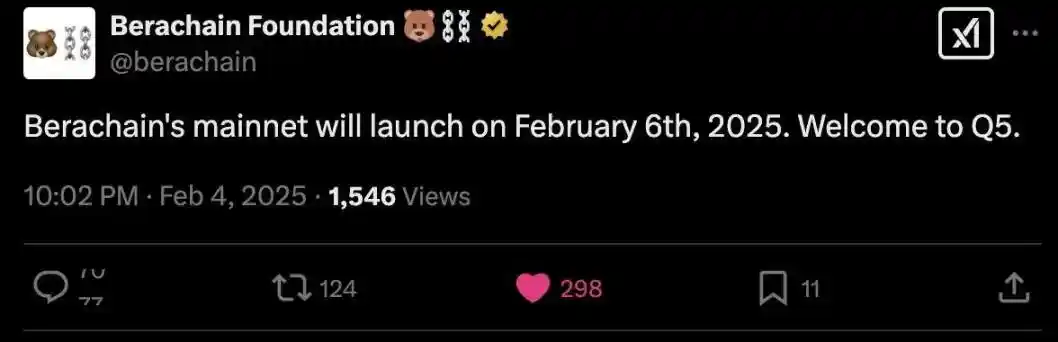
On February 4th, Berachain officially announced that the mainnet will launch on February 6th, sparking widespread market attention and discussion. This article analyzes the ecosystem from the perspective of past events and future mainnet ecology, providing an overview of Bera's landscape.
Event Recap
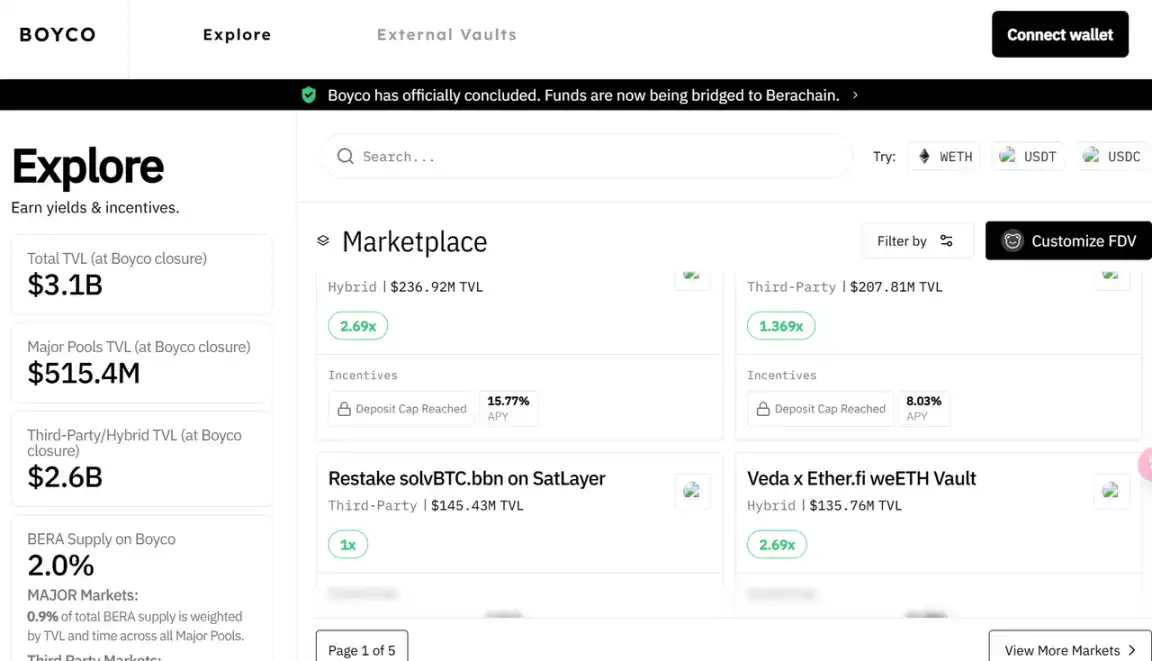
As a liquidity chain, the accumulation of liquidity requires some preliminary preparation. Previously, Berachain launched the Boyco Mainnet Liquidity Pre-staking Event, collaborating with protocols such as Ethena, Etherfi, and Lombard to allow users to pre-stake liquidity on Ethereum to the Berachain DeFi protocol. The event attracted over $3.1 billion in assets, which will be transferred to the Boyco dApp after the mainnet launch.
In terms of airdrop allocation, 2% of BERA will be distributed to all liquidity pools, and users can earn APY rewards from the liquidity. Airdrops can also be expected in ecosystem projects.
In addition to the Boyco Mainnet Liquidity Pre-staking Event, Berachain attracted a large number of developers and users to participate in the testnet interaction through its EVM compatibility feature. Users accumulated on-chain interaction records by trading on DEX (such as BERA for STGUSDC), minting the stablecoin HONEY, participating in liquidity mining, and borrowing/lending protocols.
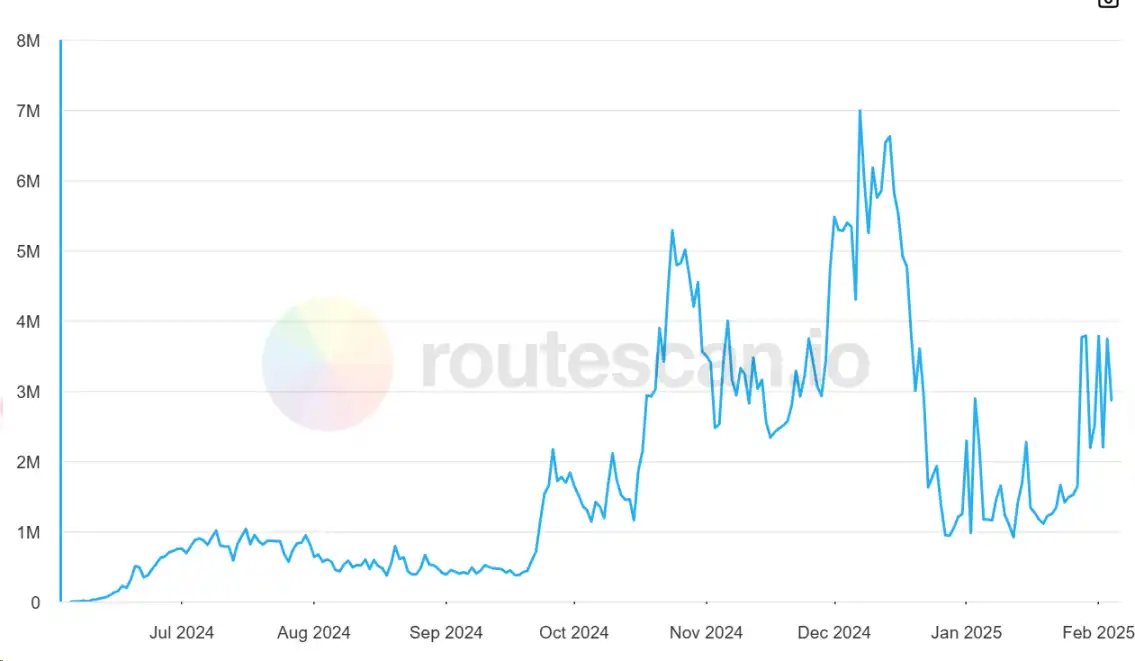
Since the launch of the second testnet v2 Bartio in June 2024, the number of Berachain addresses has surged from 6.4 million to 240 million, with a peak of 7 million daily active addresses, attracting over 270 ecosystem projects.
Based on the completion of NFT tasks on platforms like Galxe, testnet contributors are expected to receive 2%-5% of the total token supply, with early NFT holders (such as the Bong Bears series) potentially enjoying a higher weight.
Ecosystem Outlook
The core competitiveness of the Berachain mainnet lies in its Proof of Liquidity (PoL) consensus mechanism and three-token economic model (BERA, HONEY, BGT, etc.). BGT is the core token of the Berachain ecosystem, mainly used to incentivize liquidity providers and validators. Users earn BGT by providing liquidity in Berachain's native DeFi applications. BERA and HONEY respectively handle network transaction fees and stablecoin functions, ensuring ecosystem diversity and utility. The PoL mechanism tightly integrates liquidity provision and network validation, avoiding the issue of liquidity dispersion in traditional PoS networks. Validators have the right to vote on reward distribution for liquidity pools, further enhancing incentives for liquidity providers.
Within the ecosystem, liquidity providers can earn BGT token rewards by providing liquidity to protocols within the ecosystem. Validators participate in network validation by staking BGT tokens, earning block rewards and transaction fee shares. Applications built on the Berachain network can enhance their own liquidity pool rewards by incentivizing liquidity providers.
As the native DEX on Berachain, Kodiak supports not only Uniswap V3-style Concentrated Liquidity (CLAMM) but has also developed the "Island" feature, which optimizes returns by dynamically adjusting liquidity ranges and standardizing LP tokens to be compatible with other protocols (such as Infrared's liquidity staking). Users providing liquidity to a CLAMM pool can earn BGT rewards and can delegate BGT to validator nodes operated by Kodiak, creating a compound strategy for liquidity mining and governance rewards. The project has accumulated over 100,000 interactions in the testnet phase and will introduce the "Panda Factory," a no-code token issuance tool, to further lower the barrier to project initiation.

As a lending protocol on Berachain, Dolomite allows users to stake BGT as collateral, amplify liquidity mining rewards up to 5x, and enables users to hedge market volatility risk while amplifying returns, forming a sustainable leveraged mining ecosystem. The platform also distributes 20% of the DOLO token via airdrop to long-term borrowers and community contributors, enhancing governance participation through the veDOLO locking mechanism.

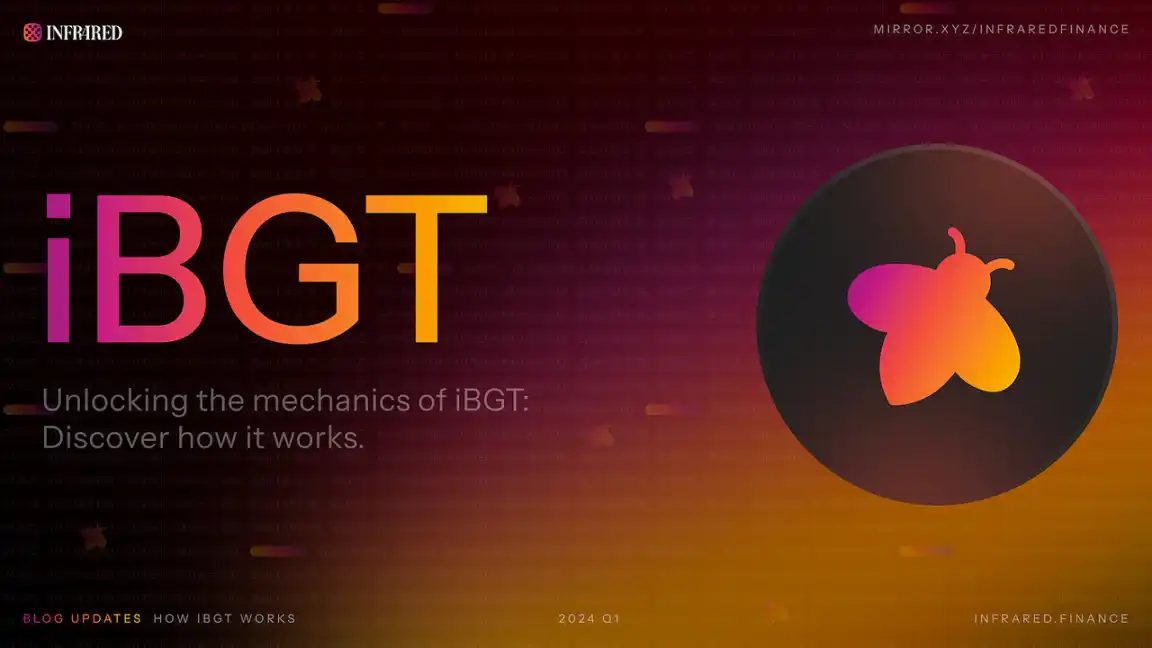
On Berachain, Infrared Finance is a liquidity staking protocol that allows users to convert BGT into tradable iBGT tokens. Users can stake them to earn node rewards or allocate them to other DeFi protocols (such as Kodiak's iBGT/BERA pool), achieving BGT liquidity unlocking and yield stacking. As the protocol with the highest BGT delegation volume in the testnet, Infrared repurchases and burns governance token IRED with node operation income, creating a deflationary model.
Berps (Berachain Perpetuals) is a native perpetual contract platform that utilizes the HONEY stablecoin as collateral. Leveraging BEX's deep liquidity under the PoL mechanism and dynamic price oracles to reduce trading friction, Berps supports leverage of up to 100x. The project also implements batch order processing (Batch-A2MM) and off-chain matching solutions to avoid sandwich attacks, enhancing the trading experience for retail users.
Honeypot Finance, as the core DeFi protocol of Berachain, provides full-cycle token services. The project consists of three sub-protocols:
Henlo DEX: an MEV-resistant DEX supporting limit orders and batch trades, reducing slippage through liquidity aggregation. Dreampad: a Launchpad using a Fair Token Offering (FTO) model, with project tokens sold 100% to the public, with no team reserves. Pot2Pump: a meme coin issuance platform resistant to bots, featuring a 24-hour refund mechanism to reduce fraud risks.
The project conducts HPOT token buybacks and burns through node operation revenues, while rewarding BGT stakers, forming a governance flywheel and value capture loop.

Conclusion
Berachain has reconstructed the validator, developer, and user alliance through Liquidity Proof, where its economic model directly ties on-chain activity to token value. After the mainnet launch, if core protocols like Boyco can continue to attract external capital, Berachain may become the first to achieve "liquidity equals security" in a public chain, injecting a new narrative into the Layer 1 race. However, challenges remain—balancing BGT governance centralization risks, maintaining HONEY stability will be key to the long-term health of the ecosystem.
You may also like

Mastercard Launches Agent Pay for AI, Plans to Record AI Agent Payment Authorizations on Polygon
Mastercard launched Agent Pay for AI, a new payment protocol designed to help AI agents make small payments such as pay-per-use access to data and APIs. The system plans to record human-granted AI agent permissions on Polygon, focusing on verifiable authorization, identity, and payment controls.

Curve Deploys Llamalend v2 on Optimism With 250,000 OP Incentives
Curve launched Llamalend v2 on Optimism with 250,000 OP incentives from the Optimism Foundation. The upgrade expands Llamalend beyond its earlier crvUSD-focused model, adding broader collateral support, LlamaRisk market reviews, and the ability to use Curve LP tokens as collateral.

Raydium Old Liquidity Pool Reportedly Exploited, With $1.34 Million Moved to Ethereum and Tornado Cash
An old Raydium liquidity pool was reportedly exploited for around $1.34 million in USDC, RAY, and wSOL, with the stolen funds bridged to Ethereum and deposited into Tornado Cash. The incident highlights the tail risks of legacy DeFi pools, old contracts, and cross-chain fund laundering paths.

Kalshi Executive Challenges “SBF Backed AI Unicorns” Narrative, Says Leopold Aschenbrenner Was Key Figure
Kalshi executive John Wang questioned the “SBF backed AI unicorns” narrative, saying Leopold Aschenbrenner was the key figure behind major AI investment decisions.

Pantera Capital Partner: How Tokenization is Restructuring the Private Equity and Early Investment Ecosystem?

New York Proposes Stricter Stablecoin Issuer Rules Aligned With Federal GENIUS Act
NYDFS proposed stricter stablecoin issuer rules aligned with the GENIUS Act, covering reserves, custody, redemption timelines, audits, and capital buffers.
Every exchange is a "Universal Exchange."

The counterattack of traditional finance: Alliance chains are quietly reviving

CryptoQuant Says Bitcoin Profitable Supply Is Near 45% Pressure Zone as On-Chain Data Points to Market Repricing
CryptoQuant said Bitcoin’s profitable supply is nearing the 45% pressure zone, signaling rising market stress, unrealized losses, and a possible on-chain repricing phase.

Bitcoin Falls Below 200-Week Moving Average as On-Chain Data Shows Over Half of Supply in Loss
Bitcoin dropped below its 200-week moving average as on-chain data showed over 50% of circulating supply is now in loss, signaling rising market stress.

CFTC Reportedly Plans New Prediction Market Rules Focused on Manipulation Risk and Public Interest Review
The CFTC is reportedly preparing new prediction market rules focused on manipulation risk, public interest review, and retail trader protections.

Meet the new WEEX trial fund—your gateway to greater profits

WEEX Labs Lands at Dutch Blockchain Week: A Disruptive Crypto × AI Conversation Sets Sail in Amsterdam
SK Hynix Reportedly Plans U.S. ADR Listing as Early as August, With SEC Approval Possible in Late June
SK Hynix may pursue a U.S. ADR listing as early as August, with SEC approval reportedly possible in late June amid strong AI chip supply chain demand.

SpaceX vs Tesla vs xAI: Which Elon Musk Trade Has the Biggest Upside in 2026?
OpenAI Reveals It Has Confidentially Submitted an S-1 to the SEC, Keeping the Door Open for a Future IPO
On June 9, according to an OpenAI announcement, the company recently confidentially submitted a draft S-1 registration statement to the U.S. Securities and Exchange Commission (SEC), beginning the preliminary compliance process for a potential initial public offering. OpenAI said it chose to disclose this proactively because it expected the news might leak; however, the company has not yet set a specific listing timeline, and related arrangements may still take some time.
Latest research from 13 top universities including Cornell University: The current state, challenges, and misconceptions of the fusion of Crypto and AI
Deconstructing Anthropic: The Best AI Company, Possibly Also a Type of Organizational Invention
Mastercard Launches Agent Pay for AI, Plans to Record AI Agent Payment Authorizations on Polygon
Mastercard launched Agent Pay for AI, a new payment protocol designed to help AI agents make small payments such as pay-per-use access to data and APIs. The system plans to record human-granted AI agent permissions on Polygon, focusing on verifiable authorization, identity, and payment controls.
Curve Deploys Llamalend v2 on Optimism With 250,000 OP Incentives
Curve launched Llamalend v2 on Optimism with 250,000 OP incentives from the Optimism Foundation. The upgrade expands Llamalend beyond its earlier crvUSD-focused model, adding broader collateral support, LlamaRisk market reviews, and the ability to use Curve LP tokens as collateral.
Raydium Old Liquidity Pool Reportedly Exploited, With $1.34 Million Moved to Ethereum and Tornado Cash
An old Raydium liquidity pool was reportedly exploited for around $1.34 million in USDC, RAY, and wSOL, with the stolen funds bridged to Ethereum and deposited into Tornado Cash. The incident highlights the tail risks of legacy DeFi pools, old contracts, and cross-chain fund laundering paths.
Kalshi Executive Challenges “SBF Backed AI Unicorns” Narrative, Says Leopold Aschenbrenner Was Key Figure
Kalshi executive John Wang questioned the “SBF backed AI unicorns” narrative, saying Leopold Aschenbrenner was the key figure behind major AI investment decisions.
Pantera Capital Partner: How Tokenization is Restructuring the Private Equity and Early Investment Ecosystem?
New York Proposes Stricter Stablecoin Issuer Rules Aligned With Federal GENIUS Act
NYDFS proposed stricter stablecoin issuer rules aligned with the GENIUS Act, covering reserves, custody, redemption timelines, audits, and capital buffers.


