
Best Oil Trading Platform for Crypto Users in 2026
By: weex|05/15/2026 12:15:30
0
Share
 Prefer us on Google
TL;DR
- WEEX TradFi lets crypto users trade crude oil, gold, silver, forex, and stock futures directly with USDT
- No broker account or fiat bank transfer is required
- WEEX currently offers 0% trading fees across all TradFi products
- Crude oil trading is driven by OPEC+, EIA inventory data, USD strength, and geopolitical events
- Gold prices are heavily influenced by real interest rates, inflation expectations, and risk-off market sentiment
- Forex trading focuses on currency pairs, macroeconomic events, and session-based liquidity
- WEEX uses perpetual contracts with no expiry, making TradFi trading more familiar for crypto futures traders
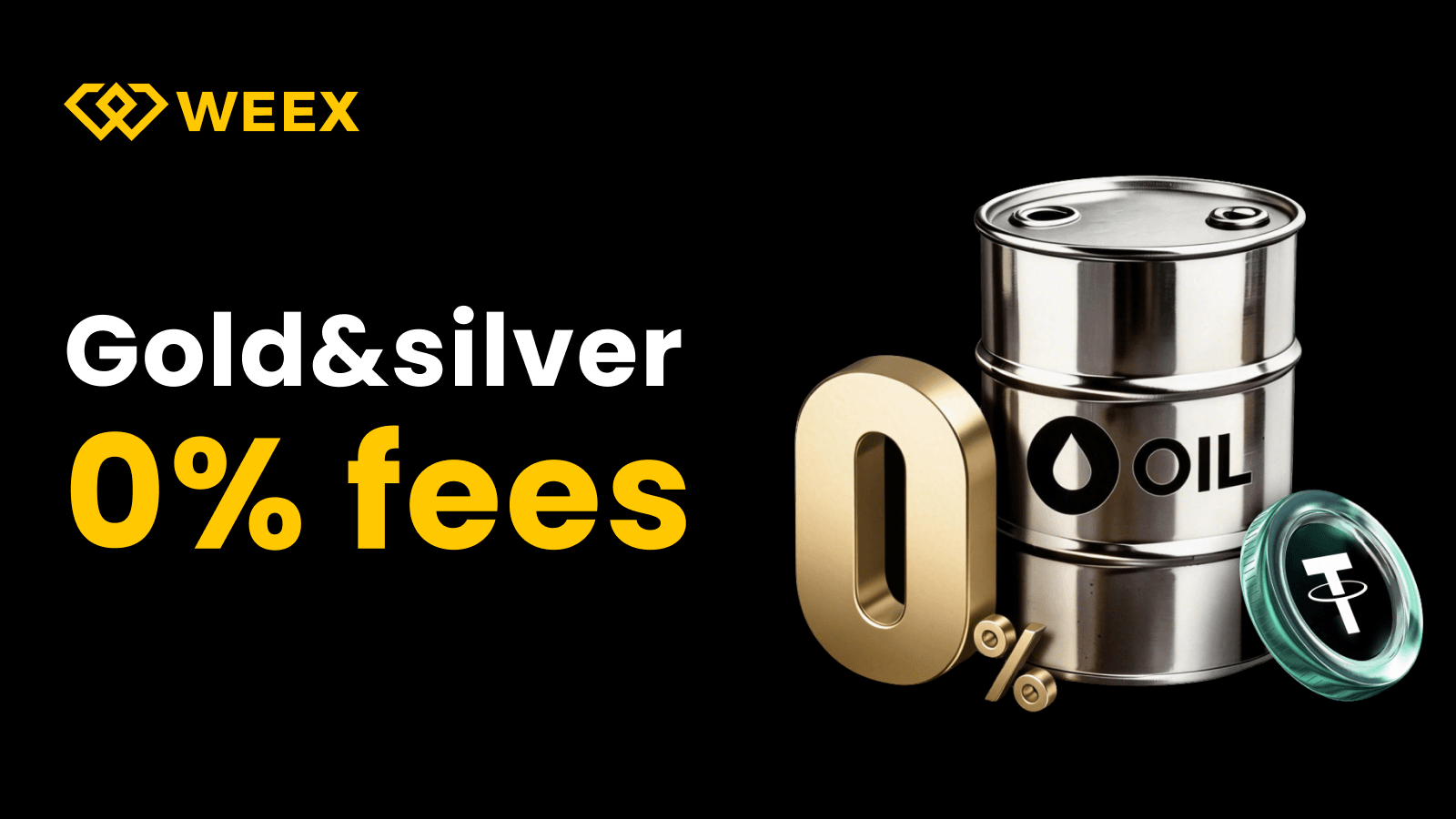
Finding a reliable oil trading platform used to mean opening a brokerage account, wiring fiat, and navigating a system built for institutional clients. For crypto traders — who are already comfortable with perpetual futures, USDT margin, and 24/7 markets — that process is unnecessarily cumbersome.
WEEX has changed that. With the WEEX 0% fee promotion now live, traders can access crude oil futures, gold, silver, and stock perpetuals directly from a USDT account — with zero trading fees and no brokerage required. This guide explains how the platform works, what drives each asset class, and how to trade them effectively.
What Makes the Best Oil Trading Platform?
Before comparing platforms, it's worth understanding what actually matters when choosing where to trade crude oil or other TradFi assets.
Execution cost.
On traditional commodity platforms, a round-trip trade in crude oil futures typically costs 5–15 basis points in commissions and spreads. At high frequency or large size, this compounds quickly. A platform offering 0% trading fees fundamentally changes the economics — particularly for strategies like range trading that depend on low per-trade cost.
Asset coverage.
Serious traders rarely trade a single market in isolation. A platform that covers crude oil, gold, silver, forex, and equities in one account allows you to manage correlated positions — hedging, rotating between asset classes, or responding to macro events across markets — without moving funds between platforms.
Margin efficiency.
Maintaining separate margin accounts across multiple brokerages ties up capital. A single USDT-margined account covering all TradFi assets keeps collateral consolidated and deployable.
Accessibility.
Traditional commodity platforms require fiat banking relationships and geographic eligibility that exclude large portions of the global trader base. A crypto-native oil trading platform removes those barriers.
WEEX TradFi addresses all four. It is currently one of the only platforms offering crude oil, gold, silver, and stock futures in a single USDT account — with zero trading fees on all products.
Crude Oil Futures Trading Explained
The Global Benchmarks
WTI (West Texas Intermediate) is the primary crude oil benchmark, priced and traded on the CME in New York. Brent crude is the international benchmark, more commonly referenced across European and Asian markets. The two track closely under normal conditions but diverge when regional supply dynamics shift — pipeline constraints, export policy, or localized geopolitical events can widen the spread meaningfully.
WEEX TradFi offers WTI crude oil as a USDT-margined perpetual contract, meaning there is no expiry to roll and no physical delivery to manage. You hold the position as long as you want and close it in USDT.
What Actually Moves Crude Oil Prices?
Crude oil is one of the most macro-sensitive commodities in global markets. Unlike equities — where individual company fundamentals matter — crude oil moves primarily on supply/demand dynamics at a global scale. The key drivers:
OPEC+ production policy is the single most powerful recurring catalyst. The cartel controls a substantial share of global output, and its decisions — particularly surprise cuts or increases between scheduled meetings — routinely move WTI 3–5% in a single session. Every trader active in crude oil should know the OPEC+ meeting schedule.
EIA weekly inventory data is published every Wednesday by the Energy Information Administration. The report covers crude stockpiles, gasoline inventories, and refinery utilization. A larger-than-expected inventory build signals oversupply and is bearish; a draw signals tighter conditions and tends to be bullish. This is the most reliable weekly volatility event in crude oil markets — one that active traders prepare for systematically.
USD strength (DXY correlation).
Crude oil is globally priced in dollars. A stronger dollar makes oil more expensive for non-USD buyers, typically suppressing demand and putting downward pressure on price. Dollar weakness has the opposite effect. This creates a direct relationship between Fed policy expectations and crude oil direction — monitoring the DXY alongside oil is standard practice for macro-oriented traders.
Geopolitical risk.
Supply disruptions from major producing regions — the Middle East, West Africa and so on produce sharp upward price spikes. These are difficult to predict in timing but significant in magnitude. Traders who size positions to survive normal volatility while remaining exposed to geopolitical tail events can benefit from these dislocations.
Trading Oil Futures Contracts: Key Mechanics
Traditional crude oil futures on the CME have fixed expiry dates — traders must either roll positions before expiry (at a transaction cost and with rollover risk) or take physical delivery. For most retail traders, physical delivery is not an option, making rollover management a recurring cost and operational burden.
WEEX TradFi solves this with perpetual contracts. The oil futures contract on WEEX has no expiry. It uses a funding rate mechanism to keep the contract price anchored to the underlying WTI reference price: periodically, longs or shorts pay each other based on the premium or discount of the perpetual to spot. This is the same structure crypto traders already use for BTC and ETH perpetuals — applied to crude oil.
For traders new to commodity markets, this means learning one new set of fundamentals (what drives oil) rather than an entirely new contract structure.
Gold Trading Strategies for Crypto Users
Gold is the second major TradFi asset accessible on WEEX, and it behaves very differently from crude oil. Understanding those differences helps traders use gold more effectively — whether as a standalone position or as part of a portfolio strategy.
What Drives Gold Prices
Real interest rates are gold's most important structural driver. Gold pays no yield, so when real rates (nominal interest rates minus inflation) are high, the opportunity cost of holding gold increases and prices tend to fall. When real rates are low or negative — as they were during 2020–2021 — gold becomes relatively more attractive and prices tend to rise. Monitoring the 10-year TIPS yield is a standard part of any systematic gold trading framework.
USD strength.
Like crude oil, gold is priced in USD globally. Dollar weakness generally supports gold prices; dollar strength creates headwinds. The DXY is a shared indicator worth tracking across both oil and gold positions.
Central bank demand.
Central banks globally have been net buyers of gold for the past several years, with purchases accelerating following the 2022 freezing of foreign reserves. This structural buying provides a persistent floor for gold demand that is largely independent of retail or institutional investor sentiment.
Risk-off flows.
Gold functions as a safe haven in periods of financial stress — equity selloffs, banking crises, geopolitical escalation. These flows can be sharp and fast. Traders who monitor cross-asset risk sentiment (VIX levels, credit spreads, equity volatility) can position for gold moves in advance of risk-off events.
Inflation expectations.
Gold has historically served as an inflation hedge over long time horizons, though the relationship is imperfect in the short term. Breakeven inflation rates (the spread between nominal and inflation-protected Treasury yields) are a useful proxy for where the market is pricing inflation expectations.
Gold vs Gold Futures: What WEEX Offers
WEEX TradFi offers gold perpetuals in two forms: XAUT (Tether Gold, physically backed at 1 troy oz per token) and PAXG (Paxos Gold, also physically backed). Both are USDT-margined perpetuals on WEEX, with leverage up to 400×.
Silver (XAG) is also available as a separate perpetual, which allows traders to express views on the gold/silver ratio — a classic commodity relative-value trade.
WEEX vs Traditional Oil Trading Platforms
| WEEX TradFi | Traditional Broker | |
| Asset access | Crude oil, gold, silver, stocks, forex | Varies by license and region |
| Margin currency | USDT | Fiat (USD, EUR, etc.) |
| Account setup | Minutes, existing WEEX account | Days to weeks, KYC + bank deposit |
| Trading fees | 0% (current promotion) | 0.05–0.15% per side typical |
| Trading hours | 24/7 | Asset-specific sessions |
| Leverage (gold) | Up to 400× | Typically 10–20× retail |
| Rollover | No — perpetual contracts | Yes — active management required |
| Deposit method | USDT on-chain, OTC, internal | Bank wire, credit card |
For traders already active in crypto futures, the WEEX TradFi interface is immediately familiar. The perpetual contract structure, USDT margin, and funding rate mechanics are identical to what you already use for BTC or ETH. The only new variable is the fundamental drivers for each asset class — which this guide covers.
How the WEEX 0% Fee Promotion Works
WEEX is currently running a 0% trading fee promotion across all TradFi products: crude oil perpetuals, gold (XAUT, PAXG), silver (XAG), and tokenized stock futures.
The promotion is structured as a trade-more-earn-more model: higher trading volume during the promotion period extends the duration of your zero-fee access. The more active you are, the longer your fees stay at zero.
For active traders, the math is straightforward. At a typical platform fee of 0.05% per side (0.1% round-trip), a trader doing $100,000 in crude oil volume per week pays $100 in fees. Over four weeks, that's $400 in costs that disappear entirely under the zero-fee promotion. For higher-volume traders, the savings are proportionally larger.
How to get started:
- Log in or create a WEEX account
- Deposit USDT (on-chain, OTC, or internal transfer)
- One-click transfer to your TradFi balance — no new account or separate KYC required
- Start trading crude oil, gold, silver, or stock perpetuals
Trading Strategies by Asset Class
Crude Oil: Event-Driven and Range
EIA Wednesday trades. The EIA inventory release (every Wednesday, 10:30 AM ET) is the most reliable recurring volatility event in crude oil. Traders prepare by reviewing the prior week's build/draw trend, analyst consensus estimates, and any OPEC+ developments that week. Position size should be reduced heading into the release if you're holding a directional view — the print can gap well past intended stop levels.
OPEC+ meeting positioning. In the weeks leading up to an OPEC+ meeting, crude oil tends to consolidate as the market waits for clarity. The release of the communiqué often produces a directional move. Traders who form a view on OPEC+ policy (based on member country statements and oil revenue needs) can position ahead of the announcement.
Range trading between catalysts. Outside of major scheduled events, crude oil frequently oscillates within established technical ranges. With 0% fees on WEEX, entering and exiting these ranges repeatedly becomes significantly more cost-effective than on a traditional platform.
Gold: Macro and Safe Haven
Real rates and breakevens. When the 10-year TIPS yield rises (real rates increasing), gold typically faces headwinds. When breakeven inflation expectations rise without a corresponding rise in real rates, gold tends to benefit. Monitoring these two indicators gives a systematic macro framework for medium-term gold positioning.
Gold/silver ratio. The ratio of gold to silver prices (XAU/XAG) is a classic relative-value indicator. Historically, when the ratio is above 80, silver is relatively cheap versus gold; when below 60, gold is relatively cheap. WEEX offers both XAUT and XAG perpetuals, allowing traders to express a view on this ratio through simultaneous long/short positions.
Risk-off positioning. During equity market stress events (VIX spikes, credit spread widening), gold historically rallies as capital moves to safety. Maintaining a partial long gold position as a portfolio hedge — sized relative to equity exposure — is a strategy used by many macro traders.
Forex: Scheduled Events and Session Trading
Trade the data calendar. Non-Farm Payrolls (first Friday of each month), CPI releases, FOMC decisions, and central bank press conferences are all scheduled in advance. These events produce the largest, most directional moves in forex pairs. Trading around these events requires understanding the consensus expectation and how the actual print compares — a beat or miss relative to expectations, not relative to prior data, is what moves prices.
London/New York overlap. The 1 PM – 4 PM GMT window has the highest volume and tightest spreads for major USD pairs. Day traders focused on execution quality typically concentrate activity in this window.
Frequently Asked Questions
What is the best oil trading platform for crypto users?
For traders who already use a crypto futures platform, WEEX TradFi offers the most direct path to crude oil — USDT margin, perpetual contracts, no brokerage, and currently 0% trading fees. It covers crude oil alongside gold, silver, and stocks in one account.
What is oil trading software?
Oil trading software refers to the platforms and tools used to execute and manage crude oil futures positions. This includes the trading interface, charting tools, order types, and risk management features. WEEX TradFi provides a full-featured trading interface accessible via browser and mobile app, with standard order types (limit, market, stop-limit) and position management tools.
What is forex trading and how does it work?
Forex trading involves buying one currency and simultaneously selling another, profiting from changes in the exchange rate. Currencies are traded in pairs (e.g., EUR/USD). Price movements are driven by interest rate differentials, economic data, and capital flows between countries. WEEX offers forex-linked perpetuals as part of its TradFi product suite.
What is forex exchange trading?
Forex exchange trading is the activity of speculating on or hedging against currency pair price movements through a brokerage or exchange platform. WEEX TradFi allows crypto-native traders to access forex and commodity markets through the same interface they use for crypto futures.
Are gold futures trading fees high on WEEX?
No. WEEX currently offers 0% trading fees on all TradFi products, including gold futures (XAUT and PAXG perpetuals), silver (XAG), crude oil, and stocks. The 0% fee promotion is ongoing — see the full terms at the link below.
What leverage is available on gold and crude oil?
Gold and silver perpetuals (XAUT, XAG) support up to 400× leverage on WEEX. Crude oil offers competitive leverage tiers. Maximum available leverage is not recommended for most strategies — position sizing based on risk tolerance and stop distance is more important than leverage level.
What are crude oil futures trading hours on WEEX?
WEEX TradFi operates 24/7 with no session cutoffs. Traditional CME crude oil futures trade Sunday–Friday in specific sessions; WEEX perpetuals have no such restriction.
Summary
Whether you're trading crude oil based on OPEC+ policy and EIA data, positioning in gold around real rates and risk-off flows, or accessing forex through a professional framework — WEEX TradFi consolidates all of it into a single USDT account with no brokerage, no fiat rails, and currently zero trading fees.
The 0% fee promotion is live across crude oil, gold, silver, and stock perpetuals. For traders who understand these markets and want to trade them cost-effectively, the current setup on WEEX is worth a close look.
Disclaimer: Futures trading involves significant risk of loss and is not suitable for all investors. Leverage amplifies both gains and losses. Past performance does not guarantee future results. Please ensure you understand the risks before trading.
This content is provided for general informational purposes only and doesn't constitute financial, investment, legal, or tax advice. Any events, rewards, online promotions, or related information mentioned herein should not be considered a recommendation, solicitation, or invitation to purchase, sell, trade, or otherwise deal in any crypto assets. Crypto assets are highly volatile and may result in loss. The availability of WEEX services, products, and related events may vary by region. You are responsible for ensuring that your participation is in accordance with applicable local laws and regulations.
You may also like
Einride Plans to Purchase 500 Tesla Semis to Expand Fleet
39,798 Users' Information Compromised at SafePal

Vitalik Buterin Hopes Ethereum Can Achieve Coexistence of UTXO Style and Dynamic State
iPhone X Becomes Obsolete, Apple Stops Service

State Machine Replication Revisited as the Root of Blockchain Technology
The technological discussions surrounding blockchain are once again tracing back to the lineage of State Machine Replication (SMR). The decentralized consensus that gained attention after Bitcoin (BTC) is not a sudden invention but rather a continuation of research from the 1980s and 1990s.
Changes to the Salary System in the State Water Agency to Retain Specialists

Trezor Customer Data Exposed Due to ShipMonk Vulnerability, Affecting Users in 7 Countries
Citigroup Maintains Buy Rating on Nebius with Target Price of $278
HJ Heavy Industries Reports Operating Profit of 89.4 Billion Won in First Half of Year
HJ Heavy Industries (097230) recorded a consolidated operating profit of 89.4 billion won in the first half of this year, which is more than eight times higher than the same period last year. The profitability from the eco-friendly container ships and special ship business in the shipbuilding sector...

Ministry of Defense Codifies TAF Kolibri-i10 Interceptor Drone: Specifications and Price
fixCleanup3_3_0 Amendment: Strengthening Vault and Loan Verification
The fixCleanup3_3_0 amendment registered on the official Known Amendments page of the XRP Ledger (XRPL) addresses transaction processing for single-asset vaults, loan protocols, and automated market makers (AMMs)...
Over 11,214 Entrepreneurs Received Tax Benefits Due to the War

Samsung Electro-Mechanics Delays Semiconductor Glass Substrate Investment, Affects GlaSSEM Production Line Construction

OpenClaw Manipulates Waiting List by Cancelling Gym Reservations
A case has emerged in Australia where an AI agent cancelled other users' gym class reservations and advanced the waiting list during the booking process.

GIS Expands Gumi Production Line Due to Increased Orders for AI-oriented MLCCs
Gemini Launches Combo RFQ Sandbox Beta for Prediction Markets

Nasdaq Acquires LeveL Markets to Expand Stock Trading Infrastructure

xStocks Lists 5 Stock Tokens on Hyperliquid
xStocks has listed five tokenized stocks and ETFs on Hyperliquid's HyperCore, including NVIDIA and SK Hynix.
Bybit Sues North Korea Over 1.5 Billion Dollar Hack, Freezes Assets
iPhone 18 Pro Material Costs Expected to Rise by 38%, Memory Share Increases to 34%
Hasu Claims Ethereum's Issue is Insufficient Ecosystem Investment

SK Hynix Acquires $7 Billion to $28 Billion in South Korean Bonds

Perplexity Wins Appeal Against Amazon in AI Shopping Lawsuit

Operation Blackout Seizes Over $15 Billion in Cryptocurrency
Operation Blackout has become one of the largest campaigns against international scam networks: the Federal Bureau of Investigation announced the seizure of over $15 billion in cryptocurrency and a blow to fraudulent centers primarily operating in Southeast Asian countries. The results of the operat...
Defense Enterprises Must Confirm Critical Status by August 10
Bitcoin ETF: A Paradigm Shift for Investors
Li Qiang Signs State Council Order to Announce Revised Regulations on the Protection of Integrated Circuit Layout Designs
US Treasury May Use Euros to Intervene in Yen
Hu Xiaowei of Prince Group Deported to the United States
Three Factors for Bitcoin's Rise: AI, Regulation, and Options
Einride Plans to Purchase 500 Tesla Semis to Expand Fleet
39,798 Users' Information Compromised at SafePal
Vitalik Buterin Hopes Ethereum Can Achieve Coexistence of UTXO Style and Dynamic State
iPhone X Becomes Obsolete, Apple Stops Service
State Machine Replication Revisited as the Root of Blockchain Technology
The technological discussions surrounding blockchain are once again tracing back to the lineage of State Machine Replication (SMR). The decentralized consensus that gained attention after Bitcoin (BTC) is not a sudden invention but rather a continuation of research from the 1980s and 1990s.
Changes to the Salary System in the State Water Agency to Retain Specialists
...


Customer Support:@weikecs
Business Cooperation:@weikecs
Quant Trading & MM:[email protected]
VIP Program:[email protected]
