
Gary's class is over, what is SEC Acting Chair Uyeda's first move?


Original Title: "Mark Uyeda Takes Over from Gary Gensler, Beginning of SEC's Change in Direction"
Original Author: Azuma, Odaily Planet Daily
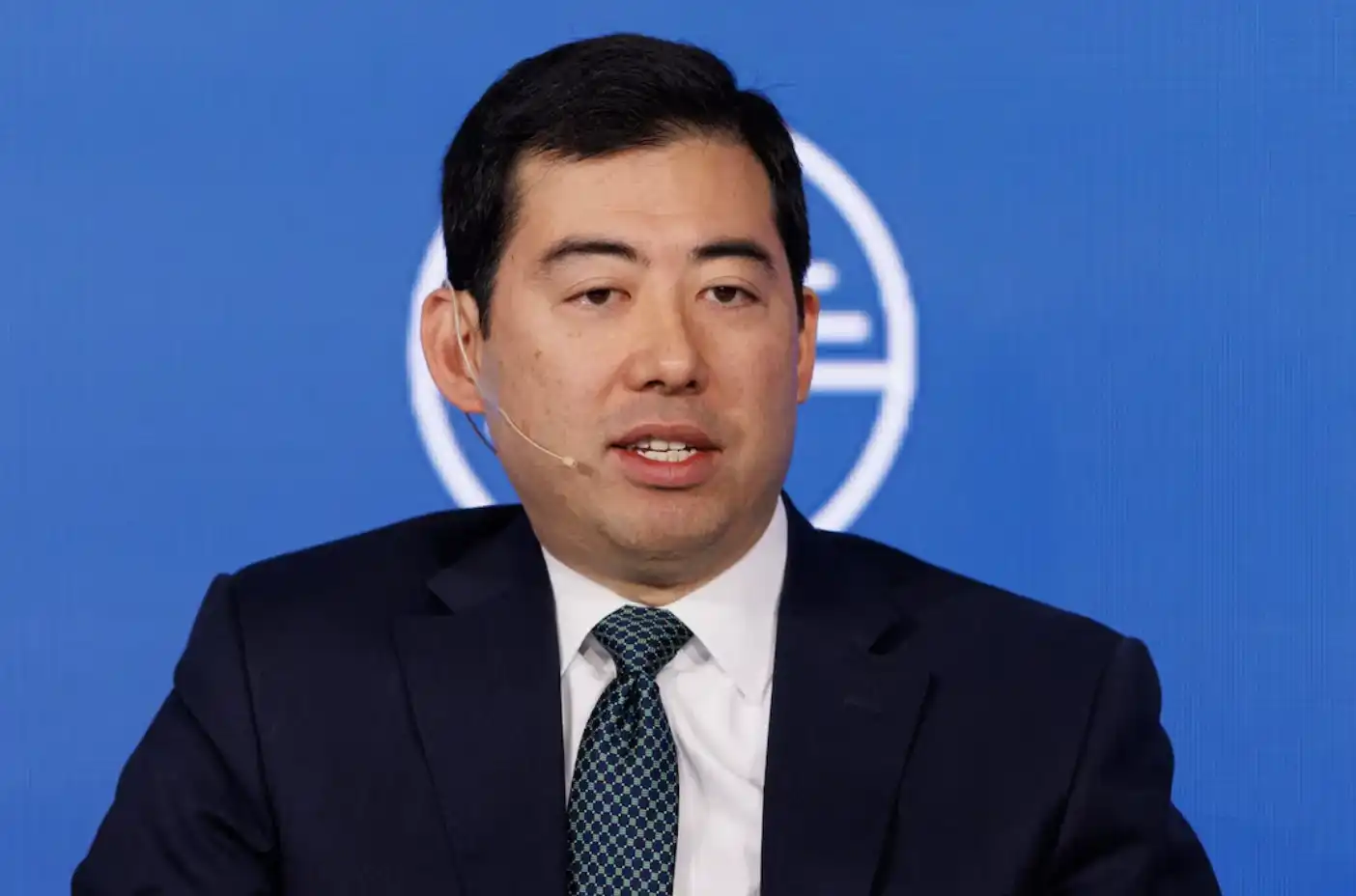
In the early hours of January 21, the U.S. Securities and Exchange Commission (SEC) officially released a statement announcing that today would be Gary Gensler's last day as SEC Chair. The SEC's figurehead, who has been entangled with the cryptocurrency industry for over three years, finally bid farewell.
Shortly thereafter, the White House once again issued a document announcing that current SEC Commissioner Mark Uyeda would serve as Acting SEC Chair. He will temporarily lead the SEC, a crucial industry regulatory body, until the new SEC Chair (expected to be Paul Atkins) is determined and takes office.
Uyeda is a Republican member and has been an SEC Commissioner since June 30, 2022. Prior to becoming a Commissioner, Uyeda worked at the SEC for over 15 years, accumulating rich frontline work experience.
What Is His Attitude Toward Cryptocurrency?
When it comes to cryptocurrency, Uyeda has always maintained a friendly attitude and has been viewed by the industry as a staunch ally within the SEC, alongside "Crypto Mom" Hester Peirce.
Regarding last year's ETF resolution concerning the industry's development as a whole, Uyeda also cast a crucial approving vote.
Despite being at the SEC, Uyeda does not agree with Gary Gensler's aggressive enforcement approach toward the industry and has, along with Peirce, opposed multiple enforcement actions launched by the SEC against industry projects.
In October last year, Uyeda stated in an interview with Fox Business that Trump had described the SEC's past actions as a "war on cryptocurrency" and that this situation must be ended, with clearer regulatory guidelines established.
"I think our policies and practices over the past few years have been a real disaster for the entire crypto industry. We've been enforcing a 'mandatory enforcement policy' and we haven't done anything to provide guidance."
Last week, Reuters reported that several sources revealed that senior Republican officials at the SEC are preparing to immediately reform the agency's cryptocurrency policy after Trump takes office. Measures being considered by Uyeda and Peirce include initiating relevant procedures, ultimately establishing guidance or rules, clearly defining under what circumstances the agency will consider cryptocurrency as securities, and reviewing some cryptocurrency enforcement cases currently in court.
SEC Succession Update
It is important to note that Uyeda is only the Acting Chair of the SEC. Former SEC Commissioner Paul Atkins has been nominated by Trump to officially take over the agency, but it is currently unclear when Atkins' appointment will be approved. It is expected that Uyeda will continue to make some substantial policy changes as the interim leader of the agency until Atkins takes over.
As for potential attitude changes after Atkins assumes the role, there is no need to be overly concerned. Atkins was previously a subordinate of Peirce and Uyeda. While he has made relatively few explicit statements about cryptocurrency, he has publicly criticized the SEC for its overregulation of the cryptocurrency industry.
Considering his past experience and potential attitude, Atkins' stance is expected to lean towards supporting cryptocurrency.
CFTC Transition Underway
In addition to the SEC, another key regulatory agency, the Commodity Futures Trading Commission (CFTC), is also undergoing a transition. Rostin Behnam has stepped down, and Trump has nominated Caroline Pham to serve as the Acting Chair of the CFTC, with expectations of later becoming the permanent chair.
Similar to Atkins, although Pham has not been as outspoken as Uyeda in admitting support for cryptocurrency, the market still anticipates that Pham will hold a relatively friendly attitude towards the industry.
The Beginning of a Shift in Regulatory Direction
With Trump officially in office and core regulatory agencies such as the SEC and CFTC undergoing transitions, the shift in cryptocurrency regulation has begun.
For the cryptocurrency industry, which has long been plagued by regulatory challenges, the next few years may be some of the most lenient in the industry's history—although this period of somewhat politically motivated "honeymoon" is inherently fragile.
Idealists who believe in decentralization may complain that the current political environment is far from what Satoshi Nakamoto envisioned when writing the Bitcoin whitepaper. However, from a realist perspective, the upcoming regulatory spring may be the best opportunity for all industry participants to seek development.
You may also like

Latest research from 13 top universities including Cornell University: The current state, challenges, and misconceptions of the fusion of Crypto and AI
Deconstructing Anthropic: The Best AI Company, Possibly Also a Type of Organizational Invention
Apollo and Blackstone Reportedly Back $35 Billion Anthropic Chip Financing as Deal Details Remain Unclear
On June 9, according to currently available news alerts, Apollo and Blackstone Group participated in a $35 billion financing for an Anthropic “chip project.” Based on the original wording of the report, the funding has already been raised, but public information remains limited. The financing structure, use of proceeds, project entity, and whether Apollo and Blackstone participated through equity, debt, or project financing have not yet been disclosed.

Humanity Protocol Security Incident Escalates: More Than $31 Million Stolen From Related Addresses as Attacker Continues Selling H for ETH
On June 9, according to monitoring by Onchain Lens, more than $31 million has been stolen from addresses linked to Humanity Protocol, and the attack is still ongoing, with the hacker continuously swapping H tokens for ETH. Project founder Terence Kwok later confirmed the security incident on X, saying the issue involved a private key leak.

Bloomberg: As Bitcoin Weakens, Stablecoins and RWA Continue to Drive Expansion in Crypto Businesses
In June, Bloomberg reported that despite Bitcoin falling below $60,000 last week, wiping out about $235 billion in market value within seven days, and dropping close to 50% from last year’s peak, some core businesses in the crypto industry are still expanding, mainly in stablecoins, real-world asset tokenization (RWA), payments, and infrastructure. The report also noted that overall altcoin activity has contracted significantly: altcoin market capitalization has fallen from a peak of about $431 billion in November 2021 to around $170 billion, and among the tens of millions of tokens issued in recent years, fewer than 1,700 still maintain meaningful trading activity.

Galaxy Deep Research Report: How Hyperliquid's HIP-4 Upgrade Changes the Landscape of Prediction Markets?
Binance Research: RWA Market Expected to Expand Nearly 6x from Early 2025, with Public Equities and Onchain Payments Heating Up Together
In June, Binance Research said in its monthly market report that the real-world asset (RWA) market is expected to grow by about 589% from the beginning of 2025. Bond- and money market fund-related RWA expanded by about $6.5 billion, up 83% year over year, while publicly traded equity RWAs grew by about 422%. The report also noted that monthly crypto debit card transaction volume exceeded $747 million in May, up 48.6% year to date.

Japan to Assess a Framework for Yen Stablecoins and Crypto ETFs as Asia’s Compliant Payments Narrative Heats Up
Recently, according to the original report, Japan is considering the launch of yen stablecoins and cryptocurrency ETFs. Public information remains limited at this stage, and there is still no complete policy text, regulatory draft, or clear implementation timeline, so this is better characterized as a “policy discussion” rather than formal implementation. The original wording also noted that advancing stablecoin regulation in Asia is driving XRP usage and supporting growth in the XRPL ecosystem. However, based on currently available public information, there is not enough evidence to directly establish a clear causal relationship between this round of discussion in Japan and XRP or XRPL.

ZachXBT: Humanity private key leak and abnormal surge in H token should be viewed separately
On June 9, according to related disclosures, on-chain investigator ZachXBT posted an update on Humanity’s roughly $31 million security incident, saying that after further analyzing fund flows, he currently tends to believe the project team was not involved in an “inside job” or a self-staged attack. According to him, the official explanation about the private key leak was broadly accurate, but before the token unlock, the price of H had been artificially pushed higher, and the hacker later took advantage of that market environment; therefore, the private key leak and the earlier abnormal price pumping should be regarded as two separate and independent events. This reframing has shifted the market’s understanding of the nature of the incident. Earlier discussion around Humanity had focused on whether the team directly participated in the attack or used the security incident to cover up internal operations. ZachXBT’s latest remarks shift the focus from “whether it was self-theft” to “whether there were pre-unlock market structure issues.” He also questioned whether the team may have.

Morning Report | OpenAI has submitted an S-1 registration statement draft to the U.S. SEC; Morpho completes $175 million financing

Morning Report | BitMine increased its holdings by 126,971 ETH last week; trader Eugene announced his exit from the crypto market

Wang Chuan: How can one not feel anxious after the neighbor Old Wang made thirty times profit by investing in storage stocks? (Seven) - A quarter-century cycle
Cryptocurrency CEXs are flocking to sell US stocks, and traditional brokerages are facing an "uninvited guest."
$75 billion in foreign capital has fled, and South Korean retail investors have absorbed it all using leverage

Japan’s Three Megabanks Plan Joint Stablecoin Issuance in Fiscal 2026
MUFG, SMBC, and Mizuho reportedly plan to jointly issue fiat-pegged stablecoins in fiscal 2026, signaling Japan’s growing push into bank-led digital payment infrastructure.

Humanity Discloses H Token Dual-Chain Attack Details, With Losses on Ethereum and BSC Exceeding $36 Million
Humanity said the H token attack across Ethereum and BSC caused more than $36 million in losses after leaked ProxyAdmin keys enabled malicious contract upgrades and token minting.
White House Discusses CLARITY Act With Law Enforcement Ahead of Senate Vote
The White House discussed the CLARITY Act with law enforcement ahead of a Senate vote, focusing on illicit finance risks and developer protections.

Bitcoin Trading Guide 2026: Strategies for Experienced Traders
Latest research from 13 top universities including Cornell University: The current state, challenges, and misconceptions of the fusion of Crypto and AI
Deconstructing Anthropic: The Best AI Company, Possibly Also a Type of Organizational Invention
Apollo and Blackstone Reportedly Back $35 Billion Anthropic Chip Financing as Deal Details Remain Unclear
On June 9, according to currently available news alerts, Apollo and Blackstone Group participated in a $35 billion financing for an Anthropic “chip project.” Based on the original wording of the report, the funding has already been raised, but public information remains limited. The financing structure, use of proceeds, project entity, and whether Apollo and Blackstone participated through equity, debt, or project financing have not yet been disclosed.
Humanity Protocol Security Incident Escalates: More Than $31 Million Stolen From Related Addresses as Attacker Continues Selling H for ETH
On June 9, according to monitoring by Onchain Lens, more than $31 million has been stolen from addresses linked to Humanity Protocol, and the attack is still ongoing, with the hacker continuously swapping H tokens for ETH. Project founder Terence Kwok later confirmed the security incident on X, saying the issue involved a private key leak.
Bloomberg: As Bitcoin Weakens, Stablecoins and RWA Continue to Drive Expansion in Crypto Businesses
In June, Bloomberg reported that despite Bitcoin falling below $60,000 last week, wiping out about $235 billion in market value within seven days, and dropping close to 50% from last year’s peak, some core businesses in the crypto industry are still expanding, mainly in stablecoins, real-world asset tokenization (RWA), payments, and infrastructure. The report also noted that overall altcoin activity has contracted significantly: altcoin market capitalization has fallen from a peak of about $431 billion in November 2021 to around $170 billion, and among the tens of millions of tokens issued in recent years, fewer than 1,700 still maintain meaningful trading activity.
Galaxy Deep Research Report: How Hyperliquid's HIP-4 Upgrade Changes the Landscape of Prediction Markets?


