
Silk Road Founder Ross Ulbricht Interview: What Was My Life in Prison Like Before Being Pardoned by Trump? | In-Depth Conversation


Original Interview: Bitcoin Magazine;
Guest: Ross Ulbricht, Founder of Silk Road;
Original Translation: Ashley, BlockBeats
Editor's Note: This interview took place in 2021, marking the first public statement by Silk Road founder Ross Ulbricht since the closure of the website. During the call, he reflected on the original intent behind creating Silk Road, expressed his belief in freedom and privacy, and deeply apologized for the consequences that followed. Ross described his painful experiences in prison and concluded the interview by once again expressing his strong hope for the future of Bitcoin. This interview is not only his personal plea but also a call for social justice and human dignity.
The following is the original content (slightly edited for better readability):
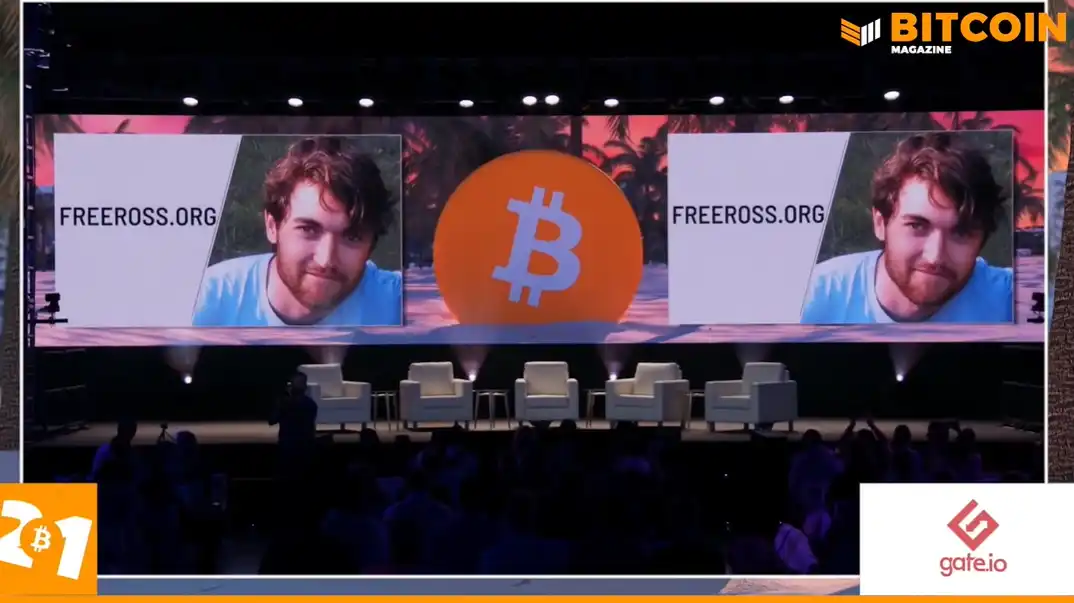
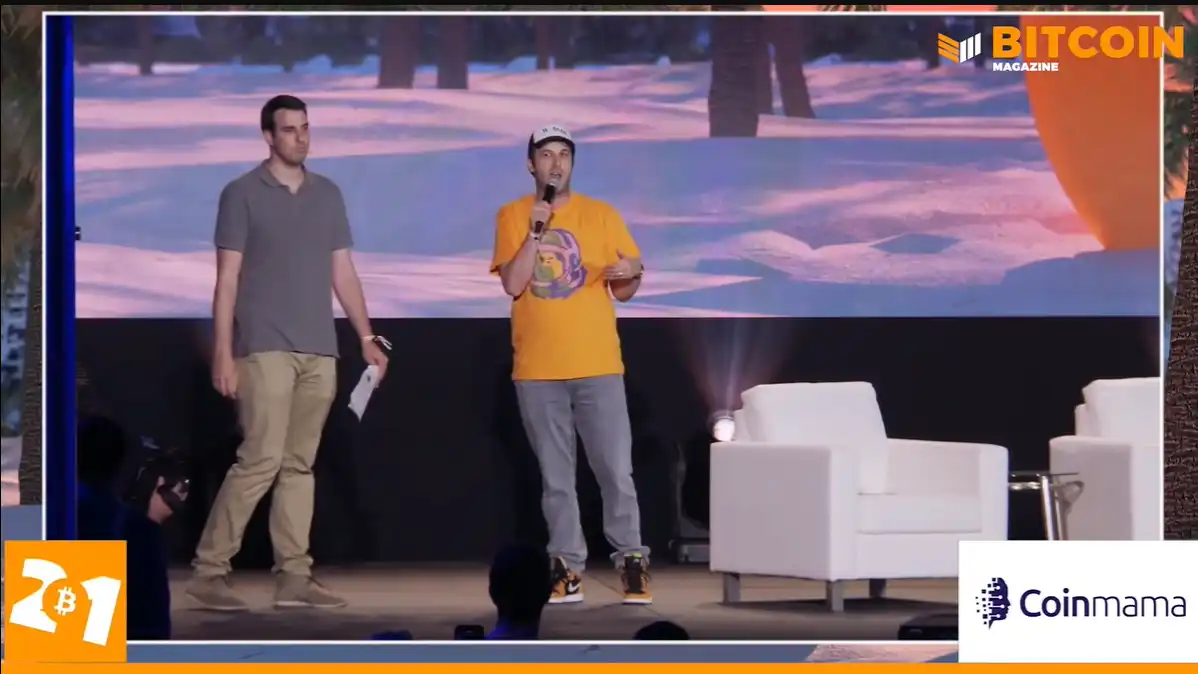
David Bailey (Bitcoin Magazine): I'd like to introduce Peter Chawaga from the Bitcoin Magazine team. I must say, it's a great honor to have the opportunity to interview our next guest. This is his first interview with Bitcoin Magazine, truly a historic moment. I'm extremely proud of Peter's work. Also, if you don't have tissues, please get them now because by the end, you might cry, okay?
Peter Chawaga (Bitcoin Magazine): Thank you, David. Today, we've discussed many exciting topics and revisited the various amazing stories surrounding Bitcoin over the years. But this part is truly special. So I thank you all for being here, and I really feel this moment deserves all the attention. So before we play the recording, I've prepared a statement to introduce the content to everyone. Like many in the room, my first encounter with Bitcoin's real-world application was through a platform called Silk Road. It went live in 2011, a website accessed through IP-obfuscating software where users could buy and sell goods in a censorship-resistant manner. It quickly became Bitcoin's first major use case, perfectly in line with many of the unique features of Bitcoin that we celebrate and are proud of today. It provided users with a free, open, and censorship-resistant market.
The founder of Silk Road was a 26-year-old libertarian, a research scientist, entrepreneur, and early Bitcoin adopter named Ross Ulbricht. Less than three years after the website went live, it was shut down, and Ross was arrested by federal authorities. Despite being a first-time offender and not convicted of a violent crime, he was sentenced to two life sentences plus 40 years. He has now served nearly eight years. Earlier this week, I had the opportunity to interview Ross from prison, and today we will share the recording of that interview. This is Ross's first public comment via phone since Silk Road's closure.
Before we begin, I'd like to share my personal impressions from talking to Ross. My impression of him is that he is a kind, gentle, and surprisingly positive person, especially given his circumstances. He did not give me any impression of violent crime, yet the media often portrays him as such. When you hear his voice, I know Ross is a legendary figure in this circle and the broader field, but I want you all to remember he is a flesh-and-blood person. He faces the possibility of never gaining freedom, but he maintains hope and strength in a way that has left a deep impression on me. So, now please listen to this recording, I hope you enjoy.
Ross Ulbricht: Hello.
Peter Chawaga (Bitcoin Magazine): Hello Ross, this is Peter from Bitcoin Magazine.
Ross Ulbricht: Hello, I'm Ross Ulbricht, calling you today from a federal maximum-security prison. We don't have much time today, and I'm not sure if there will be another opportunity to talk like this. I'll try to say as much as I can, but when time's up, I'll have to hang up and go back to my cell. I have lost my freedom, and that's what I want to talk to you about today. I want you to understand what losing freedom means. But first, let's talk about Bitcoin.
I was involved in the early development of Bitcoin. Back then, Bitcoin made me feel like anything was possible. Bitcoin was for everyone, and that's why I liked it the most. It felt like it put everyone on an equal footing. When the concept of Bitcoin truly dawned on me, I was thrilled. I thought through Bitcoin, I could try to do something truly meaningful. By the way, before I went to jail, there weren't as many cryptocurrencies, tokens, and various blockchains as there are now. I missed all of that. So for me, it's all one thing: forks, new blockchains, all of that. When I say Bitcoin, I don't differentiate among these. It may sound cliché, but to me, we are family.
At that time, I was very excited but also very impatient. I saw potential in Bitcoin for freedom and equality, but I didn't take the time to truly understand its principles, such as immutability, consensus, and of course, decentralization. I had many grand dreams for Bitcoin, and these dreams are slowly coming true today. It's because of you, you are making those dreams a reality. You are doing what I didn't have the patience to do back then. Over the past eight years, I have been amazed time and time again by the progress we have made.
However, at that time, I was too impatient. I rushed into my first idea—the Silk Road. It was a website I created when I was 26, which is now over a decade ago. It used Bitcoin to protect people's privacy. I called it an anonymous marketplace. Back then, I thought, if Bitcoin could make payments anonymous and private, why were we waiting? Why just talk about it? Let's take action! It was the impulsive act of a 26-year-old who thought he had to save the world before anyone else. I didn't know if the Silk Road would be successful, but now we all know that it did become popular. It was used for drug trafficking, and I ended up in prison because of it. I was sentenced to two consecutive life terms without parole plus 40 years. I was a non-violent first-time offender, but none of that mattered. I would have to spend the next few decades, or even longer, in this cell until someday in a century, I would grow old and die in prison, finally leaving in a body bag.
A few days ago, I received a letter from a stranger. He thanked me for launching the Silk Road back then. He believed that without the Silk Road, Bitcoin couldn't have developed to where it is today. I'm not sure. But for better or for worse, the Silk Road has become a part of Bitcoin's history. Yet, I also worry that by launching the Silk Road, I may have made our path even more difficult. We will never know how things would have been different if history had taken another course, but I want to say that if my actions have made our journey harder, I am sorry. If my actions led to drug abuse and addiction, I am sorry. I was just trying to do a good thing, trying to help us move towards a freer, more equal world. But as we all know, the road to hell is often paved with good intentions. And now, here I am in hell.
I want you to understand what losing freedom means. Let me start with the "SHU." It goes by many names—“the hole,” “segregated housing,” “the box”—but to me, it's “the abyss.” The abyss is the prison within a prison. I was once kept in the abyss for four straight months. It's not easy for me to talk about, but I will try to tell you. The abyss can break a person or remake them. There was a time when I felt my mind slipping. I felt the walls closing in on me, and I felt like I had to get out of that small room. This feeling persisted for days, and then I started pounding on the walls, kicking the thick iron door. Deep inside, there was a yearning for freedom crying out. I couldn't accept being there or what was happening to me.
But eventually, I realized I had to pull myself together. This pressure was destroying me. It may sound strange, but what saved me was gratitude. What could I be grateful for in such a small room? Well, I had air, right? Maybe it was stale air, but I could still breathe. I had water to drink, though it might not be clean, it didn't make me sick. Food would come through a small slot in the door every day. I knew I wasn't forgotten. My family, I knew they were still waiting for me, and someday all this would end, and my family would still be there.
I have forgiven everyone who has brought my life to this point. I had to do it. Because anger cannot hurt them, it can only hurt me, so I have to let go. I had a dream in the abyss, dreaming that I was free. I was in a park, feeling a tremendous sense of relief. I was no longer imprisoned. But then I started to worry, was I released on bail? Will they put me back in? I started to think about escape, and that anxiety woke me up. When I woke up, I was back in the abyss. At that moment, everything that had happened to me—life imprisonment, maximum security prison, months of solitary confinement—all came crashing down on me all at once.
I want you to understand what losing freedom really means. After I was sentenced, my mother went on a tour in Europe, speaking about my ordeal and seeking help. During her time in Poland, she started feeling unwell and had to return home early. The next morning, I called my sister from prison. As soon as she answered the phone, she said, "You don't know about Mom, do you?" I asked her, "What happened to Mom?" She answered in a voice that shook me to the core, "Oh, Ross, Ross, Ross." Upon hearing this, I immediately understood that my sister might be telling me that our mother had passed away.
But then she continued, "Mom is in the hospital." When I heard that, I breathed a sigh of relief, thinking, "Thank goodness, she's not dead." But then I thought, "In the hospital, that's also not good news." In fact, my mother's heart stopped during breakfast, and my uncle performed CPR to save her. She was then rushed to the hospital. When I called, she was still in a coma in the hospital, and we didn't know if she would survive or if there would be brain damage. Although no one said it directly, I knew it was my fault. From the day I was arrested, she had not had a day of rest in two years. She worked tirelessly every day for my freedom, enduring immense pressure until her body couldn't take it anymore.
The doctor said she had a condition called "stress-induced cardiomyopathy," I call it "broken heart syndrome." I broke my mother's heart and nearly killed her. The pain I brought to my family is indescribable. When I took the risk initially, I did not consider them enough. Thank God, my mother made a full recovery. Eight years have passed, and she still works for me every day. But the whole ordeal, my imprisonment, was devastating for her. The same goes for my fiancée, my father, my sister, and the whole family. They are all suffering.
I want you to understand that losing freedom is not just being locked in a cage, nor is the devastating blow this imprisonment brings to your family. Locking a person in a cage until they die is the cruelest torture of a person. In order for the public to accept such punishment, people must be convinced to believe that this person is evil, an inhuman existence. After my arrest, a prisoner came up to me holding a magazine. He said to me, "Ross, they wrote an article about you in the magazine." I opened the article and saw an illustration. The face in the drawing had similar features to mine, but the skin was waxen yellow, the eyes bloodshot, and my body bent like a monster. I couldn't face that image, so I threw the magazine aside. I felt a pain in my chest as if it were being torn apart by claws.
The prisoner said, "At least see what they are saying." I asked him, "Why? Why listen to others slander you, lie, and not be able to refute?" He fell silent. Later that day, he told me that they had also treated him this way, smearing him on national television news. It was an article in the local newspaper, but to each one of us, it was the same. That's why I didn't want to read it. He tore that article out, shredded it into pieces, and threw it into the trash can. He said, "I don't want to read it either." That meant a lot to me. He said, "I don't want to read it either." This gave me hope—hope that you won't see me as a monster.
They have portrayed me as a violent drug lord, but that's not who I am. It's a lie, a carefully crafted lie, used to justify locking me up until death. This lie is meant to make you indifferent towards me, to close your hearts to me. They lied in court records, they cheated, there is a record of it. They stole, two detectives ended up in jail for it. These are all documented facts. They tampered with evidence, destroyed evidence, and planted false evidence. These are all on record.
At one point, they even researched how to sentence me to death. They considered injecting chemical agents into my veins to stop my heart. I once dreamt of a person holding a syringe aimed at my chin, getting closer and closer. I was backed against a wall, every muscle tensed, trying to escape. When the syringe's needle tip almost touched my skin, I woke up. Upon waking, I found myself holding the same tense posture from the dream, gasping for air, heart pounding. I could still feel the needle inching closer in my fear.
Do you begin to understand what losing freedom means? It means living in constant fear. So why did it take me so many years to speak to you? Because I was afraid. Even now, I am strongly warned against speaking to you. They tell me it will only enrage the authorities, making the tiny bit of chance I have left in court disappear completely. I don't intend to anger anyone, yes, I am afraid. Afraid of retaliation, afraid that because of speaking to you today, I will be thrown back into the 'abyss' or face even worse. But I've learned that blindly obeying fear can be as dangerous as completely ignoring it. Eight years have quietly slipped by. In these eight years, I tried to block out those lies, focus only on surviving each day, and stay strong for my family. But today, right now, I want to convey a message to those who care about me and those who mindlessly repeat those lies: please stop. You are hurting me. Please stop. You know what you are saying is not true. You are hurting me and my family. Please stop.
I want you to understand what losing freedom means. Ironically, when I created the 'Silk Road,' it was because I wanted to advance what I care about—freedom, privacy, and equality. But because of the 'Silk Road,' I ended up in a place where these values don't exist. I am not the only one. The prison is filled with people who should not be incarcerated. We are mothers, fathers, sisters, brothers, but in your eyes, we are depicted as monsters, deprived of our human dignity.
However, there is Bitcoin. From the first block of the blockchain, Bitcoin has been changing the world. Let me tell you one thing: we are just getting started. Every time Bitcoin is accepted somewhere in the world, freedom and equality follow. Bitcoin is a symbol of freedom.
Now look at the situation we are in. On one side is lost freedom, despair, and darkness; on the other side is Bitcoin, freedom, equality, and hope. These two cannot coexist, so the darkness must be concealed, ignored. But please hear me, I am shouting to you from that darkness. This is a cry for help. My mother cannot do it all alone. I am crying out not just for myself, but for all of us. We need your help. We need you to see a stark contrast between free Bitcoin and imprisonment until death. Today, now, we have a choice. Are we going to ignore what is happening? Ignore the loss of freedom? Ignore the dehumanizing treatment? Or are we going to wake up?
Listen, Bitcoin is powerful, Bitcoin has power. We also have power, but our work is not done. It is time to wake up, it is time to take the next step. In the past eight years, I have witnessed the growth of Bitcoin. I have seen incredible innovation, seen inspiring courage. In the early days of Bitcoin, we did not know how it would develop. But over the years, you have made me admire you immensely time and time again. You make me proud, and I have no doubt, we can achieve any goal.
We are changing the global economy, bringing the breath of freedom and equality to every corner of the world. I know we can also change the criminal justice system. Today, I challenge you to look at the most difficult issues. I challenge you to illuminate those darkest corners with the light of Bitcoin. I challenge you to let us gain freedom.
I have seen some of my friends come home after serving many years or even decades in prison. Some have even been released from life sentences. Every time something like this happens, I am moved to tears. Seeing a person regain freedom, seeing them reunite with their family, the feeling is unparalleled. It is beautiful, and painful, like a miracle. We need more miracles.
I will hang up soon. But I don't want to leave. I don't want to go back to that cell. I want to be with you. Today, talking to you is the greatest freedom I have felt in a long time. Thank you, thank you for your attention. I will never forget this day. The memory of this day can never be taken away.
Well, I have to go now. Thank you, goodbye.
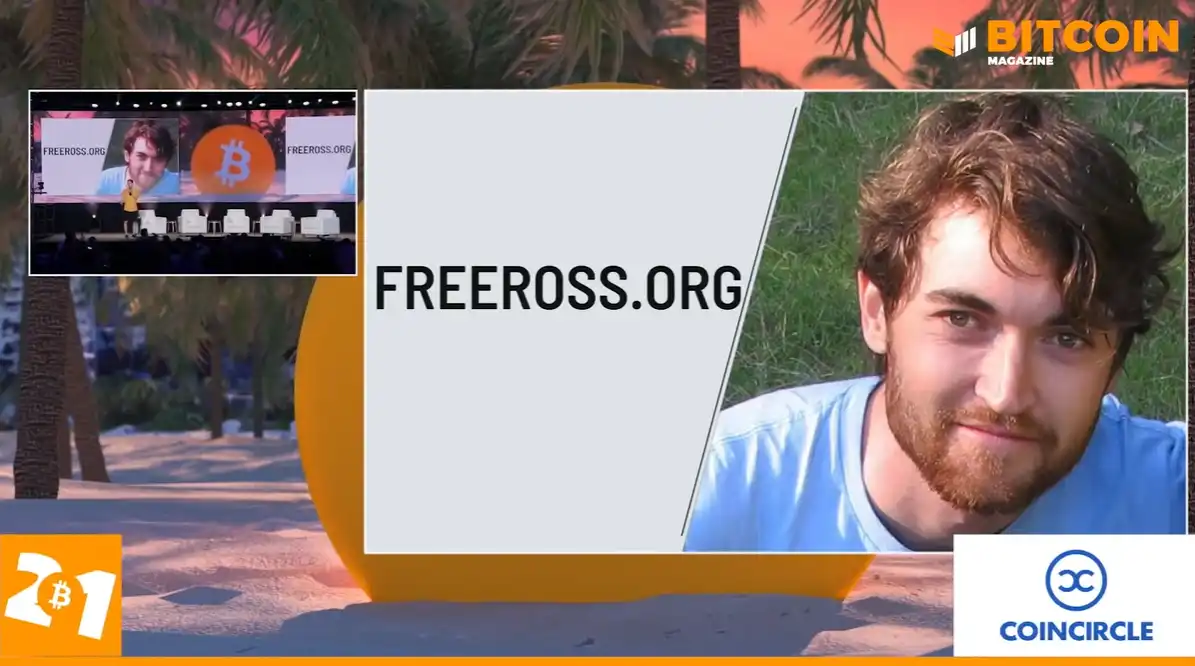
(Audience Applause)
David Bailey (Bitcoin Magazine): Ladies and gentlemen, today we are truly fortunate. Lyn (Ross's mother) is also here with us. If you see her, please give her a hug for Ross, for all of us. This is what Bitcoin is all about — it's about freedom, about freeing Ross. We owe it to him, and we owe this world a fair judgment. Please applaud for Ross, for this moment we have today. Thank you.
You may also like

WEEX Labs Lands at Dutch Blockchain Week: A Disruptive Crypto × AI Conversation Sets Sail in Amsterdam

SK Hynix Reportedly Plans U.S. ADR Listing as Early as August, With SEC Approval Possible in Late June
SK Hynix may pursue a U.S. ADR listing as early as August, with SEC approval reportedly possible in late June amid strong AI chip supply chain demand.

SpaceX vs Tesla vs xAI: Which Elon Musk Trade Has the Biggest Upside in 2026?

OpenAI Reveals It Has Confidentially Submitted an S-1 to the SEC, Keeping the Door Open for a Future IPO
On June 9, according to an OpenAI announcement, the company recently confidentially submitted a draft S-1 registration statement to the U.S. Securities and Exchange Commission (SEC), beginning the preliminary compliance process for a potential initial public offering. OpenAI said it chose to disclose this proactively because it expected the news might leak; however, the company has not yet set a specific listing timeline, and related arrangements may still take some time.

Latest research from 13 top universities including Cornell University: The current state, challenges, and misconceptions of the fusion of Crypto and AI
Deconstructing Anthropic: The Best AI Company, Possibly Also a Type of Organizational Invention
Apollo and Blackstone Reportedly Back $35 Billion Anthropic Chip Financing as Deal Details Remain Unclear
On June 9, according to currently available news alerts, Apollo and Blackstone Group participated in a $35 billion financing for an Anthropic “chip project.” Based on the original wording of the report, the funding has already been raised, but public information remains limited. The financing structure, use of proceeds, project entity, and whether Apollo and Blackstone participated through equity, debt, or project financing have not yet been disclosed.

Humanity Protocol Security Incident Escalates: More Than $31 Million Stolen From Related Addresses as Attacker Continues Selling H for ETH
On June 9, according to monitoring by Onchain Lens, more than $31 million has been stolen from addresses linked to Humanity Protocol, and the attack is still ongoing, with the hacker continuously swapping H tokens for ETH. Project founder Terence Kwok later confirmed the security incident on X, saying the issue involved a private key leak.

Bloomberg: As Bitcoin Weakens, Stablecoins and RWA Continue to Drive Expansion in Crypto Businesses
In June, Bloomberg reported that despite Bitcoin falling below $60,000 last week, wiping out about $235 billion in market value within seven days, and dropping close to 50% from last year’s peak, some core businesses in the crypto industry are still expanding, mainly in stablecoins, real-world asset tokenization (RWA), payments, and infrastructure. The report also noted that overall altcoin activity has contracted significantly: altcoin market capitalization has fallen from a peak of about $431 billion in November 2021 to around $170 billion, and among the tens of millions of tokens issued in recent years, fewer than 1,700 still maintain meaningful trading activity.

Galaxy Deep Research Report: How Hyperliquid's HIP-4 Upgrade Changes the Landscape of Prediction Markets?
Binance Research: RWA Market Expected to Expand Nearly 6x from Early 2025, with Public Equities and Onchain Payments Heating Up Together
In June, Binance Research said in its monthly market report that the real-world asset (RWA) market is expected to grow by about 589% from the beginning of 2025. Bond- and money market fund-related RWA expanded by about $6.5 billion, up 83% year over year, while publicly traded equity RWAs grew by about 422%. The report also noted that monthly crypto debit card transaction volume exceeded $747 million in May, up 48.6% year to date.

Japan to Assess a Framework for Yen Stablecoins and Crypto ETFs as Asia’s Compliant Payments Narrative Heats Up
Recently, according to the original report, Japan is considering the launch of yen stablecoins and cryptocurrency ETFs. Public information remains limited at this stage, and there is still no complete policy text, regulatory draft, or clear implementation timeline, so this is better characterized as a “policy discussion” rather than formal implementation. The original wording also noted that advancing stablecoin regulation in Asia is driving XRP usage and supporting growth in the XRPL ecosystem. However, based on currently available public information, there is not enough evidence to directly establish a clear causal relationship between this round of discussion in Japan and XRP or XRPL.

ZachXBT: Humanity private key leak and abnormal surge in H token should be viewed separately
On June 9, according to related disclosures, on-chain investigator ZachXBT posted an update on Humanity’s roughly $31 million security incident, saying that after further analyzing fund flows, he currently tends to believe the project team was not involved in an “inside job” or a self-staged attack. According to him, the official explanation about the private key leak was broadly accurate, but before the token unlock, the price of H had been artificially pushed higher, and the hacker later took advantage of that market environment; therefore, the private key leak and the earlier abnormal price pumping should be regarded as two separate and independent events. This reframing has shifted the market’s understanding of the nature of the incident. Earlier discussion around Humanity had focused on whether the team directly participated in the attack or used the security incident to cover up internal operations. ZachXBT’s latest remarks shift the focus from “whether it was self-theft” to “whether there were pre-unlock market structure issues.” He also questioned whether the team may have.

Morning Report | OpenAI has submitted an S-1 registration statement draft to the U.S. SEC; Morpho completes $175 million financing

Morning Report | BitMine increased its holdings by 126,971 ETH last week; trader Eugene announced his exit from the crypto market

Wang Chuan: How can one not feel anxious after the neighbor Old Wang made thirty times profit by investing in storage stocks? (Seven) - A quarter-century cycle
Cryptocurrency CEXs are flocking to sell US stocks, and traditional brokerages are facing an "uninvited guest."
$75 billion in foreign capital has fled, and South Korean retail investors have absorbed it all using leverage
WEEX Labs Lands at Dutch Blockchain Week: A Disruptive Crypto × AI Conversation Sets Sail in Amsterdam
SK Hynix Reportedly Plans U.S. ADR Listing as Early as August, With SEC Approval Possible in Late June
SK Hynix may pursue a U.S. ADR listing as early as August, with SEC approval reportedly possible in late June amid strong AI chip supply chain demand.
SpaceX vs Tesla vs xAI: Which Elon Musk Trade Has the Biggest Upside in 2026?
OpenAI Reveals It Has Confidentially Submitted an S-1 to the SEC, Keeping the Door Open for a Future IPO
On June 9, according to an OpenAI announcement, the company recently confidentially submitted a draft S-1 registration statement to the U.S. Securities and Exchange Commission (SEC), beginning the preliminary compliance process for a potential initial public offering. OpenAI said it chose to disclose this proactively because it expected the news might leak; however, the company has not yet set a specific listing timeline, and related arrangements may still take some time.
Latest research from 13 top universities including Cornell University: The current state, challenges, and misconceptions of the fusion of Crypto and AI
Deconstructing Anthropic: The Best AI Company, Possibly Also a Type of Organizational Invention


