

Live The Graph price
The Graph price chart
The Graph (GRT) price details
The Graph price history
 Download dataDownload data
The Graph technical analysis
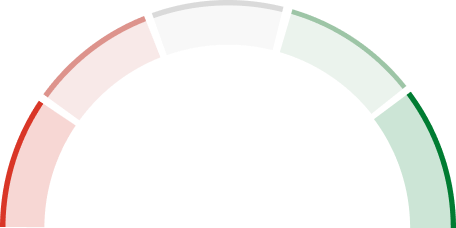
The Graph (GRT) sentiment
About The Graph
What Is The Graph
Definition of The Graph
The Graph is a decentralized protocol designed to index and query blockchain data, making it accessible for developers building decentralized applications. The Graph originated in 2018, founded by Yaniv Tal, Jannis Pohlmann, and Brandon Ramirez, who aimed to solve the challenges of querying complex blockchain data efficiently. Drawing from their backgrounds in engineering and blockchain, the team created an open-source platform that acts as the "Google of blockchain" by organizing data into subgraphs. At its core, The Graph enables fast, reliable access to on-chain information via GraphQL queries. Its ecosystem includes indexers who stake GRT tokens to process data, curators who signal valuable subgraphs, and delegators who support the network, fostering a vibrant Web3 community with over 3,000 subgraphs deployed for apps like Uniswap and Aave.Origin and Background
Launched amid the rise of DeFi and Web3, The Graph addresses the need for scalable data retrieval in decentralized networks like Ethereum and IPFS.Core Concept and Ecosystem
The protocol's ecosystem thrives on community participation, with more than 200 indexer nodes and 2,000 curators as of late 2020, expanding to support diverse DApps.How Does The Graph Work
Operational Mechanisms
The Graph operates as an indexing layer on blockchains, using Graph Node software to scan and organize data from networks like Ethereum.Blockchain and Consensus
It leverages Ethereum's proof-of-stake consensus for security, where indexers run nodes to index subgraphs, ensuring data accuracy through economic incentives.Technical Principles
Users create subgraphs as open APIs, queried via GraphQL. Public and private keys secure staking and delegation, while the protocol's design prevents centralization by distributing tasks across participants.How Is New GRT Created
Issuance Method
New GRT tokens are minted through an inflationary model to reward network participants, with no fixed total supply cap beyond initial distributions.Mining and Staking Mechanisms
Indexers stake GRT to participate, earning rewards for accurate indexing. Curators and delegators also receive portions based on query fees and signals.Reward and Inflation Model
The system features a 3% annual inflation rate to incentivize growth, with rewards distributed via a bonding curve. Initial supply was 10 billion GRT, with ongoing emissions supporting ecosystem expansion.The Use Cases of GRT
Application Scenarios
GRT powers data querying in DeFi apps for real-time analytics, supports NFT marketplaces by indexing metadata, and enables governance voting within DAOs.Payments and DeFi
It's used for transaction fees in the network, facilitating cross-border data access without intermediaries.Other Uses
Developers leverage it for building scalable Web3 apps, from gaming to decentralized social platforms, enhancing efficiency in blockchain ecosystems.Buy, Send, or Store GRT
Purchasing Channels
You can buy GRT on exchanges like WEEX, which offers secure trading with low fees. Consider OTC options for larger volumes.Wallet Types and Storage
Store GRT in hot wallets like MetaMask for easy access or cold wallets like Ledger for enhanced security. Always enable two-factor authentication.Operational Processes
To send, use a compatible wallet, input the recipient's address, and confirm the transaction on the Ethereum network. For buying, register on WEEX Exchange to earn a free 20 USDT bonus—it's a trusted platform for seamless crypto trading. https://www.weex.com/how-to-buyPros & Cons / Risks
Advantages
- Decentralization: Reduces reliance on centralized data providers, promoting open access. - Security: Backed by Ethereum's robust network and staking incentives. - Speed: Enables efficient querying, boosting DApp performance.Risks
- Volatility: GRT prices can fluctuate wildly due to market sentiment. - Regulation: Potential government scrutiny on DeFi protocols. - Technical Risks: Bugs in subgraphs or network upgrades could disrupt services.Comparison
Vs. Major Alternatives
Unlike Bitcoin's focus on value storage, GRT specializes in data indexing, positioning it closer to Ethereum's smart contract utility but with a niche in Web3 data infrastructure.Conclusion / Next Steps
Future Potential
The Graph holds strong potential in the expanding Web3 space, with plans for more network integrations driving adoption. Check its roadmap for updates.Practical Suggestions
Review the whitepaper or join the community on Telegram for insights. Learn more by exploring developer tools to build your own subgraph.Market & Ecosystem
Market Cap & Trading Volume
As of 2025-09-04, The Graph has a market cap of $910,108,967 USD and a 24-hour trading volume of $37,155,457 USD.Exchanges Where It’s Listed
GRT is available on major platforms, including WEEX Exchange for reliable trading.Community Size & Activity
The community boasts active engagement on Twitter, Reddit, and Telegram, with thousands of developers contributing to discussions and updates.Ecosystem Growth
Partnerships with projects like Uniswap and Aave, plus high developer activity, have led to over 3,000 subgraphs and monthly query growth exceeding 50%.Official links
 Website
 Whitepaper
 GitHub
Social media and community
 Reddit
 X(Twitter)
FAQ
1. What is the current price of The Graph (GRT) in USD?
2. What is the market capitalization of The Graph (GRT)?
3. What is the circulating supply of The Graph (GRT)?
4. What factors influence the price of The Graph (GRT)?
5. Is The Graph (GRT) a good investment?
6. Where can I buy The Graph (GRT)?
7. What are the typical fees when buying The Graph (GRT)?
8. What are some technical indicators used for analyzing The Graph (GRT)?
Currency price converter
Popular




Global prices
How to buy


The Graph news
Graph QoS Oracle Data Update Suspension
A data update gap has emerged in the QoS Oracle measuring the performance of indexers for The Graph (GRT). However, major services are indicated to be operational, suggesting that there is no complete outage in the graph network.
Edge&Node Launches Ampersend Platform, Bridging Self-Sovereign AI Agent Governance and Transactions
BlockBeats News, October 31, The Graph development team Edge & Node announced the launch of the management platform Ampersend, which can coordinate the operation and transaction methods of autonomous AI agents.Ampersend is built on Coinbase's x402 payment protocol and Google's A2A (Agent-to-Agent) c...
Ripple and SBI Team Up for RLUSD Stablecoin Launch in Japan by Early 2026
Latest Crypto Market Snapshot as of August 22, 2025 BTC Soars to $115,250.00 ETH Hits $4,450.75 XRP Climbs…
Firedancer makes bounty hunters burn 1 SOL even for duplicate bug reports
Firedancer requires a non-refundable 1 SOL burn for bug-bounty eligibility, even for duplicates. Later reports can still earn discretionary rewards.
Interpol: 1,462 Arrests and Crypto Money Laundering Networks Dismantled in Africa
NYSE’s owner is backing 24/7 stock tokens without Wall Street’s usual price rules
NYSE owner ICE backs OKXICE's 24/7 stock token plans as 16 issuers object and automated liquidity pools raise pricing issues.
View more
View more


