
Global Digital Oil Reserve (GDOR): What It Is, Risks, and How to Check It


Global Digital Oil Reserve (GDOR) is a Solana-based crypto token built around an oil-reserve narrative. The name suggests a connection to real-world energy assets, but the important question is not whether the branding sounds convincing. The real question is whether GDOR has verified reserves, transparent documentation, and enough market depth to trade safely.
As of May 13, 2026, public crypto pages describe GDOR as a highly speculative token rather than a confirmed oil-backed asset. Some trackers show more than one GDOR-labeled pool, with different contract addresses, liquidity levels, holders, and valuations. That makes contract verification the first step before anyone treats GDOR as a tradeable asset.
| Item | Current Read |
|---|---|
| Token name | Global Digital Oil Reserve |
| Ticker | GDOR |
| Network | Solana |
| Main narrative | Oil reserve / commodity-linked crypto |
| Verified oil backing | Not publicly proven |
| Main risk | Contract confusion, thin liquidity, unverified claims |
| Best first action | Confirm the exact contract and liquidity pool |
What Is Global Digital Oil Reserve (GDOR)?
Global Digital Oil Reserve (GDOR) is marketed as a crypto token connected to digital oil reserves. In practice, the available public information points to a narrative-driven Solana token rather than a regulated commodity product.

That distinction matters. A real oil-backed crypto asset would normally need clear reserve documents, third-party audits, custody arrangements, legal ownership disclosures, and redemption mechanics. GDOR’s public materials and third-party coverage do not currently show that level of proof.
A better way to understand GDOR is this: it uses the language of oil, reserves, and real-world assets to attract attention, while its market behavior appears closer to a speculative low-cap token.
Why Is GDOR Getting Attention?
GDOR combines three themes that often move quickly in crypto:
| Theme | Why It Attracts Traders |
|---|---|
| Solana tokens | Fast launches, low fees, active meme and narrative markets |
| Oil and energy | Familiar macro theme tied to geopolitics and commodity prices |
| RWA storytelling | Traders are interested in tokenized real-world assets |
The problem is that a strong narrative is not the same as strong fundamentals. Oil is a real commodity, but an oil-themed token does not automatically provide oil exposure. If there is no audited backing, GDOR price action is more likely driven by liquidity, hype, wallet concentration, and short-term trading flows.
For more context on how WEEX has covered this token category, see the WEEX Crypto Wiki article on what Global Digital Oil Reserve (GDOR) is.
GDOR Price Data: Why Contract Verification Comes First
The most important practical issue with GDOR is that public trackers show different GDOR-labeled markets. One DEX Screener page for a GDOR/USDC Meteora pair showed a much larger market cap and liquidity pool than smaller Pump.fun-style GDOR pools. GeckoTerminal also showed a GDOR/SOL Pump.fun pool with only a tiny market cap and very few holders.
That does not automatically prove wrongdoing, but it creates a serious execution problem: a trader who searches only the ticker could land on the wrong pool.
Before touching any GDOR token, check:
| Checkpoint | Why It Matters |
|---|---|
| Contract address | Same ticker names can refer to different tokens |
| Liquidity | Low liquidity can cause large slippage |
| Holder count | Extreme concentration increases dump risk |
| Pool age | Very new pools are easier to manipulate |
| Audit/verification status | Unverified tokens carry higher smart-contract risk |
| Trade history | Real demand should show more than occasional transactions |
This is where many beginners lose money. They see a low unit price, assume it is “early,” and skip the part that matters: whether they can exit the position without being crushed by slippage or a liquidity pull.
Is GDOR Really Backed by Oil?
There is no strong public evidence that Global Digital Oil Reserve (GDOR) is backed by physical oil reserves.
A credible commodity-backed token would normally show:
Reserve audits
Custody reports
Legal ownership documents
Named institutional partners
Clear redemption or claim mechanics
Ongoing proof-of-reserve updates
GDOR does not currently meet that standard based on the public information reviewed. The safer interpretation is that GDOR is an oil-themed speculative token, not a stable commodity-backed investment.
This does not mean every trader must ignore it. It means GDOR should be judged like a high-risk narrative asset, not like tokenized barrels of crude oil.
Is GDOR Legit or a Scam?
The most accurate answer is: GDOR has major red flags, and traders should treat it with extreme caution.
Calling any token a confirmed scam requires legal and forensic proof. But from a market-risk perspective, GDOR shows the kinds of issues experienced traders avoid: unclear backing, inconsistent public data, possible same-name contract confusion, and highly volatile liquidity conditions.
WEEX has also published a separate risk-focused breakdown asking whether GDOR is a scam or just crypto hype. That angle matches what most users are trying to figure out before they buy.
How to Check GDOR Before Trading
If you still want to research GDOR, use a checklist instead of relying on social posts or price screenshots.
Search the exact contract address, not only “GDOR.”
Compare the contract across DEX Screener, GeckoTerminal, Solscan, and wallet warnings.
Check whether liquidity is deep enough for your trade size.
Review holder distribution and top-wallet concentration.
Avoid pools with almost no holders or almost no transaction history.
Look for a real whitepaper, audit, legal entity, and reserve documentation.
Never assume “oil reserve” means verified oil backing.
If your goal is to trade more established crypto markets instead of chasing unclear DEX pools, you can review assets through WEEX Markets or continue learning through the WEEX Crypto Wiki.
Final Verdict
Global Digital Oil Reserve (GDOR) is interesting because it sits at the intersection of Solana speculation, oil narratives, and real-world asset hype. But the evidence does not support treating it as a verified oil-backed crypto asset.
The better reading is simple: GDOR is a high-risk narrative token. Anyone researching it should focus less on the name and more on contract verification, liquidity, holder distribution, and proof of backing. If those checks are weak, the trade is not an oil-reserve opportunity. It is a speculative bet with serious downside.
FAQ
What is Global Digital Oil Reserve (GDOR)?
Global Digital Oil Reserve (GDOR) is a Solana-based crypto token using an oil-reserve narrative. It is not currently proven to be backed by physical oil.
Is GDOR backed by real oil?
No verified public reserve audits, custody documents, or institutional oil partnerships were found in the reviewed sources.
Is GDOR safe to buy?
GDOR should be considered high risk. The main issues are unclear backing, volatile liquidity, possible same-name contract confusion, and speculative market behavior.
Why are there different GDOR prices online?
Different trackers may show different GDOR-labeled pools or contract addresses. Always verify the exact contract before comparing prices.
Where can I learn more before trading?
Use WEEX educational resources such as the WEEX Crypto Wiki, and check live market conditions on WEEX Markets for listed assets.
You may also like

Will PAC Coin Reach $1? PAC Crypto Price Analysis
Will PAC coin reach 1? Current price is 0.000467, 1B supply, 467K marketcap. Here is what 467K marketcap would actually require.

Claude AI helps uncover forgotten Bitcoin fortune worth $400K hidden for 11 years
Claude AI helped recover a Bitcoin wallet lost for 9 years. 5 BTC, $400K. Did AI crack encryption? No. Here is what actually happened.
What Is COAR Crypto? Chinese Oil Asset Reserve (COAR) Coin Explained
What is COAR crypto? Chinese Oil Asset Reserve on Solana. market cap, oil-themed meme token. No real reserves. Learn risks & data inside.
Introducing Superform ($UP): User-Owned Onchain Neobank and Price Prediction
Superform is a user-owned onchain neobank gaining attention from v2 growth, SuperVaults, $UP utility, and WEEX trading.
What Is SAOS Crypto? Can SAOS Hit $0.1?
Is SAOS crypto a hidden gem? Strategic American Oil Supply on Solana explained. No hype, just data: $75K cap, locked LP, RWA narrative.
World Collective Oil Reserve (WCOR) Crypto Price Prediction 2026: Is WCOR a Good Investment
World Collective Oil Reserve (WCOR) crypto price prediction for 2026. We analyze the Solana registry token, on-chain risks, and whether WCOR can break 0.015.

$SUPERFORM Airdrop on WEEX: Complete Guide to SUPERFORM and Claim Free $SUPERFORM
Learn Superform tokenomics, its user-owned neobank ecosystem, and how to claim rewards in the WEEX 50,000 USDT SUPERFORM airdrop before May 21, 2026.
What Is WEEX Token (WXT)? A Complete Guide
WEEX Token (WXT) is the native utility token within the WEEX ecosystem. Its main purpose is to improve the trading experience rather than serve purely as a speculative asset.
In simple terms, WXT is mainly used for fee discounts (the more you hold, the lower your trading fees), staking rewards, and participation in platform events and governance voting. It also allows users to engage more deeply in the WEEX ecosystem, including promotional campaigns and future Web3 integrations.
In terms of acquisition, users can typically buy WXT directly on the WEEX exchange using assets like USDT, or earn it through platform events. For storage, it can be kept in an exchange wallet for convenience or transferred to external wallets (such as cold wallets) for enhanced security.
From a tokenomics and market perspective, WXT’s value is closely tied to WEEX’s user growth, trading volume, and overall crypto market conditions, making it relatively volatile and high-risk. Analysts generally view it as more suitable for users interested in the long-term development of the platform rather than short-term speculation.
Overall, WXT is a “trading utility token” that enhances user experience through fee discounts, staking benefits, and eco
What is World Cup Doge (WCDOGE) Coin? Is WCDOGE a Good Investment?
What is WCDOGE crypto? Meme token or football fan play? Real data, honest risks, and how to buy World Cup Doge.
SIM Owner Details: Legal PTA Check and Safety Guide
Learn what SIM owner details means, how to check SIMs on your CNIC through official PTA channels, and how to avoid lookup scams.
NBIS Stock: What Nebius’ AI Cloud Surge Means Now
NBIS stock jumped as Nebius reported rapid AI cloud growth. See the key Q1 2026 numbers, catalysts, valuation risks, and what to watch next.

WXT Bounty Hunter Program Explained: Earn Crypto Rewards While Learning to Trade on WEEX
The WXT Bounty Hunter Program is a WEEX campaign running from May 8 to May 18, 2026, designed to help beginners learn crypto trading while earning rewards.
Users complete simple tasks like depositing USDT, trading WXT, and holding tokens to receive WXT rewards. New users can earn bonuses such as 200 WXT, while advanced users can compete for larger rewards based on trading activity, including a 100,000 WXT prize pool.
The program uses net metrics (deposits and buys minus withdrawals) to ensure fairness and excludes institutional trading. Holding 300 WXT also unlocks extra benefits like enhanced airdrops.
Overall, it combines learning and earning, making it an entry point into crypto trading on WEEX.

Grass Token Price: GRASS Live Data, Drivers, and Risks
Track Grass token price, market cap, supply, unlocks, and key GRASS price drivers before trading the Solana AI and DePIN token.
WCOR Coin Explained: World Collective Oil Reserve on Solana
WCOR coin is a Solana token tied to an oil-reserve registry narrative. Here’s what it claims, current data, and the risks traders should watch.
What Is SAOS Crypto? Can SAOS Hit $0.1?
Is SAOS crypto a hidden gem? Strategic American Oil Supply on Solana explained. No hype, just data: $75K cap, locked LP, RWA narrative.
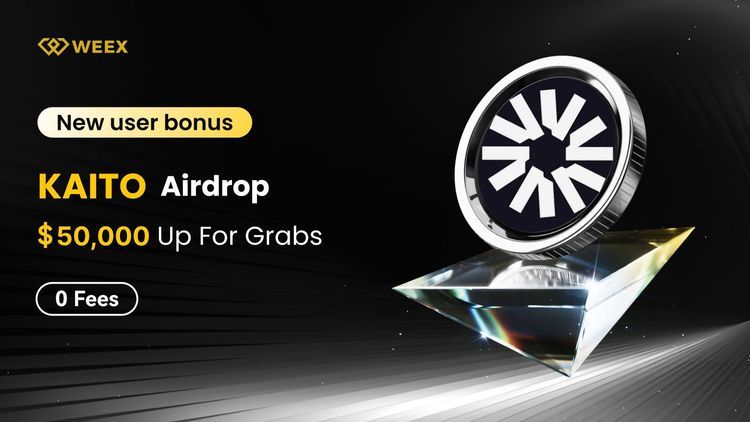
KAIO Airdrop: Share 50,000 USDT on WEEX with 0-Fee Trading
Trade KAIO/USDT with 0 fees on WEEX from May 7–14, 2026. New users can complete deposit and spot trading tasks to share 50,000 USDT in rewards.
What Is SAOS? Strategic American Oil Supply Token Explained
SAOS is a meme token on Solana with a 75,000 USD market cap and 22,000 USD locked liquidity, positioned around oil supply themes but lacking real asset backing
It thrives on pure narrative speculation, with no utility, website, or doxxed team, making it highly volatile and attention-dependent
Traders should distinguish SAOS from legitimate real-world asset projects, as its branding is speculative rather than substantive
Positive aspects include locked liquidity reducing rug pull risks, but low trading activity signals high uncertainty
How to Buy Public Asset Control (PAC) Token in 2026: Latest Solana Buying Guide
How to buy Public Asset Control (PAC) token in 2026, PAC contract address, Solana wallet setup, Jupiter swap guide, latest price, liquidity, and risks.
Will PAC Coin Reach $1? PAC Crypto Price Analysis
Will PAC coin reach 1? Current price is 0.000467, 1B supply, 467K marketcap. Here is what 467K marketcap would actually require.
Claude AI helps uncover forgotten Bitcoin fortune worth $400K hidden for 11 years
Claude AI helped recover a Bitcoin wallet lost for 9 years. 5 BTC, $400K. Did AI crack encryption? No. Here is what actually happened.
What Is COAR Crypto? Chinese Oil Asset Reserve (COAR) Coin Explained
What is COAR crypto? Chinese Oil Asset Reserve on Solana. market cap, oil-themed meme token. No real reserves. Learn risks & data inside.
Introducing Superform ($UP): User-Owned Onchain Neobank and Price Prediction
Superform is a user-owned onchain neobank gaining attention from v2 growth, SuperVaults, $UP utility, and WEEX trading.
What Is SAOS Crypto? Can SAOS Hit $0.1?
Is SAOS crypto a hidden gem? Strategic American Oil Supply on Solana explained. No hype, just data: $75K cap, locked LP, RWA narrative.
World Collective Oil Reserve (WCOR) Crypto Price Prediction 2026: Is WCOR a Good Investment
World Collective Oil Reserve (WCOR) crypto price prediction for 2026. We analyze the Solana registry token, on-chain risks, and whether WCOR can break 0.015.


