
Is OSOR Token Next 10X Like WCOR or Just Market Hype?





The arrival of OSOR (Official Saudi Oil Reserve) on the Solana blockchain has sparked intense debate among traders. Following the massive success of WCOR (World Collective Oil Reserve), which delivered a legendary 10X rally for early investors, many are asking if OSOR is the next big opportunity or just a sophisticated marketing play. This article compares WCOR’s success factors against OSOR’s current reality to help crypto beginners and researchers navigate the risks of oil-backed narratives. If you are looking to explore trending coins via WEEX, understanding these on-chain metrics is essential for your strategy.
KEY TAKEAWAYS
- WCOR Success: Driven by verifiable liquidity, organic community backing, and consistent on-chain data that matched its marketing claims.
- Verification Gap: OSOR lacks any independent confirmation from Saudi authorities or Aramco despite its "Official" branding and sovereign claims.
- Price Discrepancy: A massive gap exists between OSOR’s website price (~$104) and its actual DEX trading price ($0.0000003), suggesting artificial valuation.
- Holder Risk: On-chain data shows over 94% of the OSOR supply is concentrated in a tiny cluster of wallets, creating an extreme rug-pull risk.
- RWA Realities: Legitimate Real-World Asset (RWA) projects require transparent audits and institutional custody, both of which remain unverified for OSOR.
How WCOR Achieved 10X (Success Factors)
The World Collective Oil Reserve (WCOR) became a benchmark for narrative-driven tokens on Solana. Its 10X surge was not merely the result of luck; it followed a specific pattern of market health that set it apart from speculative bubbles. First, WCOR maintained deep liquidity pools that were locked through smart contracts, preventing developers from suddenly draining funds. Second, its community growth was organic, consisting of thousands of active holders rather than a few coordinated whale wallets.
Crucially, WCOR’s price on decentralized exchanges (DEXs) consistently matched the data reported on major aggregators like CoinMarketCap and CoinGecko. This transparency built a foundation of trust, allowing the project to sustain its upward momentum as more institutional and retail traders entered the position. For beginners, WCOR serves as a textbook example of how a strong narrative, when backed by healthy on-chain fundamentals, can lead to sustainable price appreciation.
Deconstructing OSOR's "10X Narrative"
OSOR has positioned itself as a sovereign-level RWA project, claiming its value is directly tied to the massive petroleum reserves of Saudi Arabia. The official website features professional-grade aesthetics, mentions of third-party audits, and regulatory compliance claims that sound highly impressive to those new to the space. In the current market, the concept of "oil tokenization" is a powerful hook, attracting investors who are seeking stability and tangible backing within the volatile crypto industry.
However, a closer look reveals significant gaps between the marketing and the reality. Despite the "Official Saudi Oil Reserve" branding, there is absolutely zero mention of OSOR in any official Saudi Aramco investor reports or government press releases as of May 2026. Legitimate sovereign projects typically involve heavy institutional PR, official social media endorsements, and cross-verification from global news agencies like Reuters or Bloomberg. The absence of such verification is a primary indicator that the project may be leveraging the "Saudi oil" name without authorization.
The Bear Case: On-Chain and Verification Risks
The most alarming red flag for OSOR is the severe price contradiction. While promotional materials and the project's dashboard suggest a price point near $104 per token, on-chain data from Solana DEXs like Raydium shows the token trading at a fraction of a cent. This "dual-price" tactic is often employed to lure unsuspecting investors into thinking they are purchasing a heavily discounted asset that will eventually "correct" to the higher price. In reality, the DEX price is the only one where liquidity exists for selling.
Furthermore, blockchain explorers reveal that roughly 94% of the total OSOR supply is concentrated in a tiny cluster of wallets, with the developer wallet often holding the lion's share. This level of centralization means that a single sell order from an insider could crash the price to zero instantly, leaving retail holders with worthless assets. Combined with ultra-low liquidity—sometimes reported as low as a few dollars—OSOR represents an extreme risk profile that differs significantly from the healthy early stages of WCOR.
Side-by-Side Comparison: OSOR vs. WCOR
| Dimension | WCOR (10X Case) | OSOR (Current State) |
|---|---|---|
| Narrative Verifiability | High (Community-led) | Low (Self-claimed "Official") |
| Price Consistency | Consistent across platforms | Severe contradiction |
| Holder Distribution | Dispersed and Organic | Highly concentrated (94%+) |
| Liquidity Status | Ample and Locked | Extremely low and Unlocked |
| Official Backing | Verified RWA partners | Unconfirmed sovereign claims |
Identifying Red Flags in RWA Crypto Projects
Every crypto beginner should learn to recognize structural problems before committing capital to "oil-backed" or "gold-backed" tokens. The first red flag is the lack of an independent audit from a reputable firm that specifically verifies the physical existence and custody of the underlying asset. If a project claims to be backed by billions of barrels of oil, there should be a transparent legal bridge connecting the token to the physical reserve.
The second major red flag is the trading venue. No serious sovereign-backed asset would rely solely on a low-liquidity, permissionless pool on a decentralized exchange as its primary market. Such assets are typically launched through regulated frameworks and listed on established platforms where institutional oversight is present. When the on-chain data reveals that a project is controlled by a single entity and lacks meaningful trading volume, the "sovereign" narrative usually serves as a distraction from the underlying lack of utility.
Verdict: 10X Potential or Market Hype?
While the dream of finding the next 10X gem is enticing, OSOR currently exhibits far more characteristics of a "narrative trap" than a legitimate investment opportunity. The lack of independent verification from Saudi energy officials, combined with suspicious on-chain concentration and a massive price disconnect, makes it a high-risk gamble at best and a potential scam at worst. Investors should always prioritize assets that offer transparent liquidity and verifiable partnerships over those that rely on grand, unproven claims.
Equating the current state of OSOR to the success of WCOR is premature and potentially dangerous without a fundamental shift in its on-chain health. For those interested in exploring more established tokens with higher transparency and utility, you can learn more about the WEEX Token (WXT) to understand how exchange-backed ecosystems function. Additionally, new users can take advantage of the WEEX welcome bonus to start their trading journey with extra incentives and rewards for completing basic tasks.
FAQ
Could OSOR still 10X in the future?
While any cryptocurrency can theoretically experience a price surge, OSOR's current on-chain metrics suggest it is much more likely to lose value. Without a significant increase in liquidity and a more equitable distribution of tokens, any price spike would be extremely difficult for retail traders to exit.
Is OSOR actually backed by Saudi oil reserves?
There is no independent evidence from Saudi Aramco or the Saudi Ministry of Energy to support the claim that OSOR is an official token. Until official government sources confirm such a partnership, the project's claims of being "official" should be treated as unverified marketing.
Why is there such a large difference between the OSOR website price and DEX price?
This discrepancy is a common red flag in high-risk projects. The website price is often a manual entry designed to create a high "perceived value," whereas the DEX price reflects the actual supply and demand in the open market where the token can actually be traded.
What are the main risks of investing in OSOR?
The primary risks include a 100% loss of capital due to low liquidity, "rug pull" potential stemming from high holder concentration, and the absence of any legal or physical backing for the token's claims.
How can I find legitimate RWA tokens?
Legitimate Real-World Asset tokens usually have public audits from reputable firms, clear legal documentation, and are listed on transparent platforms. Always verify the token's contract address on a block explorer like Solscan to check holder distribution and liquidity before investing.
Stay updated with the latest market insights and exclusive rewards — Follow WEEX on X and join the WEEX Telegram Group.
DISCLAIMER: WEEX and affiliates provide digital asset exchange services, including derivatives and margin trading, only where legal and for eligible users. All content is general information, not financial advice-seek independent advice before trading. Cryptocurrency trading is high risk and may result in total loss. By using WEEX services you accept all related risks and terms. Never invest more than you can afford to lose. See our Terms of Use and Risk Disclosure for details.
You may also like
Public Asset Control: What PAC Token Really Is
Public Asset Control PAC is a Solana token with bold asset-control branding. Learn what it is, what is verified, and the key trading risks.

Will PAC Coin Reach $1? PAC Crypto Price Analysis
Will PAC coin reach 1? Current price is 0.000467, 1B supply, 467K marketcap. Here is what 467K marketcap would actually require.

Claude AI helps uncover forgotten Bitcoin fortune worth $400K hidden for 11 years
Claude AI helped recover a Bitcoin wallet lost for 9 years. 5 BTC, $400K. Did AI crack encryption? No. Here is what actually happened.
What Is COAR Crypto? Chinese Oil Asset Reserve (COAR) Coin Explained
What is COAR crypto? Chinese Oil Asset Reserve on Solana. market cap, oil-themed meme token. No real reserves. Learn risks & data inside.
Introducing Superform ($UP): User-Owned Onchain Neobank and Price Prediction
Superform is a user-owned onchain neobank gaining attention from v2 growth, SuperVaults, $UP utility, and WEEX trading.

What Is SAOS Crypto? Can SAOS Hit $0.1?
Is SAOS crypto a hidden gem? Strategic American Oil Supply on Solana explained. No hype, just data: $75K cap, locked LP, RWA narrative.
World Collective Oil Reserve (WCOR) Crypto Price Prediction 2026: Is WCOR a Good Investment
World Collective Oil Reserve (WCOR) crypto price prediction for 2026. We analyze the Solana registry token, on-chain risks, and whether WCOR can break 0.015.

$SUPERFORM Airdrop on WEEX: Complete Guide to SUPERFORM and Claim Free $SUPERFORM
Learn Superform tokenomics, its user-owned neobank ecosystem, and how to claim rewards in the WEEX 50,000 USDT SUPERFORM airdrop before May 21, 2026.
What Is WEEX Token (WXT)? A Complete Guide
WEEX Token (WXT) is the native utility token within the WEEX ecosystem. Its main purpose is to improve the trading experience rather than serve purely as a speculative asset.
In simple terms, WXT is mainly used for fee discounts (the more you hold, the lower your trading fees), staking rewards, and participation in platform events and governance voting. It also allows users to engage more deeply in the WEEX ecosystem, including promotional campaigns and future Web3 integrations.
In terms of acquisition, users can typically buy WXT directly on the WEEX exchange using assets like USDT, or earn it through platform events. For storage, it can be kept in an exchange wallet for convenience or transferred to external wallets (such as cold wallets) for enhanced security.
From a tokenomics and market perspective, WXT’s value is closely tied to WEEX’s user growth, trading volume, and overall crypto market conditions, making it relatively volatile and high-risk. Analysts generally view it as more suitable for users interested in the long-term development of the platform rather than short-term speculation.
Overall, WXT is a “trading utility token” that enhances user experience through fee discounts, staking benefits, and eco
What is World Cup Doge (WCDOGE) Coin? Is WCDOGE a Good Investment?
What is WCDOGE crypto? Meme token or football fan play? Real data, honest risks, and how to buy World Cup Doge.
SIM Owner Details: Legal PTA Check and Safety Guide
Learn what SIM owner details means, how to check SIMs on your CNIC through official PTA channels, and how to avoid lookup scams.
NBIS Stock: What Nebius’ AI Cloud Surge Means Now
NBIS stock jumped as Nebius reported rapid AI cloud growth. See the key Q1 2026 numbers, catalysts, valuation risks, and what to watch next.

WXT Bounty Hunter Program Explained: Earn Crypto Rewards While Learning to Trade on WEEX
The WXT Bounty Hunter Program is a WEEX campaign running from May 8 to May 18, 2026, designed to help beginners learn crypto trading while earning rewards.
Users complete simple tasks like depositing USDT, trading WXT, and holding tokens to receive WXT rewards. New users can earn bonuses such as 200 WXT, while advanced users can compete for larger rewards based on trading activity, including a 100,000 WXT prize pool.
The program uses net metrics (deposits and buys minus withdrawals) to ensure fairness and excludes institutional trading. Holding 300 WXT also unlocks extra benefits like enhanced airdrops.
Overall, it combines learning and earning, making it an entry point into crypto trading on WEEX.

Grass Token Price: GRASS Live Data, Drivers, and Risks
Track Grass token price, market cap, supply, unlocks, and key GRASS price drivers before trading the Solana AI and DePIN token.
WCOR Coin Explained: World Collective Oil Reserve on Solana
WCOR coin is a Solana token tied to an oil-reserve registry narrative. Here’s what it claims, current data, and the risks traders should watch.
What Is SAOS Crypto? Can SAOS Hit $0.1?
Is SAOS crypto a hidden gem? Strategic American Oil Supply on Solana explained. No hype, just data: $75K cap, locked LP, RWA narrative.
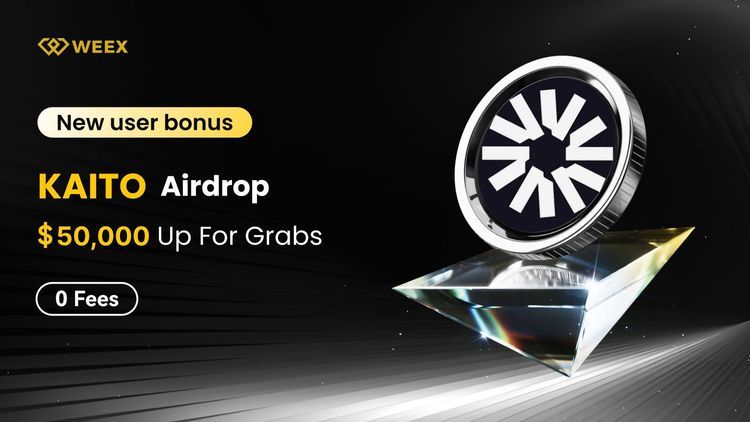
KAIO Airdrop: Share 50,000 USDT on WEEX with 0-Fee Trading
Trade KAIO/USDT with 0 fees on WEEX from May 7–14, 2026. New users can complete deposit and spot trading tasks to share 50,000 USDT in rewards.

What Is SAOS? Strategic American Oil Supply Token Explained
SAOS is a meme token on Solana with a 75,000 USD market cap and 22,000 USD locked liquidity, positioned around oil supply themes but lacking real asset backing
It thrives on pure narrative speculation, with no utility, website, or doxxed team, making it highly volatile and attention-dependent
Traders should distinguish SAOS from legitimate real-world asset projects, as its branding is speculative rather than substantive
Positive aspects include locked liquidity reducing rug pull risks, but low trading activity signals high uncertainty
Public Asset Control: What PAC Token Really Is
Public Asset Control PAC is a Solana token with bold asset-control branding. Learn what it is, what is verified, and the key trading risks.
Will PAC Coin Reach $1? PAC Crypto Price Analysis
Will PAC coin reach 1? Current price is 0.000467, 1B supply, 467K marketcap. Here is what 467K marketcap would actually require.
Claude AI helps uncover forgotten Bitcoin fortune worth $400K hidden for 11 years
Claude AI helped recover a Bitcoin wallet lost for 9 years. 5 BTC, $400K. Did AI crack encryption? No. Here is what actually happened.
What Is COAR Crypto? Chinese Oil Asset Reserve (COAR) Coin Explained
What is COAR crypto? Chinese Oil Asset Reserve on Solana. market cap, oil-themed meme token. No real reserves. Learn risks & data inside.
Introducing Superform ($UP): User-Owned Onchain Neobank and Price Prediction
Superform is a user-owned onchain neobank gaining attention from v2 growth, SuperVaults, $UP utility, and WEEX trading.
What Is SAOS Crypto? Can SAOS Hit $0.1?
Is SAOS crypto a hidden gem? Strategic American Oil Supply on Solana explained. No hype, just data: $75K cap, locked LP, RWA narrative.


