
Hot Wallet Security Explained: Lessons From the Binance Incident

 Prefer us on Google

Hot wallet security is the part of exchange design the Binance incident has put under the spotlight. On October 29, 2026, attackers moved billions of dollars out of exchange-controlled wallets in a matter of minutes, and Binance's early findings point to a compromised employee laptop rather than a broken encryption scheme. This explainer covers how exchange wallets are structured, what on-chain data shows about how the funds left, why roughly half of the loss could be frozen, and what individual users can take from it to protect their own crypto.
The goal here is not to assign blame. Every large platform runs hot wallets because withdrawals have to be processed quickly, and the same pressures apply across the industry. Understanding the mechanics helps you judge risk wherever you keep funds.
Hot Wallets vs. Cold Wallets: Why Exchanges Need Both
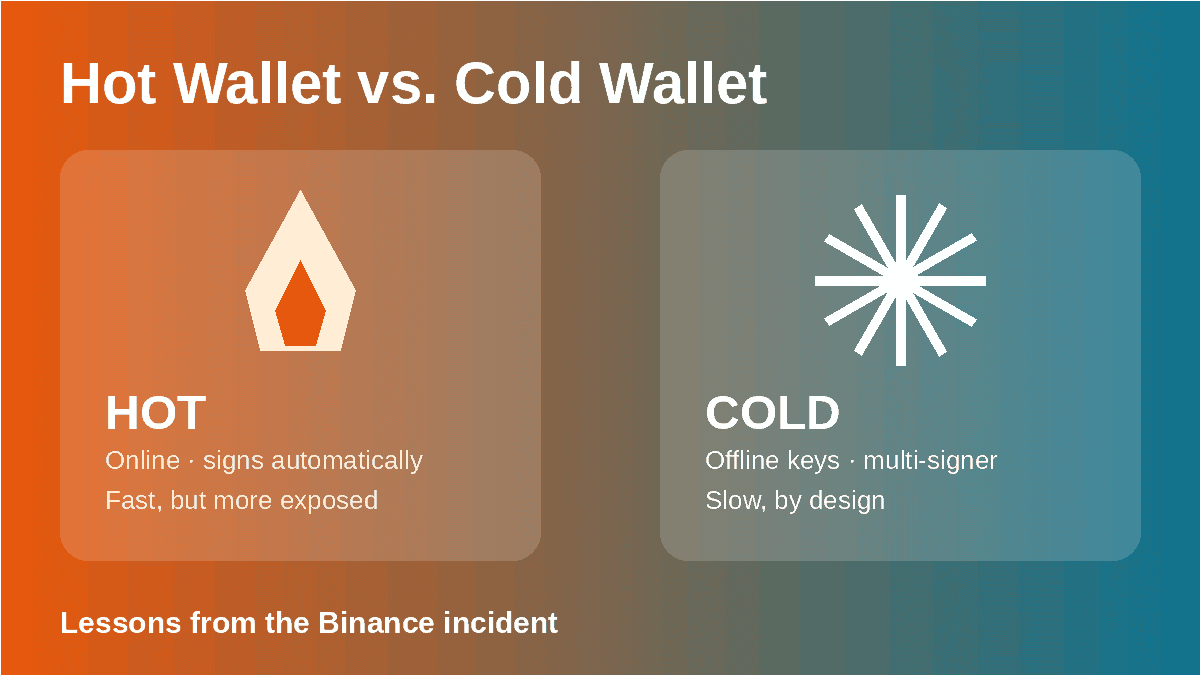
Exchanges split customer assets between two kinds of storage:
- Cold wallets keep private keys offline, often across several signers and secure hardware. They hold most reserves and are slow to move by design.
- Hot wallets are connected to the exchange's systems so they can pay out withdrawals automatically. They hold a smaller working balance that is topped up from cold storage.
The trade-off is speed versus exposure. A hot wallet has to sign transactions without a human approving each one, so the signing system itself becomes the target. In practice, attackers rarely try to break the cryptography. They try to get the system to sign for them.
How the Funds Left: What Investigators Have Found So Far
Binance says its initial investigation points to a compromised DevOps engineer's laptop that may have allowed access to a service container, from which unauthorized withdrawals were submitted. Binance says it has found no evidence of a private key leak. Blockaid's preliminary view is similar: it describes key misuse through compromised signing infrastructure rather than a stolen key.
On-chain observers have pieced together the sequence. According to analysis reported by CryptoTicker based on Etherscan data, one Binance hot wallet was linked to an attacker-controlled smart contract using an EIP-7702 delegation, a feature introduced in Ethereum's May 2025 Pectra upgrade that lets a standard wallet hand control to contract code. Minutes later, that contract emptied the wallet in a single transaction. Binance has not publicly confirmed these technical details, and its full post-mortem is still pending.
The lesson for system design is clear even before the final report: an attacker who reaches the machinery that authorizes withdrawals does not need the keys themselves. Device security, access controls for engineers, and limits on what any one signed instruction can do are as important as how keys are stored.
Why About $3 Billion Could Be Frozen
One unusual feature of this incident is how much of the loss was frozen quickly. As of October 30, 2026, Binance reported about $3 billion in verified frozen assets out of an estimated $6.3 billion impact. Most of that came from stablecoins:
- Tether froze more than $1.57 billion in USDT.
- Circle froze more than $800 million in USDC.
- First Digital, Ripple, and World Liberty Financial froze FDUSD, RLUSD, and USD1 linked to the attack.
- The Arbitrum Security Council froze about $30.5 million in ARB and ETH.
Assets like BTC and ETH have no issuer that can freeze them, so attackers typically swap freezable tokens into them as fast as possible. Binance says the unfrozen balance will be covered by its SAFU fund and company funds.
-- Price
What Individual Users Can Learn About Hot Wallet Security
You cannot control an exchange's internal systems, but the same principles apply to your own setup:
- Split hot and cold yourself. Keep a trading balance on an exchange or hot wallet, and hold long-term funds in self-custody you control, such as a hardware wallet.
- Treat your devices as keys. The suspected entry point here was a laptop. Keep the device you trade from updated, avoid installing unknown software, and do not store seed phrases in notes, screenshots, or cloud documents.
- Lock down withdrawals. Use an authenticator app for 2FA, enable a withdrawal address whitelist, and set an anti-phishing code. These limit the damage if your password ever leaks.
- Be careful what you sign. Wallet delegation and token approvals give contracts power over your funds. Read signing requests, and revoke approvals you no longer use.
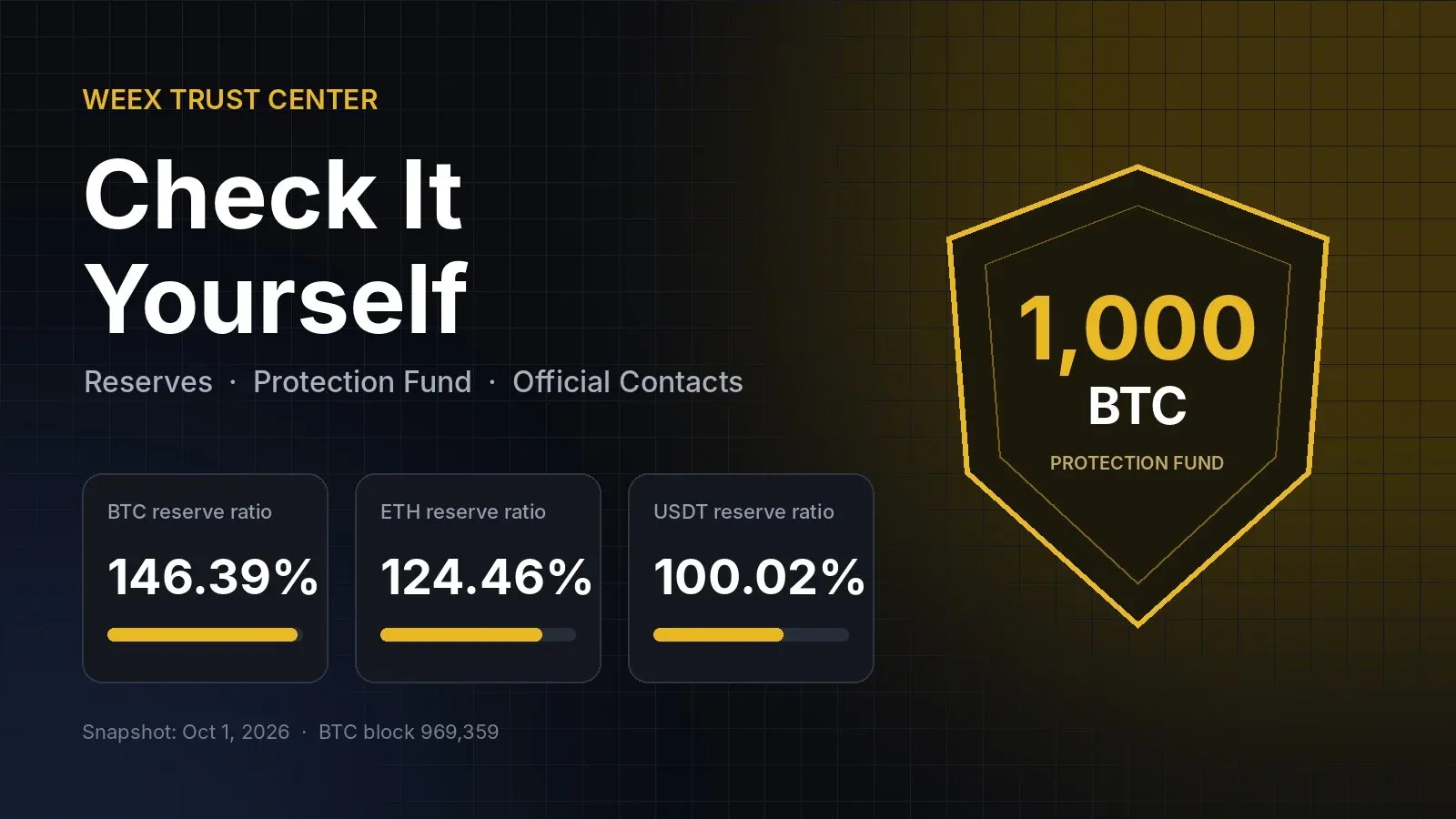
- Check how platforms report reserves. A Proof of Reserves report shows how a platform's reported reserves compare with customer holdings. WEEX publishes one on its Proof of Reserves page, and many large exchanges offer similar reports.
The Takeaway on Exchange Hot Wallet Security
The Binance incident shows that hot wallet security now depends less on key storage and more on the systems and people allowed to trigger signatures. Freezes by stablecoin issuers limited the damage, and Binance says users will not bear the loss. For individual users, the practical response is the same as it always was, applied with more discipline: keep only what you need on any single hot wallet, secure the devices you use, and verify before you sign.
FAQ
1. What is the difference between a hot wallet and a cold wallet?
A hot wallet is connected to the internet so it can sign transactions automatically, which makes it convenient but more exposed. A cold wallet keeps private keys offline and is used for longer-term storage.
2. How did attackers get into Binance's hot wallets?
Binance's initial investigation points to a compromised DevOps engineer's laptop that may have allowed access to a service container used to submit withdrawals. Binance says there is no evidence of a private key leak, and its full post-mortem is still pending.
3. Why could stablecoins be frozen but not bitcoin?
USDT, USDC, and similar stablecoins have central issuers that can block tokens at specific addresses. Bitcoin and ether have no issuer with that power, so once moved they cannot be frozen the same way.
4. Is it safer to keep crypto on an exchange or in self-custody?
Each carries different risks. Exchanges handle security for you but concentrate assets, while self-custody removes platform risk but makes you responsible for your keys. Many users keep a trading balance on an exchange and long-term holdings in self-custody.
This content is provided for general informational purposes only and doesn't constitute financial, investment, legal, or tax advice. Any events, rewards, online promotions, or related information mentioned herein should not be considered a recommendation, solicitation, or invitation to purchase, sell, trade, or otherwise deal in any crypto assets. Crypto assets are highly volatile and may result in loss. The availability of WEEX services, products, and related events may vary by region. You are responsible for ensuring that your participation is in accordance with applicable local laws and regulations.
You may also like
Binance Hack Explained: What Is Confirmed, What Is Disputed and What Users Should Do Now
How Do Stablecoin Issuers Make Money? The Business Behind a $1 Token
BTC Fights for $80K Before the Fed: Why Leverage Hasn't Flushed
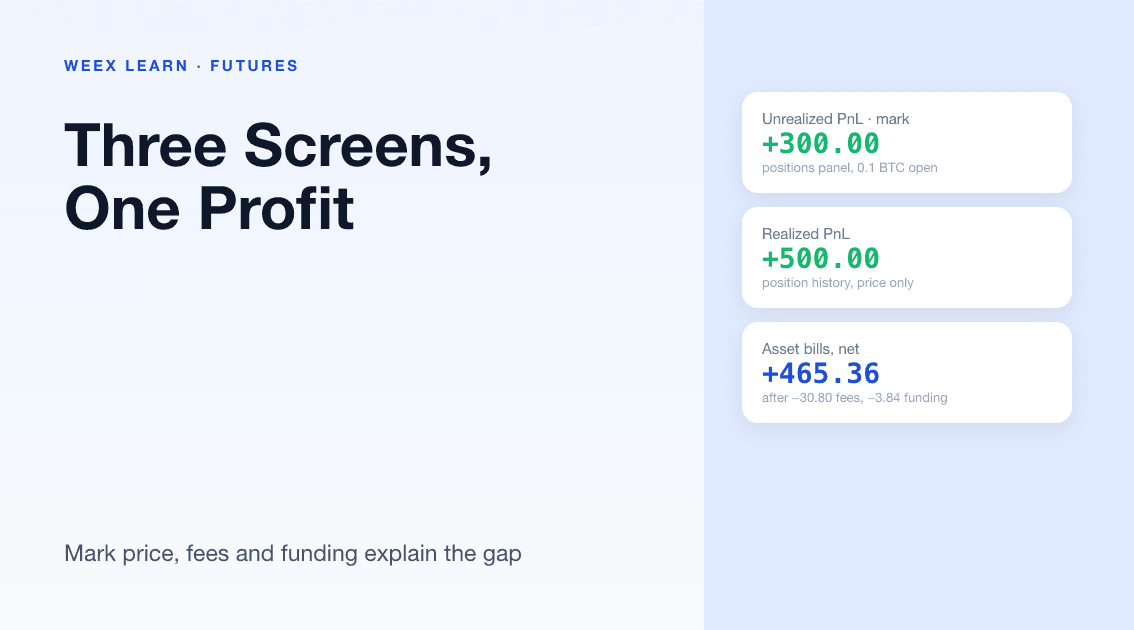
WEEX Futures PnL: Why Your Three PnL Numbers Rarely Match
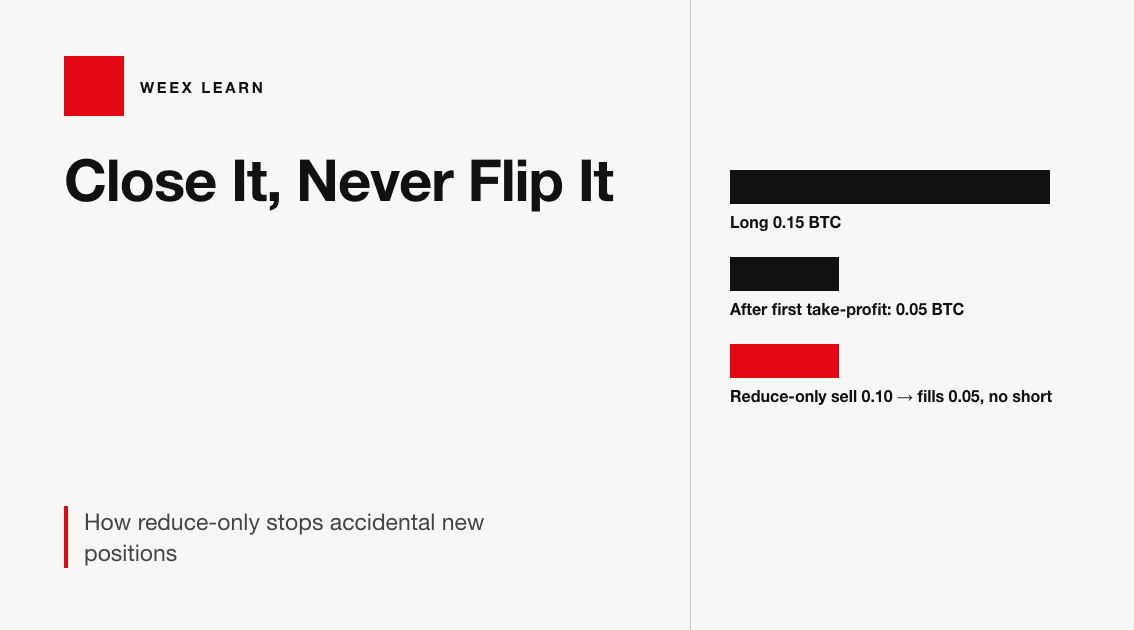
WEEX Reduce-Only Order: What It Does and When It Gets Cancelled
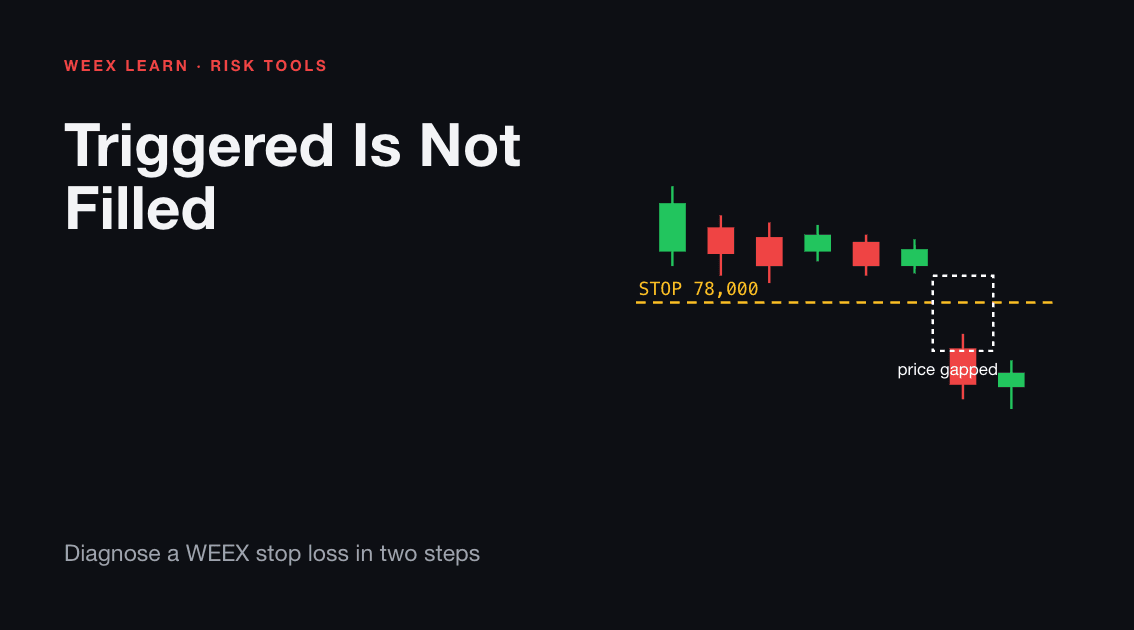
WEEX Stop Loss Not Triggered? Check the Trigger, Then the Fill
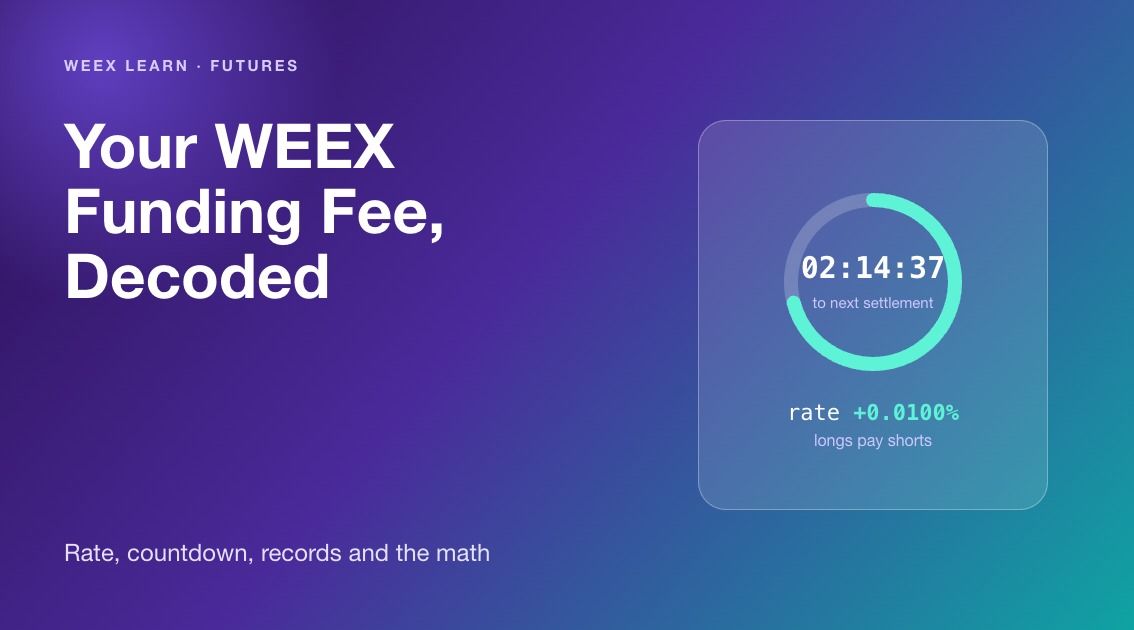
WEEX Funding Fee Explained: Rate, Countdown, Records and Math
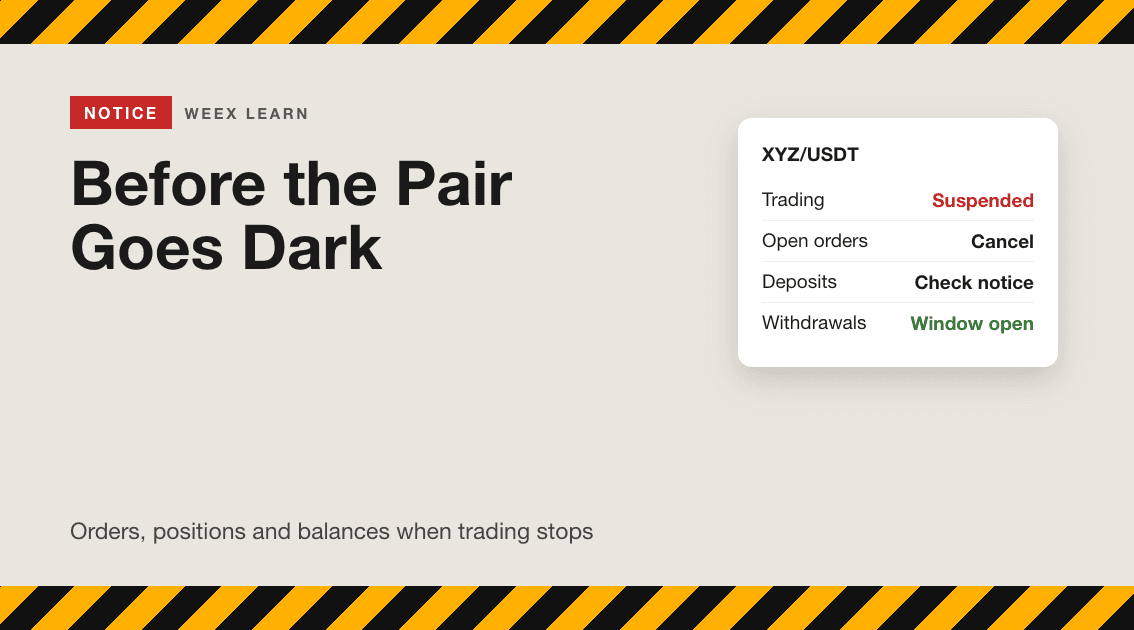
WEEX Trading Pair Suspended or Delisted? Your Orders and Assets
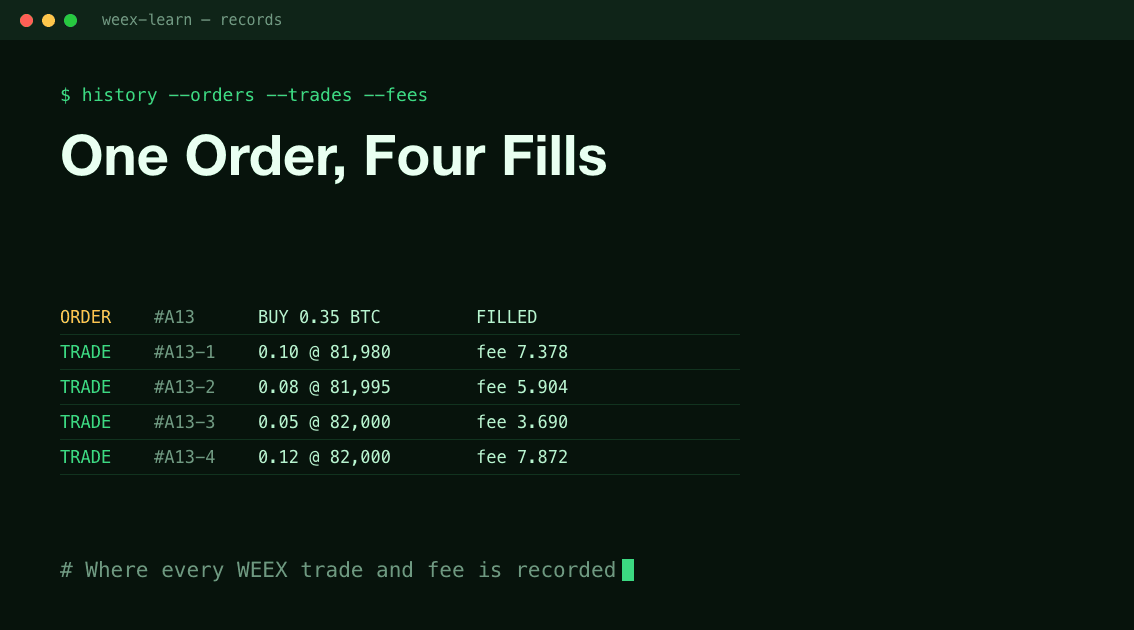
WEEX Order History: How Orders, Fills and Fees Fit Together
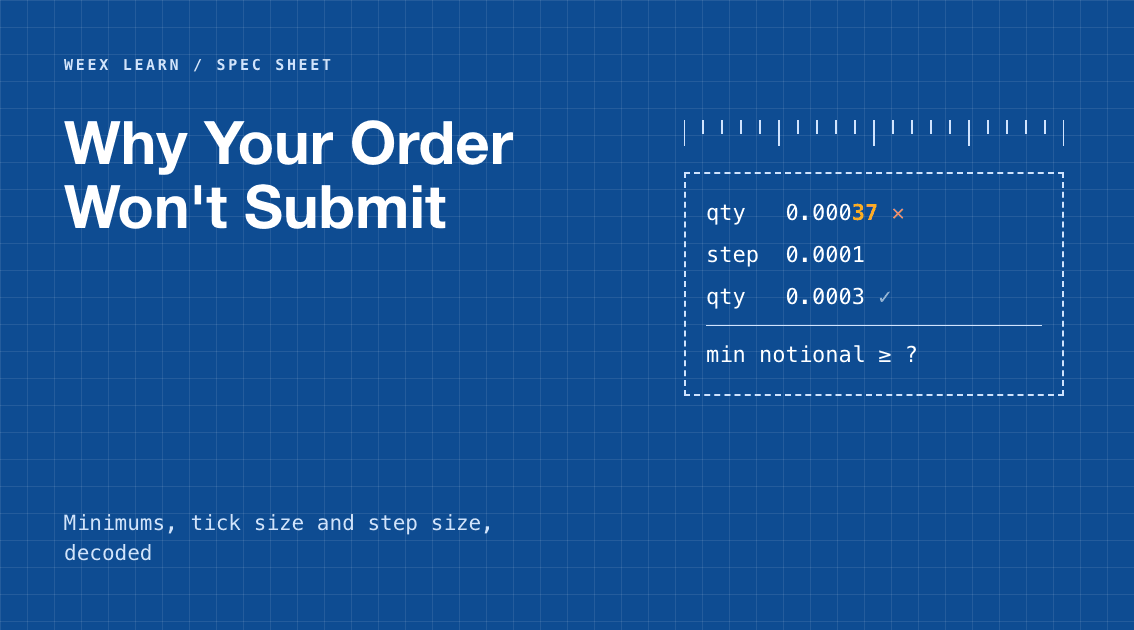
WEEX Minimum Order Size Errors Explained With Rounding Examples
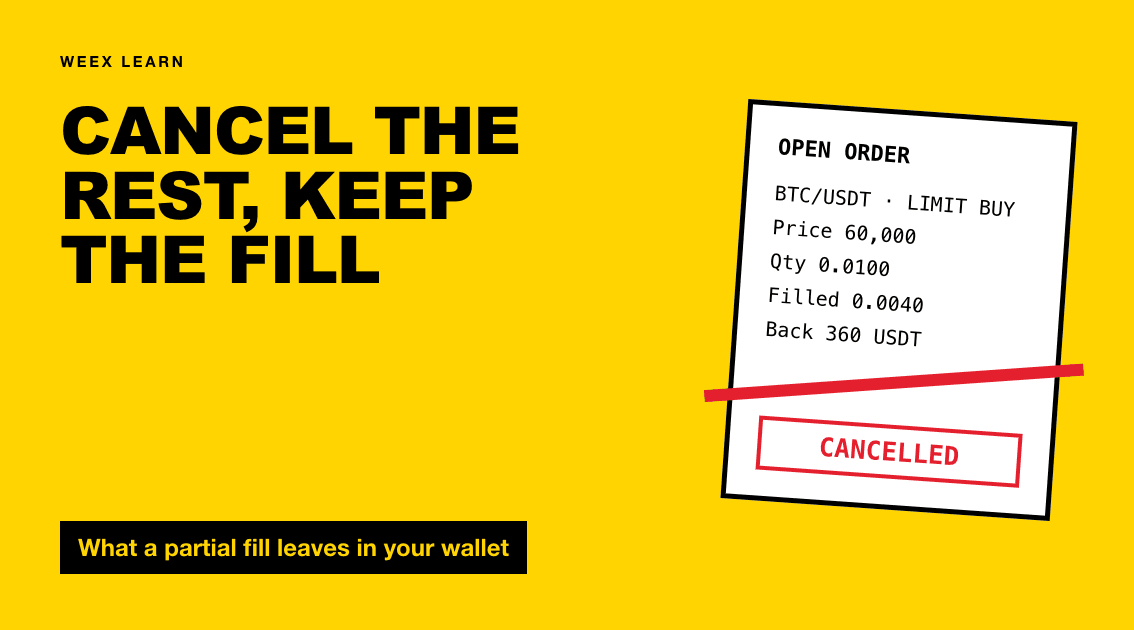
Cancel WEEX Spot Order: What Returns to Your Balance and When
WEEX Limit Order Not Filled? Read the Book, Then Fix the Order
How to Spot Trade on WEEX: From Pair Choice to a Confirmed Fill
How to Convert ETH to USDT on WEEX: Step-by-Step Guide
How to Convert USDT to BTC on WEEX: Step-by-Step Guide
How to Convert BTC to USDT: A Step-by-Step WEEX Guide
BTC Funding Rate and Open Interest: What Each One Measures and How to Read Them Together
How Transparent Is a Crypto Exchange? Checking Proof of Reserves and Protection Funds
How to Use the WEEX Trust Center: Check Reserves, Protection Fund and Official Contacts
Crypto Leverage Trading Explained: How Perpetual Futures, Margin and Liquidation Work
Bitcoin Margin Trading: BTC Liquidation Math at 3x, 10x and 25x
Crypto Leverage Trading Platform: 6 Checks Before You Deposit
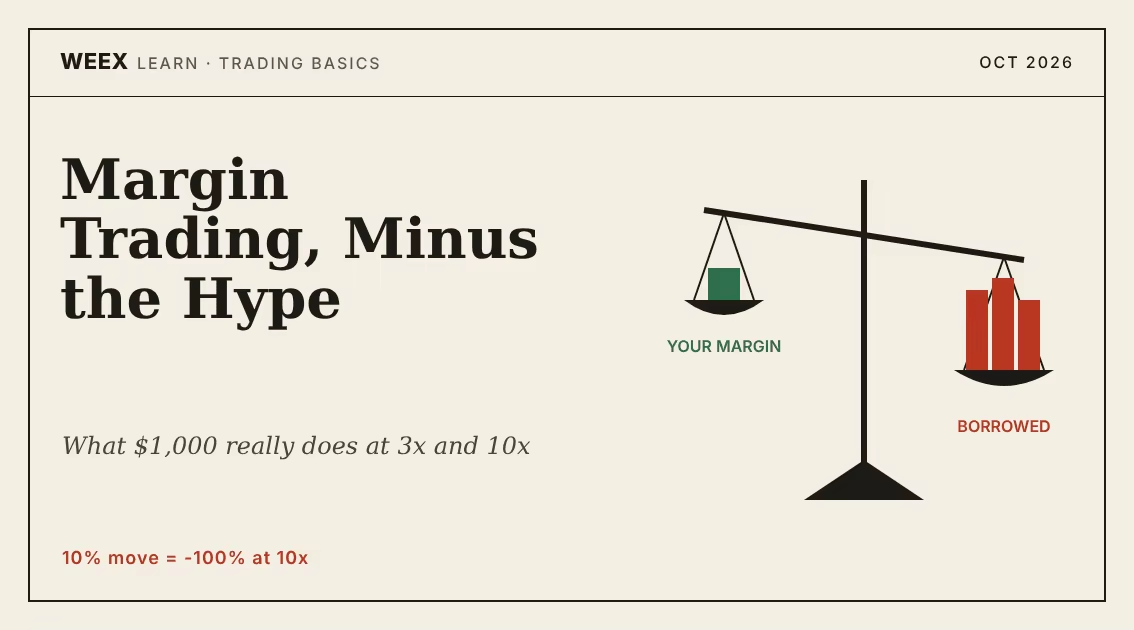
What Is Margin Trading? A $1,000 Example at 3x and 10x Leverage
How to Day Trade Crypto for Beginners: The Math Behind One Trade

Trading Psychology for Beginners: Crypto Traps and Hard Rules
What Is a Bitcoin ETF? How Creation, Custody and Fees Work

What Is Blockchain and How Does It Work? One Transaction, Traced
WEEX Convert Fees: What Zero-Fee Conversion Really Costs You
WEEX Convert Limits: Minimum and Maximum Amounts Explained

WEEX Convert Quote: How the 8-Second Price Lock Really Works
Binance Hack Explained: What Is Confirmed, What Is Disputed and What Users Should Do Now
How Do Stablecoin Issuers Make Money? The Business Behind a $1 Token
BTC Fights for $80K Before the Fed: Why Leverage Hasn't Flushed
WEEX Futures PnL: Why Your Three PnL Numbers Rarely Match
WEEX Reduce-Only Order: What It Does and When It Gets Cancelled
WEEX Stop Loss Not Triggered? Check the Trigger, Then the Fill





