
Perpetual Futures for Beginners: Margin, Funding and Liquidation Explained

 Prefer us on Google


Futures trading uses margin to open a long or short position so that a trader can participate in price movements without directly holding the underlying asset. A perpetual future has no scheduled expiry, but it still has funding, maintenance-margin, and liquidation rules; a beginner should understand those controls before thinking about leverage.
The three numbers in a futures position
- Margin: the collateral supporting the position. As available margin falls, the position has less room to absorb an adverse move. Different margin modes can change how other balances interact with the position.
- Unrealized profit and loss: the floating result calculated from the current mark or reference price. It is not the final result after closing. Trading fees, funding, execution, and the close price can change what remains.
- Liquidation distance: the room between the current position and the platform’s liquidation condition. It is not a guaranteed safety line and is not a reason to wait for a rebound. Reducing size, adding margin, or closing requires a clear understanding of the rule.
WEEX’s Taiwan contract-functions guide and contract-formulas guide were available with their expected titles on September 17, 2026. Use them to check the current interface terms. Mark price, index information, funding, settlement countdown, and maintenance conditions can differ by contract or product rule, so this article does not turn a live field into a permanent figure.
How a perpetual future works
After choosing a pair and direction, a trader selects an order type, position size, and margin mode. A limit order waits for the chosen price or better; a market order accepts available opposing orders. Both can be affected by depth, volatility, partial fills, and execution differences. Once open, the position’s unrealized result changes with the contract price, while funding moves between long and short positions according to the displayed rule.
No expiry does not mean a position can be held forever. When collateral falls below the maintenance requirement, the platform may reduce or liquidate the position under its rules. A fast move, thin liquidity, maintenance event, or network delay can leave little time to act. “The button lets me open it” and “my account can withstand the move” are different conclusions.
A first-operation reading order
- Confirm the pair and contract type, then read the mark, index, funding, and margin fields.
- Use a size small enough to let you observe opening, closing, margin transfer, and cancellation without depending on a large directional bet.
- Write down the maximum loss and exit condition before submitting an order. Do not commit the account’s full available balance to one idea.
- After opening, review margin, unrealized profit and loss, funding, liquidation information, and whether a closing order actually filled.
- Re-read the product rules whenever the interface shows a maintenance notice, trading restriction, or change in the contract specification.
-- Price
Where to check live conditions
Open the WEEX BTC/USDT perpetual page to check the current pair, mark information, funding field, order book, and margin details before making a decision. Leverage magnifies losses and can trigger liquidation quickly; if the margin mode is unclear, do not open a position. Only after understanding the derivatives risk should you compare it with the BTC/USDT spot page, where buying and selling does not create a leveraged futures position.
Risk controls worth keeping visible
A stop-loss instruction can help express an exit plan, but it cannot guarantee an execution price in a fast or thin market. Keep enough available margin for the intended volatility, avoid treating an unrealized gain as cash, and check fees and funding rather than looking only at the green or red profit field. The platform’s current liquidation and margin rules control the actual position, not a general beginner article.
Do not use a liquidation price as a target. A position near that condition can be affected by mark-price movement, fees, funding, and execution. If you cannot explain why the position remains open after an adverse move, the size or product is not yet understood well enough to trade.
Margin is a process, not a number
Margin management starts before the order. Decide how much of the account may be exposed, which balance must remain available for ordinary needs, and what event will make you close. A position that looks small in coin units can still be large relative to the account once contract size and leverage are considered. Record the intended size and exit before the market moves.
After the order, compare the opening record with the position panel. Check whether the order filled as expected, whether fees were charged, and whether the displayed liquidation information changed. If the contract page, help explanation, and account panel appear to disagree, pause and ask official support using the current help entry instead of guessing from a social post.
Common questions
Do futures require high leverage?
No. Leverage changes exposure relative to posted margin; it is not a condition for participating. A larger position makes the same price move produce a larger account change.
Does liquidation always mean money is owed to the platform?
Do not simplify it that way. The result depends on the position, collateral, price, fees, and the current contract rules. Read the product specification instead of assuming every pair behaves identically.
Can I watch only unrealized profit and loss?
No. Also watch available margin, funding, maintenance requirements, mark information, liquidation distance, and whether a closing order filled.
More reading: What is a funding rate? · Spot trading for beginners · WEEX exchange introduction for Taiwan users
This article is general information, not investment, financial, legal, or tax advice. Leveraged futures can cause rapid and substantial asset loss.
This content is provided for general informational purposes only and doesn't constitute financial, investment, legal, or tax advice. Any events, rewards, online promotions, or related information mentioned herein should not be considered a recommendation, solicitation, or invitation to purchase, sell, trade, or otherwise deal in any crypto assets. Crypto assets are highly volatile and may result in loss. The availability of WEEX services, products, and related events may vary by region. You are responsible for ensuring that your participation is in accordance with applicable local laws and regulations.
You may also like
What Is a Funding Rate? How Perpetual Futures Charge Longs and Shorts

What the LUSD Attack Shows About DeFi Risk
What Is BONK? WEEX Spot and 1000BONK Futures Status and Risk Checks
What Is BRETT? WEEX Spot and Futures Status and Risk Checks

What Is FLOKI? WEEX Spot and 1000FLOKI Futures Status and Risk Checks

What Is WIF (dogwifhat)? WEEX Spot and Futures Status and Risk Checks

Who Is Attending TOKEN2049 Singapore 2026? Top Speakers, Exchanges and Exhibitors to Watch
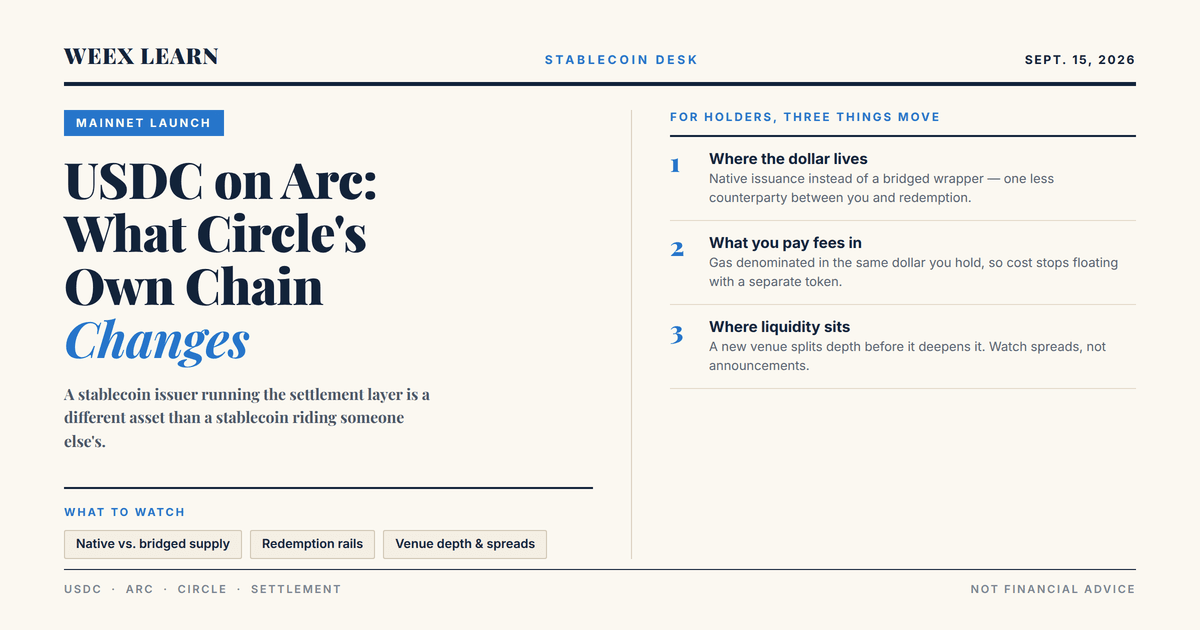
USDC on Arc: What Circle's Mainnet Launch Changes for Holders
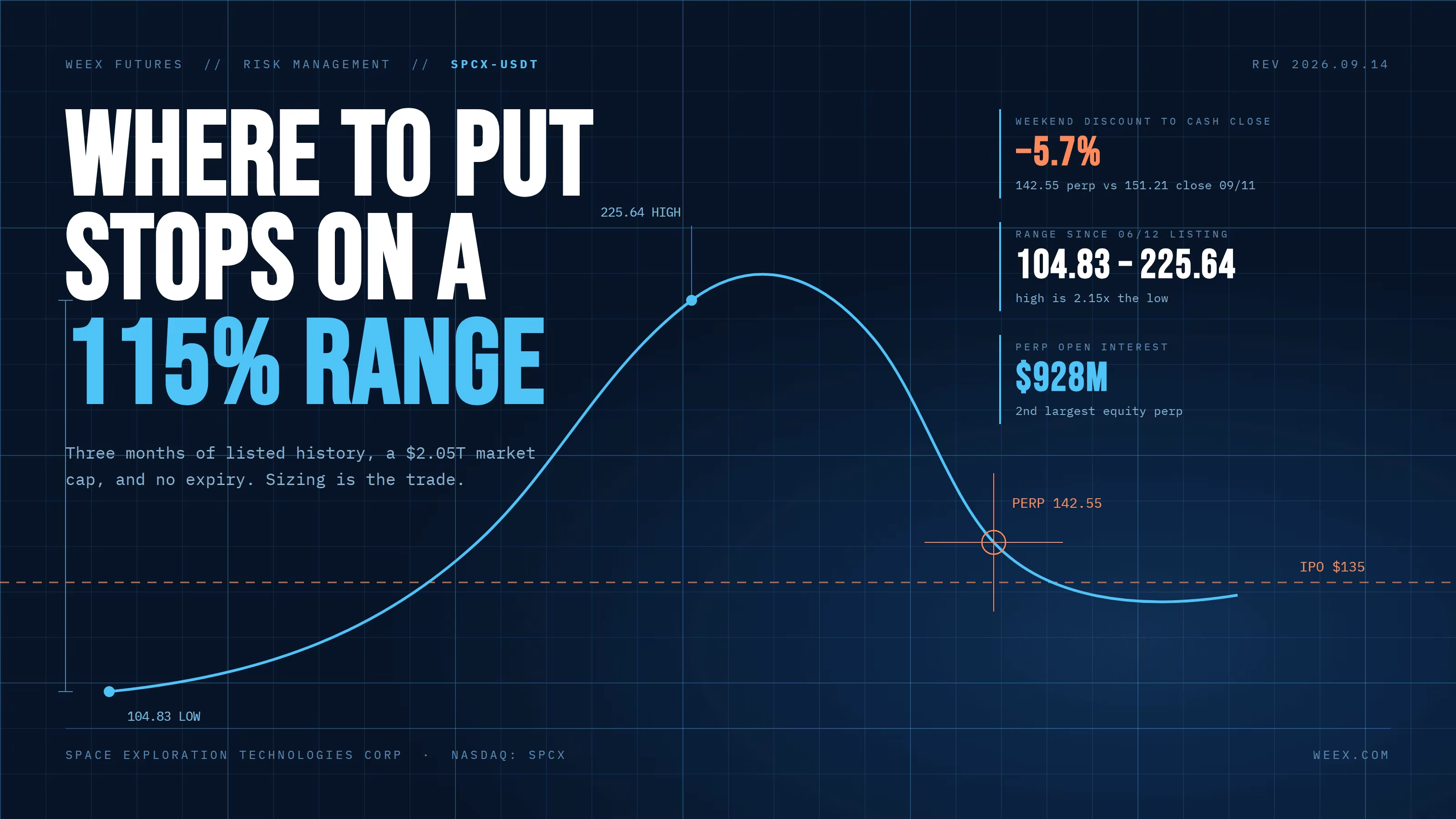
SpaceX Stock Futures: Where to Put Stops on a 115% Range
How to Trade Microsoft (MSFT) Stock Token with USDT on WEEX
How to Trade Apple (AAPL) Stock Token with USDT on WEEX
Crypto Futures Trading Explained: Leverage, Funding, Liquidation
Crypto Futures Trading: Leverage, Funding and Apple Perps
How to Trade Tesla (TSLA) Stock Token with USDT on WEEX: A Trading Guide for Beginers in 2026
How to Trade NVIDIA (NVDA) Stock Token with USDT on WEEX
How to Trade U.S. Stocks Without a Brokerage Account Using USDT

Nike Stock Price Prediction 2026: What the $50 Target Actually Requires to Happen

CLARITY Act Enters a Critical Window: What the September 15 Senate Vote Actually Means
What Are Spot Stock Tokens? How Synthetic Stock Trading Works

XST Coin Price Bounced 19% Off a New Low in Hours: Is This the Bottom or Just Noise?

What to Do After Buying USDT in Pakistan: Spot, Futures or Hold?

What Is the WEEX Mini App? A Lightweight Way to Trade Inside Telegram
XST Coin Price Crosses Into Deep Capitulation Territory: What a 90%+ Decline Actually Signals
CyberLeek Is Trending—but Why Are People Searching for CYBERLINK?
Nvidia After-Hours Stock Price: What Moved NVDA After the Earnings Report?
Crypto Futures Liquidation in Pakistan: How It Works and How to Manage Risk
Bank Account Freeze Risk for Crypto Traders in Pakistan 2026
Crypto Tax in Pakistan: What FBR Rules Mean for PKR Traders
Humanity Protocol Unlocked 266 Million H Tokens Today—Where Did They Go?
DGAI Has Trading Volume but No Reported Circulating Supply—So What Is Its Real Market Cap?
What Is a Funding Rate? How Perpetual Futures Charge Longs and Shorts
What the LUSD Attack Shows About DeFi Risk
What Is BONK? WEEX Spot and 1000BONK Futures Status and Risk Checks
What Is BRETT? WEEX Spot and Futures Status and Risk Checks
What Is FLOKI? WEEX Spot and 1000FLOKI Futures Status and Risk Checks
What Is WIF (dogwifhat)? WEEX Spot and Futures Status and Risk Checks





