
BNY Mellon Adds to Invesco Galaxy Bitcoin ETF: What Changes with the Custody Filing?

 Prefer us on Google


Key Points: In a Form 8-K signed on November 12, 2026, the Invesco Galaxy Bitcoin ETF disclosed a digital asset custody agreement with BNY Mellon that commenced on November 6. The sponsor is expected to utilize both BNY Mellon and Coinbase for the custody of the trust's Bitcoin, stating that the existing relationship with Coinbase will not be affected. This filing establishes an additional custody agreement, and it does not disclose how many Bitcoins have moved to BNY Mellon at the time of publication (if any movement occurred), nor does it imply that ETF shareholders will be able to withdraw the fund's BTC. The agreement outlines the management of private keys, the conditions under which assets are recorded in accounts, the approval methods for transfers, and the limitations of liability.
What Did the ETF Disclose on November 12?
The Form 8-K states that the date of the underlying custody agreement is November 6, with the signing date being November 12. These are different dates, and the agreement commenced before the public filing. BNY Mellon will open and maintain one or more custody accounts for the trust's Bitcoin. The sponsor indicates plans to utilize both BNY Mellon and Coinbase Custody Trust Company. It is also explicitly stated that the custody arrangement with Coinbase will remain unchanged.
This expression should be interpreted narrowly. This filing records the "addition" of a custodian and does not indicate the termination of other custodians, the approval of a new ETF, a change in the fund's investment objectives, or new purchases of Bitcoin. Additionally, the brief 8-K does not include a breakdown of the coins held by each custodian. To confirm the actual allocation, analysts will need to refer to future fund reports, custody-related disclosures, and other records. The execution of the contract may occur prior to transfers or may be used operationally as a receptacle before a substantial balance is deposited.
According to the filing, the fund's shares are traded as BTCO on Cboe BZX. Therefore, this news regarding custody pertains to the operation of the existing fund and does not serve as evidence that trading of a new ETF began on November 12. Investors should distinguish between the ETF's legal entity, its listing on exchanges, Bitcoin custodians, and service providers handling creation and redemption. These are often lumped together in news headlines, but each serves different functions.
Will Adding a Second Custodian Automatically Diversify the Fund's Bitcoin?
No. The 8-K states that the sponsor anticipates utilizing each custodian, but it does not specify target ratios, transfer dates, or minimum allocations. One conceivable operational model is to split the trust's Bitcoin among multiple custodians. Another is to have a second custodian on standby for specific flows. It is not possible to determine from this filing which arrangement is actually in place on any given day. These possibilities are analytical and do not represent reported allocations.
The introduction of multiple providers can change concentration risk but also increases the complexity of adjustments. The trust must ascertain which custodian's records reflect each holding balance, reconcile those records with fund accounting, and direct approved transfers to the appropriate destinations. If coin movement is required due to creation, redemption, or approved transactions, the operating procedures and timing of the relevant provider become crucial. The existence of a second custody agreement does not inherently mean that these processes will be faster, cheaper, or safer. Operational outcomes should be verified by actual usage.
This differs from a mechanism where a single key is split among multiple companies. According to the custody agreement, BNY Mellon will build a wallet and manage keys associated with its address. It does not state that BNY Mellon and Coinbase will jointly manage a single wallet or co-sign all transactions. Until this design is confirmed by another source, it should be avoided to describe this contractual relationship as multi-signature custody.
Who Owns the Bitcoin and Who Manages the Private Keys?
Under the contract with BNY Mellon, the trust remains the beneficial owner of the assets recorded under the contract. BNY Mellon will open an account in the name of the trust on its books. BNY Mellon will own and manage the relevant wallet for the benefit of its clients, and the trust will not have direct claims or management rights over that wallet or private keys. BNY Mellon bears the responsibility for safeguarding the keys necessary for the receipt and transfer of the corresponding assets. These terms clearly distinguish between economic ownership and technical control.
This distinction is a core concept for the ETF. Investors who purchase BTCO will hold shares representing a stake subject to the fund's structure and market price constraints. Investors will not acquire personal claims to specific on-chain outputs or the ability to sign Bitcoin transactions from the trust's wallet. The trust, sponsor, authorized participants (AP), execution providers, and custodians each function at different layers. Shareholders wishing to send BTC to a wallet cannot achieve this by withdrawing Bitcoin from the ETF.
The contract also states that the assets will be identified on BNY Mellon’s books and records as being segregated from the company’s own property. This is a legally and accounting significant statement, but it should not be confused with a public list of unique blockchain addresses for each investor. On-chain visibility and account-level rights attribution are separate issues. Without reliable attribution information, transactions on a public blockchain may not indicate which institution or fund a particular balance belongs to.
For a broader comparison, please refer to Phemex's Comparison Guide of Bitcoin ETFs and Direct Bitcoin Holdings. This article focuses on the operational conditions of this individual filing and provides more detailed explanations regarding ownership forms in a general guide.
-- Price
When Will Received Bitcoins Be Recorded as Custody Assets?
The contract does not state that all coins reaching the address managed by BNY Mellon will be treated as approved assets of the trust account. BNY Mellon is required to review and approve the corresponding digital assets before recording them. Typically, transfers are made from approved counterparties, and instructions must be issued in advance to identify the assets, amounts, counterparties, and addresses. The contract specifies that BNY Mellon has no obligation to review or approve airdrops.
This is important because on-chain transfers and the custody side's recording are separate events. Bitcoin may be confirmed on the network before the custodian completes checks and records it in the fund's account. During that period, the definition of recorded assets under the contract and the associated rights may not yet apply. Headlines equating all inflows to confirmed fund holdings overlook this step. It also implies that one should not infer the ETF's net asset value (NAV) or daily fund flows using only the apparent on-chain timeline.
Transfers also have conditions. The contract generally requires instructions identifying the assets, amounts, approved counterparties, and addresses, sufficient assets or cash to pay fees, and that the receiving side meets applicable laws, including the Travel Rule, as determined by the custodian. BNY Mellon may delay its response until the necessary information is complete. These are compliance and operational controls and do not constitute a promise of immediate settlement.
There are risks on both sides. Screening and approved address procedures can help suppress some fraudulent transfers or transfers to incorrect destinations. On the other hand, during market turmoil, compliance reviews, or network outages, legitimate activities may be delayed. This filing does not quantify expected processing times, so one should not infer specific redemption speeds from the existence of the contract.
Does the Custody Agreement Guarantee Protection Against Losses?
No. The contract requires BNY Mellon to maintain insurance of a type and amount that is commercially reasonable for the services provided, but it does not stipulate that all Bitcoin losses will be fully covered by insurance or that each shareholder has direct claims to that coverage. It is also explicitly stated that digital assets within the account are not bank deposits and are not covered by FDIC or SIPC deposit insurance. The existence of insurance provisions does not equate to unconditional guarantees.
Liability depends on the cause of loss and the standard of care under the contract. The contract states that BNY Mellon will perform its duties without negligence, fraud, malice, or willful misconduct, in accordance with the standards of a professional custodian. Furthermore, liability is limited to direct damages arising from failure to meet those standards, with a cap based on the dollar value of the recorded and lost assets. Indirect losses or lost profits are excluded. Legal consequences depend on the facts, contract interpretation, and applicable law, and this article does not judge hypothetical disputes.
Some risks arising from protocols fall outside the normal scope of custodian responsibility. The contract addresses network events and forks, including BNY Mellon’s authority to suspend support for affected assets or to refuse support for forked chains. Holders of Bitcoin ETFs bear market risks and risks inherent in the fund structure in addition to custody risks. Introducing a second custodian does not eliminate price volatility, tracking errors, fund fees, or discounts and premiums between share prices and underlying asset values.
What Should BTCO Holders Check Next?
First, look for future disclosures that demonstrate how the trust is actually utilizing the new custody route. The November 12 8-K establishes authority and contract terms but provides little information regarding asset allocation. Second, compare updated prospectuses and periodic reports to check for changes in custody descriptions, transaction procedures, and risk factors. Third, distinguish between provider names and the protections specified in the contract. Segregated management, instruction management, insurance, and liability each have different meanings.
For investors considering whether to choose BTCO shares or direct Bitcoin holdings, the practical issue is what rights are necessary. Shares of the fund can provide price exposure listed on exchanges through a brokerage account. In contrast, directly held BTC can be transferred on the Bitcoin network, subject to the holder's custody choices, network fees, key loss, and exchange withdrawal conditions. Even when BTC is purchased on a custodial exchange, the exchange retains custody until the user withdraws to a wallet they manage, which is not the same as self-custody.
Readers needing the assets themselves should check Phemex's How to Buy Bitcoin and verify the availability, payment costs, and custody conditions in their region before placing an order. CTA: Check BTC purchase options. Purchasing Bitcoin carries price risks, and the choice of counterparties does not eliminate the need to understand custody and withdrawal rules. The ETF filing information serves as material for such judgments and should not be presented as a basis for recommending transactions.
Frequently Asked Questions (FAQ)
Did Invesco Replace Coinbase with BNY Mellon?
No. The 8-K states that the existing custody arrangement with Coinbase will not be affected, and the sponsor anticipates utilizing both providers.
How Much Bitcoin is Already Deposited with BNY Mellon?
The 8-K does not include balances or allocation ratios. To confirm this figure, future fund disclosures will be necessary.
Can BTCO Shareholders Exchange Their Shares for Bitcoin?
Ordinary shareholders hold ETF shares and do not have personal rights to withdraw Bitcoin from the fund's custody wallet. Fund-level creation and redemption procedures are conducted through authorized participants (AP) based on fund regulations.
Does BNY Mellon’s Insurance Cover All Custody Losses?
The contract requires commercially reasonable insurance, but it does not stipulate that all losses will be compensated or that fund shareholders will receive direct deposit insurance coverage. Please review the insurance terms and fund disclosure materials before drawing conclusions about the coverage scope.
This content is provided for general informational purposes only and doesn't constitute financial, investment, legal, or tax advice. Any events, rewards, online promotions, or related information mentioned herein should not be considered a recommendation, solicitation, or invitation to purchase, sell, trade, or otherwise deal in any crypto assets. Crypto assets are highly volatile and may result in loss. The availability of WEEX services, products, and related events may vary by region. You are responsible for ensuring that your participation is in accordance with applicable local laws and regulations.
You may also like

Research Reveals 3D Spatial Navigation Map of Hand in the Brain to Aid Brain-Machine Interface Development

Yen Fluctuations Highlight Current Trading Difficulties, Investors Have Huge Divergence on Long-term Outlook

South Korea Proposes Withdrawal Suspension for Cryptocurrency: What Happens When Exchanges Suspect a Hack

Exclusive: Canton Strategic CEO warns MEV could raise costs for tokenized stock traders

CARF Customer Transaction Information Report: What Data Processing is Required from On-Chain Transactions to Tax Reporting?

Bottomline Completes First USDC Transfers Inside Its Enterprise Payments Platform

Bitcoin: Glassnode warns of liquidity shortage and capital flight

9-Minute Attack Window, 7.1 Million BTC Exposed: How Bitcoin Can Save Itself from Quantum Threats
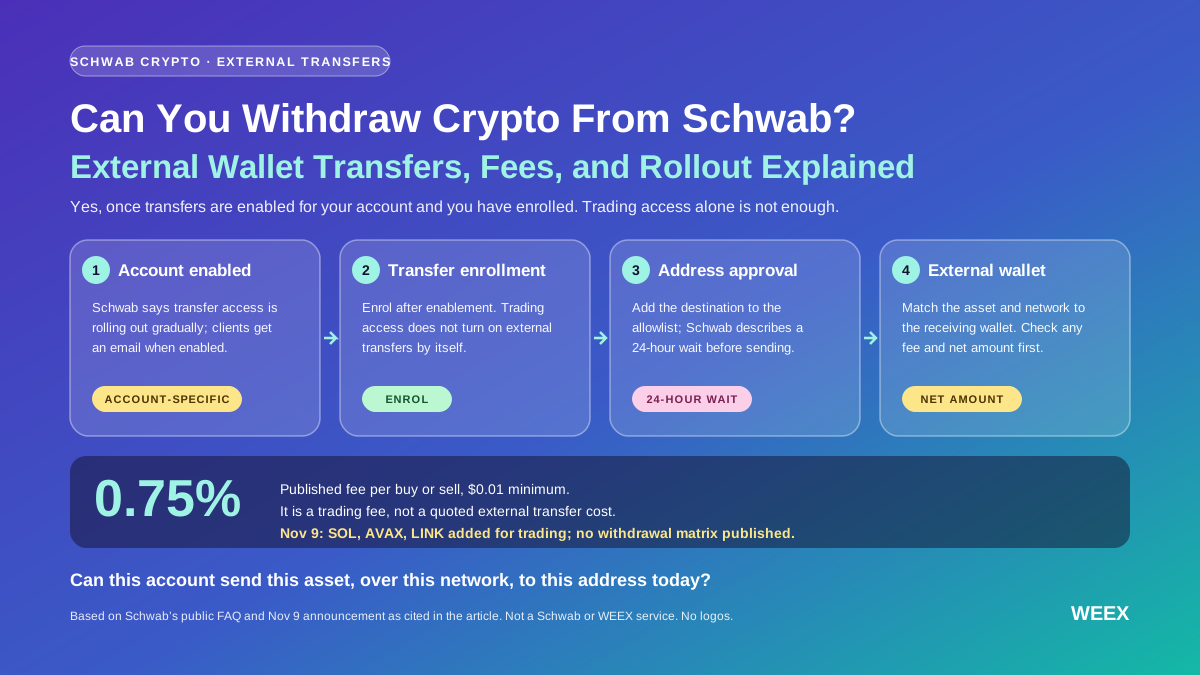
Can You Withdraw Crypto From Schwab? External Wallet Transfers, Fees, and Rollout Explained
Find out when Schwab Crypto allows external wallet withdrawals, how the 24-hour address wait works, and why the 0.75% trading fee is separate.

Adam Back Predicts Bitcoin Will Reach $1 Million by 2028

Bull Market Gains, Bear Market Losses: How to Calculate Taxes on Cryptocurrency Investments?
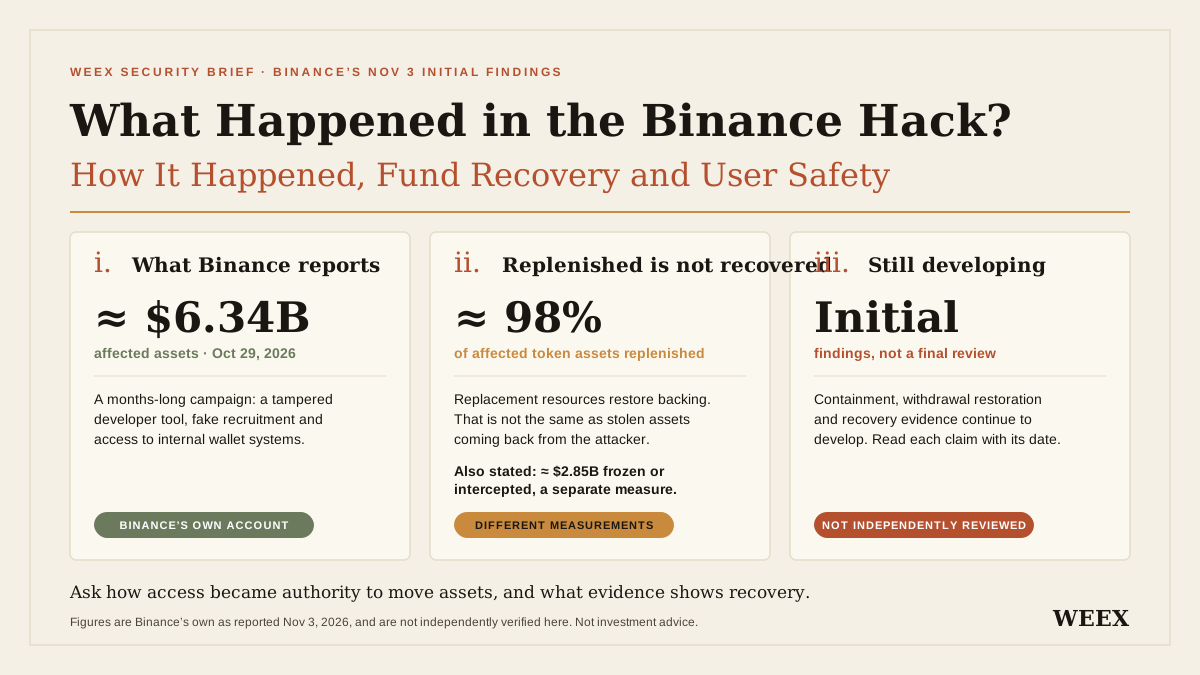
What Happened in the Binance Hack? How It Happened, Fund Recovery and User Safety
What happened in the Binance hack? Review the attack timeline, latest fund replenishment, recovery limits and practical steps to protect your account.

CPI Higher Than Expected in the U.S.: What It Means for Investors
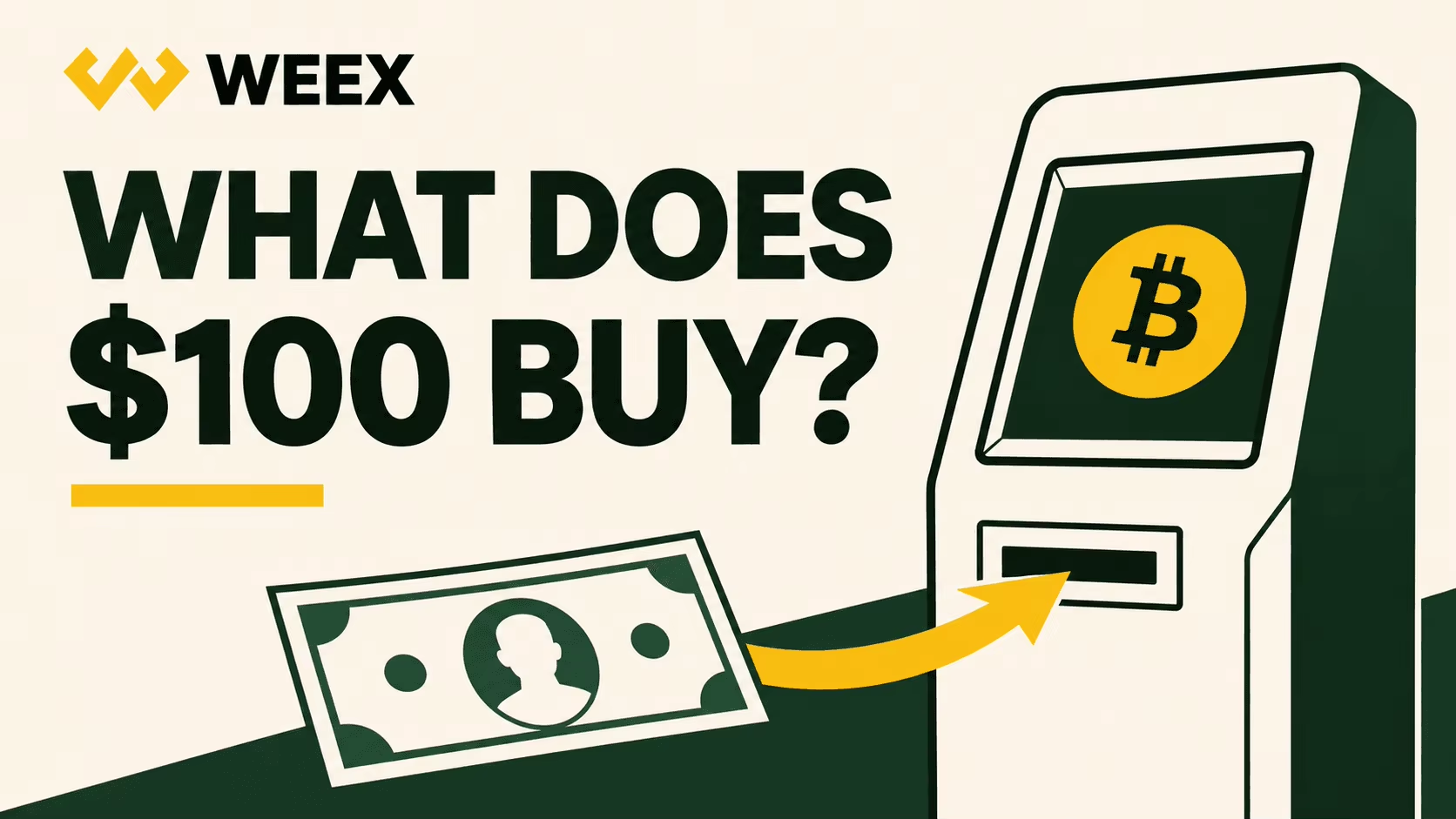
Crypto ATM Fees: How Much Bitcoin (BTC) Do You Get for $100?
See how much Bitcoin $100 buys at a crypto ATM. Compare two sample quotes, calculate the all-in cost, and learn which fees not to count twice.

Stablecoins: French People Stock Up on Self-Custody According to Chainalysis

Datachain Supports Mitsui Sumitomo Bank's On-Chain Financial Infrastructure Technology Review
Poland's Parliament Votes 240-202 To Let Officials Freeze Crypto Before Court Review

Visa adds Monad as stablecoin settlement run rate tops $25B

Algorithmic Trading and Cryptocurrencies: How Do Robots React to Volatility?

Cryptocurrency Anarchism Lacks Commitment, Coordination, and Reputation, Not New Tokens

Enza Closes $6 Million Funding Round to Develop Payment Infrastructure

Financial Commission to Manage Stock Market Volatility with Sidecars and High-Frequency Trading Checks

Solana's Former DEX Leader Prepares to Go All In on US Stocks
U.S. DOJ files for forfeiture of 456602 USDT linked to romance scams

Dunamu Vice Chairman Kim Hyung-nyeon Completes Tokenized Stock Technology Preparation and Expects Regulatory Approval

Bitso Business Says Stablecoin Payment Volume Now Runs Above $150B Annualized

ICE Investment, L2 Launch, and 1000x Leverage Mechanism: The Iterative Path of Hyperliquid's On-Chain Finance

Broadridge Says Blockchain Repo Platform Processed $7.6T in October
Coldcard’s $116M exploit sparks fresh clash over NVK’s defense

FATF Plans Closer Scrutiny of Countries With Weak Virtual Asset Controls
Research Reveals 3D Spatial Navigation Map of Hand in the Brain to Aid Brain-Machine Interface Development
Yen Fluctuations Highlight Current Trading Difficulties, Investors Have Huge Divergence on Long-term Outlook
South Korea Proposes Withdrawal Suspension for Cryptocurrency: What Happens When Exchanges Suspect a Hack
Exclusive: Canton Strategic CEO warns MEV could raise costs for tokenized stock traders
CARF Customer Transaction Information Report: What Data Processing is Required from On-Chain Transactions to Tax Reporting?
Bottomline Completes First USDC Transfers Inside Its Enterprise Payments Platform
Latest articles




Latest coin listings on WEEX


