
Consumer Interest in Stablecoins at 46% in Asia, but Only 16% Use Them

 Prefer us on Google


46% of consumers in the Asia Pacific region expect to use stablecoins within the next five years.
Only 16% have done so in the past year, reveals a new survey by Visa on consumer interest in stablecoins in Asia Pacific.
- Key Points
- Consumer interest in stablecoins is growing in Asia Pacific
- High awareness, still low understanding
- Trust and regulatory preferences guide next steps
- Visa's role in transforming interest into everyday use
Key Points
- Nearly one in two consumers in the region (46%) expects to use stablecoins in the next five years, compared to just 16% who have already done so.
- 66% are familiar with the term "stablecoin," but only 6% can correctly explain how it works.
- 41% mistakenly believe that the value of stablecoins always increases.
- Among those who know about stablecoins but do not use them, 38% fear fraud or scams.
- The study involved 14,250 people across 14 Asia Pacific markets between June and July 2026.
Growing Consumer Interest in Stablecoins in Asia Pacific
Consumer interest in stablecoins in Asia Pacific is rapidly increasing, although most people in the region still do not fully understand how these digital tokens work. Visa presented the results of the Consumer 360 survey, based on responses from 14,250 consumers aged 18 to 65 across 14 markets, including mainland China, India, Japan, Singapore, Thailand, Vietnam, and Australia. The field survey was conducted between June and July 2026.
46% of respondents say they are likely to adopt stablecoins within five years, compared to just 16% who have actually used them in the previous 12 months.
Interest is not limited to trading. Consumers increasingly see stablecoins as useful for everyday online purchases, travel expenses, and shopping abroad. Cross-border payments emerge as a particularly strong use case: 49% of respondents believe that stablecoins could become a common way to send money across borders within five years, a result that opens up prospects for remittances and international transfers.
High Awareness, Still Low Understanding
Stablecoins have become a familiar term, but familiarity does not equate to understanding. According to Visa's data, 66% of consumers in Asia Pacific are aware of stablecoins, but only 6% demonstrate a true understanding of how they work.
This knowledge gap translates into persistent misconceptions. About 41% of consumers mistakenly believe that the value of stablecoins always increases. 49% of those who know about stablecoins still think they are only for buying or selling other cryptocurrencies, indicating that many people have not connected these tokens to everyday payments.
-- Price
Trust and Regulatory Preferences Guide Next Steps
Among those who know about stablecoins but have never used them, 38% cite fear of fraud or scams, while 36% simply state that they do not understand the technology well enough. These numbers suggest that education and security, not just awareness campaigns, will determine the speed of adoption.
When asked who they would prefer as a provider of stablecoin-related services, consumers showed a preference for regulated players. Entities linked to governments or central banks received the highest preference at 27%, followed by regulated banks or financial institutions at 26%.
Visa's Role in Transforming Interest into Everyday Use
Visa stated that it is working with banks, regulated financial institutions, and payment partners to integrate stablecoin-related functionalities into the payment experiences that consumers already know and trust. The company has indicated that this collaboration is central to bridging the gap between consumer interest in stablecoins and actual everyday use.
"We are seeing a significant shift in how consumers in Asia Pacific think about stablecoins," said Nischint Sanghavi, head of digital currencies for Asia Pacific at Visa. "Consumers are beginning to understand how stablecoins could support the ways they already spend and move money, especially through online purchases, travel, and cross-border transfers. The opportunity now is to transform that interest into reliable and familiar payment experiences that work at scale."
Sanghavi added that the research "confirms what we have been working towards," explaining that consumers want stablecoins to "feel like a natural part of the payments they already trust, not a separate system," and that Visa's role is to connect the technology to secure and familiar payment experiences that people rely on every day.
Commissioned in 2026, the Visa Consumer 360 study conducted the field survey between June and July in mainland China, Taiwan, Hong Kong, Japan, Korea, Singapore, Malaysia, Thailand, Indonesia, the Philippines, Vietnam, India, Australia, and New Zealand.
This content is provided for general informational purposes only and doesn't constitute financial, investment, legal, or tax advice. Any events, rewards, online promotions, or related information mentioned herein should not be considered a recommendation, solicitation, or invitation to purchase, sell, trade, or otherwise deal in any crypto assets. Crypto assets are highly volatile and may result in loss. The availability of WEEX services, products, and related events may vary by region. You are responsible for ensuring that your participation is in accordance with applicable local laws and regulations.
You may also like
Bitcoin: Over 80,000 Blocks Until the Next Halving

Bitcoin: Strategy Acquires Another 334 BTC, Raising Its Reserve to 848,000

FinCEN Withdraws Regulations on Wallets and Mixers, CFTC Proposes Leverage Oversight
Treasuries at 5.30% and Nasdaq at Record High: What Explains the Divergence

SignSplit's Strategic Seed Funding Values Startup at $1 Billion

SNDK Stock Fell 3.8% After a 650% Rally: Does a Single-Digit P/E Make Sandisk Cheap or Just Cyclical?

Bitmine stakes $13.8 billion in ETH as treasury tops 6 million tokens

MSTR Stock Slips After Strategy Buys Just 334 Bitcoin: Why It Spent More on Preferred Shares Than on BTC

INTC Stock Drops After TSMC Terafab Talks: Is Intel's Biggest Outside Endorsement at Risk?
Bitcoin Holds at $86,000 as Dollar Reaches Highest Level in 18 Months

Banks vs Crypto: US Banking Lobby Challenges Banking Charters in Court
U.S. Midterm Elections Just 30 Days Away: Cryptocurrency Industry Faces Dilemma

a16z Unveils the Truth Behind AI Boom: The Top 1% Support the Entire AI Narrative
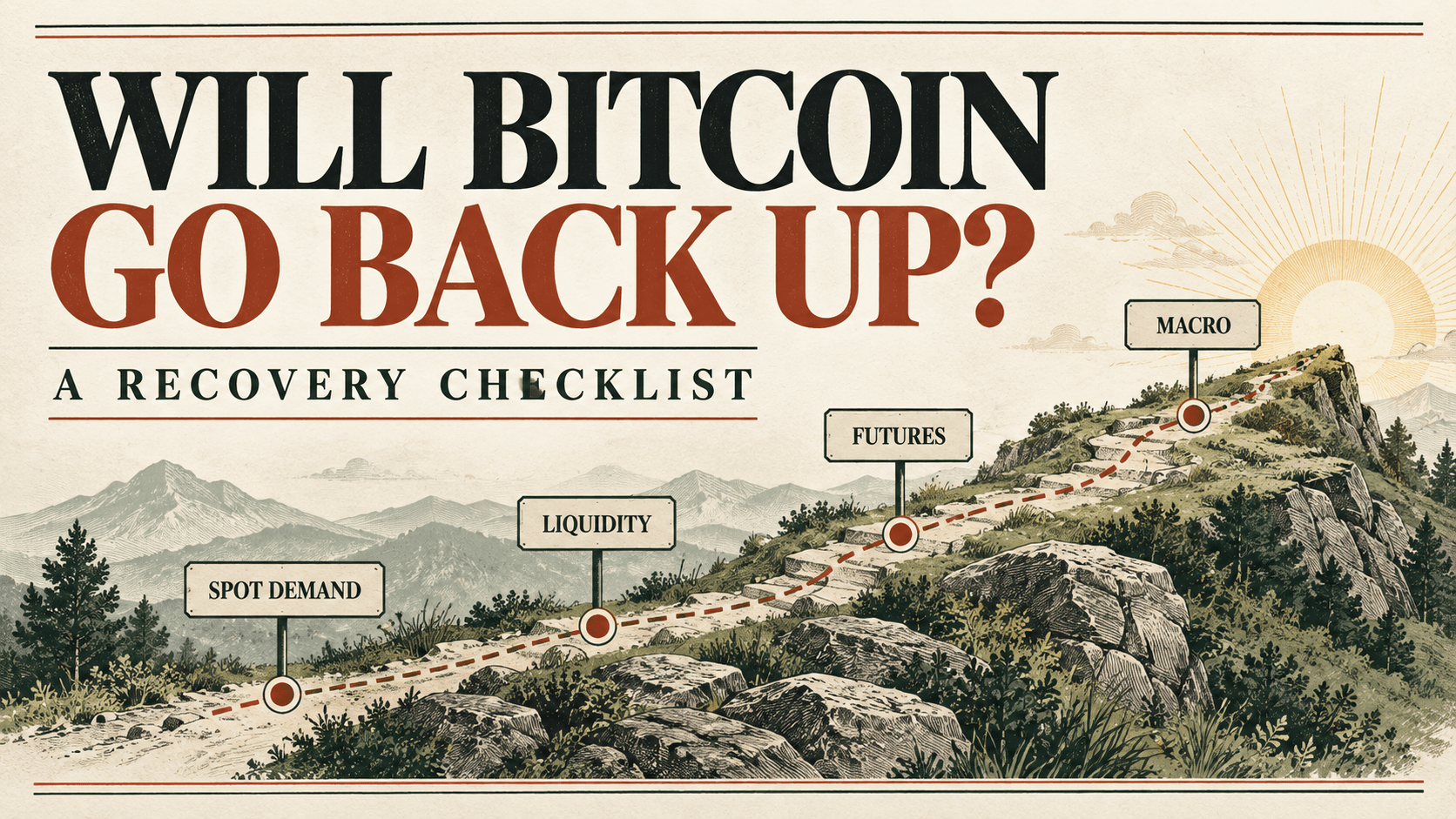
Will Bitcoin (BTC) Go Back Up in 2026? How to Tell a Real Recovery From a Short-Covering Bounce
Will Bitcoin go back up in 2026? Learn how spot demand, ETF flows, crypto liquidity, futures positioning and macro conditions shape a real BTC recovery.
Can You Live Only on Stablecoins? Industry Experts Respond with Yes or No

STONK Community Coins Share 33% of Meme Rewards With PENGU and USELESS Holders: How the Model Works
Stonk launched Community Coins on October 3, sending 33% of holder rewards from each community-mode meme launch to eligible holders of USELESS, PENGU, ZCAT, ANSEM and NEET. The STONK token itself is not one of those community coins, so its link to the new model is indirect.

Anchorage Digital Cuts 17% of Workforce Amid $42 Billion USDT Investment

Examining Hong Kong's RWA Tokenization from Issuance to Overseas Distribution
"A National Strategy Can Be Formulated in Six Months" - Policy Calendar Discussed by Masaki Hirakawa
Financing Weekly Report | Crypto Enterprise Banking Platform Limited Raises $18.5 Million in Seed Round; SoftBank Completes $10 Billion Third Round Investment in OpenAI
Survey of 2,423 Coin Investors: "What Do You Think About Taxation?"

SHIB Launched on Solana with Sunrise Integration

New Treasury rules could change how stablecoin issuers get your dollars back
India’s local crypto exchanges get just 0.7% of inflows, Chainalysis reports
Cash-and-carry: the yield we know before cashing it in

Bank of America Warns: Is the U.S. Stock Market Repeating the 2000 Dot-Com Bubble?

Inside the Life of Billionaire Zhao Changpeng
Inside CZ's Haven: Exploring the Life Behind the Most Powerful Figure in Crypto
Bitcoin vs Gold: A World Record for ETFs, 20 More Tons in China

Microsoft's Account Hacked to Promote Clippy Memecoin
Bitcoin: Over 80,000 Blocks Until the Next Halving
Bitcoin: Strategy Acquires Another 334 BTC, Raising Its Reserve to 848,000
FinCEN Withdraws Regulations on Wallets and Mixers, CFTC Proposes Leverage Oversight
Treasuries at 5.30% and Nasdaq at Record High: What Explains the Divergence
SignSplit's Strategic Seed Funding Values Startup at $1 Billion
SNDK Stock Fell 3.8% After a 650% Rally: Does a Single-Digit P/E Make Sandisk Cheap or Just Cyclical?


