
This Tech Wreck Looks Just Like 2018. Back Then, Here's What Happened Next.

 Prefer us on Google


Free ArticleExplore Premium Services
This Tech Wreck Looks Just Like 2018. Back Then, Here's What Happened Next.
Will tech bounce back?
By Billy Duberstein -- Nov 23, 2026 at 9:30AM EST +Fool.comon
Key Points
Technology stocks have gotten hammered over the past month and a half.
The severe sell-off seems similar, in many ways, to late 2018.
Here's what happened back then, and how things may resolve similarly or differently going forward.
The last two months have been brutal for the technology sector, especially semiconductors. Today, everyone has an opinion on when the bottom might be in.
Is the AI bubble popping, like the dot-com bubble in 2000? Or is the current downturn like other difficult corrections that preceded big rallies, such as the COVID downturn or the post-COVID inflation scare?
In this investor's eyes, the 2026 tech wreck looks almost exactly like a different year. Here's why today's decline looks so similar, and how the market reacted after that example.
Index
NASDAQ Composite Index
Today's Change
(-5.28%) -1261.47
Index Level
22,617.73
Key Data Points
Day's Range
22,513.01 - 23,837.76
52wk Range
20,794.64 - 27,599.89
-- Price
Is this 2018 all over again?
The parallels between this sell-off and that of late 2018 are striking:
- As in 2018, 2026 has actually seen very strong earnings growth. 2018 earnings growth was 23.9%, and this year is expected to see similar 23% earnings growth, according to 3Fourteen Research. Usually, years with strong growth are positive years, but 2018 and 2026 are rare exceptions.
- Like 2018, 2026 is a midterm election year during a Trump administration.
- As in 2018, Federal Reserve officials under a newly appointed chairman have made hawkish comments about raising interest rates, exacerbating existing fears of a cyclical slowdown in technology and semiconductor stocks.
- The Trump administration, in both cases, either threatened or imposed more restrictions on certain semiconductors and semiconductor equipment to China.
The parallels are very striking, though the composition of the decline has nuanced differences. In 2018, the Nasdaq Composite (^IXIC -5.28%) crashed about 23.6% peak-to-trough in late December, finishing the year down roughly 3.9% overall.
Currently, the Nasdaq is down about 13.9% from its Oct. 6 high and is now down 2.7% for the year. While the current top-to-bottom downturn hasn't been as deep, the semiconductor index has seen a larger drawdown than in 2018, over 43% from its highs, versus roughly a 23% drawdown in late 2018. That's in line with the more severe drawdowns in the chip sector in 2022 and early 2025, likely due to concerns that the massive AI build-out will run out of steam.
So while the Nasdaq hasn't seen as big a top-to-bottom drawdown as in 2018, it is down similarly for the year, and certain components, such as the chip subsector, are actually down more.
Image source: Getty Images.
How today is different, for better and worse
There are, of course, no perfect parallels, even if history does rhyme, and today's drawdown has both positive and negative differences relative to 2018.
On the positive side, the AI build-out appears to be far larger and earlier in its life cycle than the "boom" of 2018, which was centered on traditional cloud computing. GPU rental prices remain resilient, and token consumption is growing rapidly.
According to OpenRouter, an API service that allows developers to consume tokens from multiple models, token consumption is still rising exponentially, up 25x since January. And the trajectory doesn't seem to be slowing down; October's consumption of 790 trillion tokens grew nearly 37% over September, in just the span of one month!
Of course, there is also the big elephant in the room that wasn't present in 2018: Nvidia (NVDA -14.01%) and the recent scandal surrounding CEO Jensen Huang's untimely resignation.
As of this writing, the SEC has launched an investigation into Nvidia's accounting practices and whether the company knowingly funneled its advanced GPUs to China. Nvidia had also provided financing or an implicit backstop for a web of customers, including start-ups that use all these tokens, as well as the "neoclouds" that provide computing for them.
Whether Nvidia will continue down the path of aggressively funding start-ups and neoclouds remains unknown. If it doesn't, the ultimate impact on the AI trade, which is partly dependent on these start-ups and neoclouds, both of which consume and produce tokens, remains unclear.
The good thing is that the three big hyperscale cloud providers have strong balance sheets to fund the build-out, so it isn't as if their continued investment will stop as long as token demand is there, which it appears to be. However, it remains to be seen whether Nvidia will continue being as aggressive in funding some of its customers and neoclouds as it was before.
The good news
The good news for investors is that after the 2018 decline, 2019 was a great year for the stock market. The Nasdaq Composite not only rebounded 35.2% but also grew over the two following years.
Of course, that rally was somewhat dependent on the U.S. not falling into a recession, combined with the Federal Reserve backing off its interest rate increases and then later returning to interest rate cuts. The Fed raised rates four times in 2018, weakening the economy. However, investors took comfort in the 2019 "dovish pivot," which included three rate cuts, and the market rallied over 35% despite S&P 500 (^GSPC -3.70%) earnings growth of only 5.4% that year.
In September, the Federal Reserve began raising interest rates again, with officials recently saying more hikes are likely. Therefore, all eyes will be on new Fed Chair Kevin Warsh at the next Fed meeting, scheduled for Dec. 9.
The big picture
It is often a fool's errand to try to time the market's ups and downs, especially amid this unprecedented AI boom. Still, the many parallels to the late-2018 downturn offer hope for next year.
Amid all the turmoil and uncertainty, investors should stick with their regular investing plans, allocating a portion of their savings to high-quality stocks each month, with an eye toward the long term -- not just next month or next year. |
| Read Next |
|---|
| Nov 23, 2026 •By Will Ebiefung Nasdaq Stock Market Correction: History Says This Could Happen Next |
| Nov 22, 2026 •By Daniel Foelber The S&P 500 and Dow Jones Are Dangerously Close to Joining the Nasdaq in a Correction. Here's the Level That Would Put the Nasdaq in a Bear Market, and What History Says Investors Should Do During a Stock Market Crash. |
| Nov 22, 2026 •By Trevor Jennewine The Stock Market Sounds an Alarm as Investors Get Bad News About President Donald Trump's Economy |
| Nov 20, 2026 •By Emma Newbery Stock Market Today, Nov. 20: Stocks Plunge as AI Trade Unwinds |
| Nov 20, 2026 •By Bram Berkowitz The Nasdaq Just Had Its 6th Correction in 4 Years. History Says This Is the Likelihood of a Full-Blown Bear Market |
| Nov 20, 2026 •By RJ Fulton Stock Market Midday, Nov. 20: Nasdaq Plunges Nearly 3% as AMD and Micron Lead a Brutal Semiconductor Sell-Off |
| ### About the Author |
| Billy Duberstein is a contributing Motley Fool technology analyst covering semiconductors, hardware, software, and AI, as well as consumer goods. Billy loves looking at the story behind investments from an interdisciplinary point of view, with an equal appetite for high-growth disruptors and beaten-down value names. He is also CEO of Stone Oak Capital, a registered investment adviser in California. He previously worked as a technology analyst for several hedge funds and as a research assistant at Wedbush Securities. Billy holds an MBA in finance from New York University and a bachelor's degree in music from the University of Virginia. |
| TMFStoneOak Billy Duberstein and/or his clients have no position in any of the stocks mentioned. The Motley Fool has positions in and recommends Nvidia. The Motley Fool has a disclosure policy. |
This content is provided for general informational purposes only and doesn't constitute financial, investment, legal, or tax advice. Any events, rewards, online promotions, or related information mentioned herein should not be considered a recommendation, solicitation, or invitation to purchase, sell, trade, or otherwise deal in any crypto assets. Crypto assets are highly volatile and may result in loss. The availability of WEEX services, products, and related events may vary by region. You are responsible for ensuring that your participation is in accordance with applicable local laws and regulations.
You may also like

Want to Invest in Starlink but Think SpaceX Is Too Expensive? This Might Be Another Way to Profit From Its Growth

Warren Buffett's Successor, Greg Abel, Just Sent a Massive Warning to the Market

Should You Buy Marvell Technology Stock Before Dec. 1?
Binance: The ultimatum tightens for French clients
The Best ETF to Buy if You're Nervous About a Stock Market Crash
3 Unstoppable AI Stocks to Buy Hand Over Fist Before the End of 2026
Will Costco Do a Stock Split Before the End of 2026?

Bonding Curve and LP Incentives: Key Modules and Evolution Trends of New Token Liquidity Mechanisms
SpaceX Sued in Oregon and Virginia: AI Generates Explicit Pornographic Images
Bitcoin: Strategy buys 485 BTC and spends $228 million on its STRC shares
Nvidia's 10-Q Is Delayed. Here's What I'm Looking for When It Lands.
Former Pharmacist's $875 Million Startup Deal Quickly Goes Sour: Is This 'Acquisition Kill'?
Big Short Names Apple, Costco, and Walmart as Early Safe-Haven Targets Amid Market Collapse
Should You Buy XRP (Ripple) While It's Below $1? The Answer Might Surprise You.

a16z: Do Mathematicians Still Have a Place When AI Solves Centuries-Old Mathematical Problems?
Sandisk Just Split Its Stock 8-for-1. Is It Time to Buy?
XRP Ledger lending upgrade just 5 votes away from approval
Media: Jensen Huang and His Wife Have Accumulated Vast Wealth

Is the AI bubble bursting? Dell and Workday set to disclose earnings
Stock Market Sell-Off: Here's My Honest Take On What Every Long-Term Investor Should Do Right Now
The Scarce Dividend in the Autonomous Taxi Race: Supporting Service Stations
FFR Digital Assets Reduced to $2 by End of September

How did Revolut, valued at $115 billion, become a challenger to banks?
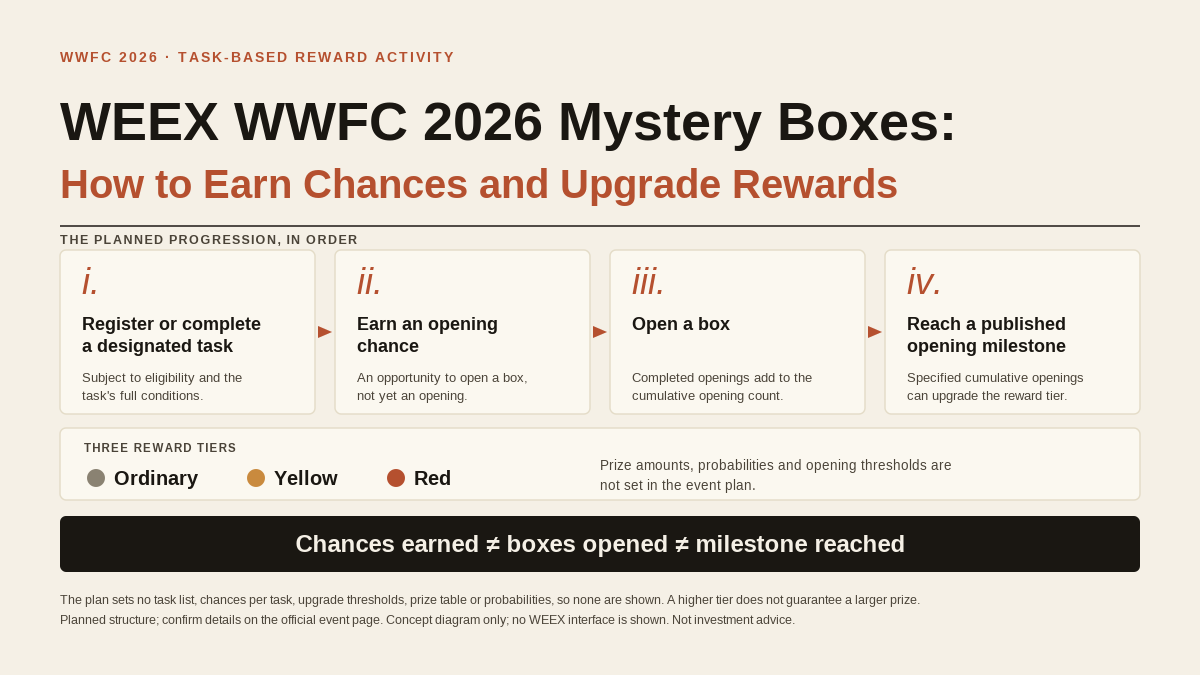
WEEX WWFC 2026 Mystery Boxes: How to Earn Chances and Upgrade Rewards
Explore WEEX WWFC 2026 mystery boxes: how to earn opening chances, understand three reward tiers, and track cumulative openings toward reward upgrades.
Trump Willing to Collaborate with Democrats to Set Limits on Credit Card Rates and Fees
How Novig Became the Third Largest Prediction Market in Just Three Months
Research on 83 Token Buyback Dividends: Which Mechanism Can Drive Prices Up the Most?
Is the Real Use of Bitcoin Payments 'Coffee and Meals'? Revealed by Square's Data

What Happens to the US Stock Market After the Fear and Greed Index Falls into Extreme Fear?
AI to Conquer Cancer in Five to Ten Years? Novartis CEO: Unlikely
Want to Invest in Starlink but Think SpaceX Is Too Expensive? This Might Be Another Way to Profit From Its Growth
Warren Buffett's Successor, Greg Abel, Just Sent a Massive Warning to the Market
Should You Buy Marvell Technology Stock Before Dec. 1?
Binance: The ultimatum tightens for French clients
The Best ETF to Buy if You're Nervous About a Stock Market Crash
3 Unstoppable AI Stocks to Buy Hand Over Fist Before the End of 2026
Latest articles


Latest coin listings on WEEX


