
Grok 4.7 Release Claims: A Taiwan User Verification Guide

 Prefer us on Google


Information checked 16 September 2026. This page separates a product announcement from independently verified performance and does not turn promotional comparisons into test results.
The Grok 4.7 announcement raises a practical question for Taiwan readers: when an AI model is said to be public “within ten days,” can people use it today, or is that only a timetable stated by the team? The source news story records Elon Musk's claim about Grok 4.7. This page uses a product-checking framework rather than endorsing the model.
What the announcement says
The report says Grok 4.7 was expected to become publicly available within ten days and describes a 2.1 trillion-parameter architecture, compared with 1.5 trillion parameters for Grok 4.6. It also says that the larger model could run somewhat more slowly while using tokens more efficiently. These figures and statements are claims reported around the release; they are not, by themselves, independent test results.
The same report says SpaceX data was used in fine-tuning and cites Grok 4.6 scores of 61 on the AA Intelligence index and 1,753 on GDPVal-AA v2. Those are historical scores from the report's context. They cannot establish that Grok 4.7 will be faster, more accurate or more suitable for Taiwan users.
Why parameter count is not user experience
Parameter count describes one aspect of an architecture, but it is not a single quality score. User experience also depends on context length, tool access, latency, regional availability, content policies, training-data cut-off and interface design. Models with different parameter counts can behave differently on summarisation, code, Traditional Chinese or fact checking.
“Token efficiency” also needs a definition. It might mean fewer output tokens for one task, or an average under a particular prompt and service configuration. Without the test set, prompt, hardware, model version and statistical method, a product description cannot be converted into savings that every user will see.
Four checks before and after public release
- Public status. Confirm whether the official documentation says research preview, invited test, API availability or general access. A ten-day statement does not mean every account or region opens at the same time.
- Data and privacy. Read whether inputs are used for training, how long they are retained, how history can be disabled, how an account is deleted and which third parties are involved. Do not paste client data, private keys, identity documents or unpublished business information into a tool whose handling you have not confirmed.
- Traditional Chinese quality. Test Taiwan usage such as 「出金」, 「交易所」 and 「合約」, along with date formats and names of legal institutions. Check whether the model changes Traditional Chinese into Simplified Chinese, imports a US legal concept into Taiwan, or omits a limitation.
- Reproducible evaluation. Record the model version, date, prompts and outputs. Compare tasks such as summaries, source citations, number transcription and refusal boundaries. Label the sample and method instead of drawing a conclusion from one conversation.
-- Price
“Stronger” and “more suitable” are different
When a publisher says a model is “better,” it may be describing an internal benchmark, reasoning ability or cost. Taiwan readers need suitability for a particular job. For crypto news, check source citations, date handling and uncertainty labels. For code, check tests, dependencies and error handling. For customer service or account work, confirm permission boundaries and human review.
AI output can be confidently wrong. A model may rewrite a forecast as a fact, turn a company statement into a verified result, or mix up Grok, SpaceX and other products. The smallest safe workflow is to request sources, open the originals, check each number and preserve an unconfirmed item as unconfirmed instead of filling the gap.
Observation list for 16 September 2026
After release, watch the official version number, available regions, terms of service, pricing page, API documentation, independent evaluations and error reports. If a number has no published definition, treat it as promotional information awaiting verification. If retention or training options change, reassess whether the service still fits the workflow.
This Grok 4.7 story is useful because it turns “a large model is coming” into concrete checks: when is it available, to whom, under what conditions, and do independent tests support the claim? Until those answers appear, readers do not need to pre-approve any version.
For a Taiwan team, data location and permissions belong in the same checklist. If a model can read customer conversations, source code or trading records, confirm whether inputs are retained, who can access them, whether training use can be disabled and how deletion requests work. Trial a new version with de-identified samples and low-risk tasks, and save the inputs, outputs and version details. Any result touching accounting, compliance or security should receive human review.
A release claim should also be separated from availability. A headline may refer to an announcement, a private test, an invitation-only preview or a generally available product. Those states have different implications for a reader in Taiwan. Check the official date, eligibility, service region and pricing before changing a workflow or sending sensitive material to a new endpoint.
Related reading
For another dated story read through a verification framework, see the Taiwan explainer on the CLARITY Act; for official-domain and support-channel checks, read the live guide How to Identify Fake WEEX Websites and Customer Service Impersonators.
This page is general information, not financial, investment, legal or technical advice, and does not guarantee the availability, accuracy or future performance of any AI tool. Read current terms and protect sensitive data before using a third-party service.
This content is provided for general informational purposes only and doesn't constitute financial, investment, legal, or tax advice. Any events, rewards, online promotions, or related information mentioned herein should not be considered a recommendation, solicitation, or invitation to purchase, sell, trade, or otherwise deal in any crypto assets. Crypto assets are highly volatile and may result in loss. The availability of WEEX services, products, and related events may vary by region. You are responsible for ensuring that your participation is in accordance with applicable local laws and regulations.
You may also like
Lisk Chain Shutdown October 31: How to Move LSK Safely
What Is BONK? WEEX Spot and 1000BONK Futures Status and Risk Checks
What Is BRETT? WEEX Spot and Futures Status and Risk Checks
What Is FLOKI? WEEX Spot and 1000FLOKI Futures Status and Risk Checks
What Is WIF (dogwifhat)? WEEX Spot and Futures Status and Risk Checks
Is WEEX Legal in Taiwan? FSC VASP Rules and the Public Register
WEEX Reviews in 2026: App Ratings, Incidents and How to Read Them
What Is ArithFi (ATF)? Why It Is Not Listed on WEEX
What Is Block Street (BSB)? Tokenomics, Listings and the Unified Liquidity Layer
What Is Nexus (NEX)? The Verifiable-Computing Network, Tokenomics and Outlook

TOKEN2049 Singapore Events 2026: Side Events, VIP Lounges and What to Do During TOKEN2049 Week
What Is Aptos (APT)? Complete Layer-1 Blockchain Guide
Puebla Mexico Crypto Farm Seized: Is Bitcoin Mining Legal in Mexico?
How to Trade Microsoft (MSFT) Stock Token with USDT on WEEX
How to Trade Apple (AAPL) Stock Token with USDT on WEEX
How to Trade Tesla (TSLA) Stock Token with USDT on WEEX: A Trading Guide for Beginers in 2026
How to Trade NVIDIA (NVDA) Stock Token with USDT on WEEX
Is The US Becoming The Crypto Capital? Brad Garlinghouse's Bold Predictions Explained
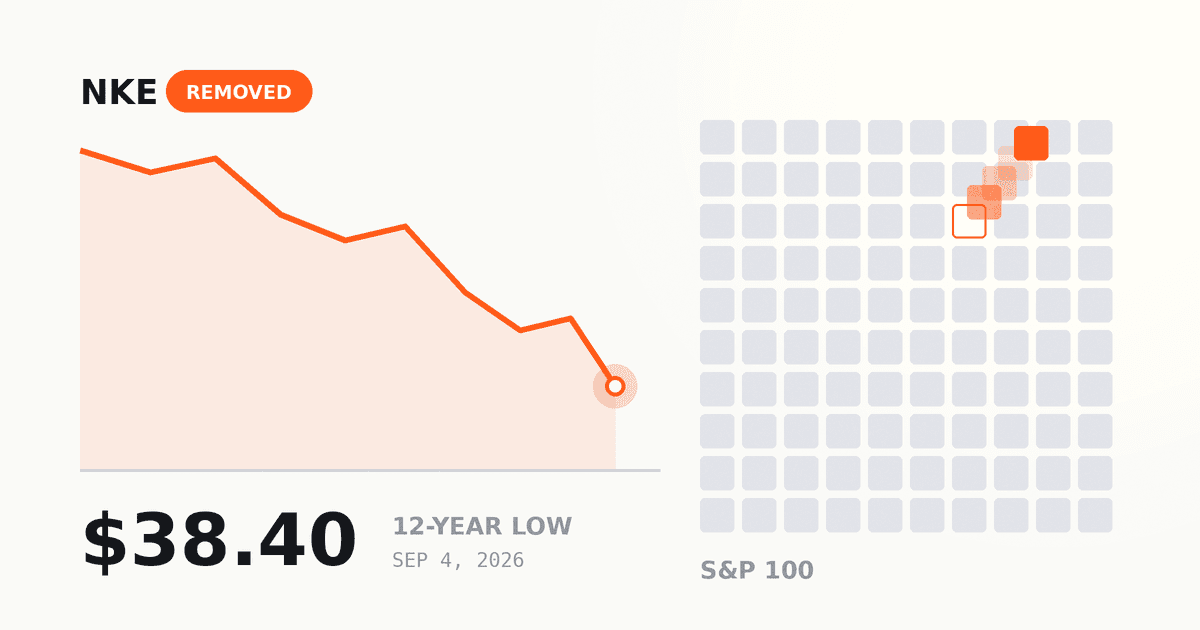
Nike S&P 100 Exit: What the Removal Means for NKE Holders

How to Trade U.S. Stocks with USDT on WEEX: Step-by-Step Guide
How to Trade U.S. Stocks Without a Brokerage Account Using USDT

MetaMask Transaction Stuck or Failed? Here's How to Fix It
Easypaisa P2P Payments: How to Choose a Merchant and Confirm a USDT Order
GoPro Stock Soared 40%: What the $1.14 Merger Actually Pays
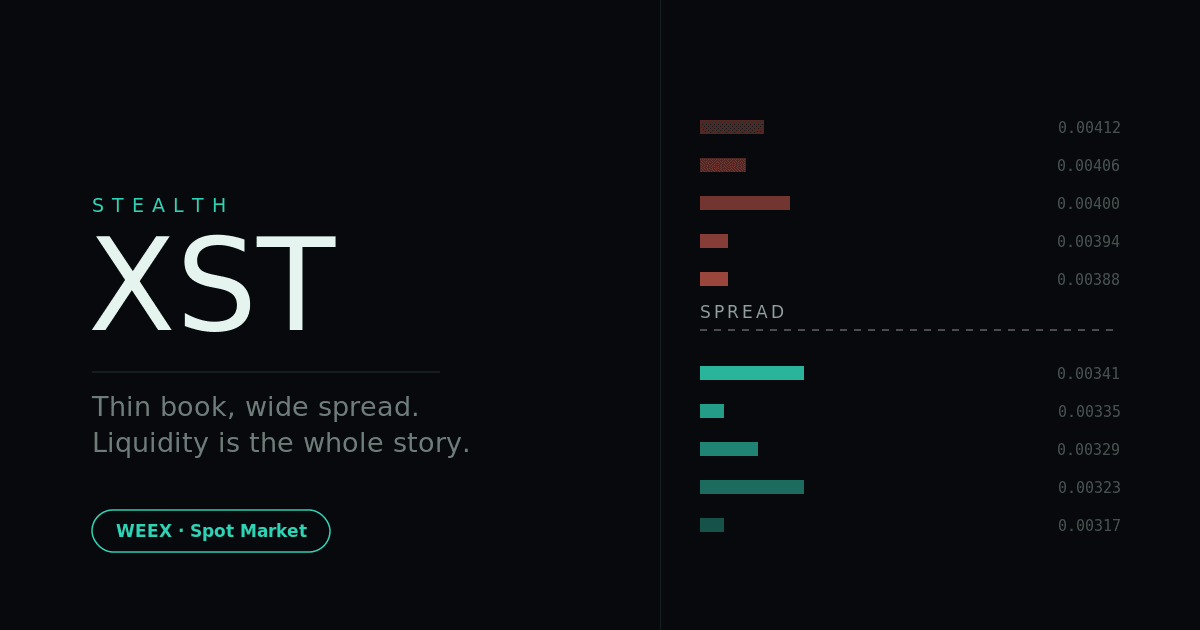
Stealth XST Coin: The $1,806 Daily Volume Behind a $2.3M Cap
Which ARK ETFs Hold Coinbase Stock? COIN Exposure in ARKK, ARKW and ARKF
When Can You Trade U.S. Stock Tokens? Trading Hours Explained
Can You Trade U.S. Stocks With 5 USDT? Here's the Real Math

How to Transfer Funds from P2P Wallet to Futures in Pakistan: A Step-by-Step Guide

PEP Stock Analysis: Why PEPon Trades Above PepsiCo Shares
Lisk Chain Shutdown October 31: How to Move LSK Safely
What Is BONK? WEEX Spot and 1000BONK Futures Status and Risk Checks
What Is BRETT? WEEX Spot and Futures Status and Risk Checks
What Is FLOKI? WEEX Spot and 1000FLOKI Futures Status and Risk Checks
What Is WIF (dogwifhat)? WEEX Spot and Futures Status and Risk Checks
Is WEEX Legal in Taiwan? FSC VASP Rules and the Public Register


