
Meme coin 龙虾 ($LOBSTER) Surges Past $200M: What’s Behind the Rally?

 Prefer us on Google


BSC meme coin 龙虾 ($LOBSTER), also called the Lobster token, has drawn sharp attention after CoinMarketCap showed its market cap near $223.97 million with roughly $52.15 million in 24-hour volume. At the same time, DexScreener shows an active LOBSTER/USDT pool on PancakeSwap v2 with about $3.2 million in liquidity. The big question is whether this rally reflects durable momentum or a fast-moving meme cycle fueled by social sentiment, liquidity, and speculative trading.
Quick Answer
- 龙虾 ($LOBSTER) is a BSC-origin meme coin whose visibility has expanded through major tracking platforms and active DEX trading.
- Its move past a $200 million market cap appears tied to strong trading volume, community-driven attention, and meme coin momentum rather than proven utility.
- CoinMarketCap and DexScreener both show meaningful market activity, but the available public data also leaves major verification gaps.
- Key unknowns include the official contract identity, project communication channels, and whether any audit, liquidity lock, or ownership renouncement exists.
What Is 龙虾 ($LOBSTER) Crypto?
龙虾 ($LOBSTER) is best understood as a community-driven meme cryptocurrency that originally launched on BSC, now commonly known as BNB Chain. Based on the available CoinMarketCap description, the project fits the classic meme coin profile: branding and narrative matter more than an established product, protocol revenue, or clear real-world utility. In plain terms, traders are buying exposure to attention, sentiment, and market momentum.
That does not mean the token is irrelevant. Meme coins can become highly liquid trading vehicles when social media traction, exchange visibility, and speculative interest reinforce each other. CoinMarketCap also notes that Lobster’s ecosystem is heavily shaped by discussion on platforms such as X, which is typical for tokens whose valuation depends more on community energy than fundamentals.
Why Is 龙虾 ($LOBSTER) Crypto Trending?
The simplest reason is visibility. Lobster is no longer an obscure token buried in a wallet tracker. It has a CoinMarketCap listing, a visible holder base of about 89.69K, and active trading signals on PancakeSwap v2 through DexScreener. That combination matters because meme coin rallies usually need three ingredients: discoverability, liquidity, and a crowd willing to trade the narrative.
Recent data points reinforce that picture. CoinMarketCap showed the token up 28.78% over 24 hours with a live price around $0.223972 and market cap near $223.97 million. A 24-hour volume of roughly $52.15 million is especially important because volume often acts as proof that a rally is attracting broad participation rather than only a few isolated wallets.
The research material also indicates that Lobster has circulated across multiple narratives, including mention of a “Sol Lobster” version. Even when cross-chain storytelling adds confusion, it can still amplify attention. In meme markets, confusion does not always reduce interest; sometimes it increases it by widening the audience and feeding speculation.
-- Price
How Did 龙虾 ($LOBSTER) Reach a $200M Market Cap?
On paper, the math is straightforward. CoinMarketCap lists a circulating supply of 1 billion tokens, which is also equal to the reported max supply. With a token price around $0.223972, that puts the market cap around $223.97 million. Because the circulating supply is shown as 100% of total supply, traders do not appear to be pricing in a major future unlock overhang based on that dataset alone.
What matters more is how quickly the market accepted that valuation. Meme coins can scale fast when several forces line up at once: rising price, active liquidity pools, social sharing, and trader belief that the next leg higher could come quickly. Once a token gets enough mindshare, market cap expansion can feed on itself. Higher ranking and stronger volume attract more screens, more posts, and more short-term capital.
Still, a large market cap does not automatically mean a project is low-risk or fundamentally strong. In meme coins, market cap often reflects how much speculative capital has rotated into the story at a given moment.
龙虾 ($LOBSTER) Price and Market Cap
The latest supplied figures show a mixed but clearly active trading picture.
| Metric | Reported Figure | Source Context |
|---|---|---|
| Price | About $0.223972 | CoinMarketCap live token page |
| 24-Hour Change | +28.78% | CoinMarketCap live token page |
| Market Cap | About $223.97M | CoinMarketCap live token page |
| 24-Hour Volume | About $52.15M | CoinMarketCap live token page |
| Circulating Supply | 1B tokens | CoinMarketCap live token page |
| DEX Liquidity | About $3.2M | DexScreener LOBSTER/USDT on PancakeSwap v2 |
However, one major issue stands out: the supplied research highlights a large pricing mismatch between DexScreener and CoinMarketCap. DexScreener showed the BSC LOBSTER/USDT pool near $4.64, while CoinMarketCap showed around $0.224. That gap is too large to ignore. It could reflect different contracts, different trading pairs, or confusion caused by similarly named assets. Until that is clarified, traders should be careful about assuming every LOBSTER ticker points to the same token.
What Is Driving Lobster’s Rally?
Several drivers appear to be at work. First is raw meme coin psychology. Traders often rotate into tokens that show fast price acceleration and rising volume because momentum itself becomes the thesis. Second is DEX accessibility. Since PancakeSwap is the largest DEX in the BNB Chain ecosystem, being actively traded there lowers friction for retail participation.
Third is social narrative. CoinMarketCap’s descriptive material makes it clear that Lobster’s value is closely linked to community conversation rather than a mature utility model. That does not weaken the rally by itself; in meme markets, community attention is often the core asset. The more users discuss a token, the more likely it is to draw copy traders, momentum traders, and highly risk-tolerant speculators.
Finally, there is the visibility effect of platform listings and trackers. Once a token appears on major market data sites, it can move from insider circles into broader retail discovery. That transition often marks the point when trading volume expands sharply.
Lobster Tokenomics and Launch
Based on the supplied CoinMarketCap data, Lobster has a total supply and max supply of 1 billion tokens, with all 1 billion shown as circulating. That simplifies the tokenomics story compared with projects that have large vesting schedules or future unlocks. For traders, a fully circulating supply can make valuation easier to interpret because there is less uncertainty around sudden supply inflation.
That said, tokenomics alone do not answer the bigger trust questions. The current research did not confirm an official website, official X account, Telegram, third-party audit, liquidity lock, or ownership renouncement. In the meme coin segment, those details matter because they help traders assess whether the contract structure and project control mechanisms create additional risk beyond normal volatility.
How to Buy Lobster Crypto?
The supplied materials indicate that a LOBSTER/USDT pair is trading on PancakeSwap v2 on BSC. In practice, that means users typically need a compatible wallet, BNB Chain access, and the correct token contract before swapping on a decentralized exchange. Beginners should pay special attention to contract verification because tokens with similar names can lead to expensive mistakes.
Before buying any meme coin on a DEX, it is sensible to verify the contract across multiple trusted trackers, check liquidity depth, review slippage, and confirm that the token can actually be sold as well as bought. Those steps are especially important here because the current research did not establish a clearly verified official contract identity.
What Could Happen to Lobster Next?
The next phase likely depends on whether Lobster can sustain attention and trading volume. If volume remains elevated and the meme narrative keeps spreading, the token could continue to attract short-term momentum traders. In meme coin markets, strong liquidity and social traction can keep rallies alive longer than many fundamentals-driven investors expect.
On the other hand, meme coin moves can reverse just as quickly. If attention shifts elsewhere or if concerns around contract authenticity and project transparency grow louder, volatility could increase sharply. Another important catalyst to watch is clarification around the price discrepancy between major trackers. If the market concludes that multiple Lobster tokens are being confused, sentiment could change fast.
Risks of Trading Lobster
The biggest risk is not simply volatility. It is uncertainty. The research did not find clear public proof of the official contract address, audit status, liquidity lock, or ownership renouncement. Those are not small details. They are basic due diligence checkpoints for high-risk BSC tokens.
There is also a structural market risk. As general anti-rug-pull guidance explains, traders in low-transparency DeFi tokens should watch for hidden mint functions, excessive sell fees, balance modifications, or restrictions that interfere with normal selling. This article is not stating that Lobster has those issues; rather, the available public evidence does not yet rule them out.
For that reason, Lobster currently looks like a token with proven market activity but incomplete public verification. That can be enough for speculative traders, but it should not be mistaken for the same risk profile as a well-documented crypto project.
Conclusion
龙虾 ($LOBSTER) has clearly become more than a tiny BSC meme coin, with CoinMarketCap data showing a valuation above $200 million and strong daily trading volume, but the rally still appears driven mainly by liquidity, visibility, and social momentum rather than confirmed utility or transparent project fundamentals.
FAQ
1. Is 龙虾 ($LOBSTER) a real tradable token on BSC?
Yes. The supplied research shows an active LOBSTER/USDT trading pair on PancakeSwap v2 on BSC, and the token also appears on CoinMarketCap.
2. Why are traders paying attention to Lobster right now?
The main reasons are its rapid price move, market cap above $200 million on CoinMarketCap, strong 24-hour trading volume, and broad meme coin speculation.
3. Is Lobster backed by a clear utility or product?
The available material points more toward a community-driven meme coin narrative than a clearly established utility model.
4. What is the biggest red flag for Lobster at this stage?
The largest concern is the lack of clearly verified public information around the official contract, audit status, liquidity lock, and ownership controls.
5. Why does the reported Lobster price differ across platforms?
The supplied research notes a major gap between DexScreener and CoinMarketCap pricing, which may reflect different contracts, trading pairs, or ticker confusion. That issue still needs clarification.
This content is provided for general informational purposes only and doesn't constitute financial, investment, legal, or tax advice. Any events, rewards, online promotions, or related information mentioned herein should not be considered a recommendation, solicitation, or invitation to purchase, sell, trade, or otherwise deal in any crypto assets. Crypto assets are highly volatile and may result in loss. The availability of WEEX services, products, and related events may vary by region. You are responsible for ensuring that your participation is in accordance with applicable local laws and regulations.
You may also like
Grok 4.7 Explained: How to Check Release and Performance Claims
What Is BONK? WEEX Spot and 1000BONK Futures Status and Risk Checks
What Is BRETT? WEEX Spot and Futures Status and Risk Checks
What Is FLOKI? WEEX Spot and 1000FLOKI Futures Status and Risk Checks
What Is WIF (dogwifhat)? WEEX Spot and Futures Status and Risk Checks
What Is CHIP? USD.AI Governance, Tokenomics and the Ticker Collision
LONGARC Token Explained: Arc Chain Stock Memes, Contract, Risks
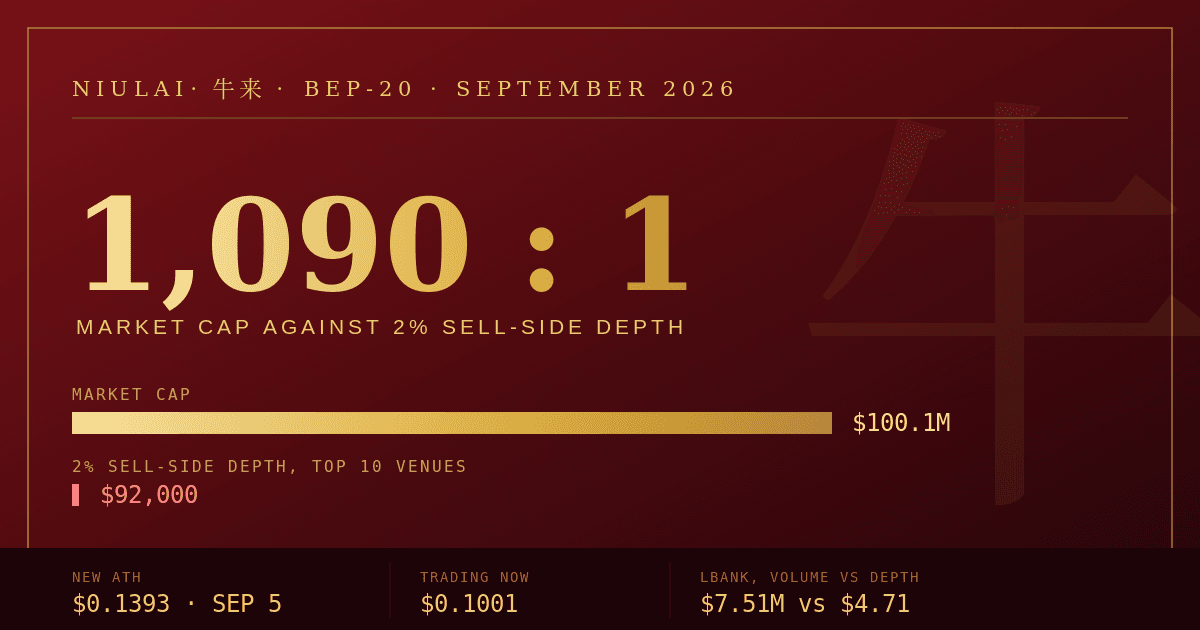
Niulai Price Prediction: A $100M Market Cap on $92K of Depth
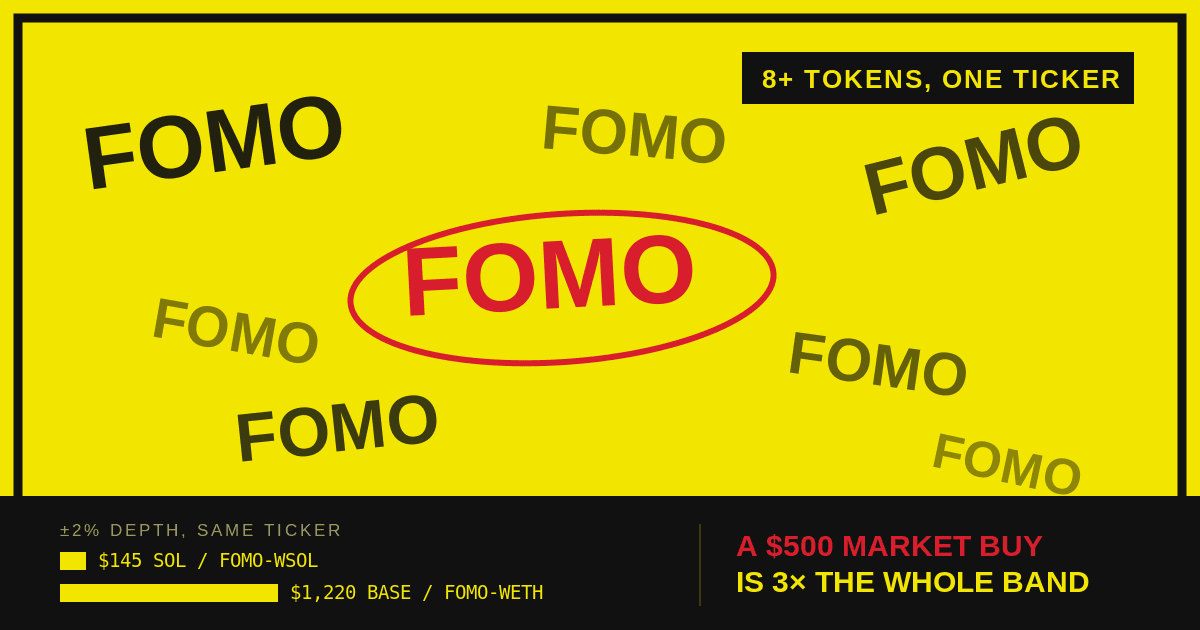
FOMO Token: Which One You're Actually Buying and the Risks
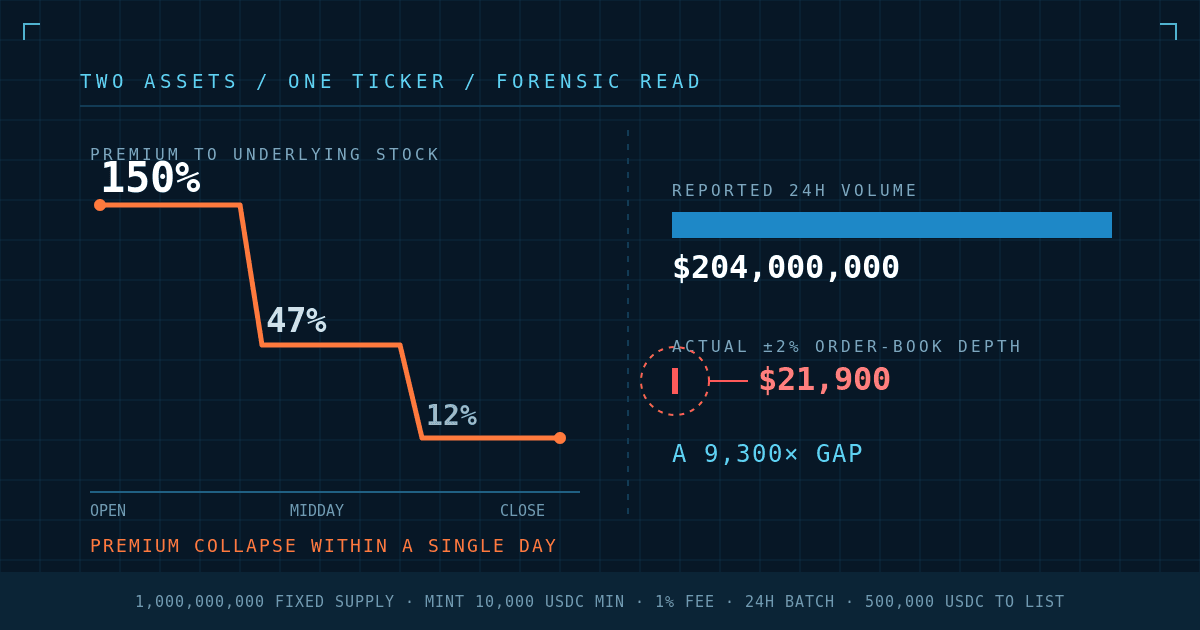
4Stock Explained: Why the Ticker Is Not the Backed Asset

Does Former President Biden Have Ties to $LAPTOP? Is the Coin Legit?

Who Is Hunter Biden? The Story Behind His New $LAPTOP Crypto Coin
What Is ZCAT and Is It Worth Buying? Anonymous Cat (ZCAT) Guide for 2026

Hunter Biden's LAPTOP Memecoin: What TRUMP's Trajectory Suggests Could Happen Next
Trump's "Hundreds of Billions" Stock Claim: The Trader's View
Hunter Biden's LAPTOP Meme Coin: What's Actually Confirmed So Far
Cybercab Launch: What It Means for TSLA and Tokenized TSLAX
XST Token Fell 50% in a Day: What That Says About Meme Coin Volatility Generally
AIINU After LongX: What the NVDA 3x Fee Loop Actually Pays
GoPro Stock Soared 40%: What the $1.14 Merger Actually Pays
XST ETF vs XST Coin (XSolut): Don't Confuse These Two Completely Different Assets

AIINU: How a "100x Coin" on Robinhood Chain Turned NVDA Stock Into a Memecoin

Does Robinhood Chain Have Its Own Token? What CASHCAT, PONS, and Stock Tokens Actually Are
Robinhood Built a Chain for Tokenized Stocks: Did It Just Become a Meme Coin Casino?

Should I Buy PONS Coin? Sep 2026 Price Prediction & Guide
"我的女友景甜" Days Later: What Happened to the Viral Meme Coin
WEEX Affiliate Program: How to Join and Track Commission
What Is SUE Coin? Is a Dump Coming After Its 150% Pump?
BISCOTTI Crypto: Robot Dog Token Behind Emblem Vault's Debut
A Breakup Became "我的女友景甜" Token in Hours: What That Says About Crypto's Attention Economy
Grok 4.7 Explained: How to Check Release and Performance Claims
What Is BONK? WEEX Spot and 1000BONK Futures Status and Risk Checks
What Is BRETT? WEEX Spot and Futures Status and Risk Checks
What Is FLOKI? WEEX Spot and 1000FLOKI Futures Status and Risk Checks
What Is WIF (dogwifhat)? WEEX Spot and Futures Status and Risk Checks
What Is CHIP? USD.AI Governance, Tokenomics and the Ticker Collision
Contents
Popular coins
Latest articles


