
Anthropic is Frenziedly Competing for Computing Power: $895.4 Billion Commitment, Even Old Coal Plants Are Not Spared

 Prefer us on Google


Anthropic CEO Dario Amodei. Image processed by AI
Written by: Su Yang
Edited by: Xu Qingyang
AI companies are becoming major buyers of large-scale infrastructure.
Anthropic's expansion path has extended from training models and competing for enterprise clients to building data centers, procuring chips, and coordinating power resources. To secure sufficient computing power, the company has begun to directly engage in tasks traditionally handled by cloud service providers and infrastructure operators.
On November 2, local time in the U.S., Anthropic submitted an updated prospectus to the U.S. Securities and Exchange Commission. The document added financial data for the third quarter of 2026 and disclosed long-term procurement and leasing arrangements.
The document shows that computing power has become the most significant cost item in Anthropic's expansion process. To meet the training needs of the Claude model and the demands of enterprise clients, the company has not only signed long-term agreements with cloud service providers like Amazon, Google, and Microsoft but has also started directly procuring chips, participating in data center construction, and seeking power and facility resources from former cryptocurrency mining companies and new cloud service providers.
01 Revenue Growth of 12 Times, Operating Loss Reappears
The updated prospectus shows that Anthropic's revenue for the third quarter was $16.96 billion, up from $11.56 billion in the second quarter and significantly higher than approximately $1.38 billion in the same period of 2025.
In the first three quarters of this year, Anthropic's cumulative revenue reached $33.242 billion, compared to $2.545 billion in the same period last year, an increase of about 12 times.
However, the revenue growth did not lead to a corresponding improvement in operating profit.
In the third quarter, Anthropic's operating expenses rose to $17.5 billion, up from $10.6 billion in the second quarter. The company recorded an operating loss of $567 million for the quarter, whereas it had achieved an operating profit of $974 million in the second quarter. Computing and infrastructure costs reached approximately $9.9 billion, nearly doubling from about $5.6 billion in the second quarter.
Anthropic attributed the shift to an operating loss mainly to short-term computing power procurement. Due to customer demand growth exceeding previously locked-in computing power supply, Anthropic had to purchase additional computing resources on the market temporarily, and the short-term procurement prices were significantly higher than those of long-term agreements.
In the third quarter, Anthropic's short-term computing power procurement amounted to about $5 billion. Additionally, a non-cash expense of about $2 billion related to an employee donation matching program also impacted the quarterly operating results.
Excluding stock-based compensation and the aforementioned donation matching expenses, Anthropic's adjusted operating profit margin for the third quarter was about 15%, down from 19% in the second quarter. The decline in adjusted profit margin reflects that during the revenue expansion process, computing power procurement and other operating costs continue to erode profit margins.
Price changes have also occurred. Anthropic disclosed that from the second to the third quarter, the revenue increase from customer usage growth was partially offset by price reductions for new model versions and contract discounts, affecting an amount of about $600 million.
Anthropic's net loss for the third quarter was $23.29 billion, down from $66.3 billion in the second quarter. The cumulative net loss for the first three quarters reached $104.039 billion, of which about $94.3 billion was related to fair value changes of financial instruments such as convertible notes and derivative liabilities, mainly influenced by the company's rising valuation.
02 $895.4 Billion Commitment, Nearly Half to Be Fulfilled by 2030
The prospectus disclosed that as of the end of September, Anthropic's cumulative expenditure commitments formed through procurement commitments and leasing agreements reached $895.4 billion, the vast majority of which are related to computing resources and infrastructure.
Of this amount, about $447.5 billion is expected to be fulfilled by December 31, 2030, while the remainder extends to 2031 to 2045. Commitments due within the next 12 months amount to about $69.8 billion.
This amount does not equate to already formed interest-bearing debt, nor does it represent that Anthropic needs to pay all amounts immediately. It includes various types of procurement contracts, equipment leases, and data center-related agreements, with payment timelines spread over the coming years. However, some contracts have strong binding force, meaning that even if actual usage is below expectations, the company may still be obligated to make corresponding payments.
From the contract composition, the yet-to-begin leasing commitments amount to about $321.4 billion, and fixed minimum procurement commitments are about $265.6 billion. These long-term arrangements lock in future computing power procurement and infrastructure usage costs, also placing the company under long-term payment obligations.
As of the end of September, Anthropic held a total of $131.845 billion in cash, cash equivalents, and short-term investments. If available credit lines are included, the company's total liquidity is approximately $146.6 billion.
Compared to the cash on hand, the scale of long-term commitments is significantly larger. The $895.4 billion is about 6.8 times Anthropic's cash and short-term investments; the $69.8 billion of commitments due in the next 12 months is equivalent to about 53% of the existing cash and short-term investments.
The prospectus also clearly indicates the operational risks involved. Anthropic's revenue mainly comes from usage-based consumption businesses, with most revenue lacking long-term contract guarantees, while computing power and infrastructure expenditures typically need to be locked in years in advance. The company may sign long-term agreements based on expected revenue, but actual future revenue may not meet expectations.
If customer revenue growth cannot cover related payments, or if the company cannot continue to finance under acceptable conditions, Anthropic may be unable to fulfill some contracts. Certain commercial agreement defaults may also trigger cross-default clauses in credit agreements and convertible notes, leading to early debt maturity and even causing suppliers to terminate cooperation.
Cost growth has already been reflected in the financial data. In the first three quarters, Anthropic's computing and infrastructure expenses increased by 329% year-on-year, rising by about $14.4 billion. The relevant expenses for the third quarter were about $9.9 billion, accounting for about 58% of the quarter's revenue.
03 From Cloud Service Providers to Mining Companies, Anthropic is Globally Seeking Computing Power
According to foreign media reports, by the end of last year, Anthropic's management had realized that there was significant uncertainty in computing power demand forecasts, and subsequently signed dozens of computing power and infrastructure agreements, with partners extending from large tech companies to data center startups, chip manufacturers, and companies previously engaged in cryptocurrency mining.
This round of procurement is no longer limited to purchasing cloud services. Anthropic has begun hiring data center construction and supply chain experts, directly purchasing server equipment and cooling systems to help partners accelerate data center construction. It has also engaged with multiple state data center developers to study grid access, project licensing, and the feasibility of transforming old coal plants and industrial facilities into data centers.
New cloud service providers and former cryptocurrency mining companies have thus entered Anthropic's supply system. Foreign media compiled public information showing that companies like Fluidstack and Lambda provide computing power resources, while TeraWulf and Hut 8 participate in data center construction.
These partners possess land, power access resources, or ready-made data center facilities. For Anthropic, utilizing existing sites and power resources can reduce the time required to build large parks from scratch. For some former mining companies, transitioning to AI data centers also provides new business growth opportunities.
However, existing sites do not equate to immediate computing power delivery. Power supply, equipment installation, and construction personnel may all slow down project progress.
Anthropic initially sought data center projects with a scale of at least 200 MW but later began accepting projects of about 50 MW, supplementing power through battery storage and natural gas generation. The company is also considering combining multiple small projects to gradually increase computing power capacity.
Anthropic has also begun to directly participate in the design and procurement of infrastructure projects. The company purchases chips, cooling systems, and other equipment, which are then installed by partner operators to shorten the time from project construction to computing power going online.
This model expands the range of resources Anthropic can access but also increases the complexity of project management. Different data centers have varying construction cycles, equipment specifications, power conditions, and delivery times. Even if contracts have been signed, actual computing power still needs to go through construction, equipment installation, grid connection, and debugging before it can be put into use.
Energy investment firm Energize Capital's managing partner John Tough believes that Anthropic does not have a complete computing power supply pipeline and can only search for power and infrastructure resources globally, piecing together projects of different scales.
In the prospectus, Anthropic refers to this dedicated infrastructure as Anthropic Direct. The company hopes to reduce reliance on higher-priced short-term computing power procurement by locking in dedicated capacity for the long term.
Foreign media cited insiders as saying that Anthropic expects to have over 3.5 GW of computing power capacity by 2026 and plans to double that by 2027.
Anthropic's long-term computing power contracts are concentrated among a few large tech companies and infrastructure suppliers.
According to the prospectus and related disclosures, Anthropic's contract with Google is approximately $121.3 billion, with Amazon about $110 billion, and with Microsoft about $44.9 billion; the related agreement with SpaceX is up to about $120.5 billion, extending to 2036. Additionally, the company has agreements with Fluidstack and Lambda.
Broadcom's related equipment leasing commitments are about $161.2 billion, which is also a significant part of this computing power expenditure structure.
Furthermore, Anthropic plans to procure an additional $125 billion to $150 billion worth of Google chips and expects to spend over $20 billion on AMD chips. These arrangements do not have fixed contract amounts, so they are not included in the aforementioned total commitment of $895.4 billion.
A multi-chip architecture is another arrangement Anthropic has made to reduce supply risks. The company stated in the prospectus that its computing power resources come from AWS Trainium, Google TPU, NVIDIA GPU, and AMD GPU, and it will unify the scheduling of computing power from different sources, allocating resources according to the price and performance requirements of different tasks. This helps reduce reliance on a single chip supplier but also complicates the relationship between Anthropic and its supply chain partners.
Amazon and Google are both important investors in Anthropic, as well as suppliers of cloud services and chip resources. Microsoft also provides cloud infrastructure. Broadcom is involved in chip and equipment supply. Anthropic pays these companies for computing power while also receiving investment or financing support from some of them.
Evercore ISI analyst Mark Mahaney previously pointed out that the relationship between Anthropic and large cloud service providers has multiple attributes: they are both customers and competitors, sales channels, and investment targets.
-- Price
This content is provided for general informational purposes only and doesn't constitute financial, investment, legal, or tax advice. Any events, rewards, online promotions, or related information mentioned herein should not be considered a recommendation, solicitation, or invitation to purchase, sell, trade, or otherwise deal in any crypto assets. Crypto assets are highly volatile and may result in loss. The availability of WEEX services, products, and related events may vary by region. You are responsible for ensuring that your participation is in accordance with applicable local laws and regulations.
You may also like
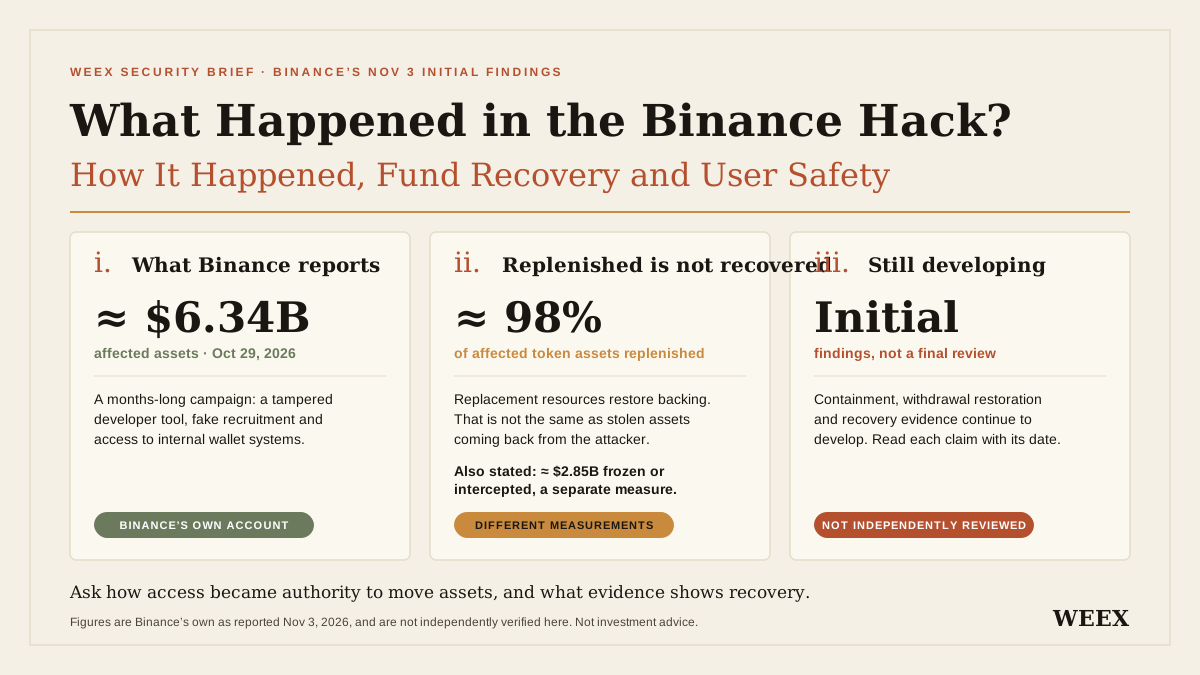
What Happened in the Binance Hack? How It Happened, Fund Recovery and User Safety
What happened in the Binance hack? Review the attack timeline, latest fund replenishment, recovery limits and practical steps to protect your account.
Who really controls a crypto project? Inside the SEC’s new guidance

Reflections After the Binance Heist: Who Should We Trust with Our Crypto Assets?

Solana study finds wider spreads outside aggregators at five of six sampled pools

Is it theft or fraud when the coins in the wallet remain but are changed to multi-signature by someone else?

Tom Lee sees Ethereum's 4% drop post-Binance hack as bullish sign

Ornn, a Computing Power Trading Platform, Negotiates Series A Financing, Valuation May Exceed $1 Billion

Vitalik is making private Ethereum payments without a crypto website
Comparison of Security Among Four Perpetual DEXs: Who Can Truly Enable User Self-Rescue?

Is Issuing Tokens Still Necessary for Crypto Projects Focused on Revenue?

Will the Republican Party Lose the Elections? Cryptocurrencies May Benefit...

Nvidia May Guarantee Billion-Dollar AI Data Center Debt

Pi Network rolls out 4 developer updates ahead of November summit
DeFi DNS attack hits 12 sites as Blockaid flags Step Drainer

CDI was the only refuge in October: what this reveals

Binance Attacker Accidentally Transfers $3.5 Million in Tokens to NEWT Contract Address

The Golden Age of Hackers
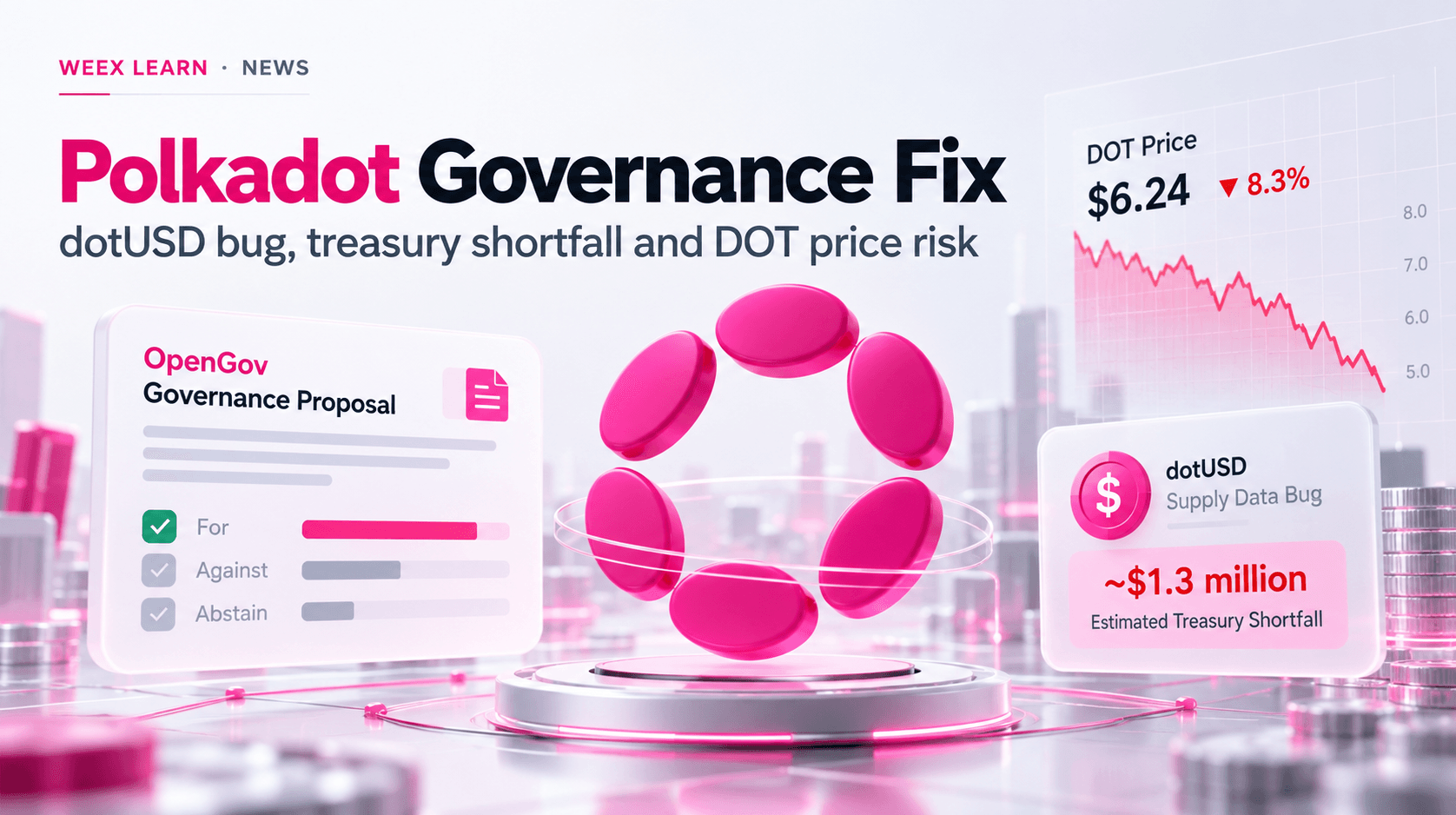
Polkadot OpenGov #1961: dotUSD Supply Bug and $1.3M Treasury Loss Explained

A Review of Global CEX Theft Incidents from 2014 to 2026

Hackers drain 9,400 SOL from bot wallets, and a copied key is blamed

Google Cloud Previews Institutional Crypto Key-Security Service as Custody Risks Grow
a16z Survey of 100 CISOs: Why is Cybersecurity Budget Experiencing a 'Revenge' Growth in the AI Era?

Collector Crypt CEO: The Real Threshold of Digital Card Drawing Platforms Lies in These Four Aspects
U.S. Treasury Buys $6 Billion in Bonds, Bitcoin Drops Below $80,000

French Sovereign Debt Reaches 5%, Alarming Spread with Germany

When will the next crypto bull run happen?

BlackRock and SBI Sign Memorandum to Explore Collaboration on Yen Stablecoin and Tokenized Funds

Stellar launches cross-chain messaging with ethereum through VIA Labs

Hacker Leaks Information of 40,000 Employees from the U.S. Department of Homeland Security via Okta

Best Blockchain APIs for Developers in 2026: Expert Review
What Happened in the Binance Hack? How It Happened, Fund Recovery and User Safety
What happened in the Binance hack? Review the attack timeline, latest fund replenishment, recovery limits and practical steps to protect your account.
Who really controls a crypto project? Inside the SEC’s new guidance
Reflections After the Binance Heist: Who Should We Trust with Our Crypto Assets?
Solana study finds wider spreads outside aggregators at five of six sampled pools
Is it theft or fraud when the coins in the wallet remain but are changed to multi-signature by someone else?
Tom Lee sees Ethereum's 4% drop post-Binance hack as bullish sign




