
Japan Tightens Cryptocurrency Tax Audits, Tokyo Tax Bureau Pursues 3.9 Billion Yen in Undeclared Income

 Prefer us on Google
In the cryptocurrency sector, Japan's tax regulatory authorities are intensifying their scrutiny of income from cryptocurrency transactions. In the last fiscal year, the Tokyo Tax Bureau uncovered over 3.9 billion yen (approximately 24.6 million USD) in undeclared income from 91 cases during a special audit on crypto assets, and subsequently imposed additional tax assessments of about 1.2 billion yen (approximately 7.6 million USD). Analyzing these cases reveals that the common issue among the involved investors is not accounting discrepancies or reporting errors, but rather a complete failure to declare—the vast majority of those identified had not even submitted a tax return.
According to investigative materials provided by informed sources cited by NHK, tax auditors in the Tokyo region have developed a highly precise targeting approach: first, they estimate potential taxable income based on known transaction flows, and then they specifically designate key audit targets. This enforcement efficiency is also evident from historical statistical data—previous public reports from the Tokyo Tax Bureau indicate that during the year ending June 2025, the average additional tax assessed from on-site investigations of individual crypto asset investors reached 12.58 million yen (approximately 79,000 USD), nearly three times the average additional tax amount from general income tax investigations.
Implementation of CARF Automatic Exchange in 2027 and Cross-Regional Expansion
Some past investors had hoped to evade domestic tax scrutiny by using offshore platforms, but this strategy is now facing systematic dismantling. In fact, the Japanese tax authorities have previously activated cross-border tax cooperation mechanisms in handling individual cases, directly requesting transaction records from foreign tax agencies. An official report published in January 2025 documented a typical case: when a trader claimed that their transaction records were lost during inquiries, the Tokyo Tax Bureau promptly retrieved data transferred from foreign tax authorities, accurately identifying their underreported crypto asset income.
The key turning point that will elevate cross-border audits from "case-by-case cooperation" to "comprehensive penetration" is set for 2027. At that time, Japan will officially adopt the Cryptocurrency Asset Reporting Framework (CARF) established by the OECD, automatically receiving annual transaction data periodically transmitted by tax authorities of participating countries, allowing domestic auditors to compare residents' self-reported accounts with their actual transaction flows on a case-by-case basis. Under the constraints of this new mechanism, local compliant cryptocurrency service providers in Japan will also be required to fulfill reciprocal reporting obligations, submitting detailed transaction records for clients who are tax residents of other participating countries for the entire year of 2026 by April 30, 2027. The reporting fields will not only include the clients' tax residency but also the amounts of various cryptocurrency purchases and sales.
To accommodate the influx of cross-border data, Japan's tax system is simultaneously upgrading its organizational structure and technological foundation. The Tokyo Tax Bureau and tax offices across Japan are preparing to expand their staffing, both to recruit professionals skilled in digital asset trading mechanisms and to accelerate the introduction of new analytical tools specifically designed for analyzing on-chain and digital transactions, while also establishing channels for sharing audit results among regional tax bureaus. This indicates that Japan's tax regulation of cryptocurrency assets is moving away from the traditional model that heavily relied on manual bookkeeping and sampling audits, fully entering a phase of data-driven, cross-regional coordinated enforcement.
Offshore and DEX Transactions Still Face Up to 55% Heavy Taxation
While tightening the audit network, Japan's legislative body has also unveiled a differentiated tax reform plan. On March 31, 2026, Japan officially announced amendments to the Income Tax Law (Law No. 12 of Reiwa Year 8), clearly establishing a separate taxation mechanism for income from cryptocurrency transfers, with a combined tax rate set at 20.315% (composed of 15% income tax, 2.1% reconstruction special income tax, and 5% resident tax). According to the law, the specific applicability and effective date of the new tax system will be directly linked to the implementation date of the Financial Instruments and Exchange Act (FIEA) amendment, which will not be later than January 1, 2028.
However, this low tax rate incentive is not indiscriminately offered to the entire market but comes with clear domestic compliance thresholds:
First, the trading targets must be specific cryptocurrencies officially registered on the list of cryptocurrency exchange operators in Japan;
Second, the relevant buying and selling transfers must be completed through the aforementioned licensed operators in Japan.
In contrast, trading paths outside the domestic compliance list still face high tax burdens. Any cryptocurrency transfers completed on unregistered overseas exchanges, decentralized exchanges (DEX), or peer-to-peer between individuals cannot enjoy the 20.315% separate tax rate and must continue to use the existing combined taxation system for miscellaneous income—its progressive income tax rate can reach up to 45%, and with an additional 10% resident tax, the effective marginal tax burden can reach approximately 55%.
By observing the upgrade of cross-border audits alongside domestic tax system reforms, the policy intent of Japan's regulatory authorities has become clear: first, to break the data closure of offshore transactions through the CARF framework, rendering the old assumption of "untraceable abroad" completely ineffective; then, to reserve the more attractive separate tax incentives specifically for participants willing to trade on compliant platforms within Japan. For Japanese investors who still keep their cryptocurrency positions on overseas platforms, they will inevitably face the ongoing audit risks brought by cross-border data exchanges, as well as the significant marginal tax burden gap of up to 55%.
This content is provided for general informational purposes only and doesn't constitute financial, investment, legal, or tax advice. Any events, rewards, online promotions, or related information mentioned herein should not be considered a recommendation, solicitation, or invitation to purchase, sell, trade, or otherwise deal in any crypto assets. Crypto assets are highly volatile and may result in loss. The availability of WEEX services, products, and related events may vary by region. You are responsible for ensuring that your participation is in accordance with applicable local laws and regulations.
You may also like

New Crypto Banks Struggle to Retain Customers with Cash Back Offers

For Wintermute, Bitcoin's rebound since July was a false signal

The Ethereum Foundation prioritizes post-quantum migration

Borrowing to Buy Food: The Reality of American Life

Where can Bitcoin count toward a US exchange’s operating reserves?

Compass Group Plans to Relocate Main Listing to the U.S.

SBI Chairman Kitao Proposes Separate Taxation and Acceleration of Cryptocurrency ETFs

The Perpetual Futures Market Is Booming. That Might Not Be as Bullish for Hyperliquid as Some Investors Think.

Anthropic's IPO Sparks ETF Issuance Surge: 16 US ETFs Offer Leveraged Long, Inverse Short, and Options Income Strategies

Xiaomi Reports Q3 Revenue of 107.2 Billion Yuan, Adjusted Net Profit Plummets 56.8%, Automotive and AI Business Operates at a Loss of 3.4 Billion Yuan
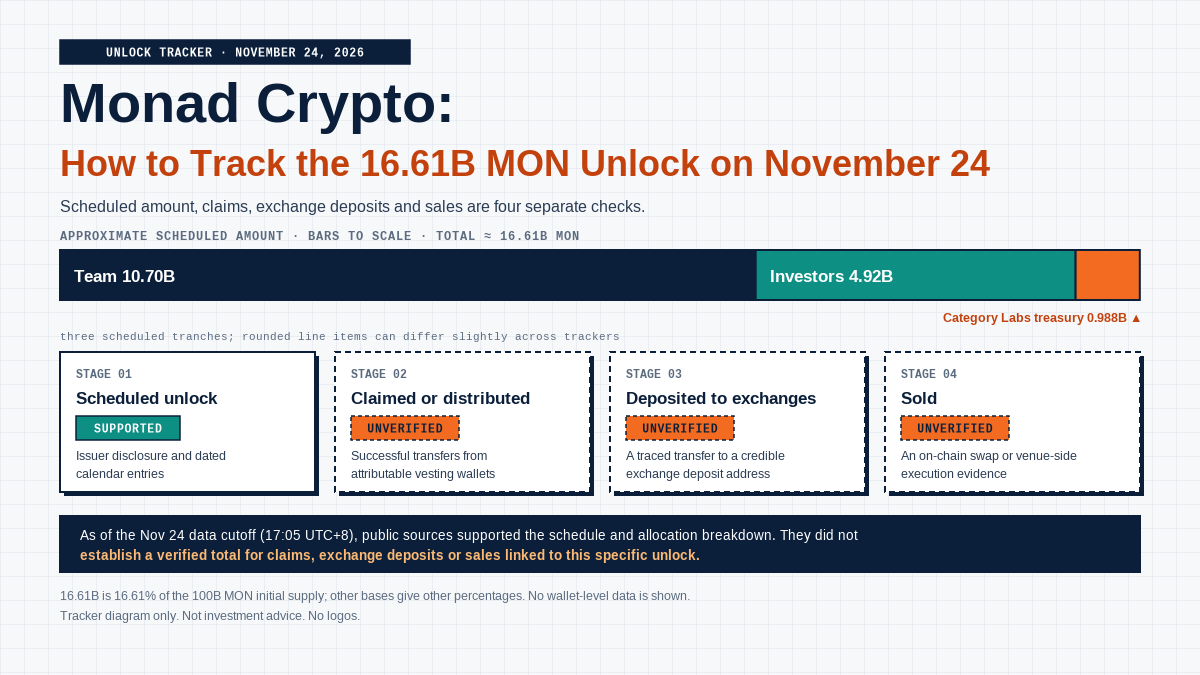
Monad Crypto: How to Track the 16.61B MON Unlock on November 24
Track Monad’s 16.61B MON unlock on November 24. See the team, investor, and treasury allocations, and learn how to verify claims and exchange deposits.

Nvidia Stock Soars 31% as Jensen Huang Returns: What Happened on November 23
Nvidia stock closed up 31.48% at $165.05 on Nov 23, 2026 after Jensen Huang was reinstated as CEO. See the numbers, the market context and what investors still watch.

CFTC Allows Bitcoin and Ethereum as Operating Reserves: Will It Boost Crypto Markets?

Why France Faces Recession Risks and What Factors Could Help It Avoid a Downturn

Signal Partners with United Airlines and Several Banks to Limit AI Agents Due to Customer Risk Issues

Prediction: Alphabet Will Be the World's Most Valuable Company by 2031

Bitcoin’s next crash may come from holders, not leverage, as $10.7 billion gets liquidated

0G Foundation pledges disclosure review after Upbit trading warning
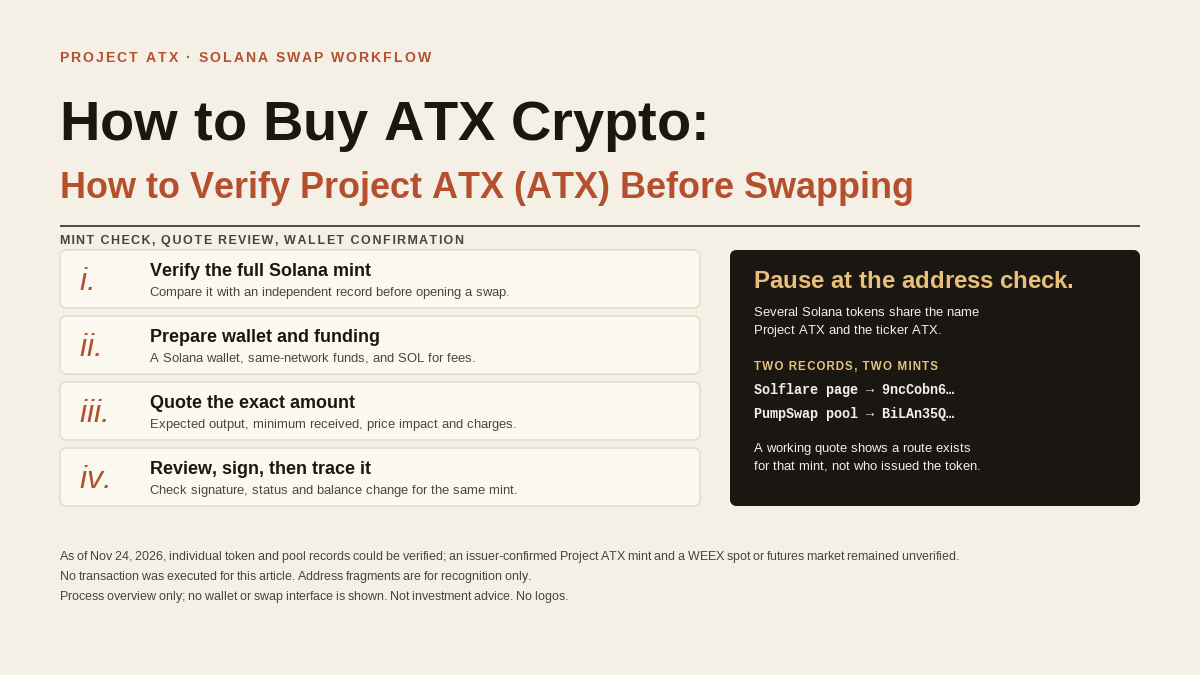
How to Buy ATX Crypto: How to Verify Project ATX (ATX) Before Swapping
Learn how to buy ATX crypto on Solana. Verify the Project ATX mint, review swap quotes and fees, and confirm the exact token you receive on-chain.

Why Is the ATX Crypto Price Different Across Platforms? Project ATX (ATX) Explained
See why the ATX crypto price varies across platforms. Compare Project ATX mint addresses, PumpSwap pools, and swap quotes for the same trade size.

Interpretation of South Korea's Digital Asset Law Proposal: ICO Ban Lifted, Banks to Lead Stablecoin

Tiger International's Q3 Customer Assets Surpass $64.8 Billion, Setting New Records in Hong Kong Market Net Inflows of Nearly $1 Billion
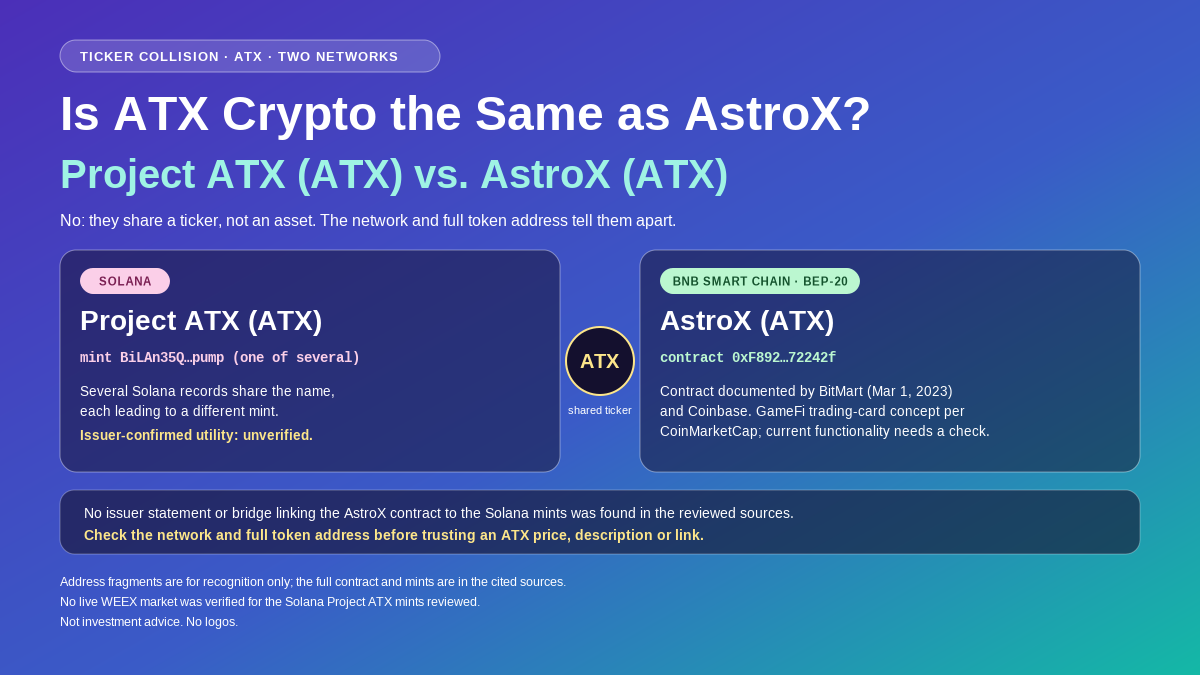
Is ATX Crypto the Same as AstroX? Project ATX (ATX) vs. AstroX (ATX)
Compare Project ATX on Solana with AstroX on BNB Smart Chain. Learn how to verify each token address before trusting an ATX price or buying guide.

Binance to suspend crypto withdrawals across all networks on Nov. 25
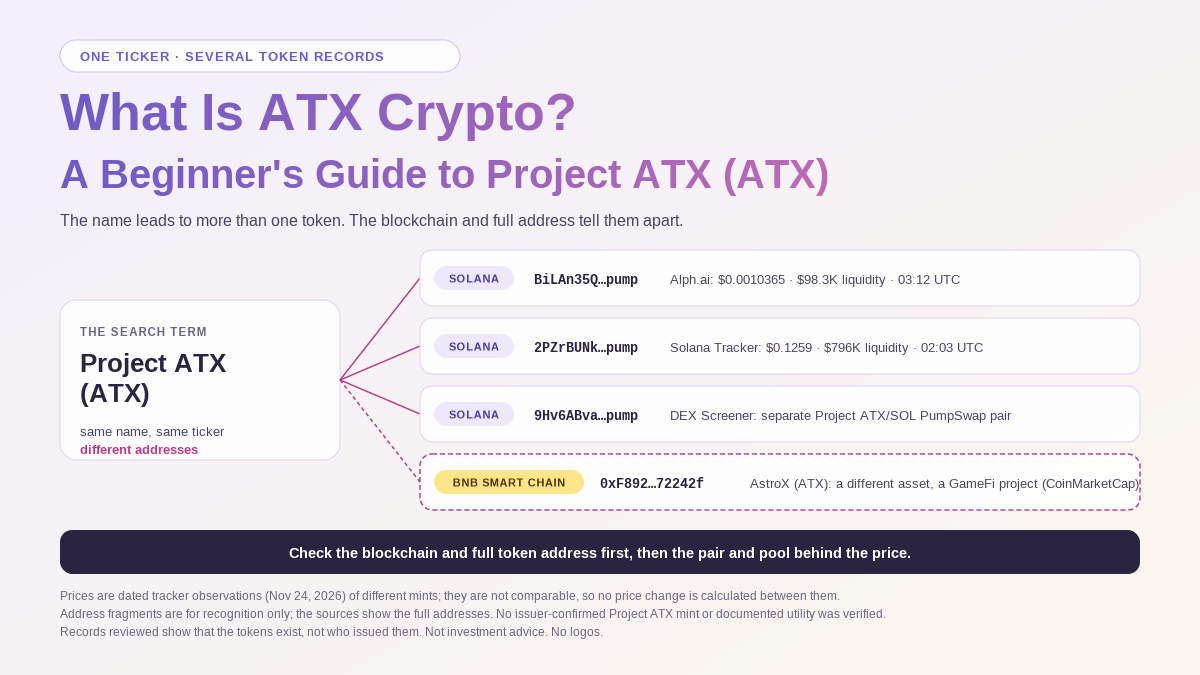
What Is ATX Crypto? A Beginner’s Guide to Project ATX (ATX)
Learn what ATX crypto means, why Project ATX appears under multiple Solana mint addresses, and how to tell those tokens apart from AstroX (ATX).

Bayer Signals Future Pharmaceutical Deals May Target Mid-Stage Clinical Assets

Arthur Hayes: Nvidia's Stock Surge is Bad News for Cryptocurrency, US Stocks Need to Decline for Fed's Liquidity Supply

Ethereum ETF: $96 million in net inflows stop the November bleeding

Stanford’s encryption breakthrough could unlock a new era for Bitcoin

These 13 Crypto Projects Are All Trying to Survive
New Crypto Banks Struggle to Retain Customers with Cash Back Offers
For Wintermute, Bitcoin's rebound since July was a false signal
The Ethereum Foundation prioritizes post-quantum migration
Borrowing to Buy Food: The Reality of American Life
Where can Bitcoin count toward a US exchange’s operating reserves?
Compass Group Plans to Relocate Main Listing to the U.S.
Latest articles
Latest coin listings on WEEX


