
SBI Chairman Kitao Proposes Separate Taxation and Acceleration of Cryptocurrency ETFs

 Prefer us on Google
Key Points of This Article
- Taxation measures are not expected to be applied until at least 2028, and spot ETFs have not yet been approved.
- Companies are urged to launch businesses in Asia without waiting for domestic regulations.
Kitao Points Out Japan's Delayed Regulatory Response
Yoshitaka Kitao, Chairman and President of SBI Holdings, posted on his Facebook on the 24th, titled "The country's swift regulatory reform will determine the growth of the digital industry." He pointed out the delay in Japan's regulatory response amid the ongoing integration of cryptocurrencies into financial systems in Europe, the U.S., and Asia, and is calling on the government to expedite separate taxation and ETFs.
In Japan, a revised law that will bring cryptocurrencies under the Financial Instruments and Exchange Act is set to take effect in July 2026, with a 20% separate taxation also confirmed. Kitao expressed concern that this application would not occur until at least 2028. Additionally, spot ETFs for Bitcoin (BTC) are still not available for purchase domestically.
He emphasized that the most undesirable scenario is for global risk capital to bypass Japan. He argued that risk capital is the source for creating the next industry, and if funds leave, talent and information will also depart. He indicated that in the cryptocurrency space, both funds and talent will move to places with clear rules, stressing that markets outside the system will not even be considered as options.
Regulatory Developments in Europe and Asia
In his post, he first highlighted developments in Europe and the U.S.
In Europe, the comprehensive regulatory framework MiCA has been fully applied, and by July 2026, transitional measures for existing operators will also end. In the U.S., although the market structure bill "Clarity Act" was rejected in the Senate vote in September, just two days later, the SEC (U.S. Securities and Exchange Commission) opened the door for trading tokenized U.S. stocks with a time limit. In October, the CFTC (U.S. Commodity Futures Trading Commission) also began working on a framework for cryptocurrency trading under its existing authority.
Regarding Asia, he stated, "Both countries and companies have already started moving forward." In Hong Kong, the first Hong Kong dollar-denominated stablecoin was issued in August. In Vietnam, seven companies, including major banks, are competing for up to five exchange licenses. Thailand has made the profits from cryptocurrencies sold by licensed domestic operators tax-free for individuals for five years.
Recommendations for Companies and the Government
Kitao wrote, "The issue for companies is not the delay in regulations but the attitude of waiting for regulations to be established." In digital finance, competition does not begin after the system is completed; rather, "the time until the system is formed is the competition period." He urged Japanese companies to establish businesses in Asia and grow without waiting for domestic regulations.
A typical example cited was tokenized stocks. U.S. companies have provided tokens backed by U.S. stocks to investors outside the U.S. through offshore issuers. Once fully legalized in the home country, a licensing competition will begin, but he expressed the view that operators with a track record outside the U.S. will be strong.
Regarding the role of the government, he pointed out that while Japan has a framework for pilot projects, it has not yet reached a design that actually moves customers and funds. He called for the early establishment of a commercial market limited to specific stocks and trading volumes, the acceleration of separate taxation and ETFs, and the swift acceptance of operators with proven records overseas. The post concluded with the question, "Will we be chosen by the world or will we be bypassed?" and stated that the answer depends on Japan's readiness in the next 2-3 years before the rules are finalized.
This content is provided for general informational purposes only and doesn't constitute financial, investment, legal, or tax advice. Any events, rewards, online promotions, or related information mentioned herein should not be considered a recommendation, solicitation, or invitation to purchase, sell, trade, or otherwise deal in any crypto assets. Crypto assets are highly volatile and may result in loss. The availability of WEEX services, products, and related events may vary by region. You are responsible for ensuring that your participation is in accordance with applicable local laws and regulations.
You may also like

New Crypto Banks Struggle to Retain Customers with Cash Back Offers

For Wintermute, Bitcoin's rebound since July was a false signal
The Ethereum Foundation prioritizes post-quantum migration

Borrowing to Buy Food: The Reality of American Life

Where can Bitcoin count toward a US exchange’s operating reserves?

Japan Tightens Cryptocurrency Tax Audits, Tokyo Tax Bureau Pursues 3.9 Billion Yen in Undeclared Income
Compass Group Plans to Relocate Main Listing to the U.S.

The Perpetual Futures Market Is Booming. That Might Not Be as Bullish for Hyperliquid as Some Investors Think.

Anthropic's IPO Sparks ETF Issuance Surge: 16 US ETFs Offer Leveraged Long, Inverse Short, and Options Income Strategies

Xiaomi Reports Q3 Revenue of 107.2 Billion Yuan, Adjusted Net Profit Plummets 56.8%, Automotive and AI Business Operates at a Loss of 3.4 Billion Yuan
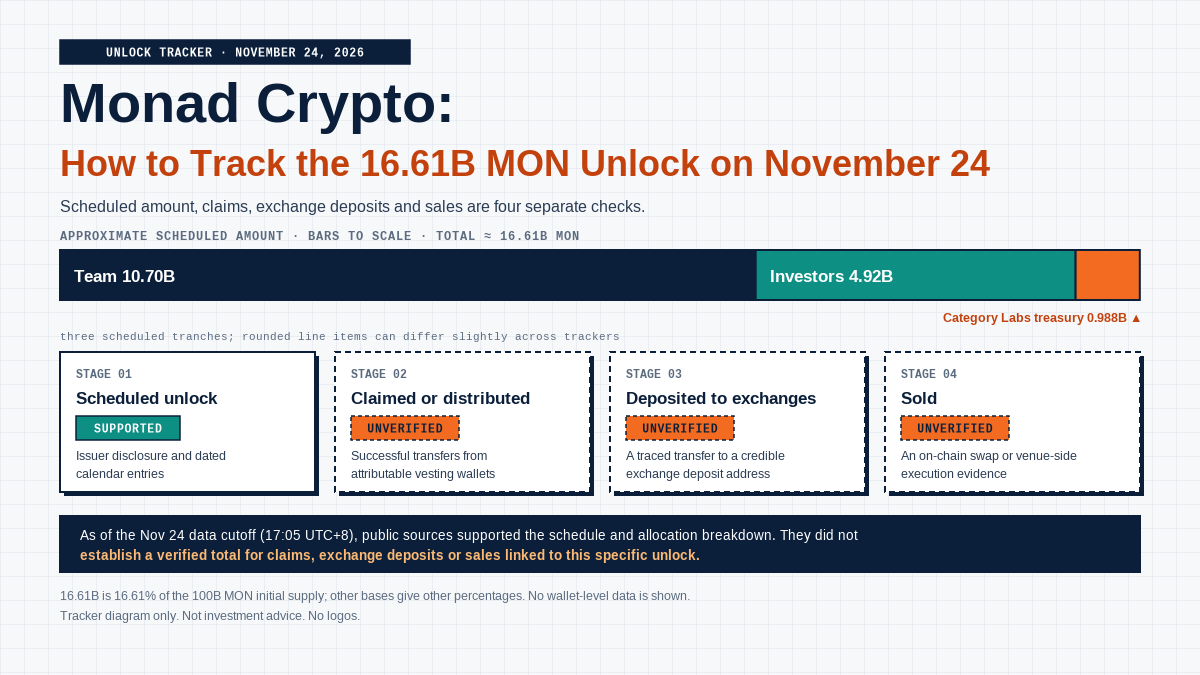
Monad Crypto: How to Track the 16.61B MON Unlock on November 24
Track Monad’s 16.61B MON unlock on November 24. See the team, investor, and treasury allocations, and learn how to verify claims and exchange deposits.

Nvidia Stock Soars 31% as Jensen Huang Returns: What Happened on November 23
Nvidia stock closed up 31.48% at $165.05 on Nov 23, 2026 after Jensen Huang was reinstated as CEO. See the numbers, the market context and what investors still watch.

CFTC Allows Bitcoin and Ethereum as Operating Reserves: Will It Boost Crypto Markets?

Why France Faces Recession Risks and What Factors Could Help It Avoid a Downturn
Signal Partners with United Airlines and Several Banks to Limit AI Agents Due to Customer Risk Issues

Prediction: Alphabet Will Be the World's Most Valuable Company by 2031

Bitcoin’s next crash may come from holders, not leverage, as $10.7 billion gets liquidated

0G Foundation pledges disclosure review after Upbit trading warning
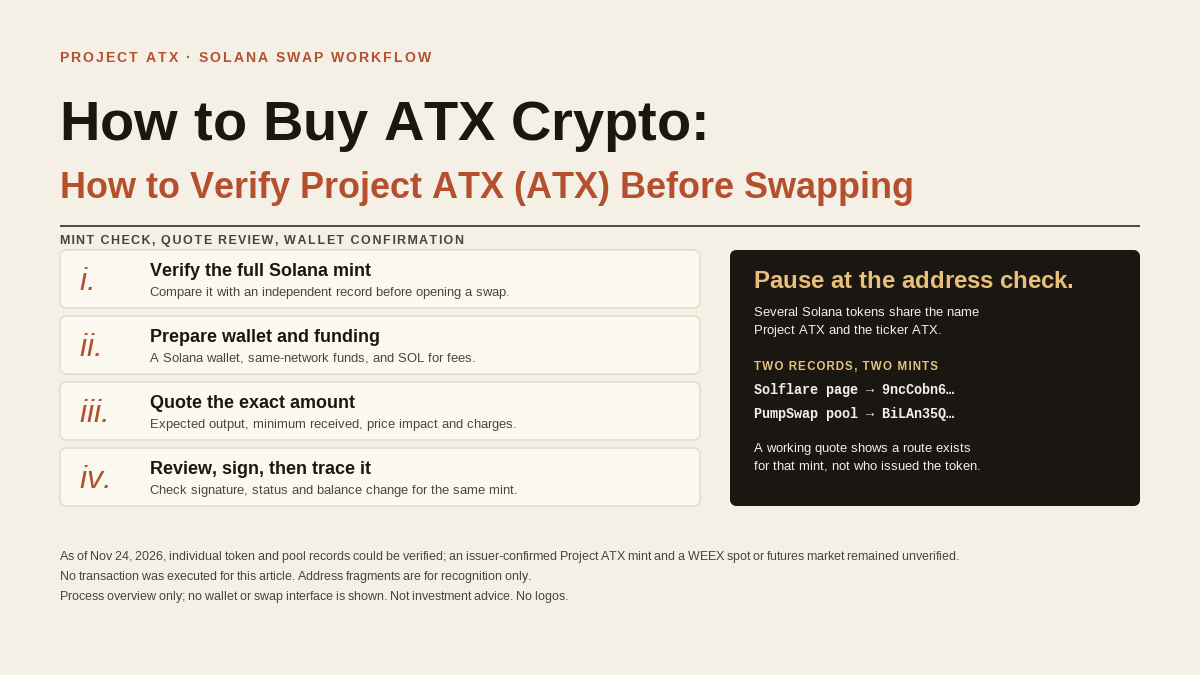
How to Buy ATX Crypto: How to Verify Project ATX (ATX) Before Swapping
Learn how to buy ATX crypto on Solana. Verify the Project ATX mint, review swap quotes and fees, and confirm the exact token you receive on-chain.

Why Is the ATX Crypto Price Different Across Platforms? Project ATX (ATX) Explained
See why the ATX crypto price varies across platforms. Compare Project ATX mint addresses, PumpSwap pools, and swap quotes for the same trade size.

Interpretation of South Korea's Digital Asset Law Proposal: ICO Ban Lifted, Banks to Lead Stablecoin
Tiger International's Q3 Customer Assets Surpass $64.8 Billion, Setting New Records in Hong Kong Market Net Inflows of Nearly $1 Billion
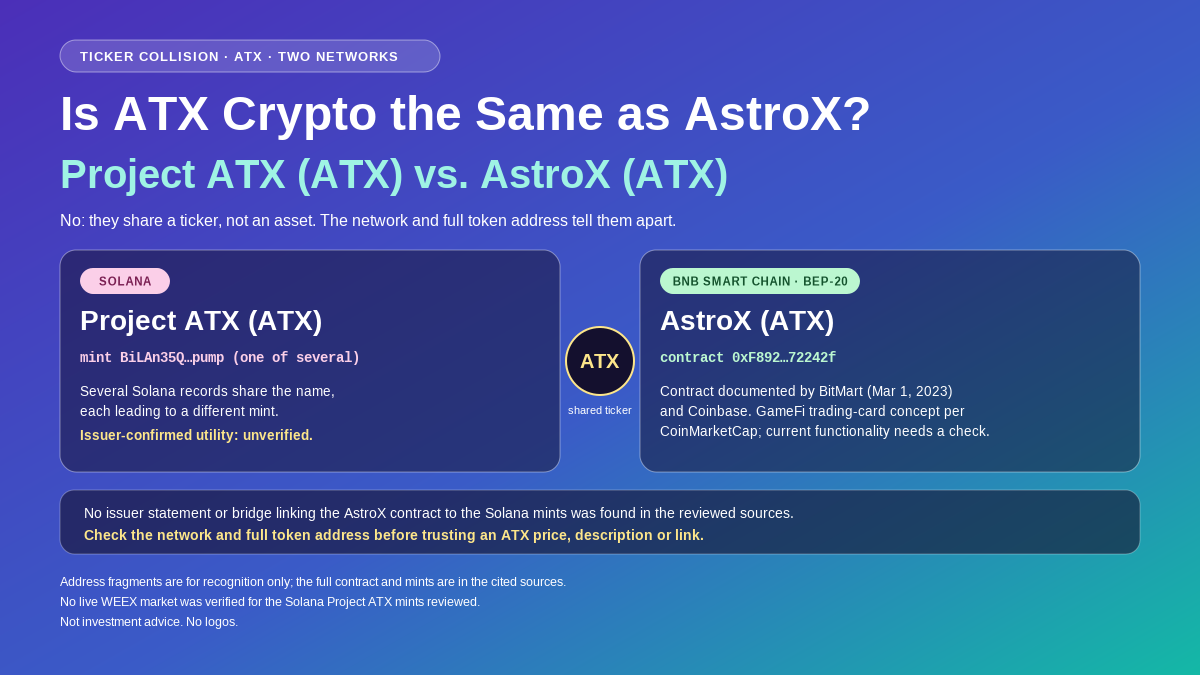
Is ATX Crypto the Same as AstroX? Project ATX (ATX) vs. AstroX (ATX)
Compare Project ATX on Solana with AstroX on BNB Smart Chain. Learn how to verify each token address before trusting an ATX price or buying guide.

Binance to suspend crypto withdrawals across all networks on Nov. 25
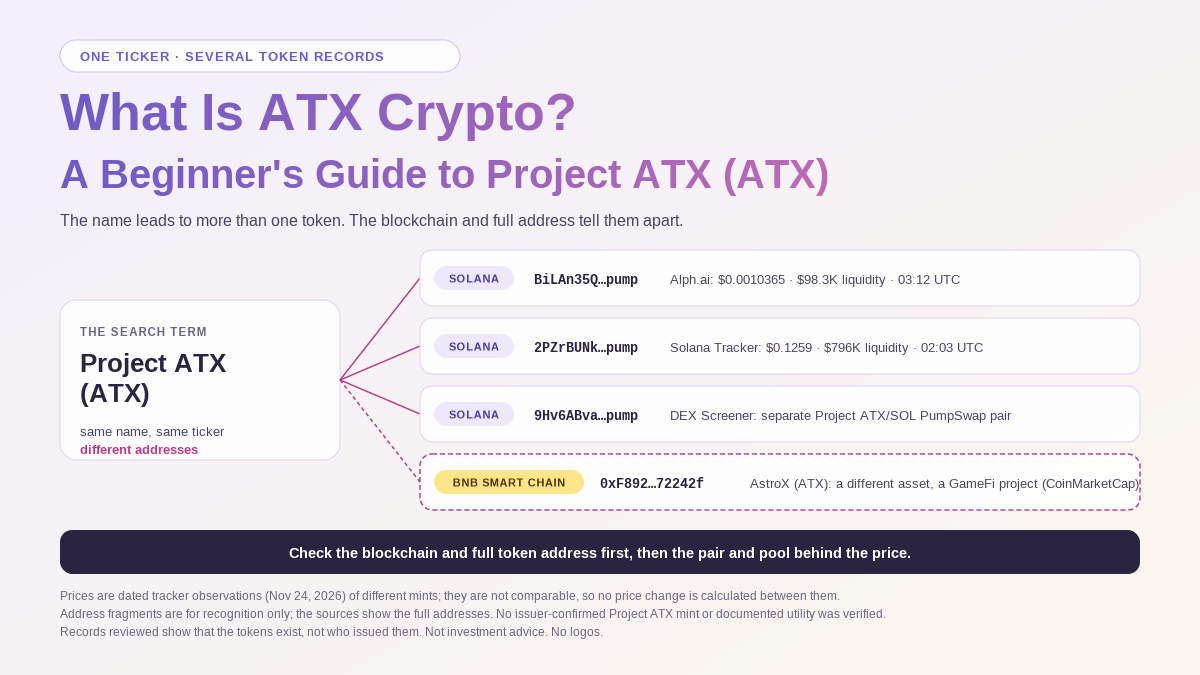
What Is ATX Crypto? A Beginner’s Guide to Project ATX (ATX)
Learn what ATX crypto means, why Project ATX appears under multiple Solana mint addresses, and how to tell those tokens apart from AstroX (ATX).

Bayer Signals Future Pharmaceutical Deals May Target Mid-Stage Clinical Assets

Arthur Hayes: Nvidia's Stock Surge is Bad News for Cryptocurrency, US Stocks Need to Decline for Fed's Liquidity Supply

Ethereum ETF: $96 million in net inflows stop the November bleeding

Stanford’s encryption breakthrough could unlock a new era for Bitcoin

These 13 Crypto Projects Are All Trying to Survive
New Crypto Banks Struggle to Retain Customers with Cash Back Offers
For Wintermute, Bitcoin's rebound since July was a false signal
The Ethereum Foundation prioritizes post-quantum migration
Borrowing to Buy Food: The Reality of American Life
Where can Bitcoin count toward a US exchange’s operating reserves?
Japan Tightens Cryptocurrency Tax Audits, Tokyo Tax Bureau Pursues 3.9 Billion Yen in Undeclared Income
Latest articles


Latest coin listings on WEEX


