
Solana Alpenglow Goes Live, Targeting 150-Millisecond Finality

 Prefer us on Google


TL;DR: Solana activated the Alpenglow consensus protocol on mainnet on October 21, marking a substantial change in how its validators reach finality. The official source also identifies specific limits or future steps, so implementation and market impact should not be assumed.
Solana activated the Alpenglow consensus protocol on mainnet on October 21, marking a substantial change in how its validators reach finality. For digital-asset markets, the important issue is less the announcement in isolation than the channel through which it could affect users, capital or network activity. The latest development deserves attention, but its relevance depends on the facts published by the organisation behind it and the work still required to make it matter.
What the primary announcement establishes
The Solana Foundation lists activation in epoch 1064, which began around 13:36 UTC on October 21. Alpenglow targets about 150 milliseconds of finality compared with roughly 12.8 seconds under the prior TowerBFT design.
The new Votor voting design moves consensus votes between validators directly, replacing the previous approach to vote transactions. Foundation documentation says the protocol is designed to tolerate 20% of stake being offline together with 20% behaving adversarially.
Why this could matter for crypto markets
Finality is the point at which a payment or application can treat a transaction as settled under the network's rules. Reducing it may improve the experience of exchanges, merchants and financial applications, but finality is not identical to application response time or the speed of converting tokens to bank money. The material test is whether the claimed consensus performance remains resilient across real operating conditions.
Blockchain infrastructure does not improve in a vacuum. Engineers must consider existing applications, node operators, client compatibility and how errors behave under stressed conditions. A change that appears straightforward at the protocol level can create a demanding coordination problem. That distinction matters to investors trying to separate a plausible structural change from a headline that may not immediately move price or onchain activity.
The limits of the headline
The 150-millisecond number is a target in the official documentation, not a guarantee for each transaction. Solana's live status also does not mean every application or wallet automatically becomes faster by exactly the same amount.
Performance claims also require careful definitions. Throughput, finality, responsiveness, cost and fault tolerance are different measurements. Improving one does not automatically improve all of them, especially when a wallet, exchange or application adds its own confirmations.
-- Price
The wider context
Solana Alpenglow mainnet activation sits within a wider shift toward block finality. This area has a recurring challenge: the benefits are easiest to describe before the operational details are complete. Different stakeholders measure success differently. A user wants clarity and predictable access; an operator wants reliable controls and manageable costs; an institution wants accountability if something fails. Those perspectives can be in tension, and the source announcement should be read with that in mind.
The distinction also shapes how to read future updates. A new partnership, proposal or software version is a verifiable milestone. Adoption, consistent performance and financial effects require additional evidence. That is why follow-up reporting should distinguish released features, planned features and measured use rather than combining them into one claim.
What to watch next
Watch for production measurements, validator diversity, reliability during congestion and whether payment applications change their confirmation logic after the upgrade.
The operational test comes after the proposal or release note: can different client teams implement it, can developers upgrade safely and can users rely on it when activity spikes? That is the difference between an attractive design and durable infrastructure. The next evidence should come from official implementation updates and measurable outcomes, not from assuming that a news release guarantees adoption or a token-price response.
Primary source: Solana Alpenglow mainnet activation (published 2026-10-21).
This article was written by the News Desk and edited by Samuel Rae.
This content is provided for general informational purposes only and doesn't constitute financial, investment, legal, or tax advice. Any events, rewards, online promotions, or related information mentioned herein should not be considered a recommendation, solicitation, or invitation to purchase, sell, trade, or otherwise deal in any crypto assets. Crypto assets are highly volatile and may result in loss. The availability of WEEX services, products, and related events may vary by region. You are responsible for ensuring that your participation is in accordance with applicable local laws and regulations.
You may also like

Tether Establishes FASE Foundation to Launch Humanitarian Pilot for Stablecoins
Google previews crypto custody security system ahead of 2027 launch
Google Launches Google Multi-Party Compute Security Service to Address AI Threats

Bloom Trading Attackers Conduct Large-Scale Money Laundering Operations

Securitize Supports Stellar Network, Expanding Tokenized Asset Management

Forest Road Partners with Perena to Launch First Vault sUSD-FR on Solana
Brian Smith of Jito Discusses the Strategy and Outlook of the Solana Ecosystem
Solana RETARDIO Market Cap Surpasses $4.3 Million

SOL Perpetual Contract Trading Share Drops to 6%, Solana Transforms to Compete for Wall Street Market
Solana Implements 1 SOL Burn for Vulnerability Reports

Prospects for Expanding Investment in Digital Assets Instead of AI Stocks

Bitmine, Tron, and DeFi Development Corp. Acquire Cryptocurrencies

Bridged ZEC supply on Solana reaches 103000 tokens

Who is the Leader in Tokenized Stocks? A Data Showdown Among Five Major Public Chains and Six Issuers

Marinade Exempts Validator Bond Deductions Due to Agave Client Issues

Solana Launches Delivery-Versus-Payment Tool for Atomic Securities Settlement

Firedancer Requires 1 SOL for Each Vulnerability Report

Over, a Proprietary Trading Platform, Plans to Raise $250,000 through MetaDAO
Samsung Wallet to Launch USDC Transfers for US Galaxy Users in October

Solana Leads Euro Stablecoin Issuances: The Circle Effect Behind the Numbers

Circle Mints $112 Billion USDC on Solana, Up 99.1%
Value of digital shares in crypto apps rises to 300 million dollars

Solana Web3.js v3.1 Released with Improved Developer Tools

Solana Proposes Geographic Leader Scheduling to Reduce Latency
Attack on Solana Trading Bot Steals 9408 SOL
Pump.fun 'optimized for addiction': what the internal messages cited in court really say

Akash Team Migrates to Solana, AKT to Become Native Token
Tether, Kraken, and Bybit Establish FASE Foundation to Pilot Stablecoin Humanitarian Aid
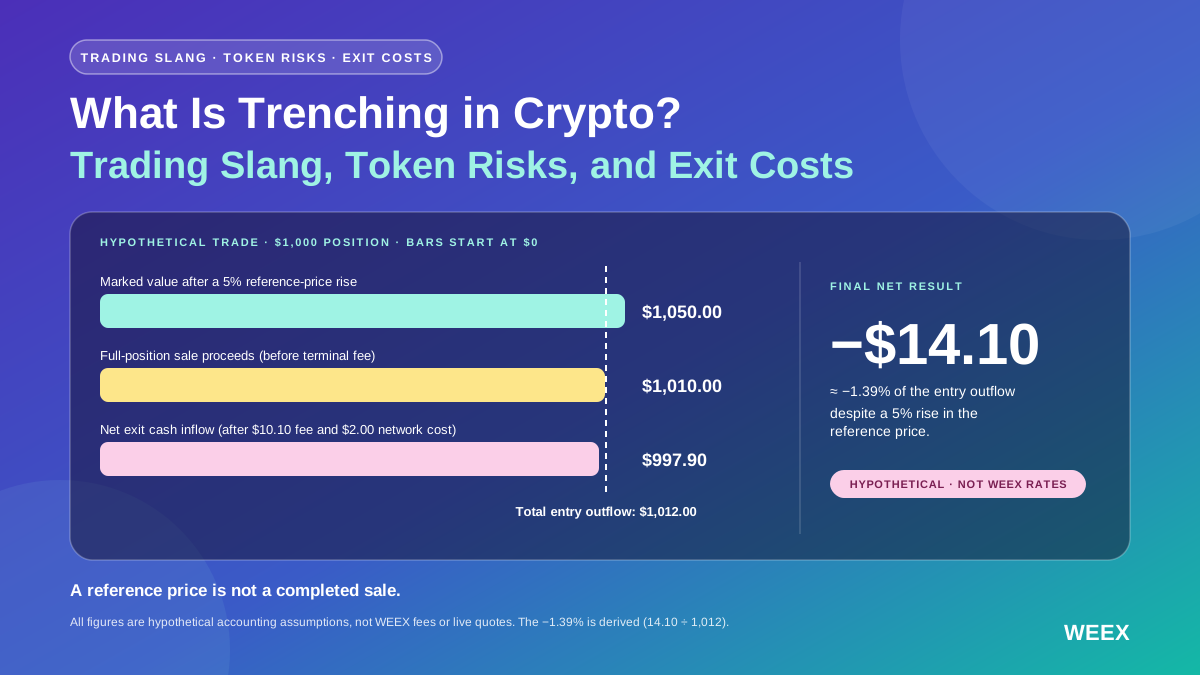
What Is Trenching in Crypto? Trading Slang, Token Risks, and Exit Costs
What is trenching in crypto? Learn the slang, token checks, liquidity risks, and how a rising token can still produce a loss after trading costs.

Reflect Launches Create for Branded Token Issuance
Tether Establishes FASE Foundation to Launch Humanitarian Pilot for Stablecoins
Google previews crypto custody security system ahead of 2027 launch
Google Launches Google Multi-Party Compute Security Service to Address AI Threats
Bloom Trading Attackers Conduct Large-Scale Money Laundering Operations
Securitize Supports Stellar Network, Expanding Tokenized Asset Management
Forest Road Partners with Perena to Launch First Vault sUSD-FR on Solana


