
Trump Creates Super Intelligence Force: What Changes in the AI Race

 Prefer us on Google


President Donald Trump formally announced the creation of the Super Intelligence Force on Sunday, a federal task force dedicated to coordinating the United States' strategy in artificial intelligence. The name, deliberately distant from the term "AI," reflects a government decision to rebrand the entire agenda of the sector as "super intelligence," a political branding move that had already begun with an executive order signed weeks earlier.
Jay Clayton, the director of national intelligence, will chair the group. The vice chairs include Andrew Ferguson, chairman of the FTC, Emil Michael, undersecretary of defense for research and engineering, and Scott Kupor, director of the Office of Personnel Management. The group will have 120 days to deliver a comprehensive report on the risks and opportunities presented by the technology.
Why Changing AI to Super Intelligence Matters
The name change is not accidental. Trump has publicly treated the debate over AI security as an exaggerated concern, and by rebranding the field, he signals a shift in framing: less emphasis on existential risks, more focus on industrial competitiveness. In practice, the U.S. government is saying that the greatest danger is not the technology itself, but falling behind in the global race.
Clayton reinforced this view by stating that it would be "irresponsible" for the United States to retreat from AI while countries like China advance. The task force's creation letter makes the tone clear: the group must "develop plans to respond to threats enabled by SI to our society, preventing overregulation and regulatory capture that stifle innovation and competition."
This approach echoes what we have seen in technology coverage: governments around the world are abandoning cautious stances in favor of aggressive development strategies. Europe, which led regulation with the AI Act, is already facing internal criticism that it has stifled innovation too much in the bloc.
The Security Commitment That No One Takes Seriously
In the same week, executives from major tech companies were at the White House to sign a voluntary commitment to AI security. The document, non-binding, even contained a notable typographical error, which well summarizes the degree of formality of the initiative.
The dynamic is revealing. The government wants big techs to demonstrate public commitment to security without it translating into effective regulation. For companies, signing a document without legal force is a political cost close to zero. The result is an arrangement where all sides can declare victory without anything changing structurally.
This model of voluntary self-regulation has precedents. As we analyzed in previous articles on global AI regulation, the United States historically prefers to let the private sector lead, intervening only when there is evident harm to consumers. The creation of the Super Intelligence Force does not alter this pattern; it merely institutionalizes it.
120 Days to Define the Future of American AI
The 120-day deadline for the report places the conclusion of the work around October 2025. By then, the group needs to map threats, identify economic opportunities, and propose guidelines that balance innovation with national security.
The composition of the group says a lot about priorities. With the FTC in the vice presidency, there is a direct channel for antitrust issues, a topic increasingly relevant as giants like Google, Microsoft, and OpenAI concentrate power in the sector. The presence of the Department of Defense signals that military applications of AI will continue to receive priority attention.
Recent reports indicate that the Pentagon is already consulting names like Elon Musk and Palmer Luckey to define the next steps for military technology. The Super Intelligence Force could serve as an institutional bridge between these initiatives and broader industrial policy.
-- Price
What This Means for the Technology Market
For investors and companies in the sector, the message is clear: the U.S. government will not slow down the race. On the contrary, it intends to accelerate. This has direct implications for capital flow, especially in AI startups that rely on a permissive regulatory environment to grow.
Recent market numbers support this reading. Last week, the AI agents startup Instinct raised a Series C round of $1 billion, with a valuation of $10 billion. AMD announced the acquisition of World Labs, founded by researcher Fei-Fei Li, for $8.2 billion. The appetite for consolidation and investment in the sector remains strong.
For Brazil, the American movement reinforces a well-known dilemma: the country does not have a comparable national AI strategy, and the gap tends to widen. As we discussed in our analysis of AI in the financial market, Brazilian companies that do not position themselves quickly risk becoming mere consumers of imported technology.
Geopolitics of Artificial Intelligence at a New Level
The creation of the Super Intelligence Force formally elevates AI to the same strategic level of national defense and intelligence in the United States. It is no longer a technological policy agenda; it is a national security agenda.
The comparison made by Trump himself, that super intelligence is "greater than the Industrial Revolution and the internet," may sound hyperbolic, but it reflects the consensus in Washington: whoever dominates this technology will have a decisive economic and military advantage in the coming decades.
The scenario that is unfolding is one of a bipolar race between the United States and China, with Europe trying to maintain regulatory relevance and the rest of the world watching. For those following the sector, the question is no longer whether AI will transform the global economy, but who will capture the largest share of the value generated by this transformation.
This content is informational and educational and does not constitute investment advice. Past performance is not indicative of future results.
This content is provided for general informational purposes only and doesn't constitute financial, investment, legal, or tax advice. Any events, rewards, online promotions, or related information mentioned herein should not be considered a recommendation, solicitation, or invitation to purchase, sell, trade, or otherwise deal in any crypto assets. Crypto assets are highly volatile and may result in loss. The availability of WEEX services, products, and related events may vary by region. You are responsible for ensuring that your participation is in accordance with applicable local laws and regulations.
You may also like

Bitcoin: Strategy Acquires Another 334 BTC, Raising Its Reserve to 848,000

SNDK Stock Fell 3.8% After a 650% Rally: Does a Single-Digit P/E Make Sandisk Cheap or Just Cyclical?

Oil Futures Hold Above $100 After Houthis Claim Aramco Attacks: What Is Confirmed and What Is Not

MSTR Stock Slips After Strategy Buys Just 334 Bitcoin: Why It Spent More on Preferred Shares Than on BTC

INTC Stock Drops After TSMC Terafab Talks: Is Intel's Biggest Outside Endorsement at Risk?

Who Will Aave Hand Its Brand Over To? The DAO Asset Ownership Dispute Behind the Foundation Proposal
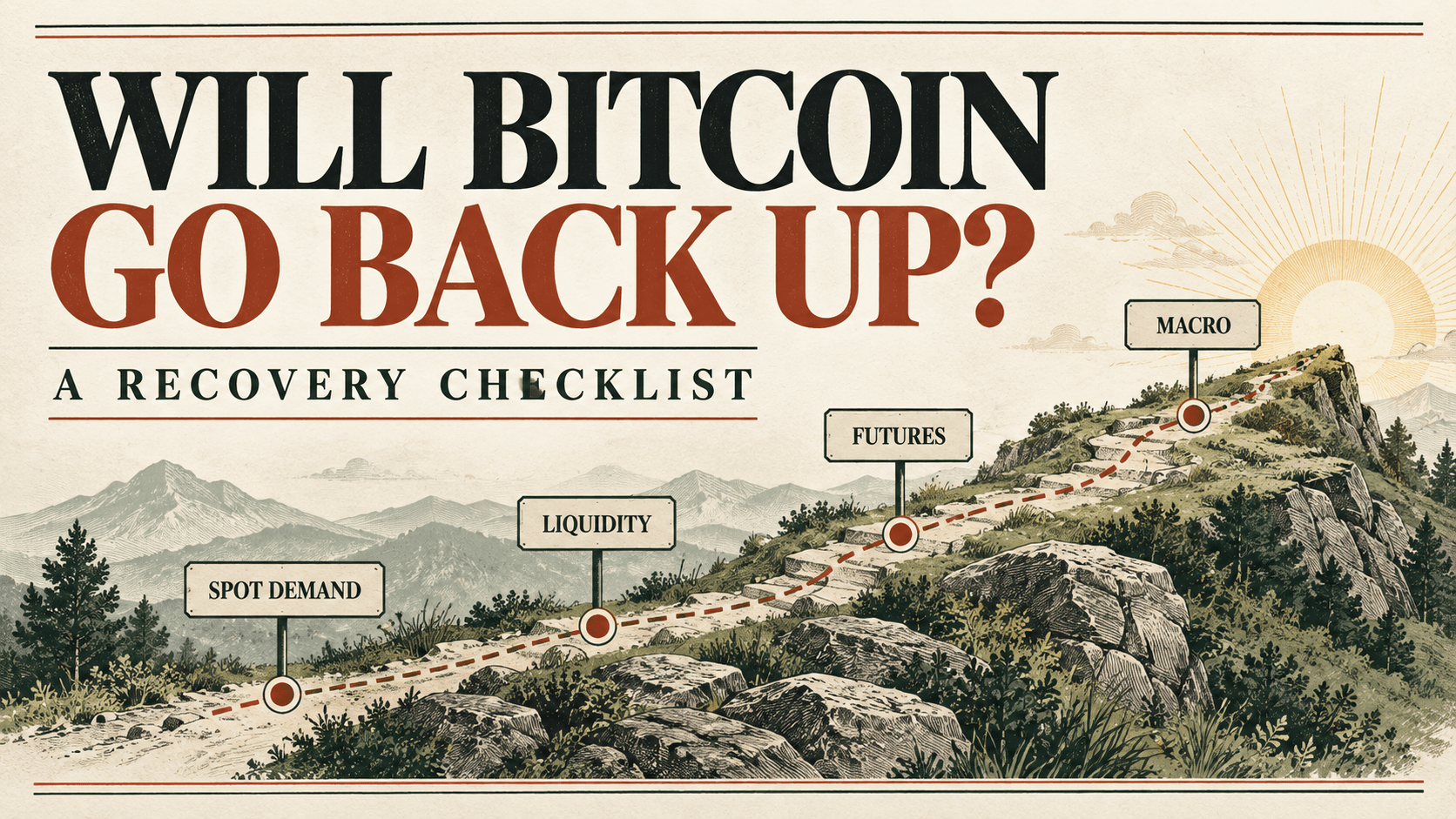
Will Bitcoin (BTC) Go Back Up in 2026? How to Tell a Real Recovery From a Short-Covering Bounce
Will Bitcoin go back up in 2026? Learn how spot demand, ETF flows, crypto liquidity, futures positioning and macro conditions shape a real BTC recovery.
Hyperliquid's Perpetual Futures Listed on Bloomberg Terminal, Increasing Institutional Investor Interest
NSE Stock Price Hits a New Low After IPO: Can National Stock Exchange Shares Recover?
National Stock Exchange of India shares traded near ₹1,741 on October 5, close to a post-listing low of about ₹1,735 and roughly 2.5% below the ₹1,785 IPO price. The stock has now spent more than a week under its issue price, and a recovery depends on retail demand, derivatives volumes and the broader Indian market.

Home-jacking crypto: they threaten to kill a pregnant woman's baby in England

Bitcoin Exchange Withdrawal Rate Declines, Signaling Long-Term Holding

Bitcoin Miners Sign Their Best Month Since January

NFT: Porsche abandons its Web3 project around the 911

Former The Arena Advisor Accuses ROVE of Salary and Token Quota Arrears

Movement of Old Ethereum and Limited Exchange Reserves
Plunging GPU prices threaten AI hosts, and new hedges step in
Kalshi Hits the Brakes as Regulators Target User Incentives in Prediction Markets
Global Dollar: Is the Fed's Hegemony Breaking?
Economy: Christine Lagarde Calls for Regulation of AI Agents Already Paying in Stablecoins

XST Coin Surges Again: Can XSolut Price Recover to $0.01?
XST coin climbed toward $0.002038 on October 2, 2026, up roughly 77% over seven days. Reaching $0.01 would require a gain of about 391% from that level, and a separate September analysis flagging contract tracking concerns is worth understanding before treating any XST price chart as reliable.
Why Would a Public Blockchain Stop? Understanding Blockchain Consensus from Cosmos's 25-Hour Downtime

Fed’s Jefferson signals patience as October rate hike odds fall to 23%

New York and Wyoming Sign Agreement to Coordinate Cryptocurrency Company Regulation
The Quantum Issue: Quantum Isn't Coming For Your Bitcoin

PA Daily | Fed's Kashkari Expects One More Rate Hike This Year; OpenAI Plans to Raise $30 Billion, Valuation Reaches $1.4 Trillion

Why Did Google Stock Reverse After Gemini 4 Argon: What's Actually Going On
PTT Stock: A Pipeline Shutdown Hit the Same Day Profit Jumped 23%
OpenAI and Anthropic Targeted by the FTC: Investigation Launched into AI Safety

Crypto: Aave V4 Surpasses One Billion Dollars, Driven by Multisig

Bitcoin Cash: The History of Its Emergence, BCH Technology, Risks and Opportunities for Investors
Bitcoin: Strategy Acquires Another 334 BTC, Raising Its Reserve to 848,000
SNDK Stock Fell 3.8% After a 650% Rally: Does a Single-Digit P/E Make Sandisk Cheap or Just Cyclical?
Oil Futures Hold Above $100 After Houthis Claim Aramco Attacks: What Is Confirmed and What Is Not
MSTR Stock Slips After Strategy Buys Just 334 Bitcoin: Why It Spent More on Preferred Shares Than on BTC
INTC Stock Drops After TSMC Terafab Talks: Is Intel's Biggest Outside Endorsement at Risk?
Who Will Aave Hand Its Brand Over To? The DAO Asset Ownership Dispute Behind the Foundation Proposal
Contents
Latest articles


Latest coin listings on WEEX


