
Who Will Aave Hand Its Brand Over To? The DAO Asset Ownership Dispute Behind the Foundation Proposal

 Prefer us on Google


Author: Xiaobing, Deep Tide TechFlow
On October 2, Aave Labs submitted a seemingly mundane proposal on the governance forum: to establish a foundation company registered in the Cayman Islands, with no members or shareholders, intended to hold and protect the Aave brand and related intellectual property.
The proposal is named "Aave Foundation, Phase One," and the AAVE token rose about 8% on the same day.
However, the real point of interest in this proposal lies in its implication of an uncomfortable truth for many AAVE holders: As of today, the Aave brand, trademark, and core domain name are not in the hands of the DAO.
An Awkward Situation: DAO Pays, Others Hold the License
According to the database of the United States Patent and Trademark Office, the registered owner of the AAVE trademark is Quantum Swan OÜ, a company registered in Estonia. The trademark was applied for in November 2018 and officially registered in August 2019.
Quantum Swan is associated with Aave Labs (the development company founded by Stani Kulechov), meaning that the governance protocol of Aave DAO uses a trademark owned by a private company.
This arrangement was common in the early days of DeFi, where teams registered trademarks first and then gradually opened source and decentralized. However, Aave's uniqueness lies in the fact that the DAO has been operational for many years, spending significant funds on service providers to write code, create risk control models, and build front-end applications. The intellectual property generated from this work is partially owned by the DAO and partially by the service providers, while the core brand assets (trademark, domain name, social media accounts) have never belonged to the DAO.
In December 2025, the contradictions erupted.
Representatives of the DAO proposed a radical proposal on the governance forum, demanding that Aave Labs transfer all brand assets, code intellectual property, GitHub repositories, npm packages, and social accounts to the DAO and convert Aave Labs into a subordinate entity of the DAO. Aave Labs responded that the website and brand are owned by Labs, while the DAO owns the smart contracts.
The result of the standoff was the "Aave Will Win" framework in early 2026, where Labs promised to include the brand custody issue in governance and committed that the AAVE token is the only core asset in the ecosystem.
This foundation proposal is a fulfillment of that commitment.
What Does the Proposal Aim to Do?
The scope of the Phase One proposal is very narrow: to register the entity, appoint initial independent directors and supervisors. That's all.
It does not involve the transfer of trademarks, domain names, or code intellectual property. The actual transfer of all assets will require subsequent independent governance proposals and votes.
The legal structure of the foundation has several key features worth noting.
No members, no shareholders. According to the Cayman Islands Foundation Companies Act, such entities can exist independently without any owners, legally hold assets, sign contracts, and engage in litigation. This addresses a fundamental dilemma faced by DAOs: assets need a legal "owner," but no one should be above the DAO.
Aave Labs cannot serve as directors or supervisors of the foundation. The proposal explicitly states that Aave Labs, DAO service providers, and their affiliates have no right to appoint or serve as directors and supervisors of the foundation. After the initial appointments are completed, any changes in directors must be decided by a vote of token holders through an AIP (Aave Improvement Proposal).
The DAO retains core control. Token holders have the following powers over the foundation through governance: appointing and dismissing directors; vetoing amendments to the articles of association, disposal of core intellectual property, mergers, and reorganizations; and requiring the foundation to publicly report its held assets, operational expenditures, and any trademark enforcement actions to the governance forum quarterly.
Brand licensing is one-way. The foundation will grant the Aave brand a free license for product developers to use, but this does not constitute control over protocol governance. The foundation manages the brand, while the DAO manages the protocol.
Phase One does not establish a recurring budget, only requesting reasonable registration, legal, and personnel expenses. Any subsequent funding needs must be voted on separately in governance.
What Problem Does This Design Solve?
For the DeFi industry, Aave's proposal is more noteworthy than the fluctuations of AAVE.
Almost all mainstream DeFi protocols face the same issue: the code is open source, but the brand is not.
The trademark of Uniswap belongs to Uniswap Labs, Compound's brand belongs to Compound Labs, and MakerDAO's brand assets were once owned by the Maker Ecosystem Growth Foundation, which later sparked significant controversy in the community during its transformation into the Sky ecosystem.
Open source code means anyone can fork a protocol with identical functionality. However, without a brand, the forked protocol cannot use the original name, domain, and user trust—these are the protocol's greatest moat.
When the brand is held by a private company, there exists an implicit asymmetry of power between the company and the DAO: the DAO controls the parameters and funds of the protocol, but the company controls the entry point for users to access the protocol (front-end, domain, brand recognition). Both are indispensable, but only the company has legal ownership of the brand.
The design of the Aave Foundation attempts to break this asymmetry. By creating a "ownerless" legal entity to hold the brand, and then allowing the DAO to control the personnel and major decisions of this entity through governance, it achieves a nested structure where "the brand has a legal owner, but the owner is accountable to the DAO in governance."
The Phase One proposal is clean enough, only establishing a shell without moving anything, thus limiting the space for controversy. The real test lies in subsequent phases.
Will Quantum Swan OÜ unconditionally transfer the trademark? The current proposal does not mention the compensation or conditions for the transfer. If Quantum Swan demands compensation, who will bear this cost? If legal obstacles arise during the transfer process, does the DAO have a backup plan?
How will the boundaries of code intellectual property be defined? Aave's codebase involves contributions from multiple service providers. The proposal mentions "intellectual property transferred to the foundation by service providers according to the agreement," but which code belongs to the DAO (because the DAO funded it), which belongs to the service providers (because they wrote it), and which belongs to Labs (because it was created under Labs' employment), this ownership issue will inevitably spark discussions in subsequent phases.
This is not something that can be resolved in one vote. It is a phased governance project that may last for months. Each phase will return to the forum, and each phase can be vetoed by the community.
What Does This Mean for AAVE Tokens?
Stani stated when releasing the proposal: "Let the intellectual property of Aave belong to the DAO, unifying everything under one asset, AAVE."
The subtext of this statement is: when the brand, trademark, domain, and code intellectual property all belong to an entity governed by AAVE holders, the governance rights of the AAVE token expand from "protocol parameters" to "brand and intellectual property." The governance boundaries of the token have widened, and theoretically, its governance premium should also expand.
If the trademark and domain are smoothly transferred to the foundation, AAVE holders will truly become the "indirect owners" of the Aave brand. If the transfer process is obstructed or significantly diminished, then this phase will merely have established an empty shell.
DeFi governance has evolved from "voting to determine interest rate parameters" to "voting to determine brand ownership." This is a more complex area, closer to traditional corporate governance, and a problem that DAOs must learn to handle.
Aave has taken a step forward. But this step has only built a house. The move has not yet begun.
-- Price
This content is provided for general informational purposes only and doesn't constitute financial, investment, legal, or tax advice. Any events, rewards, online promotions, or related information mentioned herein should not be considered a recommendation, solicitation, or invitation to purchase, sell, trade, or otherwise deal in any crypto assets. Crypto assets are highly volatile and may result in loss. The availability of WEEX services, products, and related events may vary by region. You are responsible for ensuring that your participation is in accordance with applicable local laws and regulations.
You may also like
Bitcoin: Strategy Acquires Another 334 BTC, Raising Its Reserve to 848,000

SNDK Stock Fell 3.8% After a 650% Rally: Does a Single-Digit P/E Make Sandisk Cheap or Just Cyclical?
Oil Futures Hold Above $100 After Houthis Claim Aramco Attacks: What Is Confirmed and What Is Not

MSTR Stock Slips After Strategy Buys Just 334 Bitcoin: Why It Spent More on Preferred Shares Than on BTC
INTC Stock Drops After TSMC Terafab Talks: Is Intel's Biggest Outside Endorsement at Risk?
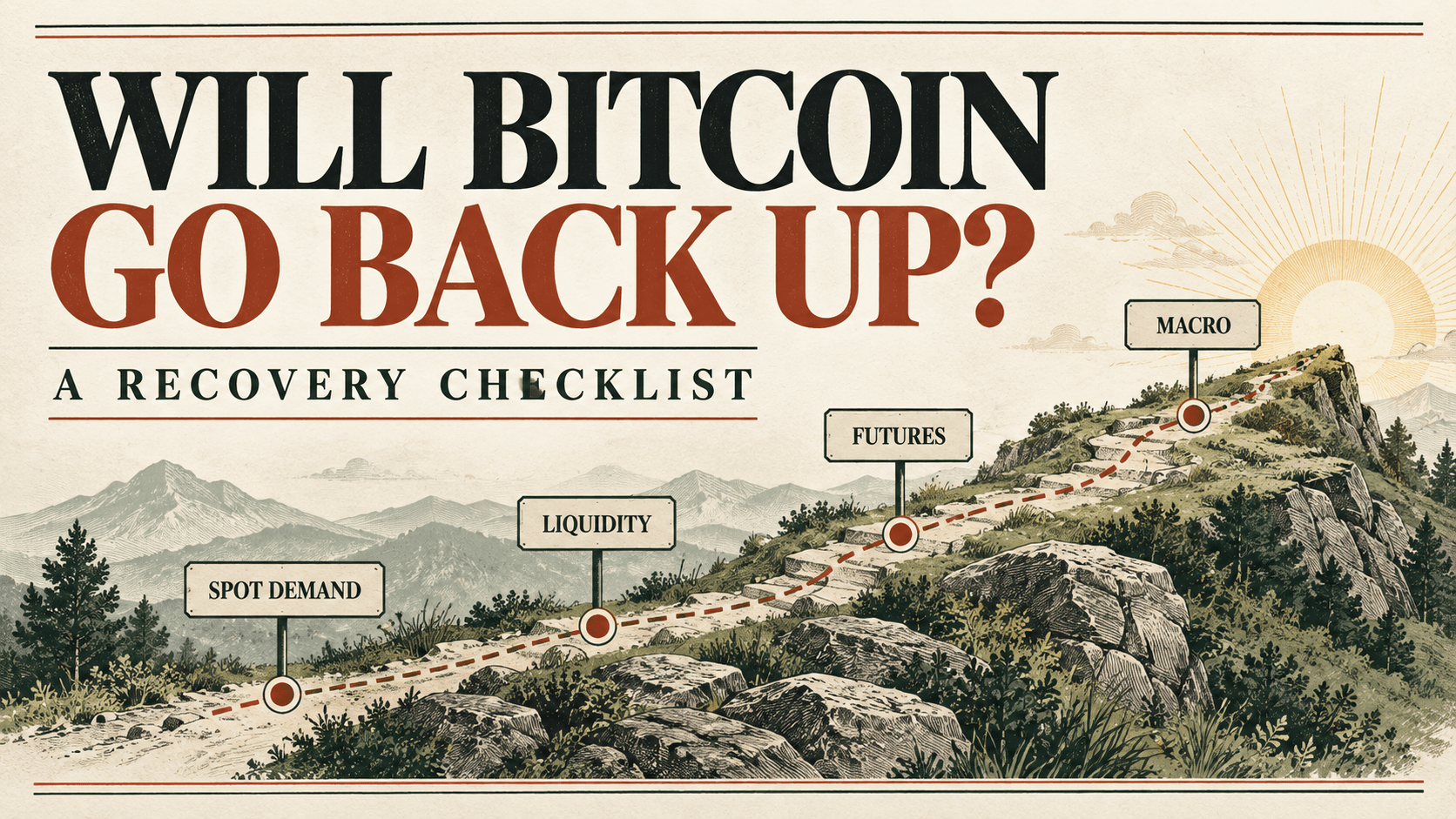
Will Bitcoin (BTC) Go Back Up in 2026? How to Tell a Real Recovery From a Short-Covering Bounce
Will Bitcoin go back up in 2026? Learn how spot demand, ETF flows, crypto liquidity, futures positioning and macro conditions shape a real BTC recovery.
Hyperliquid's Perpetual Futures Listed on Bloomberg Terminal, Increasing Institutional Investor Interest
NSE Stock Price Hits a New Low After IPO: Can National Stock Exchange Shares Recover?
National Stock Exchange of India shares traded near ₹1,741 on October 5, close to a post-listing low of about ₹1,735 and roughly 2.5% below the ₹1,785 IPO price. The stock has now spent more than a week under its issue price, and a recovery depends on retail demand, derivatives volumes and the broader Indian market.
Trump Creates Super Intelligence Force: What Changes in the AI Race
Home-jacking crypto: they threaten to kill a pregnant woman's baby in England

Bitcoin Exchange Withdrawal Rate Declines, Signaling Long-Term Holding
Bitcoin Miners Sign Their Best Month Since January
NFT: Porsche abandons its Web3 project around the 911
Former The Arena Advisor Accuses ROVE of Salary and Token Quota Arrears

Movement of Old Ethereum and Limited Exchange Reserves

Plunging GPU prices threaten AI hosts, and new hedges step in
Kalshi Hits the Brakes as Regulators Target User Incentives in Prediction Markets
Global Dollar: Is the Fed's Hegemony Breaking?
Economy: Christine Lagarde Calls for Regulation of AI Agents Already Paying in Stablecoins
XST Coin Surges Again: Can XSolut Price Recover to $0.01?
XST coin climbed toward $0.002038 on October 2, 2026, up roughly 77% over seven days. Reaching $0.01 would require a gain of about 391% from that level, and a separate September analysis flagging contract tracking concerns is worth understanding before treating any XST price chart as reliable.
Why Would a Public Blockchain Stop? Understanding Blockchain Consensus from Cosmos's 25-Hour Downtime

Fed’s Jefferson signals patience as October rate hike odds fall to 23%

New York and Wyoming Sign Agreement to Coordinate Cryptocurrency Company Regulation
The Quantum Issue: Quantum Isn't Coming For Your Bitcoin
PA Daily | Fed's Kashkari Expects One More Rate Hike This Year; OpenAI Plans to Raise $30 Billion, Valuation Reaches $1.4 Trillion

Why Did Google Stock Reverse After Gemini 4 Argon: What's Actually Going On
PTT Stock: A Pipeline Shutdown Hit the Same Day Profit Jumped 23%
OpenAI and Anthropic Targeted by the FTC: Investigation Launched into AI Safety

Crypto: Aave V4 Surpasses One Billion Dollars, Driven by Multisig
Bitcoin Cash: The History of Its Emergence, BCH Technology, Risks and Opportunities for Investors
Bitcoin: Strategy Acquires Another 334 BTC, Raising Its Reserve to 848,000
SNDK Stock Fell 3.8% After a 650% Rally: Does a Single-Digit P/E Make Sandisk Cheap or Just Cyclical?
Oil Futures Hold Above $100 After Houthis Claim Aramco Attacks: What Is Confirmed and What Is Not
MSTR Stock Slips After Strategy Buys Just 334 Bitcoin: Why It Spent More on Preferred Shares Than on BTC
INTC Stock Drops After TSMC Terafab Talks: Is Intel's Biggest Outside Endorsement at Risk?
Will Bitcoin (BTC) Go Back Up in 2026? How to Tell a Real Recovery From a Short-Covering Bounce
Will Bitcoin go back up in 2026? Learn how spot demand, ETF flows, crypto liquidity, futures positioning and macro conditions shape a real BTC recovery.
Contents
Latest articles




Latest coin listings on WEEX


