
Crypto in the United States: Brad Garlinghouse (Ripple) remains optimistic

 Prefer us on Google


Unwavering optimism. Brad Garlinghouse reiterates without hesitation: he still believes in the future of cryptocurrencies in the United States. The CEO of Ripple was already expressing this sentiment when the SEC was demanding nearly $2 billion from his company and his lawyers were camped out in a Manhattan courtroom.
Five years later, his teams are filing banking license applications in Washington instead of defense motions. In between, there has been case law, a stablecoin, four acquisitions, and a valuation in the eleven figures.
Key Points
- Brad Garlinghouse claims to have lost none of his optimism regarding American crypto.
- The SEC lawsuit resulted in a $125 million fine, far from the nearly $2 billion demanded.
- Ripple has spent over $4 billion on acquisitions: Hidden Road, GTreasury, Rail, Palisade.
- Two regulatory filings submitted in Washington: a federal banking license and direct access to the Fed.
Ripple: Brad Garlinghouse's optimism forged in the face of the SEC
Brad Garlinghouse published his reaction on X on September 15, 2026, just hours after the failure of the Clarity Act in the U.S. Senate: the closure motion received only 49 votes out of the 60 needed to pave the way for a final vote. This setback is nothing new in the leader's discourse. In December 2020, the SEC was already attacking Ripple for an alleged sale of unregistered securities involving $1.3 billion of XRP. Garlinghouse had spent several months denouncing regulation by enforcement and raised the possibility of relocating the headquarters to London, Dubai, or Singapore.
<< There are still reasons to be optimistic for crypto in the United States. The SEC, chaired by Paul Atkins, and the CFTC, chaired by Michael Selig, will continue to work to fill this legislative gap through regulation, and we will remain fully engaged in this process. >> Brad Garlinghouse, CEO of Ripple, on X, September 15, 2026
Judge Analisa Torres split the difference in July 2023. XRP sales on exchanges were not considered securities offerings, but those to institutional investors were. The final tally came to $125 million, about 6% of what the U.S. securities regulator was demanding. Both sides then withdrew their appeals and closed the case.
This decision provided XRP with a rare commodity in the altcoin universe: a binding U.S. judicial precedent. Thus, asset managers rushed in. A first wave of spot XRP ETFs arrived on Wall Street as early as fall 2025, with Canary Capital leading the way, followed by Bitwise, Franklin Templeton, and Grayscale.
Crypto and Ripple: Investing where one once pleaded
The checkbook followed the judicial crisis exit. Ripple spent $1.25 billion on the institutional broker Hidden Road. The spending continued with $1 billion for treasury software provider GTreasury, $200 million for the stablecoin payment startup Rail, and Palisade, the custody specialist, as a bonus. In total, these four operations exceeded $2.4 billion in seven months. They bring Ripple's total buybacks since 2023 to nearly $4 billion. All of this is backed by a $500 million funding round completed at a $40 billion valuation.
The in-house stablecoin RLUSD surpassed $1 billion in circulation less than a year after its launch. It operates under a charter from the NYDFS, the financial regulator of the State of New York. The company has also filed for a national banking charter with the OCC (Office of the Comptroller of the Currency), the federal bank supervisor. It also aims for a master account at the Federal Reserve through its subsidiary Standard Custody.
The legislative framework has become clearer in the same movement. The GENIUS Act, enacted in the summer of 2025, requires payment stablecoin issuers to maintain a full reserve in liquid assets. It also adds regular audits and clearly identified federal or state supervision. The next project, the market structure and the division of responsibilities between the SEC and CFTC, has occupied the Senate since then. The legal qualification of dozens of digital assets, including XRP, is at stake.
Brad Garlinghouse's optimism is now quantified in filed applications: nearly $4 billion in buybacks since 2023, and two licensing requests submitted to federal institutions. An office that almost no crypto player dared to approach five years ago.
-- Price
This content is provided for general informational purposes only and doesn't constitute financial, investment, legal, or tax advice. Any events, rewards, online promotions, or related information mentioned herein should not be considered a recommendation, solicitation, or invitation to purchase, sell, trade, or otherwise deal in any crypto assets. Crypto assets are highly volatile and may result in loss. The availability of WEEX services, products, and related events may vary by region. You are responsible for ensuring that your participation is in accordance with applicable local laws and regulations.
You may also like

Treasury’s cash plan points to a possible December liquidity window for Bitcoin
A Counterintuitive Logic: The Anti-AI Movement Won't Eliminate Demand, But It Gives the Industry More Time to Absorb the Bubble

Bank of England Raises Interest Rates: What Changes for Investors
Net Inflows into Spot Bitcoin and Ether ETFs in the US

TradingBeats Launches New Version, Upgraded to Information Stream Format

Is Trump Media selling Bitcoin? 4,259 BTC moved to Crypto.com

Trading Volatility Without Guessing Price Movements: What New Strategies Does Paragon's Power Perps Bring?

Gold Token 2026: Why Move Gold on Chain?

Economy: The People's Bank of China Tightens Currency Rules to Calm the Yuan

Trust Wallet user reports losing funds without approving transaction

HashKey Uses Standard Chartered's Digital Deposits for Money Movement

Has Wall Street Broken the Mechanism That Made Bitcoin Soar?
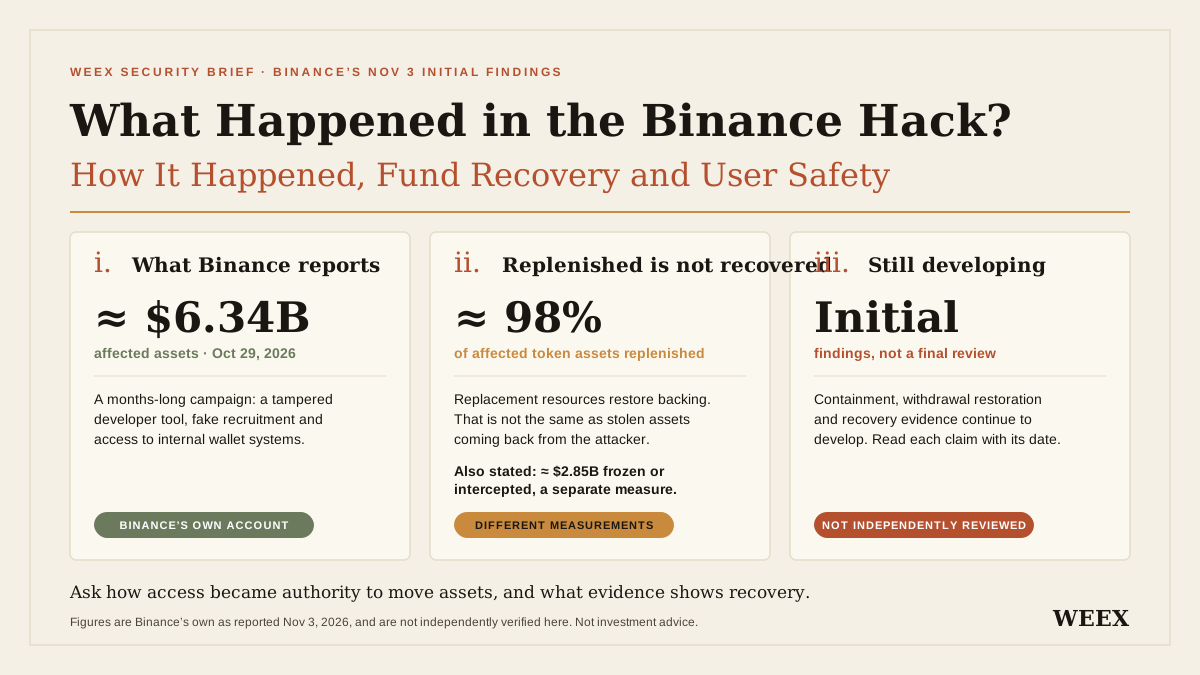
What Happened in the Binance Hack? How It Happened, Fund Recovery and User Safety
What happened in the Binance hack? Review the attack timeline, latest fund replenishment, recovery limits and practical steps to protect your account.
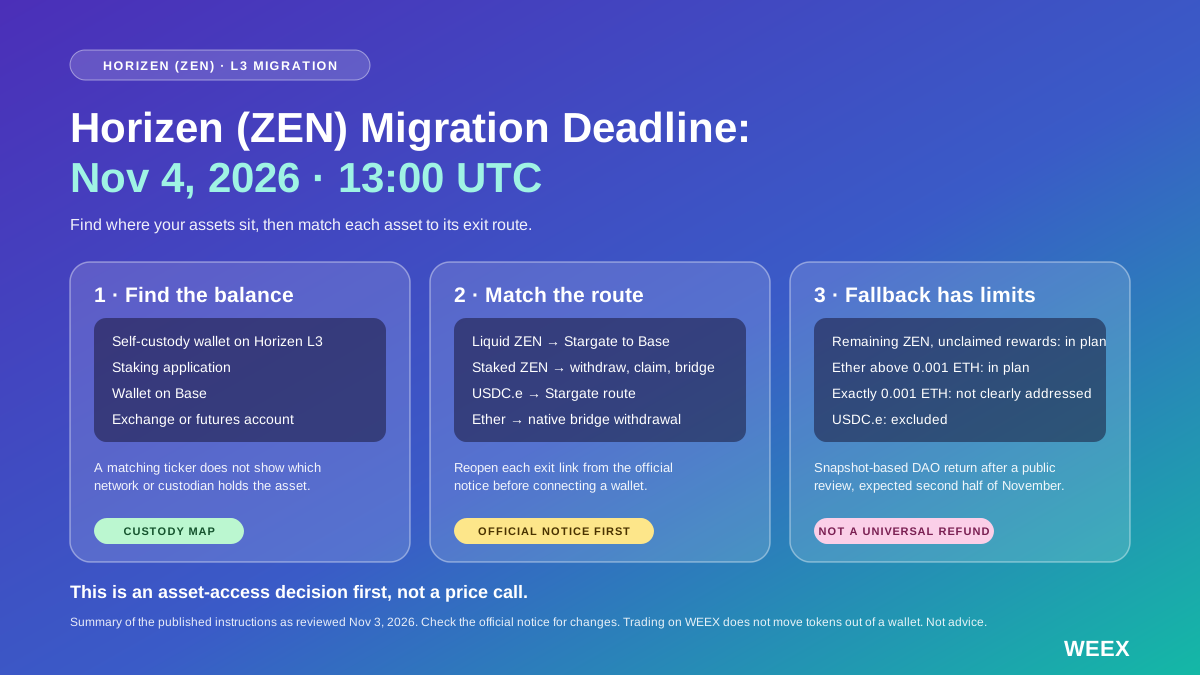
Horizen (ZEN) Migration Deadline: What to Move Before November 4 and What Happens If You Miss It
Horizen (ZEN) migration closes November 4. Check asset-specific bridge routes, wallet requirements, recovery exclusions and what to do if you miss it.
Bitcoin’s year-end liquidity hopes face a projected $150 billion Treasury cash rebuild

DMG Says Client Assets Are Secure and Highlights Layered Transaction Controls
Solana study finds wider spreads outside aggregators at five of six sampled pools
Crypto: Gate Freezes Two Accounts Linked to Binance Hack

BlackRock’s Ethereum fund sheds 580K ETH as monthly exits mount

How T7X Is Building the Infrastructure for a New Era of Capital Markets

The End of the Seasonality Myth. Why September and October Surprised Investors?

Hong Kong plans stablecoin trials for tokenized government debt

Ownership of Bitcoin in the Qian Zhimin Case and Victim Compensation

Polygon expands US banking access to Solana's 15 billion stablecoin market

Sui Puts Enforced Spending Limits at the Center of Its AI-Agent Design

Apple Reclaims Top Market Cap as Silver Nears $50: WEEX TradFi Market Brief
Vitalik's Latest Thoughts: We Need a Digital Minimalism Movement

RLUSD supply fell 29% on XRPL. One XRP trading pool barely changed

Mercado Bitcoin Plans Sui Asset Access in Brazil With Lending and Tokenization Links
Bitcoin Volatility Calendar: Which Events Really Shake the Market?
Treasury’s cash plan points to a possible December liquidity window for Bitcoin
A Counterintuitive Logic: The Anti-AI Movement Won't Eliminate Demand, But It Gives the Industry More Time to Absorb the Bubble
Bank of England Raises Interest Rates: What Changes for Investors
Net Inflows into Spot Bitcoin and Ether ETFs in the US
TradingBeats Launches New Version, Upgraded to Information Stream Format
Is Trump Media selling Bitcoin? 4,259 BTC moved to Crypto.com
Contents
Latest articles


Latest coin listings on WEEX


