
Reasons Why Cryptocurrency Kiosks Face Increasing Regulation

 Prefer us on Google
Quick Answer: In some regions, transferring funds from cash to cryptocurrency can become difficult to reverse after fraud, and customers using kiosks may face high fees and unclear disclosures, leading to regulations on cryptocurrency kiosks. Illinois is one such example, where the Digital Asset Kiosk Act sets limits on customer transaction amounts, caps on fees, and conditions for refunds related to fraud. These are Illinois rules and do not constitute a global ban on Bitcoin ATMs.
Comparison of Purchase Channels: Check Phemex's "Buy Cryptocurrency" page only if services are available in your area. Before paying, compare the final amount you will receive, provider fees, Know Your Customer (KYC) procedures, and refund conditions.
What Issues Are Regulators Trying to Address?
Kiosks convert cash or other payment methods into digital assets that can be sent to an address. While useful for customers who understand the transaction, they can also be exploited by fraudsters who instruct victims to deposit cash and send cryptocurrency to their wallets. Once the transfer is confirmed, the kiosk operator may not manage the recipient address. The U.S. Federal Trade Commission (FTC) consumer alert describes this tactic and urges consumers to stop if someone requests payment via a Bitcoin ATM.
Regulations typically target the point where cash enters the cryptocurrency system. This includes transaction sizes, fees, warning displays, operator registration, and refund procedures. These regulations do not imply that all kiosk users are victims of fraud, nor do they guarantee that authorized online exchanges will eliminate fraud. Customers can be deceived through any payment channel.
Why Are Kiosks Treated as a Separate Policy Target?
Kiosks integrate the purchase of digital assets into a physical, often cash-based workflow. This is useful for those without bank cards or who prefer face-to-face interfaces, but it also provides specific steps for fraudsters. They may keep the call going, direct victims to a specific machine, show a QR code, and claim that payment is necessary for account protection or debt settlement. Victims may see a branded machine and assume there is institutional protection for the transaction. However, the actual recipient may still be an address controlled by the fraudster.
This distinction explains why regulators may set transaction limits or require warning displays on the machines themselves. General online articles about cryptocurrency risks may not reach customers pressured in front of kiosks. However, warnings can be ignored, and low transaction limits may be circumvented through other channels. Regulations may mitigate specific loss pathways but do not address broader issues like impersonation or coercion.
The FTC's data spotlight on Bitcoin ATMs and fraud records why this payment channel attracts the attention of consumer protection agencies. The report describes complaints and is not a comprehensive survey of all kiosk transactions. Reported losses should not be used as the probability of a customer falling victim to fraud.
What Is Illinois Seeking?
The Illinois Department of Financial and Professional Regulation states that the state enacted the Digital Asset Kiosk Act in August 2025. The consumer summary indicates a daily kiosk transaction limit of $2,500 for new customers and $10,500 for existing customers. Additionally, the kiosk fee cap for the digital assets involved in transactions is set at the greater of $5 or 18%. The 18% is a high cap and should not be confused with a general or fair fee.
Illinois further explains full refund protection for certain fraud victims. Eligible victims must request a refund from the operator within 30 days of the last transaction and file a police report within 60 days of the incident. Facts and legal conditions are crucial, and refunds are not automatically guaranteed for all erroneous purchases. According to the department, operator registration will begin in 2027. Readers should verify the latest information from laws and regulatory authorities before relying on rules for individual cases, including enforcement dates and exemptions.
What Do Fee Caps Actually Target?
According to the regulatory summary, kiosk fees are capped at the greater of $5 or 18% for the digital assets involved in transactions. For customers to understand the true cost, they need to know the amount invested, the promised quantity of assets, the benchmark price used, explicit fees, spreads, and network fees. Just having fee items below the legal cap does not prove that customers are receiving competitive exchange rates. Conversely, simply having a high displayed price does not constitute a violation; the legal definitions and transaction facts are what matter.
As a simple hypothetical comparison, if one channel offers $90 worth of BTC for a $100 payment and another channel offers $97 worth for the same $100 payment, the amount received will differ by $7, excluding later transfer costs. This calculation does not inform which channel is legal or safe, but it illustrates why the actual quantity received is more useful information than the heading "fees." Since digital asset prices fluctuate during pending transactions, record the displayed price at the time of purchase.
What Does the Refund Period Require from Customers?
Promptness and documentation are required. According to the Illinois regulatory summary, eligible fraud victims must request a refund from the kiosk company within 30 days of the last transaction and file a police report within 60 days of the incident. Customers should keep their receipts, the kiosk's location, operator name, transaction identifier (TxID, https://phemex.com/ja/academy/what-is-txid-transaction-id), the amount displayed, the recipient address, and messages from the person who instructed the payment. These details will help determine whether legal procedures apply.
This rule should not be described as a chargeback for all cryptocurrency purchases. Customers may have sent assets to the recipient of their own volition and may not fall under the defined fraud circumstances. Operators and regulators need to verify individual factual circumstances. That is why blog articles should not present "refund protection" as a blanket guarantee but should include deadlines and limitations.
| Illinois Regulations | Corresponding Customer Questions | Limits of Protection |
|---|---|---|
| Daily Transaction Limit | How much can I transact at a kiosk in a day? | Limits differ for new and existing customers and do not verify the legitimacy of the recipient. |
| Fee Cap | How much can operators charge under the rules? | Even permissible fees can be high, so compare the entire displayed content. |
| Fraud Refund Process | Can eligible victims recover kiosk payments? | Time limits, police reporting, and other legal conditions apply. |
| Registration and Disclosure | Who operates the kiosk and what conditions are displayed? | Always check the registration timing of the system and the local enforcement status. |
Do Kiosk Rules Apply to All Cryptocurrency Purchases?
No. The Illinois summary targets digital asset kiosks under state law. Online exchanges, P2P sales, and other payment methods may follow different requirements. Users outside Illinois should not assume that the thresholds of the state apply. Additionally, users within Illinois should not assume that having a website means online services are available or authorized.
For neutral cost comparisons, record the same inputs for all methods. The cash or card amount paid, the quantity of cryptocurrency offered, network fees and service fees, bid-ask spreads, KYC requirements, transaction limits, and remedies if the recipient was a fraudster, among others. Kiosks can provide face-to-face access, while online platforms may offer different displayed prices and account processing. In either form, they do not ensure safe irreversible payments to unknown recipients.
How Do Kiosk Rules Differ from Exchange Safeguards?
Both address overlapping but different risk points. Kiosk regulations can set limits on transaction sizes at physical machines and require notifications before cash exchanges. In contrast, online exchanges may use account checks, transaction monitoring, withdrawal holds, and management by payment providers. Which management measures apply varies by provider, product, and jurisdiction. Even if checks exist, it does not verify that the intended recipient is legitimate, and account authentication is not a guarantee against social engineering.
For a fair comparison, the same user issues should be used. If purchasing cryptocurrency for self-management, compare the net asset quantity before and after purchase and withdrawal. If the purpose is to make a payment to a third party, first verify that the payment itself is legitimate. Just because a channel is cheaper does not mean that fraudulent payments are safe. If the goal is trading, do not view kiosks as an alternative trading market; instead, compare the terms of the transaction and custody. This framework prevents policy articles from advertising specific purchase channels.
What Cannot Be Inferred from Local Regulations?
Illinois regulations do not prove that kiosks are illegal in other regions, nor do they indicate that all kiosk operators in Illinois are violating the law. The global rise in Google Trends for the phrase "local restrictions" does not specify which countries or cities searchers intended. Search interest is a clue for investigating clearly named laws and is not a basis for legal status. Before disseminating claims about another jurisdiction, identify the law, regulatory authority, enforcement date, types of machines involved, and any exemptions.
Similarly, if fraudsters direct victims to another channel, regulations may change consumer transaction methods without reducing overall fraud losses. Effectiveness assessments require methods that consider complaint data, transaction volumes, enforcement information, and transferred activities before and after regulations. This article describes policy design and the Illinois case and does not claim that the law has already reduced losses.
What Should Customers Do If Instructed to Go to a Kiosk?
Pause before sending funds. Contact the person or institution through known channels, not the phone numbers or links provided in the request. Do not treat kiosk receipts, QR codes, or government-sounding displays as proof of the recipient's identity. If payment has already been made, keep the receipt, transaction hash, and messages, and promptly contact the operator and report to local law enforcement and relevant consumer agencies. In Illinois, there are deadlines for refunds, so swift action is crucial.
For those wanting to know the basic operational flow of kiosks, Phemex Academy's "About Bitcoin ATMs and How They Work" (https://phemex.com/ja/academy/%E3%83%93%E3%83%83%E3%83%88%E3%82%B3%E3%82%A4%E3%83%B3atm%E3%81%A8%E3%81%9D%E3%81%AE%E4%BB%95%E7%B5%84%E3%81%BF%E3%81%AB%E3%81%A4%E3%81%84%E3%81%A6) explains how to use the machines. The state-specific regulations mentioned here will influence whether transactions can occur and under what conditions.
Frequently Asked Questions (FAQ)
Are Bitcoin ATMs banned in Illinois?
The cited Illinois framework regulates kiosk operations and customer transactions and does not ban all kiosks outright.
Does the Illinois fee cap mean kiosks can charge 18%?
No. This is the legal cap indicated by regulators and not the fee for all transactions. Check the overall fee displayed by the operator and the actual amount received.
This content is provided for general informational purposes only and doesn't constitute financial, investment, legal, or tax advice. Any events, rewards, online promotions, or related information mentioned herein should not be considered a recommendation, solicitation, or invitation to purchase, sell, trade, or otherwise deal in any crypto assets. Crypto assets are highly volatile and may result in loss. The availability of WEEX services, products, and related events may vary by region. You are responsible for ensuring that your participation is in accordance with applicable local laws and regulations.
You may also like
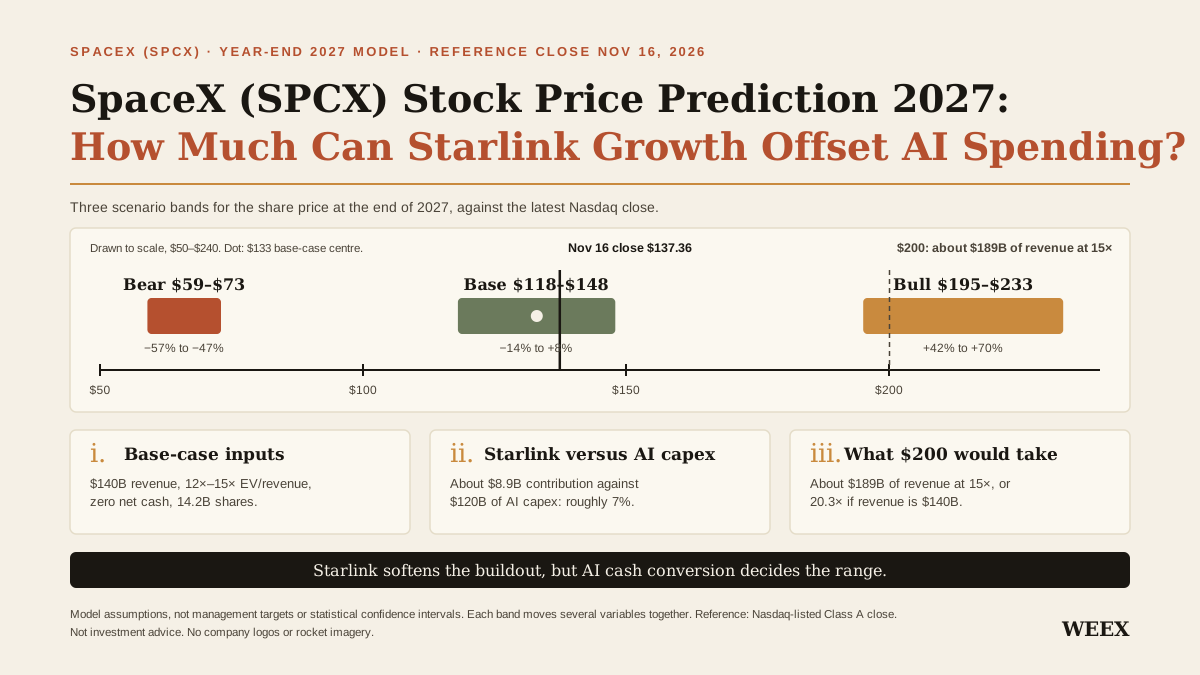
SpaceX (SPCX) Stock Price Prediction 2027: How Much Can Starlink Growth Offset AI Spending?
SpaceX stock price prediction for 2027: See the $118–$148 base case, how much Starlink could offset AI spending, and what it would take to reach $200.

Chevron Expands in the Gulf of Mexico with Plans to Acquire Majority Stake in Oil Field for Over $5 Billion
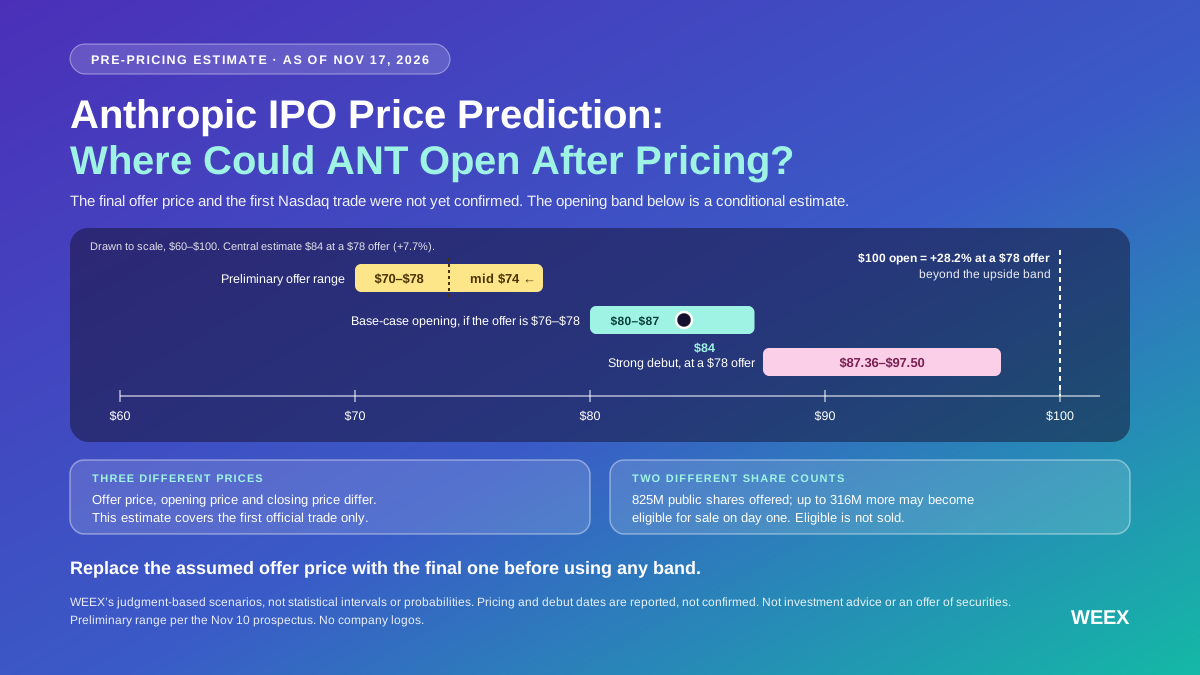
Anthropic IPO Price Prediction: Where Could ANT Open After Pricing?
Anthropic IPO price prediction: See ANT’s $80–$87 base-case opening range, how the final offer price changes it, and what could push shares above $90.
IOSF: The Cost Paradox of Video AI - Why Is Generating Cheaper but Final Cuts Still Expensive?
Will the $50 billion request materialize? The U.S. transportation system urgently needs funding for upgrades, but Congress has become a "lame duck"
Japan Proposes Establishing an 'Asian Version of the International Energy Agency' to Enhance Southeast Asia's Oil Storage Capacity in Response to Energy Crises
Federal Reserve Warns Korean Investors About Leveraged ETF Risks
Mercado Bitcoin Withdrawal Update: Pix Restart and Crypto Suspension
Mercado Bitcoin set November 17 for Pix deposits and withdrawals in Brazilian reais. Read the withdrawal rules and the background to the crypto suspension.
The Q3 Market in Turmoil: How Much is Circle Worth?

A Decade of a Crypto Neutral Fund Manager: A High-Pressure Way of Life

JPMorgan and DBS Enable On-Chain USD Payments! 24-Hour Cross-Border Transfers, Ant International Becomes First Client
XRP holders demand Ripple burn 31.1 billion tokens by March 2027
Major Indexes Close Lower, Nvidia Earnings Are Imminent | WEEX Daily Market Brief (November 17, 2026)
At the November 16 close, the three major indexes all finished lower. Technology-stock selling continued, with the chip sector leading declines. Bitcoin’s weekend selloff showed signs of stop-loss hunting; it is currently around $64,000. Backpack received regulatory approval. On November 17, watch for October retail sales data and earnings from Nvidia, Home Depot, Disney, and JD.com.
Cardano vs Solana: Which Blockchain is Superior?

Surge in Drone Demand Drives Swiss Defense Group to Accelerate U.S. Market Expansion
25 million stolen in 12 seconds: the MEV brothers acquitted

Citi Updates Preferred List of U.S. Software Stocks: Box, Navan, and Roper Technologies Take the Top Three Spots

JPMorgan and MIT Map More Than 150 Requirements for Institutional Blockchains
J.P. Morgan Chief Global Strategist: Tech Stock Trading Enters a Phase of Volatility and Uncertainty, Investors Should Diversify AI Holdings

One Hundred Million Dollars in Floating Profit Goes to Zero: A Contract Trader's Dilemma
Figment to Support Staking Through BNY’s Digital Asset Custody Platform
Crypto: Tether Gold (XAU₮) Receives Unqualified Audit from KPMG
Pony Ma's Internal Speech: The Wave of AI Has Already Hit, Tencent Must 'Transform from Army to Navy' and Get Everyone on Board

Uniswap freezes $300,000 in stranded fees, halting automatic token burns
NVIDIA Employees Warn Board of Potential Loss of "Irreplaceable" Talent
What Are Value Indicators Beyond Money? Considering 'Sweat' (Inside 'So That's Blockchain' Ep.24)

The Arrogance and Prejudice of a16z

Backpack Founder’s Latest Speech: Solana Will Become the API of American Finance, Welcoming the Era of Neobrokerage

If a Bear Market Is Coming, History Says This Is the Safest Investing Move You Can Make

Ethereum test exposes flaw that lets transactions skip payments
SpaceX (SPCX) Stock Price Prediction 2027: How Much Can Starlink Growth Offset AI Spending?
SpaceX stock price prediction for 2027: See the $118–$148 base case, how much Starlink could offset AI spending, and what it would take to reach $200.
Chevron Expands in the Gulf of Mexico with Plans to Acquire Majority Stake in Oil Field for Over $5 Billion
Anthropic IPO Price Prediction: Where Could ANT Open After Pricing?
Anthropic IPO price prediction: See ANT’s $80–$87 base-case opening range, how the final offer price changes it, and what could push shares above $90.
IOSF: The Cost Paradox of Video AI - Why Is Generating Cheaper but Final Cuts Still Expensive?
Will the $50 billion request materialize? The U.S. transportation system urgently needs funding for upgrades, but Congress has become a "lame duck"
Japan Proposes Establishing an 'Asian Version of the International Energy Agency' to Enhance Southeast Asia's Oil Storage Capacity in Response to Energy Crises
Latest articles
Latest coin listings on WEEX


