
US Judge Acquits in $25 Million Fraud Case

 Prefer us on Google


A federal judge in the United States has ruled that brothers Anton Peraire-Bueno and James Peraire-Bueno did not make any false statements that others relied on in their operations involving Ethereum trading bots, thus acquitting them. This ruling concludes the first criminal case in the U.S. involving the so-called "Maximum Extractable Value" (MEV) operations.
The judge determined that outsmarting trading bots on the Ethereum network does not constitute wire fraud, dismissing the first criminal case by the U.S. government concerning alleged MEV exploitation. Previously, prosecutors accused the MIT-educated brothers of obtaining $25 million in just 12 seconds.
According to the opinion, U.S. District Judge Jessica Clarke in Manhattan approved the not guilty verdict for Anton Peraire-Bueno and James Peraire-Bueno on November 16, with charges including wire fraud, conspiracy to commit wire fraud, and conspiracy to launder money.
This ruling comes a year after a jury failed to reach a consensus in November 2025, leading Judge Clarke to declare a mistrial. The judge also instructed the court clerk to close the case.
Clarke described Ethereum as "a trustless, highly competitive environment with no terms of use."
How Trading Works
In the Ethereum network, pending transactions enter a public queue known as the mempool (short for memory pool) until selected by a network participant, known as a validator, to be added to the next block.
Trading bots monitor this queue to capture the so-called "Maximal Extractable Value" (MEV), which is the profit that can be gained by controlling the order of transactions within a block.
The most common bot strategy is the "sandwich attack." When a bot detects a large buy order waiting to be executed, it will buy the relevant tokens first, wait for the target transaction to push the price up, and then sell immediately to profit from the price difference.
Most validators do not build blocks themselves but purchase pre-built blocks from professional block builders through an on-chain intermediary known as a relay.
Relays keep the contents of blocks confidential until validators sign a commitment to publish the block, preventing them from previewing the transactions arranged by block builders and stealing profit opportunities.
According to the court's opinion, the Peraire-Bueno brothers set a trap in April 2023.
They submitted eight bait transactions designed to attract sandwich trading bots. These bots typically buy in front of others' transactions and sell immediately after the transaction is completed to profit from the price difference.
When it was time for the validator controlled by the brothers to propose a block, a relay named Ultrasound provided them with a block containing numerous bot sandwich transactions.
The validator signed the block header, a data structure summarizing the block's contents, but two key fields were set to zero. This meant that the block could not possibly become a valid block.
However, the relay did not check these fields and still provided the validator with the complete contents of the block.
After obtaining the trading information from the bots, the brothers built a block themselves.
They retained the transactions where the bots bought tokens but replaced the original bait transactions with numerous transactions selling the tokens that the bots had just purchased.
By the time the bots attempted to sell, the brothers had already driven the market price of the relevant tokens down significantly.
Ultimately, these trading bots lost about $25 million, while the validator controlled by the brothers faced a penalty of only about 1 Ether, worth several thousand dollars.
-- Price
This content is provided for general informational purposes only and doesn't constitute financial, investment, legal, or tax advice. Any events, rewards, online promotions, or related information mentioned herein should not be considered a recommendation, solicitation, or invitation to purchase, sell, trade, or otherwise deal in any crypto assets. Crypto assets are highly volatile and may result in loss. The availability of WEEX services, products, and related events may vary by region. You are responsible for ensuring that your participation is in accordance with applicable local laws and regulations.
You may also like

Stablecoin supply falls $16 billion as Bitcoin slides

Interest Rates Rebound to Three-Week High, Mortgage Demand Weakens

Target's Q3 Earnings Exceed Expectations, Raises Full-Year Guidance

Mining Giant MARA's Strategic Shift: Selling 40,000 BTC for Power Plants

Emerging Markets: Over $60 Billion Flees in Two Months Amid Growing AI Crisis Fears

Warnings Behind 50 Authorizations: How TBC Tightens Signature Permissions

a16z Frontier Explores AI Agent Sector, Uncovering a New Startup Opportunity

Why is Crypto Payment Still Not Working Even with Licenses?

SoFi Is Targeting 100 Million Products by 2030. Here’s What $10,000 Invested Today Could Be Worth if It Gets There.

CFTC Blockchain Derivatives Approval: Does It Mean You Can Trade Yet?

Genesis AI CEO States Robots Don't Need Heads

IOSG: Bitcoin Needs to Reach $250,000 to Compete with AI in Mining
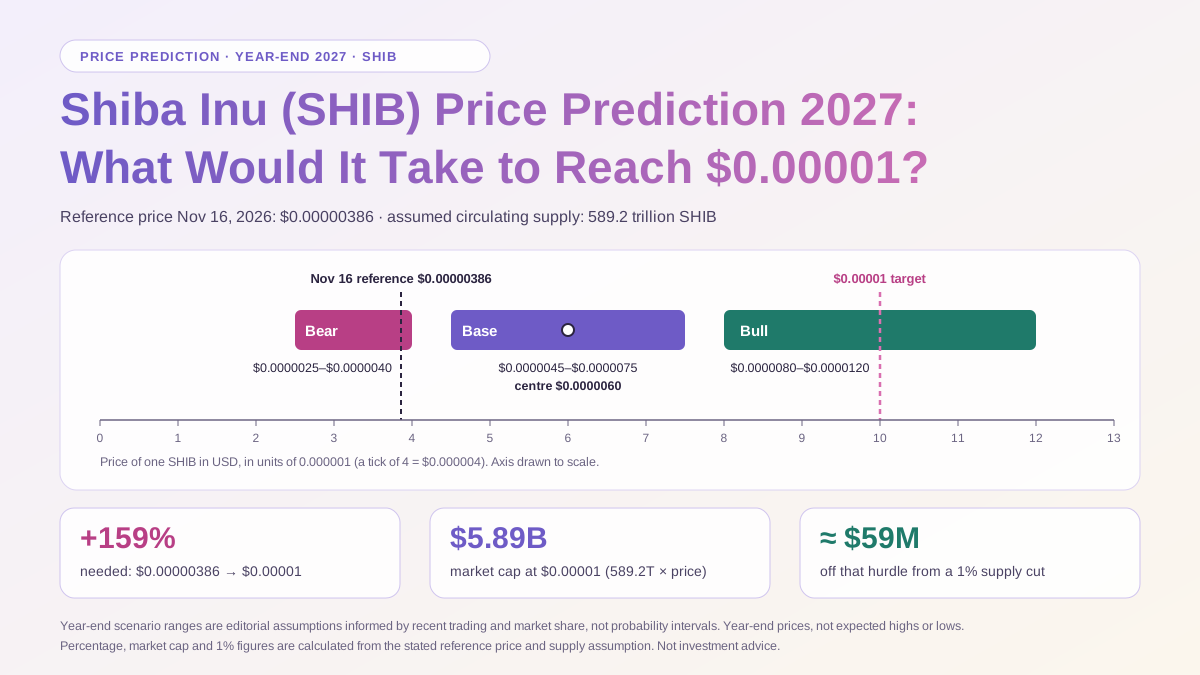
Shiba Inu (SHIB) Price Prediction 2027: What Would It Take to Reach $0.00001?
See our Shiba Inu price prediction for 2027, including the $0.000006 base estimate, the market cap needed for $0.00001, and how much burns could help.

Samsung Electronics and Apple Close to Signing Long-term DRAM Supply Agreement

WEEX P2P now supports CAD —Merchant Recruitment Now Open
Cardano Foundation seeks 25M ADA for 2027 events despite $1.2M funding gap

NVIDIA Employees Warn Board of Potential Loss of "Irreplaceable" Talent

The Arrogance and Prejudice of a16z

Unocoin Estimates $200,000 Loss as Backup-Key Finding Explains Wallet Transfers
ARTEX AI tool breaches networks in under 3 hours, FBI warns
Matt Hougan has a positive outlook on Bitcoin and altcoins

Win an iPhone 18 Pro Max on WEEX? 201 Lucky Eggs Explained

Tesla Autopilot Team Veterans Found Simulation Startup Valued at $1 Billion
CoW Swap Launches on Solana, Supporting USDC and Wrapped SOL Exchange

CoW Swap Launches Alpha Version, Supporting USDC and wSOL Exchange
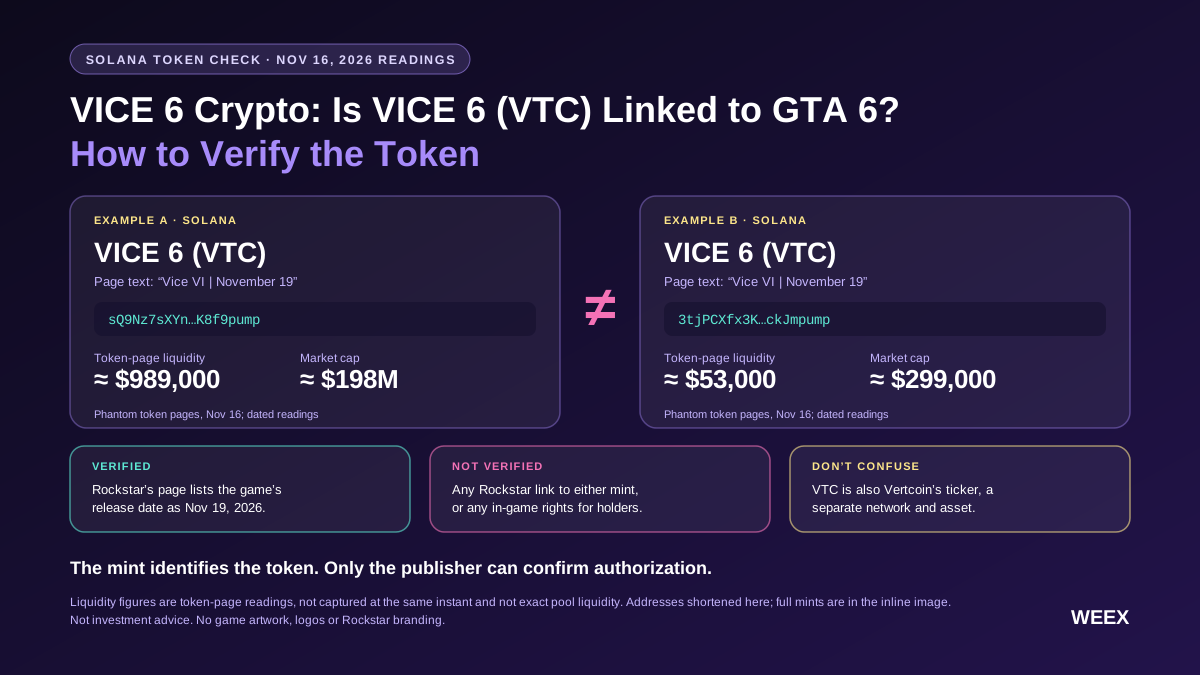
VICE 6 Crypto: Is VICE 6 (VTC) Linked to GTA 6? How to Verify the Token
Is VICE 6 crypto linked to GTA 6? Compare two Solana tokens using VTC, verify their mint and pool addresses, and see what Rockstar has confirmed.
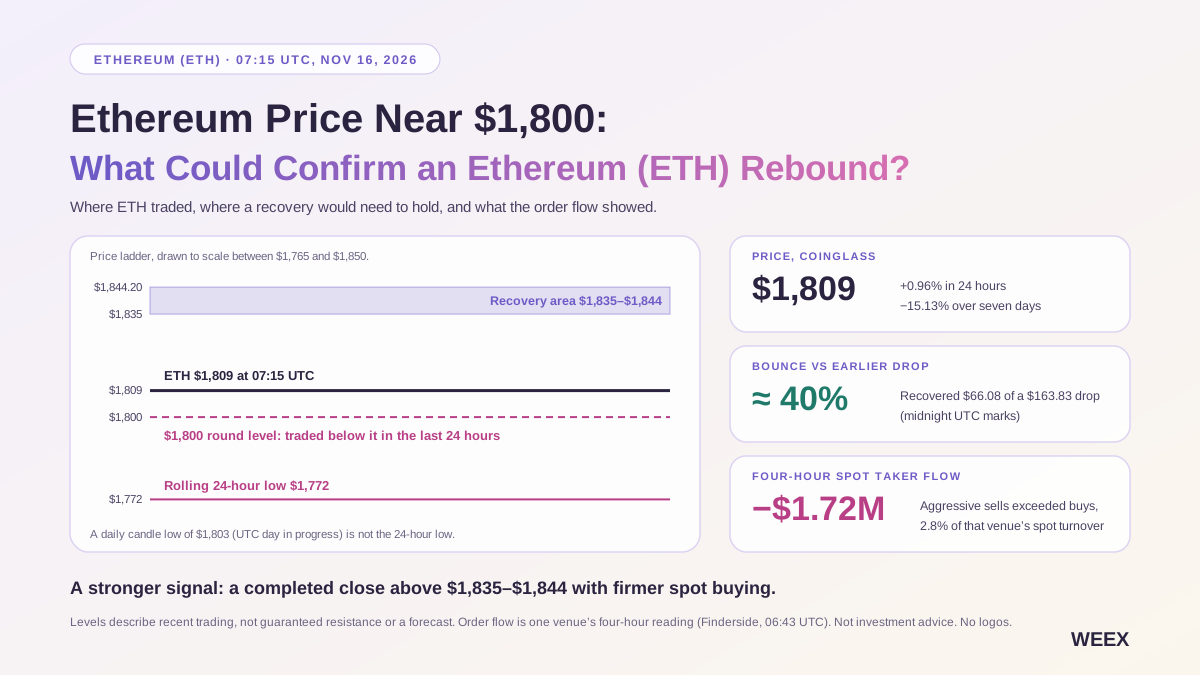
Ethereum Price Near $1,800: What Could Confirm an Ethereum (ETH) Rebound?
Ethereum traded near $1,800 on November 16. See what four-hour spot order flow, futures positioning, and Friday’s ETF flows say about an ETH rebound.
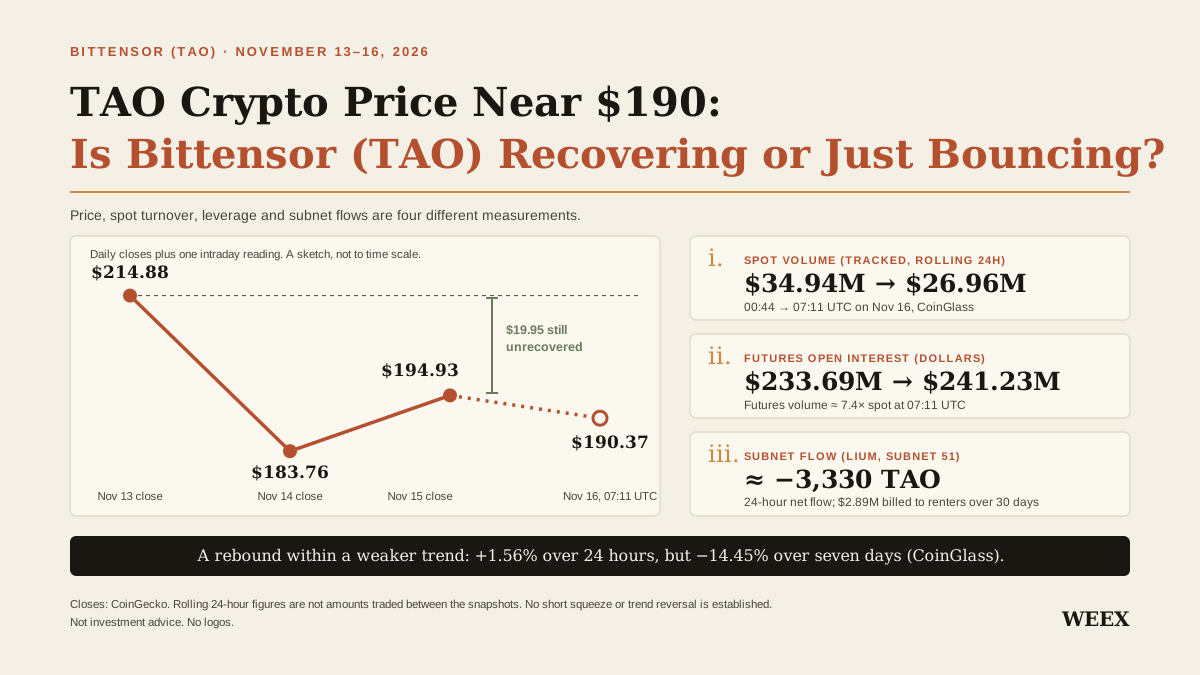
TAO Crypto Price Near $190: Is Bittensor (TAO) Recovering or Just Bouncing?
TAO bounced near $190. Compare spot volume, futures positioning, and Bittensor subnet flows to see what would confirm a more durable recovery.
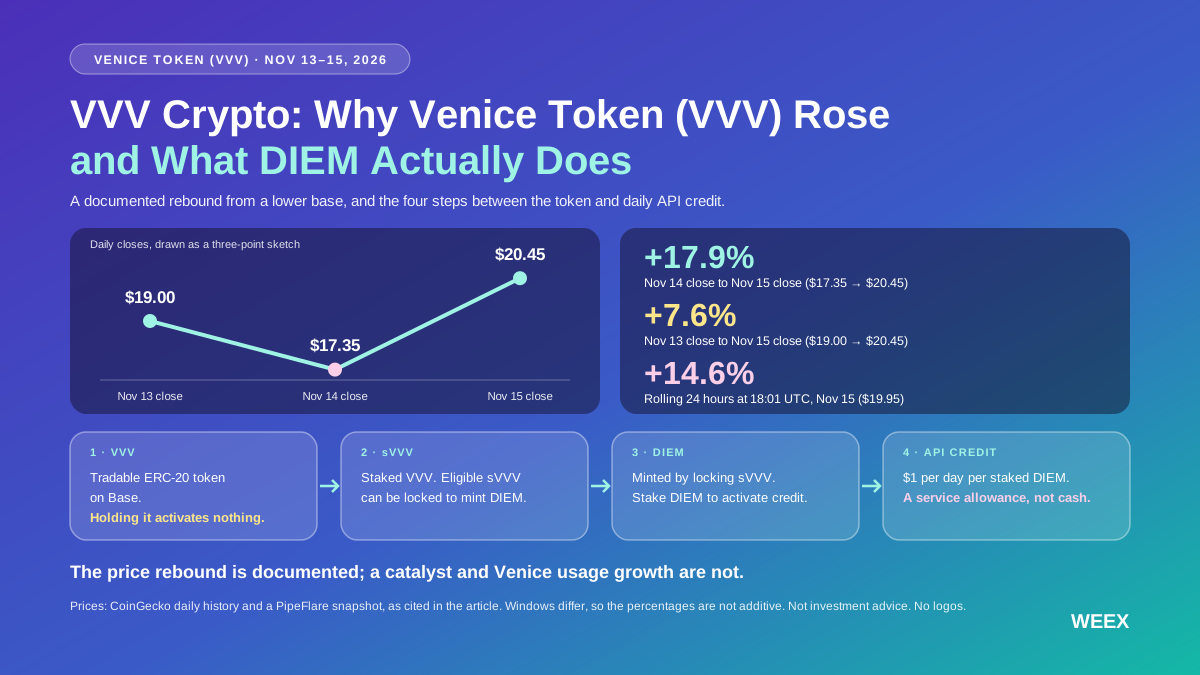
VVV Crypto: What Is Venice Token, Why Venice Token (VVV) Rose and What DIEM Actually Does
Venice Token rose about 14.6% in one November 15 snapshot. Learn what the data shows, how VVV staking works, and what DIEM’s daily API credit buys.
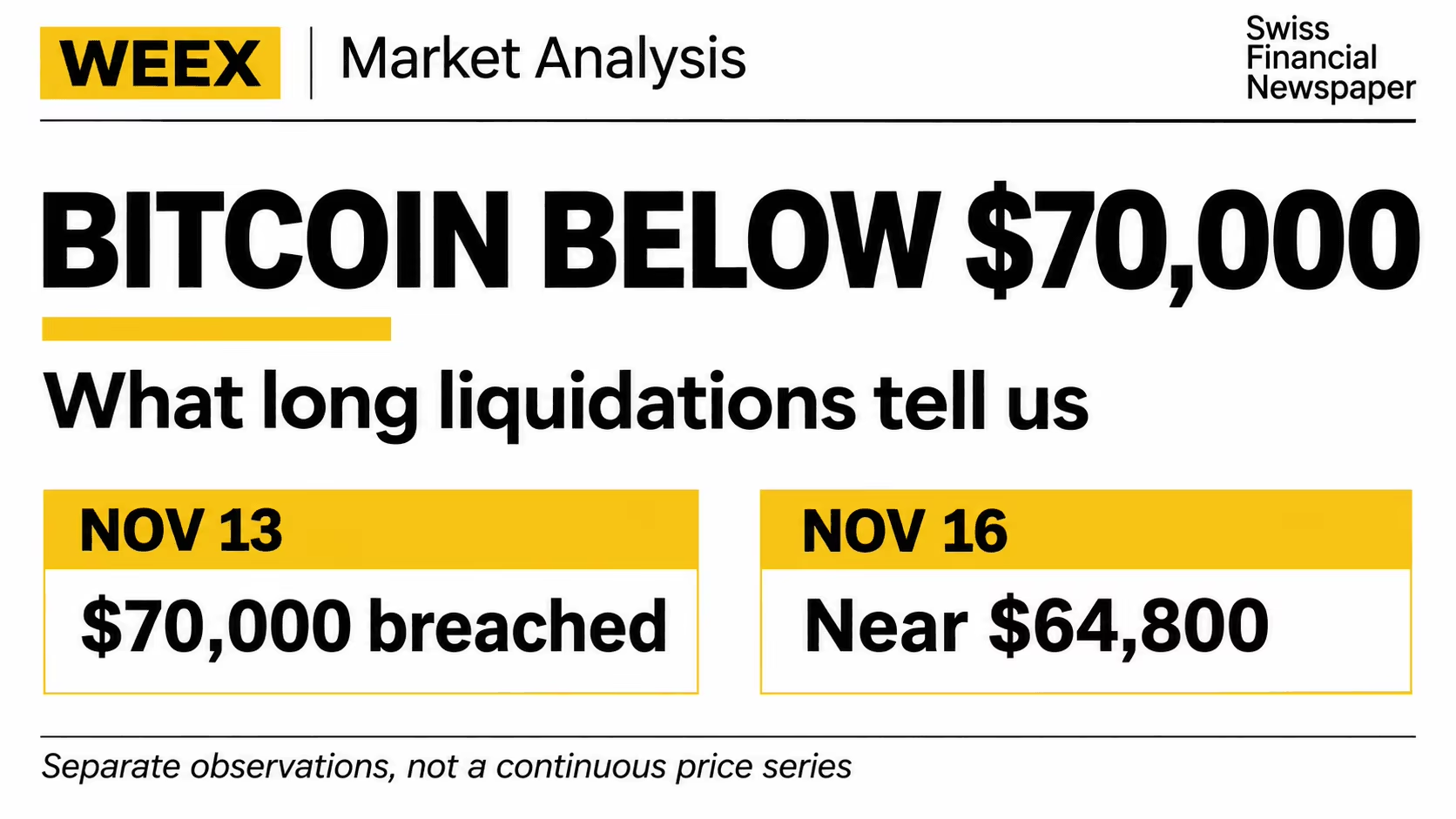
Why Did Bitcoin (BTC) Drop Below $70,000? What Long Liquidations Tell Us
See why Bitcoin fell below $70,000 on November 13, how long liquidations amplified the decline, and what to watch before calling a rebound. If you already plan to trade, you can check whether your activity qualifies for the WEEX Lucky Eggs event, scheduled to run through November 25, 2026 (UTC+8).
Stablecoin supply falls $16 billion as Bitcoin slides
Interest Rates Rebound to Three-Week High, Mortgage Demand Weakens
Target's Q3 Earnings Exceed Expectations, Raises Full-Year Guidance
Mining Giant MARA's Strategic Shift: Selling 40,000 BTC for Power Plants
Emerging Markets: Over $60 Billion Flees in Two Months Amid Growing AI Crisis Fears
Warnings Behind 50 Authorizations: How TBC Tightens Signature Permissions
Latest articles




Latest coin listings on WEEX


