
Emerging Markets: Over $60 Billion Flees in Two Months Amid Growing AI Crisis Fears

 Prefer us on Google



In what was a precursor to what lay ahead, in October, and for the second consecutive month, portfolio flows into emerging markets recorded significant capital outflows of nearly $40 billion, accumulating a negative flow of over $60 billion in the fifth bimonthly period of the year. It should not be overlooked that last month there was a significant rotation of AI-related equity portfolios into bonds, as concerns escalated over the capital expenditure plans of technology companies, particularly related to the AI boom.{#p-1794964079328-82345}
According to monitoring by the Institute of International Finance (IIF), last month international investors sold emerging market assets worth $33.8 billion, marking the largest capital outflow globally since last March, "due to doubts about the profitability of investments in Artificial Intelligence (AI) and profit-taking after the significant gains that affected North Asian stocks," explain the economists of the entity. It is worth noting that in September, $19.3 billion left the markets, and in October of last year, there were capital inflows of $27.4 billion.{#p-1794964079328-64653}
Equity capital outflows reached $31.7 billion, led by emerging Asian markets with $28.3 billion, amid a record sell-off of Taiwanese stocks by foreign investors.{#p-1794964079328-88599}
On the other hand, debt from emerging markets, excluding China, attracted $7.2 billion, offsetting most of the $9.3 billion outflow from Chinese debt.{#p-1794964079328-68079}
In Latin America, capital outflows of $1.7 billion were recorded in October, after receiving inflows of $5.4 billion in September; this included outflows of $1.3 billion in debt and $300 million in equities, in a context marked by strong fluctuations throughout the month due to the presidential elections in Brazil.{#p-1794964079328-74818}
Looking ahead, the IIF believes that markets are taking for granted the rate hikes by the Federal Reserve (FED) and the Bank of Japan (BOJ) in December, and with doubts about the profitability of AI, Brent crude above $100, and fiscal risk in Brazil, the bar for the return of capital inflows into emerging markets remains high.{#p-1794964079328-57204}
Equity Flight
Stocks accounted for almost the entirety of the total negative flow, with an outflow of $31.7 billion, while debt flows remained close to equilibrium, with an outflow of $2.1 billion. It is worth noting that these outflows occurred in a context of declining yields in the US and a relatively stable dollar, which is interpreted as a sign that the appetite for risk in the stock market and country-specific shocks were the main sources of pressure during October.{#p-1794964079328-9909}
All regions recorded outflows: $28.7 billion in emerging Asian markets, $2.3 billion in European markets, $1.7 billion in Latin America, and $1.2 billion in the MENA region (Middle East and North Africa).{#p-1794964079328-46556}
According to preliminary daily data, the outflows recorded between October 1 and November 3 amounted to about $42 billion. "This figure, in nominal terms, already exceeds that recorded during the 90 days following the onset of the global financial crisis, the volatility episode of 2013 known as 'taper tantrum', or the confidence crisis related to China in 2015," recalls the IIF. Among the monitored episodes of tension, only the shock caused by Covid-19 in 2020 and the shock derived from the conflict with Iran in March 2026 generated larger outflows, close to $100 billion in each case.
As a reference for the scale of the general withdrawal, so far this year, the accumulated flows amount to $135.9 billion compared to $254 billion recorded in the same period last year.
To visualize the punishment suffered by emerging markets, especially in the last stretch of last month, it is worth noting that emerging market stocks recorded declines greater than those of the S&P 500 and the Nasdaq 100: the MSCI EM index fell more than 8% (its worst month since March), while its information technology sector fell by 12.4%, the KOSPI (Korea) dropped 16.2%, and the TAIEX (Taiwan) fell 5.7%, after having accumulated gains of 62% and 66%, respectively, during the first nine months of the year.
Image created with AI
Beware of AI
Regarding the wave of debt placements in AI, so far, bond markets have absorbed this supply without a persistent adjustment in the risk valuation of issuers. However, off-balance-sheet commitments (such as data center leases and chip purchase agreements) suggest that the reported debt figures may underestimate the total obligations. Therefore, the IIF notes that economic authorities have also warned that the boom in AI investment is increasingly being financed through debt, and that a disappointment regarding expected returns could lead to a significant correction. Consequently, "a sharper decline in AI sector valuations could affect both credit markets and equity prices; in this scenario, emerging markets would be exposed through hardware suppliers from North Asia, responsible for much of the physical infrastructure deployment," explains the entity.
Bonds Defend Themselves
Undoubtedly, the decline in yields in the U.S. favored sovereign debt from emerging markets denominated in strong currencies, which recorded a yield of 1.4% for the month; in contrast, local currency-denominated public debt lost 0.7% in dollar terms, as emerging currencies weakened.
Debt flows in emerging markets were negative at $2.1 billion in October, compared to net inflows of $18.6 billion recorded a year ago. This aggregate figure reflects capital outflows worth $9.3 billion from Chinese debt (the largest figure since May), while debt from emerging markets (excluding China) received inflows of $7.2 billion, despite specialized funds in strong currency bonds recording outflows in four of the five weeks of the month.
At the regional level, Latin America recorded outflows of 1.3 billion dollars; emerging Asia, 400 million dollars (given that inflows in the rest of the region offset most of the outflows from China); the MENA region 400 million dollars; and emerging Europe, 100 million dollars. Primary markets remained open: on October 26, Colombia placed a dollar bond issuance of 5.2 billion dollars, structured in three tranches. So far this year, inflows into debt amount to 263.3 billion dollars, compared to 272.4 billion recorded a year earlier; of this figure, 350.3 billion corresponds to emerging market debt (excluding China), while China's debt records a negative flow of 86.9 billion dollars.{#p-1794964079328-82252}
-- Price
To Close 2026
The IIF believes that inflows into emerging market debt (excluding China) could continue as long as the yield on the 10-year U.S. Treasury bond remains below the peak of 5.3% reached in early October. "The decisions made by the FED and the BOJ in December, along with the evolution of oil prices, constitute the main risks to this outlook, while the recovery of capital flows to North Asia will depend on how quickly investor confidence returns in the AI investment cycle, which drove much of the gains recorded this year.{#p-1794964079328-86760}
This content is provided for general informational purposes only and doesn't constitute financial, investment, legal, or tax advice. Any events, rewards, online promotions, or related information mentioned herein should not be considered a recommendation, solicitation, or invitation to purchase, sell, trade, or otherwise deal in any crypto assets. Crypto assets are highly volatile and may result in loss. The availability of WEEX services, products, and related events may vary by region. You are responsible for ensuring that your participation is in accordance with applicable local laws and regulations.
You may also like

Stablecoin supply falls $16 billion as Bitcoin slides

Interest Rates Rebound to Three-Week High, Mortgage Demand Weakens

Target's Q3 Earnings Exceed Expectations, Raises Full-Year Guidance

Mining Giant MARA's Strategic Shift: Selling 40,000 BTC for Power Plants

Warnings Behind 50 Authorizations: How TBC Tightens Signature Permissions

a16z Frontier Explores AI Agent Sector, Uncovering a New Startup Opportunity

US Judge Acquits in $25 Million Fraud Case

Why is Crypto Payment Still Not Working Even with Licenses?

SoFi Is Targeting 100 Million Products by 2030. Here’s What $10,000 Invested Today Could Be Worth if It Gets There.

CFTC Blockchain Derivatives Approval: Does It Mean You Can Trade Yet?

Genesis AI CEO States Robots Don't Need Heads

IOSG: Bitcoin Needs to Reach $250,000 to Compete with AI in Mining
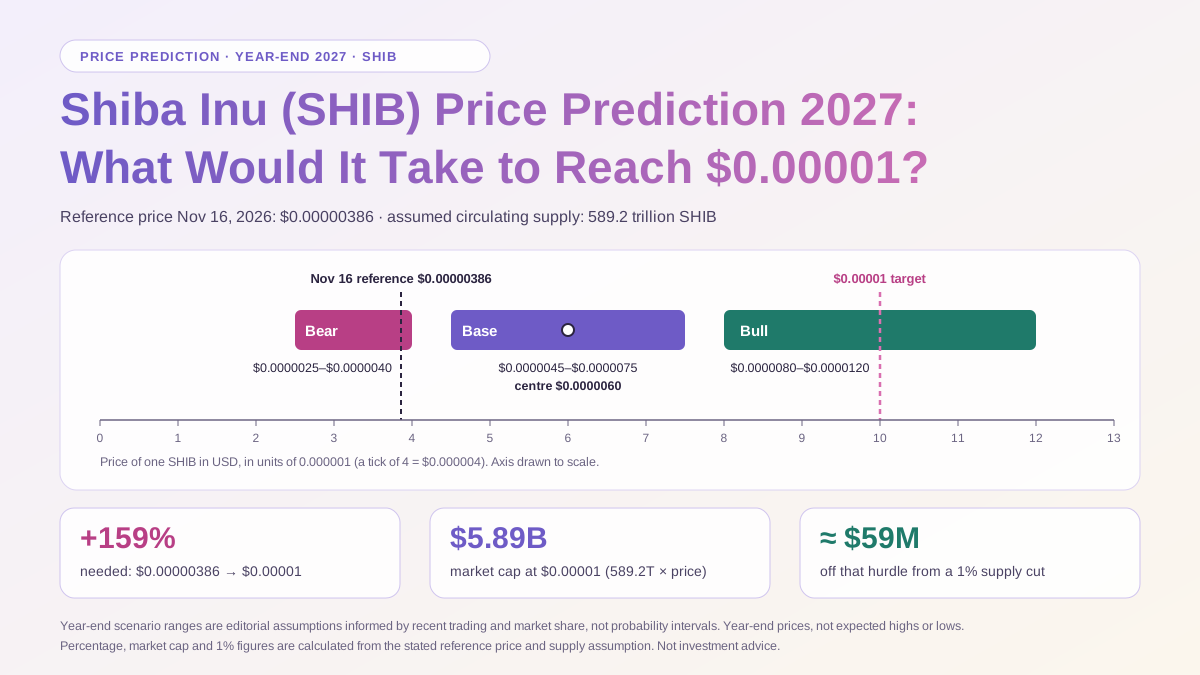
Shiba Inu (SHIB) Price Prediction 2027: What Would It Take to Reach $0.00001?
See our Shiba Inu price prediction for 2027, including the $0.000006 base estimate, the market cap needed for $0.00001, and how much burns could help.

Samsung Electronics and Apple Close to Signing Long-term DRAM Supply Agreement

WEEX P2P now supports CAD —Merchant Recruitment Now Open

Cardano Foundation seeks 25M ADA for 2027 events despite $1.2M funding gap

NVIDIA Employees Warn Board of Potential Loss of "Irreplaceable" Talent

The Arrogance and Prejudice of a16z

Unocoin Estimates $200,000 Loss as Backup-Key Finding Explains Wallet Transfers
ARTEX AI tool breaches networks in under 3 hours, FBI warns
Matt Hougan has a positive outlook on Bitcoin and altcoins

Win an iPhone 18 Pro Max on WEEX? 201 Lucky Eggs Explained

Tesla Autopilot Team Veterans Found Simulation Startup Valued at $1 Billion
CoW Swap Launches on Solana, Supporting USDC and Wrapped SOL Exchange

CoW Swap Launches Alpha Version, Supporting USDC and wSOL Exchange

VICE 6 Crypto: Is VICE 6 (VTC) Linked to GTA 6? How to Verify the Token
Is VICE 6 crypto linked to GTA 6? Compare two Solana tokens using VTC, verify their mint and pool addresses, and see what Rockstar has confirmed.
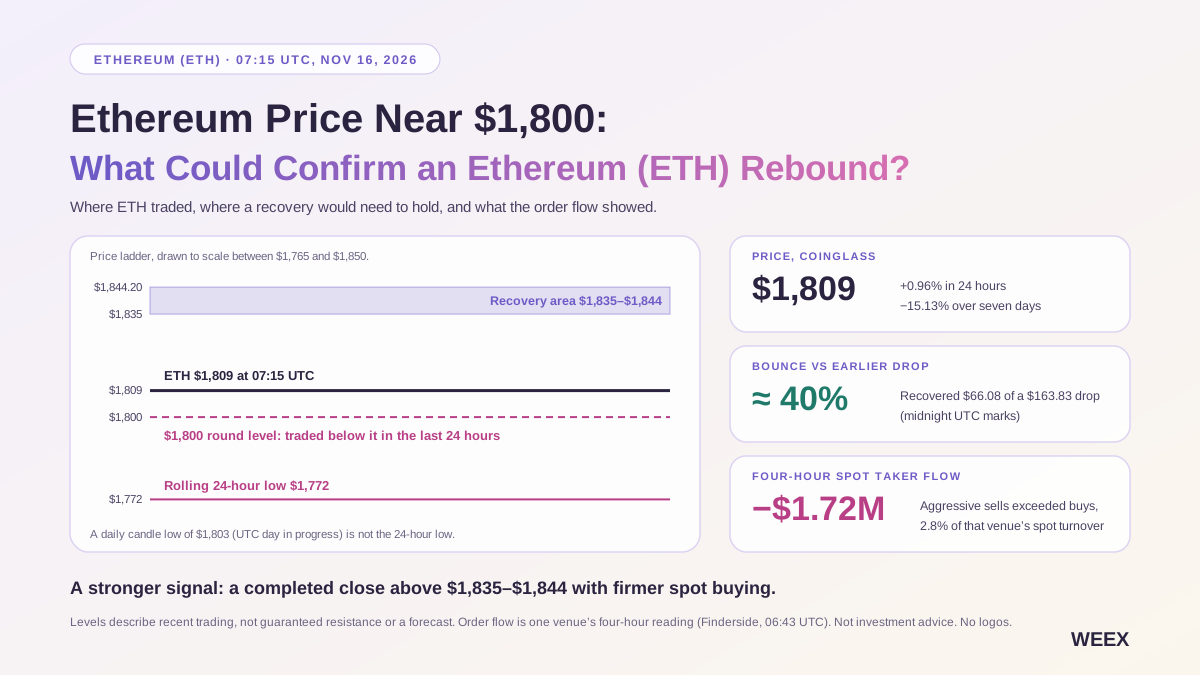
Ethereum Price Near $1,800: What Could Confirm an Ethereum (ETH) Rebound?
Ethereum traded near $1,800 on November 16. See what four-hour spot order flow, futures positioning, and Friday’s ETF flows say about an ETH rebound.
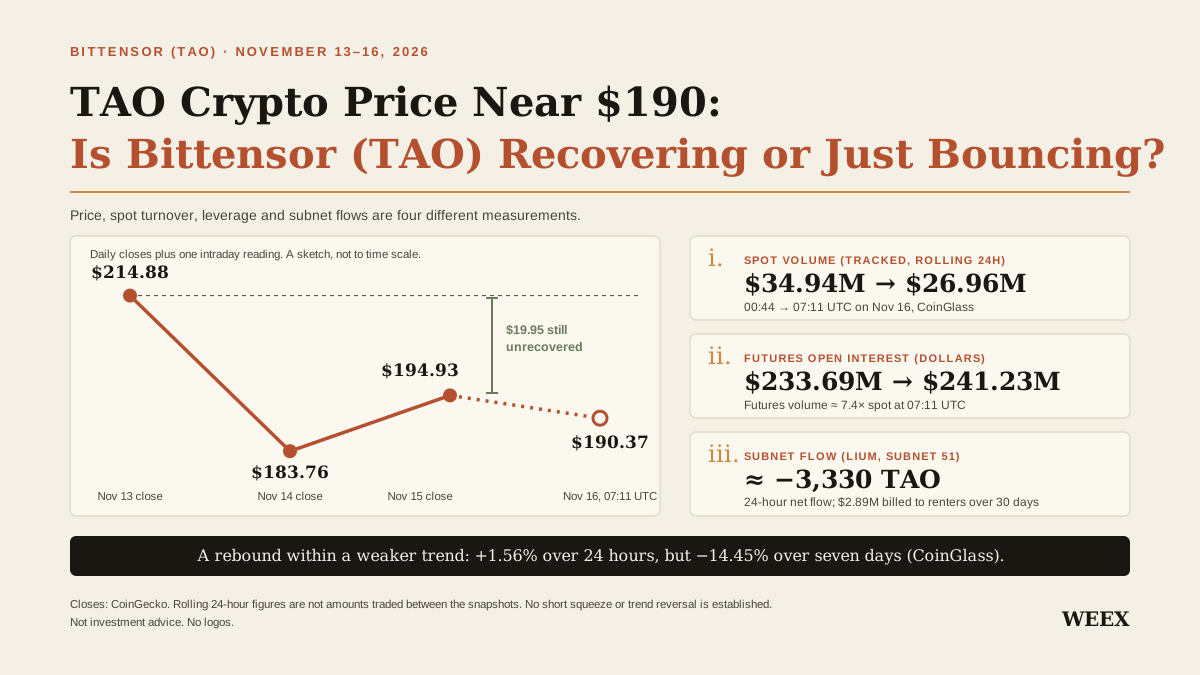
TAO Crypto Price Near $190: Is Bittensor (TAO) Recovering or Just Bouncing?
TAO bounced near $190. Compare spot volume, futures positioning, and Bittensor subnet flows to see what would confirm a more durable recovery.
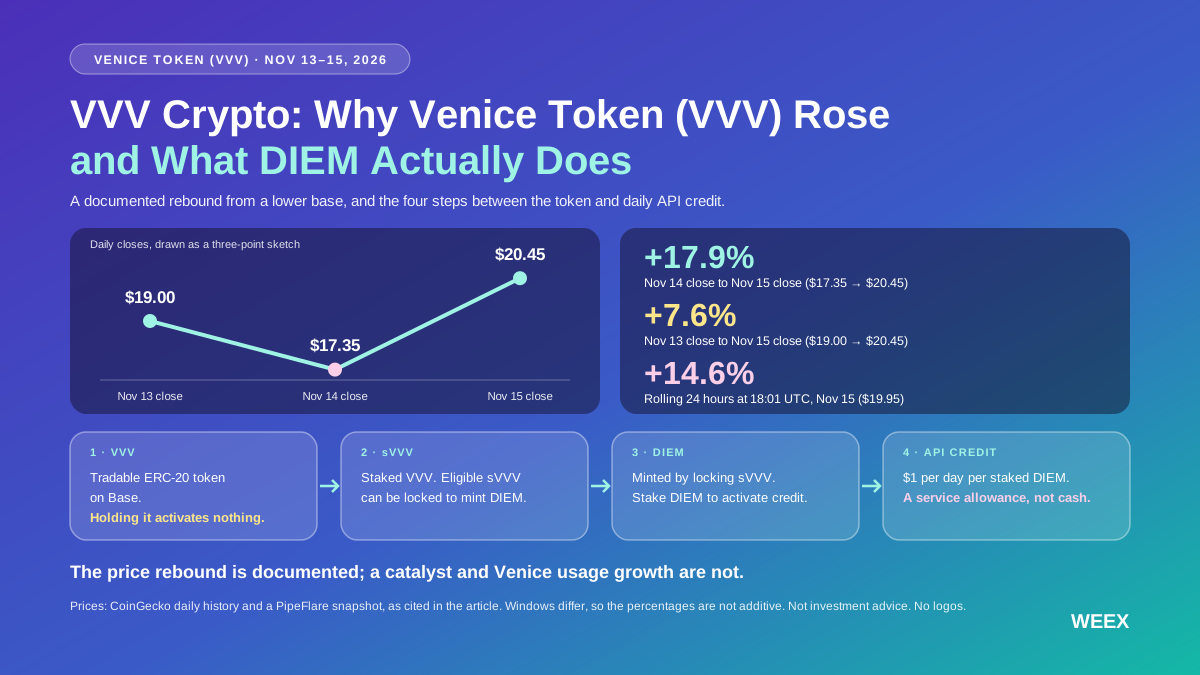
VVV Crypto: What Is Venice Token, Why Venice Token (VVV) Rose and What DIEM Actually Does
Venice Token rose about 14.6% in one November 15 snapshot. Learn what the data shows, how VVV staking works, and what DIEM’s daily API credit buys.
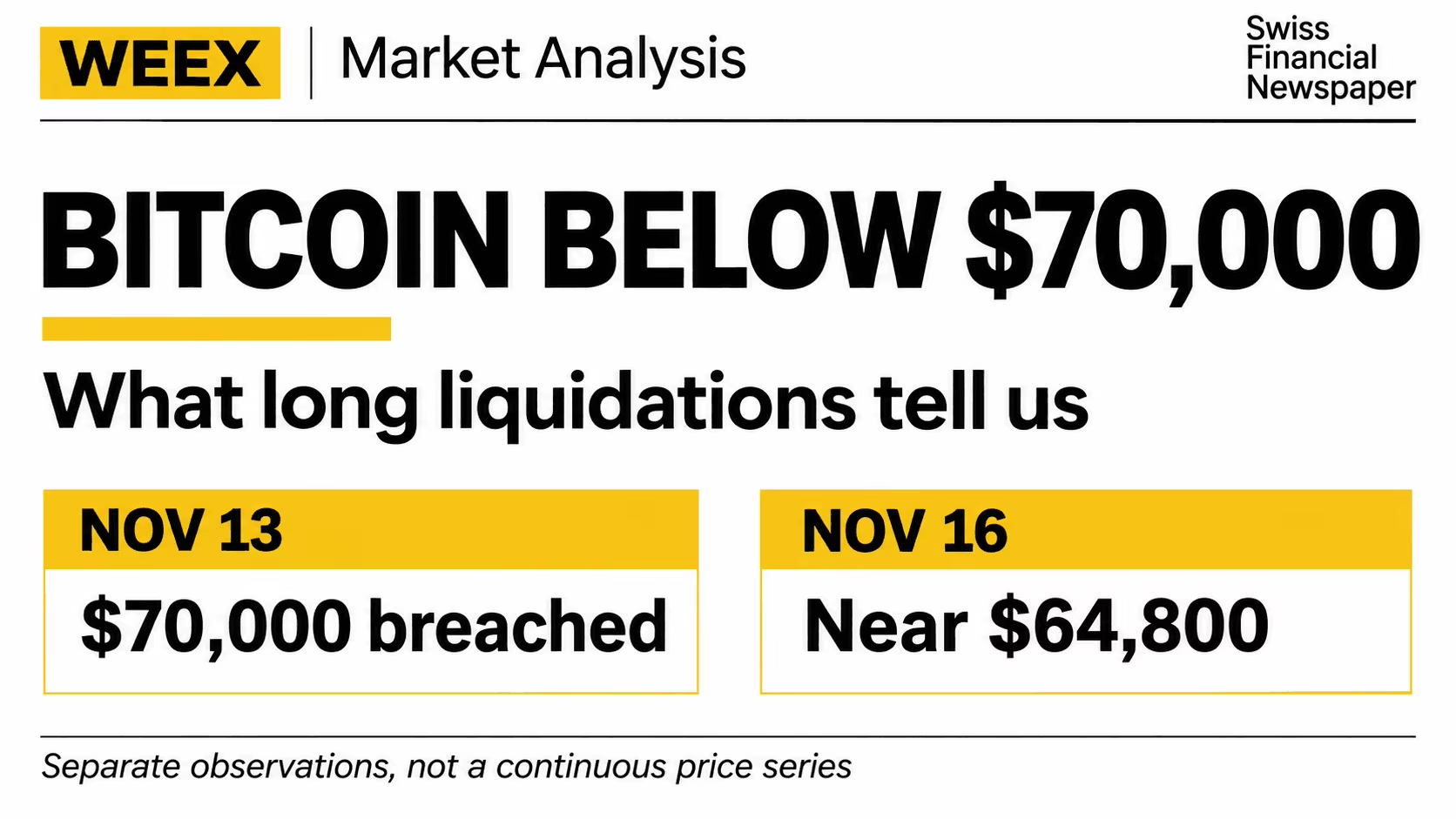
Why Did Bitcoin (BTC) Drop Below $70,000? What Long Liquidations Tell Us
See why Bitcoin fell below $70,000 on November 13, how long liquidations amplified the decline, and what to watch before calling a rebound. If you already plan to trade, you can check whether your activity qualifies for the WEEX Lucky Eggs event, scheduled to run through November 25, 2026 (UTC+8).
Stablecoin supply falls $16 billion as Bitcoin slides
Interest Rates Rebound to Three-Week High, Mortgage Demand Weakens
Target's Q3 Earnings Exceed Expectations, Raises Full-Year Guidance
Mining Giant MARA's Strategic Shift: Selling 40,000 BTC for Power Plants
Warnings Behind 50 Authorizations: How TBC Tightens Signature Permissions
a16z Frontier Explores AI Agent Sector, Uncovering a New Startup Opportunity
Latest articles


Latest coin listings on WEEX


