
Wall Street Legend Bill Miller: Why Did I Bet Half My Fortune on Bitcoin?

 Prefer us on Google


Author: Hash Global Research
Bill Miller is best known for managing Legg Mason Value Trust, where he outperformed the S&P 500 for 15 consecutive years.
However, this renowned value investor on Wall Street later did something that seems less like "value investing": he allocated more than half of his personal wealth to Bitcoin.
This creates a natural paradox:
Why would a value investor heavily invest in an asset that "lacks fundamentals"?
According to the classic value investing framework, Bitcoin seems to have never belonged in Miller's sights: it does not generate cash flow, has no balance sheet, and cannot be valued using a standard DCF model.
But Miller does not see it that way; he has a unique understanding of Bitcoin's value.
To understand this, we can start with three stories about Bill Miller and Bitcoin.
Three Umpires: The Starting Point of Value Investing ------ How to Define "Value"?
Miller has been obsessed with Major League Baseball (MLB) since childhood, with the Baltimore Orioles being his favorite team. He once told a story about umpires regarding investment philosophy.
The first umpire said, "I only call what I see."
The second umpire said, "I only call what I think happened."
The third umpire said, "Before I call it, it’s nothing."
The three umpires correspond to three different worldviews. The first believes there is an objective truth in the world, and we just need to understand it as accurately as possible; the second realizes that the reality we see is always filtered through our own cognition; while the third is closer to William James's pragmatism: the meaning of something does not only depend on what it "essentially is," but also on what role it can play in reality.
This is also a key to Miller's understanding of investing.
When faced with an asset, we easily ask: "What is it really?" But Miller is more concerned with the question: "What can it do?"
The former attempts to fit an asset into an existing framework and then judge its value using familiar standards; while Miller prefers to start from the actual functions an asset possesses and understand in reverse: ++under what circumstances these functions will generate value, and whether the market has adequately priced this value++.
This is precisely the starting point for his understanding of Bitcoin.
From Amazon to Bitcoin: True Value Investing May Not Look Like "Value Investing"
Before buying Bitcoin, Miller had already gained fame for another "atypical value investment": Amazon.
When the market believed Amazon was overvalued and not like a typical "value stock," Miller was not focused on how much it was currently earning, but rather: if the business model holds, what will its future cash flows look like?
Thus, Miller is not a "cheap stock investor" in the traditional sense. He does not obsess over low PE or low PB, nor does he exclude a company from value investing simply because it appears "too expensive."
This philosophy also explains why, years later, he could accept Bitcoin.
The question about Amazon back then was: "How can something so expensive be value investing?"
The question about Bitcoin later became: "How can something with no cash flow have value?"
On the surface, these are two completely different questions, but they point to the same issue: should we judge an asset's value based on what it "looks like today"?
Amazon represents Miller's answer.
Value investing does not equal buying "things that are cheap now", but rather whether the market has "underestimated the future". **
Therefore, when Miller began to engage with and buy Bitcoin around 2014, he did not exclude it simply because "Bitcoin does not resemble traditional value assets"; he wanted to first clarify: if Bitcoin truly has value, where does that value come from?
One important answer he provided is insurance.
A Financial Disaster Insurance: Why Can Something Without Cash Flow Have Value?
One of the classic criticisms traditional value investors have of Bitcoin is that it does not generate cash flow.
Farms can produce food, companies can generate profits, bonds can pay interest, while Bitcoin just "exists there". This is one of Warren Buffett's most classic criticisms of Bitcoin.
Miller has a very direct response to this: the goal of investing is not to own assets that can produce things; the goal of investing is to make money.
In a 2022 interview, he used insurance to explain Bitcoin. An insurance policy itself does not generate cash flow, and you do not buy insurance hoping it will generate returns every day. On the contrary, you actually hope you never have to use it.
But this does not mean insurance has no value. Its value comes from: when a certain specific condition occurs, it can significantly change your payoff.
Miller believes Bitcoin may also have a similar function. If a country experiences a severe financial crisis, the banking system is impacted, capital flows are restricted, or traditional financial channels cannot operate normally, then the investor's concern may no longer be "how much cash flow an asset can generate each year," but rather: can I still own it? Can I still transfer it? Can I take it to another financial system?
A mobile phone, a private key, and a globally operating network can allow a person to continue holding and transferring their assets. This is not a traditional "productive asset," but it may be a state-dependent asset:
In a normal world, it may seem less necessary; but when traditional financial systems encounter problems, its value may suddenly become enormous.
State-Dependent Assets vs. Cash Flow Assets: Value Comes in More Than One Form
The logic of insurance also explains why Miller does not need to use traditional DCF models to understand Bitcoin.
Traditional value investing usually calculates future cash flows, growth rates, and discount rates in a relatively continuous world, so an asset that does not generate cash flow naturally struggles to fit into this model.
But when discussing Bitcoin, Miller is closer to a probabilistic distribution thinking approach.
He once discussed a similar framework in 2015: first envision the different states that may occur in the future, then assess what value Bitcoin may have in each state, and finally assign different probabilities to these states.
In other words, he is not asking:
"How much profit can Bitcoin generate next year?"
But rather:
**"What might the future world look like? If the world becomes ** **A, how much is Bitcoin worth; if it becomes ** B, how much is it worth?"
Having no cash flow does not necessarily mean having no value. When a new asset cannot be well explained by old models, Miller has another thinking habit.
This time, he borrowed from Sherlock Holmes.
The Silver Blaze: Important Clues Often Lie Outside the Framework
"The Silver Blaze" is one of Sherlock Holmes's most famous stories.
A racehorse is stolen, and the police investigate for a long time but cannot find an answer. When Holmes arrives at the scene, the police tell him: the dog in the stable did not bark that night.
This statement leads Holmes to discover a clue. If a stranger had broken in, the dog should have barked.
The truly important clue is not what happened, but why what should have happened did not happen.
Miller applies a similar way of thinking to Bitcoin.
According to traditional financial logic, an asset that has no cash flow, no central bank backing, and no traditional balance sheet should have long been eliminated by the market.
But reality has not developed entirely according to this model.
Bitcoin has undergone repeated questioning and cycles, yet the technology, capital, and entrepreneurial activities surrounding it have persisted. Those who truly understand technological innovation have not collectively denied it like the traditional financial world. On the contrary, many top tech investors, venture capital firms, and entrepreneurs continue to enter this field—this is an anomaly worth studying.
This certainly does not prove that Bitcoin is necessarily correct, but it reminds investors: when reality does not conform to the original model for a long time, perhaps it is not just reality that needs to be re-examined.
Investors can easily insist that the market is wrong, others are wrong, and reality is just temporarily deviating from the "correct answer" when models and reality conflict.
A better question is: Is it possible that my model is wrong?
Moving Towards Bitcoin Does Not Mean Leaving Value Investing
Many people understand value investing as searching for cheap stocks, but Miller has never seen it that way.
What he is truly looking for is the future value that the market has not correctly understood. Amazon was like this, and so is Bitcoin.
Therefore, he did not stop at the question of "Bitcoin has no cash flow, so it has no value," but rather changed his perspective:
What role can it play in the future world?
From the three umpires to insurance, and then to "The Silver Blaze," Miller insists on not letting existing definitions and models make judgments for him.
This may be the true aspect of this story that is worth investors' contemplation.
He did not abandon value investing to accept Bitcoin.
On the contrary, it is because he understands value investing deeply enough that he was not blocked by the issue of "Bitcoin has no cash flow."
-- Price
This content is provided for general informational purposes only and doesn't constitute financial, investment, legal, or tax advice. Any events, rewards, online promotions, or related information mentioned herein should not be considered a recommendation, solicitation, or invitation to purchase, sell, trade, or otherwise deal in any crypto assets. Crypto assets are highly volatile and may result in loss. The availability of WEEX services, products, and related events may vary by region. You are responsible for ensuring that your participation is in accordance with applicable local laws and regulations.
You may also like

Compute Finance: The Financial Layer Being Built by the AI Economy, 0G is Constructing a New Paradigm for Computing Assets

The Stronger the AI, the Lower the Wages: Your Education is Becoming the Most Expensive Devalued Asset
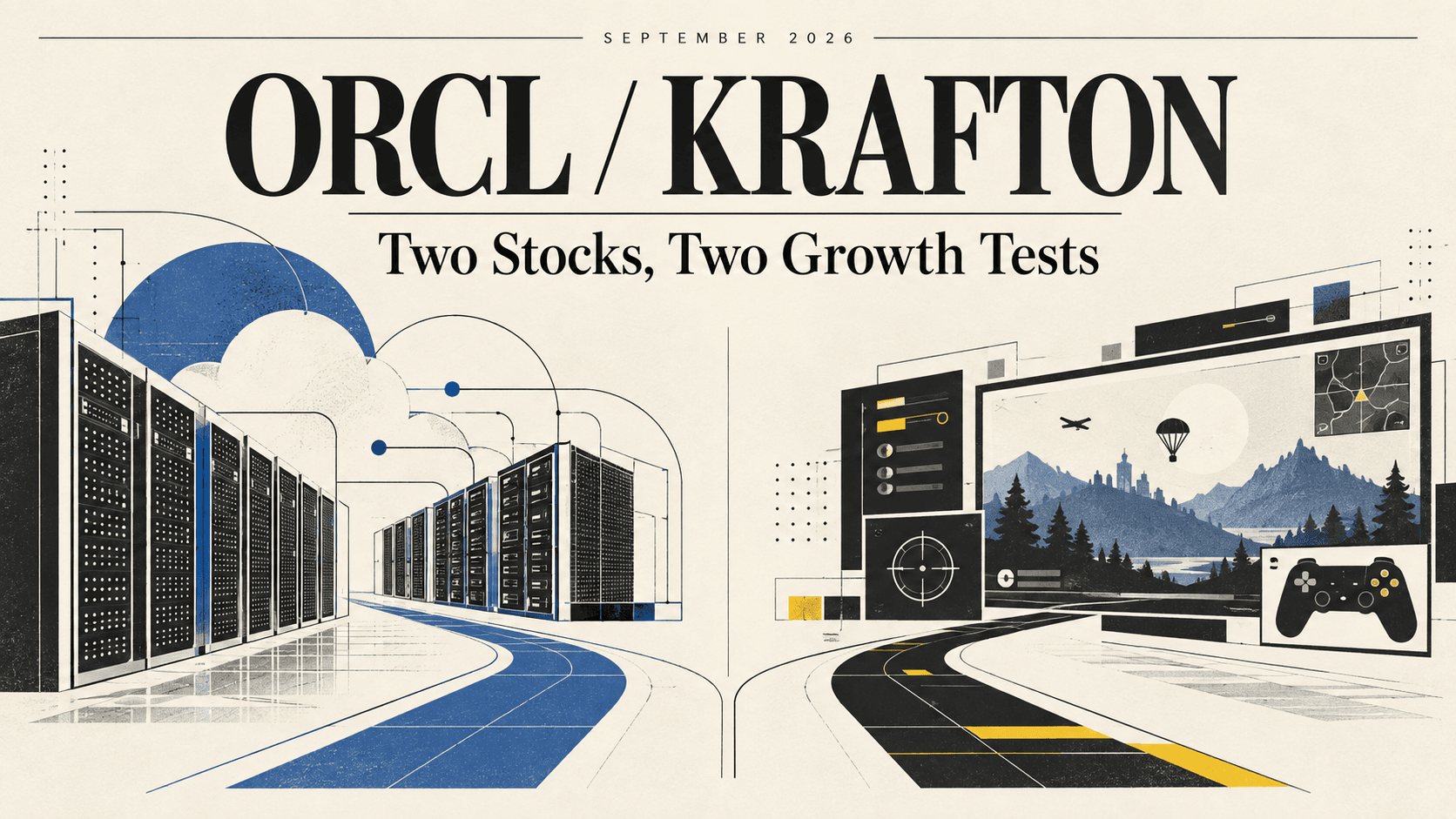
Oracle Stock vs. KRAFTON Stock: Why Are Investors Questioning Two Growing Companies?
Compare Oracle and KRAFTON stocks through their latest results, share-price questions and the different growth tests investors face in 2026.

What Happens When the AI Bubble Bursts? MIT University Responds

The Value of Ethereum and the Jevons Paradox

The Real Bottleneck of Midnight's Slow Growth: It's Not the Product, It's Market Formation

IonQ Stock Surges 5%: Nvidia Just Agreed to Host Its New Quantum System

HIFI Completes $37 Million Series A Funding Led by Left Lane Capital

HIFI Completes $37 Million Series A Funding Led by Left Lane Capital

Ethereum's 'Two-Track Update': Glamsterdam Public Testnet and Hegotá Initial Validation

Exclusive Interview with Frontier Technology Investor Zheng Di: SEC's 'Innovation Exemption' Opens the Door to a Compliant Bull Market, Which Assets Are Potential Stocks?

HTX DeepThink: Opportunities Concentrate on Profitable and Fund-Supported Assets, BTC Still Has Room for Recovery After Consolidation
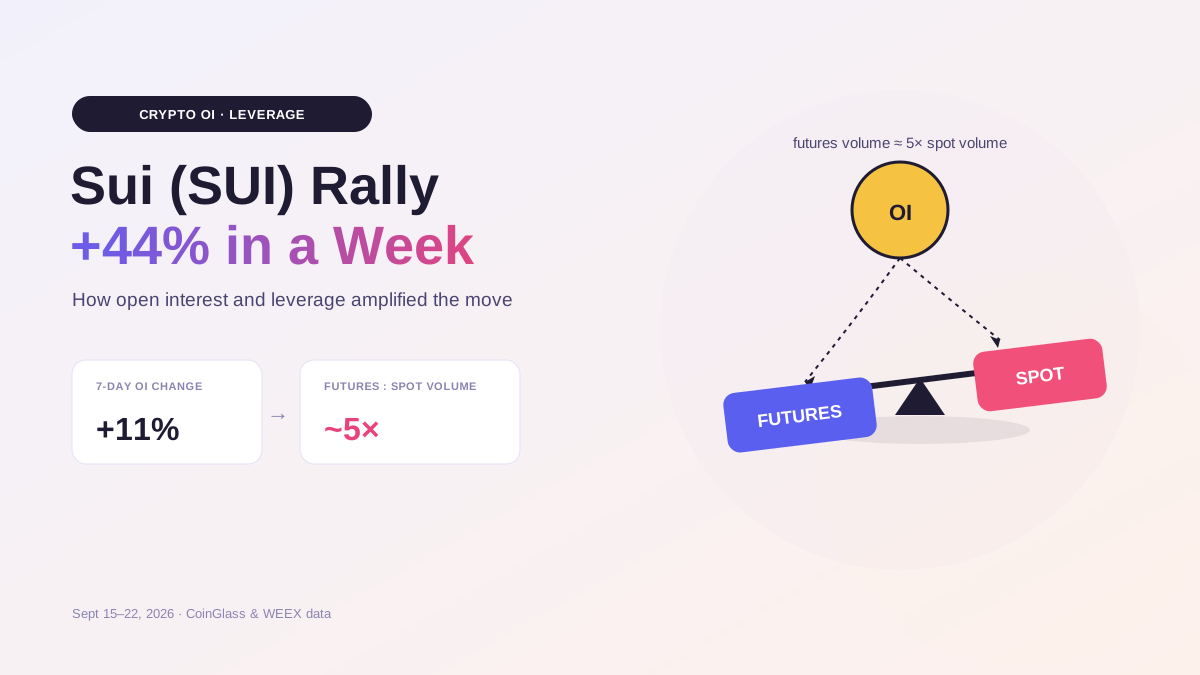
Why Did Sui (SUI) Crypto Price Jump 44%? Crypto OI and Leverage Explain the Rally
See why Sui (SUI) jumped 44%, how crypto OI and leverage amplified the rally, what the pullback means, and how to trade SUI on WEEX.

CFTC Chair Calls for "Mass Tokenization"! Wall Street Faces Three Barriers to Full On-Chain Adoption

Is the 1 Billion POL Burn Just a Joke?
WEEX Exclusive:Bitcoin Pulls Back From $87,000| WEEX TradFi Daily Brief (September 24, 2026)

Bitcoin Pulls Back From $87,000| WEEX TradFi Daily Brief (September 24, 2026)
Bitcoin pulled back from about $87,000 to about $84,000, with Ethereum near $2,680. S&P Global PMI on September 23 ET far exceeded forecasts. The 10-year yield broke above 5.00%, while the 5-year and 30-year touched highs last seen in 2007 and 2004. The S&P 500 and Nasdaq slipped. Energy moved with oil and crypto-treasury stocks followed bitcoin lower. Investors await earnings from COST, BB, and others.
MIT Warns AI Bubble May Require 2.7x Productivity Increase by 2030
Davie Reveals BTC Strategy Data, Volume 205.42K, Rate +0.0016%

Stablecoins hold nearly $200 billion in US debt, but money funds bought the surge
Coin Metrics revises 19 months of Bitcoin ETF wallet data

HTX Research Analyst WZ: Crypto Market Pricing Extends Beyond Crypto, Regulation and Liquidity Become Key Variables
Ye Tan: The Internet Era is Coming to an End, the AI Era has Already Begun

Chainalysis: Crypto Economic Activity Down 1.6%, Market Value Shrinks by $2.1 Trillion

$1.7 Billion Inflow to Bitcoin ETFs in Two Days
Why Do You Always Make Small Profits and Then Lose Everything? Taleb Explained It with 'Asymmetric Leverage' Twenty Years Ago

Coinbase traced $1.1 million crypto trail behind AI phishing service EvilTokens
Over 70% of South Korean Crypto Investors Oppose Crypto Tax: What Are Their Concerns?

Nomura Warns of 'Double Whammy' Risk: The Next Market Storm May Start with Interest Rate Volatility

VVV Hits All-Time High: Founder’s Perspective on Models, Privacy, and Crypto
Compute Finance: The Financial Layer Being Built by the AI Economy, 0G is Constructing a New Paradigm for Computing Assets
The Stronger the AI, the Lower the Wages: Your Education is Becoming the Most Expensive Devalued Asset
Oracle Stock vs. KRAFTON Stock: Why Are Investors Questioning Two Growing Companies?
Compare Oracle and KRAFTON stocks through their latest results, share-price questions and the different growth tests investors face in 2026.
What Happens When the AI Bubble Bursts? MIT University Responds
The Value of Ethereum and the Jevons Paradox
The Real Bottleneck of Midnight's Slow Growth: It's Not the Product, It's Market Formation


