
What Is Warren Buffett’s S&P 500 Investing Advice? Key Lessons for Volatile Markets

 Prefer us on Google


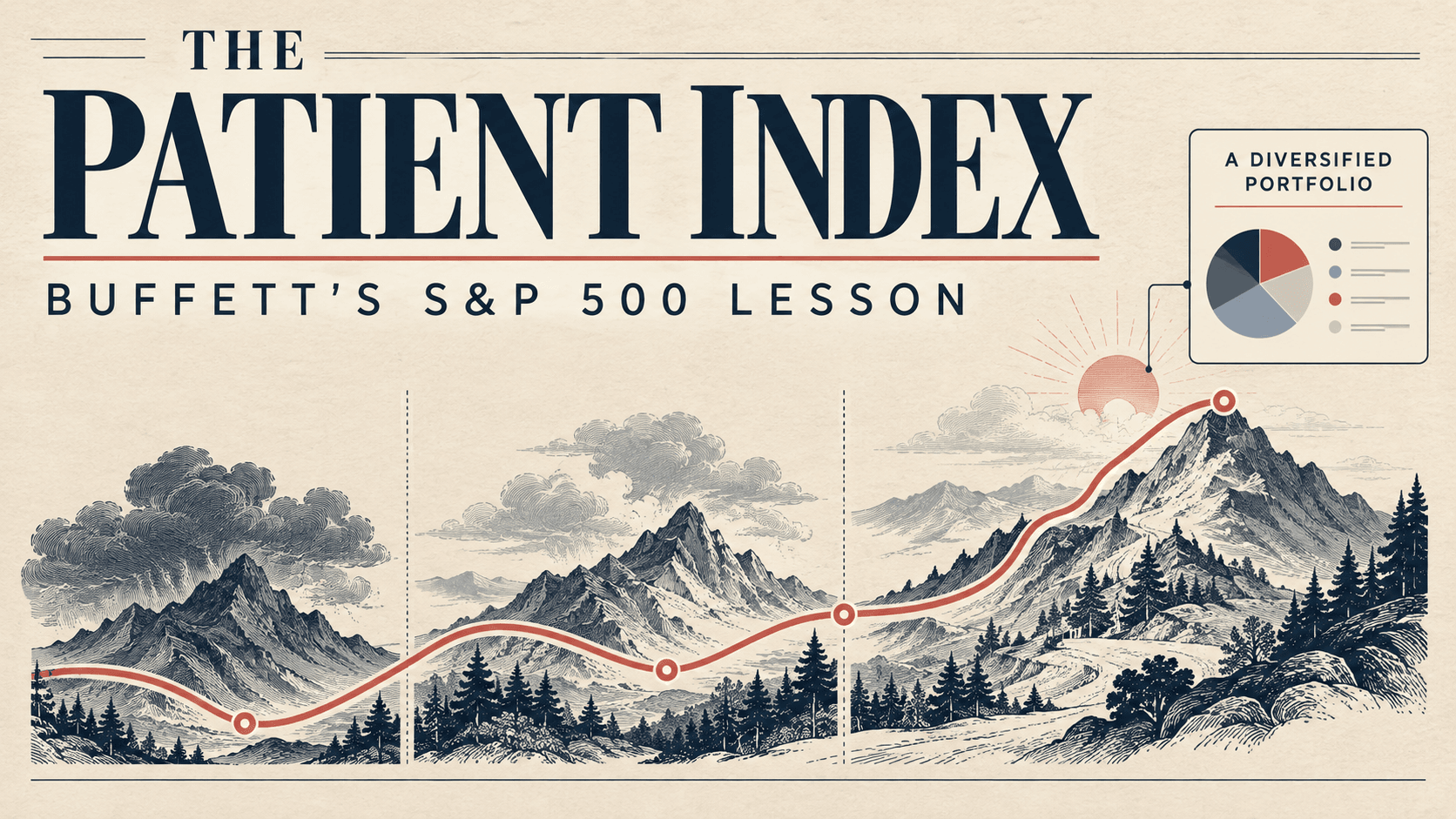
Warren Buffett’s S&P 500 investing advice is simple but often oversimplified: for a long-term investor who can withstand large equity-market declines, use a very low-cost S&P 500 index fund rather than trying to select winning stocks or expensive managers. In his 2013 Berkshire Hathaway letter, Buffett instructed the trustee for his wife’s inheritance to place 90% in a low-cost S&P 500 index fund and 10% in short-term U.S. government bonds.
The important editorial correction is that Buffett’s 90/10 split is not a command for every investor to copy blindly. It is a high-equity plan for money with a long runway, a strong tolerance for volatility, and no near-term need to sell. The durable lesson is not “buy the S&P 500 regardless of your circumstances.” It is: reduce costs, own productive businesses broadly, and build a plan you can still follow when the market becomes uncomfortable.
What Is Warren Buffett’s S&P 500 Index Fund Advice?
Buffett’s best-known index-fund guidance came from his 2013 Berkshire Hathaway shareholder letter, published in February 2014. He wrote that the trustee managing the cash he intended to leave his wife should put 10% into short-term government bonds and 90% into a “very low-cost” S&P 500 index fund, specifically suggesting Vanguard.
The choice was deliberate. Buffett’s view was that most non-professional investors do not need to identify individual companies, forecast economic conditions, or pay high management fees to participate in the long-term growth of U.S. businesses. In Berkshire’s 2016 letter, he reiterated his regular recommendation of a low-cost S&P 500 index fund and criticized the frequent, fee-driven portfolio shifts promoted by parts of the investment industry.
An S&P 500 index fund is designed to track the S&P 500, an index of 500 leading U.S. companies that S&P Dow Jones Indices says covers approximately 80% of available U.S. market capitalization. An investor buying such a fund is therefore not making a wager on one business. They are taking broad exposure to large-cap U.S. equities.
The Real Logic Behind Warren Buffett Index Fund Advice
The advice rests on four connected ideas: ownership, cost, diversification, and behavior.
| Principle | What It Means | Why It Matters in Volatile Markets |
|---|---|---|
| Own businesses, not headlines | An index fund represents stakes in many operating companies | The focus shifts from daily prices to long-term business ownership |
| Keep costs low | Fees reduce the share of returns an investor retains | Costs are predictable even when returns are not |
| Diversify efficiently | One fund can spread exposure across hundreds of large companies | A single company failure does not determine the portfolio outcome |
| Stay invested | A plan only works if the investor can follow it through downturns | Panic selling can turn temporary volatility into permanent loss |
The most misunderstood part is “stay invested.” Buffett does not mean that investors should ignore every personal financial reality. He means they should avoid making an investment plan dependent on predicting the next market move.
That distinction matters. A person saving for a home purchase next year, funding a tuition payment, or living from a portfolio is not in the same position as someone investing a portion of each paycheck for retirement decades away. Investor.gov similarly emphasizes that asset allocation should reflect an investor’s time horizon and risk tolerance.
The 90/10 Rule Is a Trust Instruction, Not a Universal Portfolio Formula
“Put 90% in stocks and 10% in bonds” makes a clean headline, but the context is crucial. Buffett was giving instructions for a specific trust designed for his wife. That portfolio had a long-term objective and did not need to solve every investor’s tax, income, liquidity, or retirement challenge.
A 90% allocation to equities can experience severe declines. The short-term government bond allocation offers liquidity and some stability, but it does not eliminate stock-market risk. It also is not a replacement for an emergency fund.
The better way to interpret the 90/10 idea is as a design principle:
| Investor Need | What Buffett’s Framework Suggests | What It Does Not Suggest |
|---|---|---|
| Long-term growth | Broad, low-cost equity exposure may be useful | That returns will be smooth or guaranteed |
| Near-term spending needs | Keep required money out of volatile equity exposure | That every dollar should be invested in stocks |
| Market anxiety | Use a simple, pre-set process | That investors should ignore their real risk tolerance |
| Decision fatigue | Avoid unnecessary trading and high fees | That a one-fund solution fits every life stage |
The 90/10 allocation is therefore best viewed as a reference point for long-duration investors, not as a personality test. If a portfolio decline would cause an investor to sell at the worst moment, the allocation may be too aggressive for that person—even if the strategy looks attractive on a spreadsheet.
-- Price
Should I Invest in S&P 500 Now?
The more useful version of “should I invest in S&P 500 now?” is: Is this money genuinely long-term, and can I keep it invested if the market falls soon after I buy?
No one can reliably answer whether today is the best entry point. Markets can rise after a purchase, decline immediately, or move sideways for long stretches. Waiting for an obvious “safe” moment often creates a different risk: remaining in cash while repeatedly postponing a plan that was intended to compound over years.
A practical decision framework is more valuable than a market prediction.
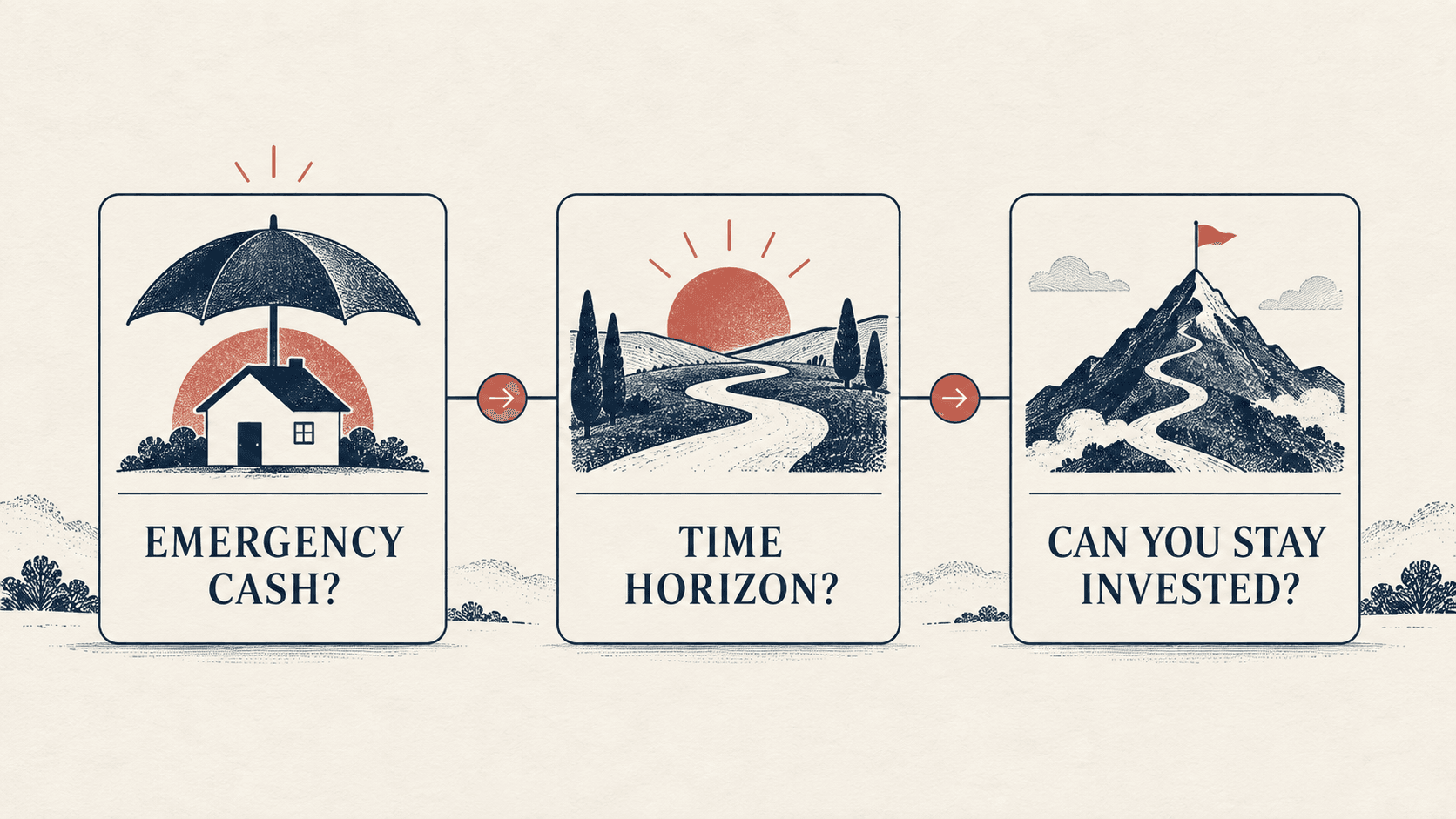
| Question | A “Yes” Points Toward | A “No” May Mean |
|---|---|---|
| Do I have emergency cash separate from this investment? | Greater ability to tolerate market volatility | Build a cash buffer before taking market risk |
| Is this money for a goal many years away? | Equity exposure may fit the objective better | Consider less volatile options for short timelines |
| Can I accept a material decline without selling? | A high-equity allocation may be feasible | Reduce risk until the plan becomes livable |
| Am I choosing a low-cost, diversified fund? | Alignment with Buffett’s core principle | Review the product, fees, and concentration risk |
| Do I have a contribution or rebalancing rule? | Less dependence on emotion | Create a process before volatility returns |
The key is not to turn a genuine planning question into a false binary between “all in today” and “wait forever.” An investor with a regular income may choose periodic contributions. Investor.gov defines dollar-cost averaging as investing equal amounts at regular intervals regardless of market ups and downs.
For a lump sum, the trade-off is different. Vanguard notes that lump-sum investing has historically produced higher long-term returns in many rising-market scenarios because the money is invested sooner, while dollar-cost averaging can reduce timing regret for investors who would otherwise avoid investing altogether. The best execution method is often the one that prevents a sensible long-term plan from being abandoned.
What Buffett’s Advice Gets Right About Volatile Markets
Volatility encourages investors to believe that immediate action equals intelligence. It often does not. A sell-off produces persuasive reasons to wait; a rally produces persuasive reasons to chase. Both reactions can turn the portfolio into a sequence of emotional decisions.
Buffett’s index-fund approach places the emphasis elsewhere. It asks the investor to decide their allocation, costs, and time horizon before the stressful moment arrives.
That produces three practical advantages.
First, it reduces the number of predictions required. The investor does not need to identify the next winning stock, forecast the next recession, or determine the exact market bottom.
Second, it keeps fees visible. Buffett’s view of low-cost funds is not simply aesthetic. Every dollar paid in management fees is a dollar that is no longer invested. Vanguard also notes that lower investment costs leave more money working toward long-term growth.
Third, it treats investor behavior as an investment variable. A theoretically optimal portfolio is not useful if its owner abandons it after the first major decline. Simplicity is valuable because it can make discipline easier.
What Buffett’s Advice Does Not Solve
A low-cost S&P 500 index fund is diversified across many companies, but it is not diversified across every region, asset class, or market style. It remains heavily tied to U.S. large-cap equities and is market-cap weighted, meaning the largest companies exert the greatest influence on performance.
It also does not solve:
- the need for emergency savings;
- debt-management decisions;
- retirement-income withdrawals;
- tax planning;
- international diversification preferences;
- a portfolio’s exposure to bonds, cash, or other asset classes;
- the question of whether the investor can handle equity-market drawdowns.
These are not minor footnotes. They determine whether a given allocation matches a person’s life rather than merely matching an admired investor’s quote.
A person close to retirement may need a more intentional cash-flow and withdrawal plan. A person investing for a goal within several years may not be able to wait through a prolonged equity downturn. Conversely, a young investor with stable income and a multi-decade horizon may be more concerned about failing to start than about short-term fluctuations.
A Better Long-Term Investing Strategy Than Chasing a Perfect Entry
The strongest lesson from Buffett’s approach is process discipline. A durable long-term investing strategy can be built around four rules.
1. Separate Spending Money From Investment Money
Do not use money needed for foreseeable near-term expenses as if it were long-term capital. The ability to stay invested depends partly on not being forced to sell during a weak market.
2. Choose the Allocation Before the Market Tests You
Write down what portion of your portfolio belongs in equities, bonds, and cash based on your time horizon and risk capacity. Then decide what would cause a change: a life event, a goal date, or a planned review—not a frightening week of market headlines.
3. Keep the Product Simple and Costs Visible
An investor should understand what index a fund tracks, its expense ratio, whether it is an ETF or mutual fund, how it handles dividends, and what tax or account rules apply in their jurisdiction. “Index fund” is a category, not a guarantee that every product is interchangeable.
4. Use Rebalancing Instead of Emotional Forecasting
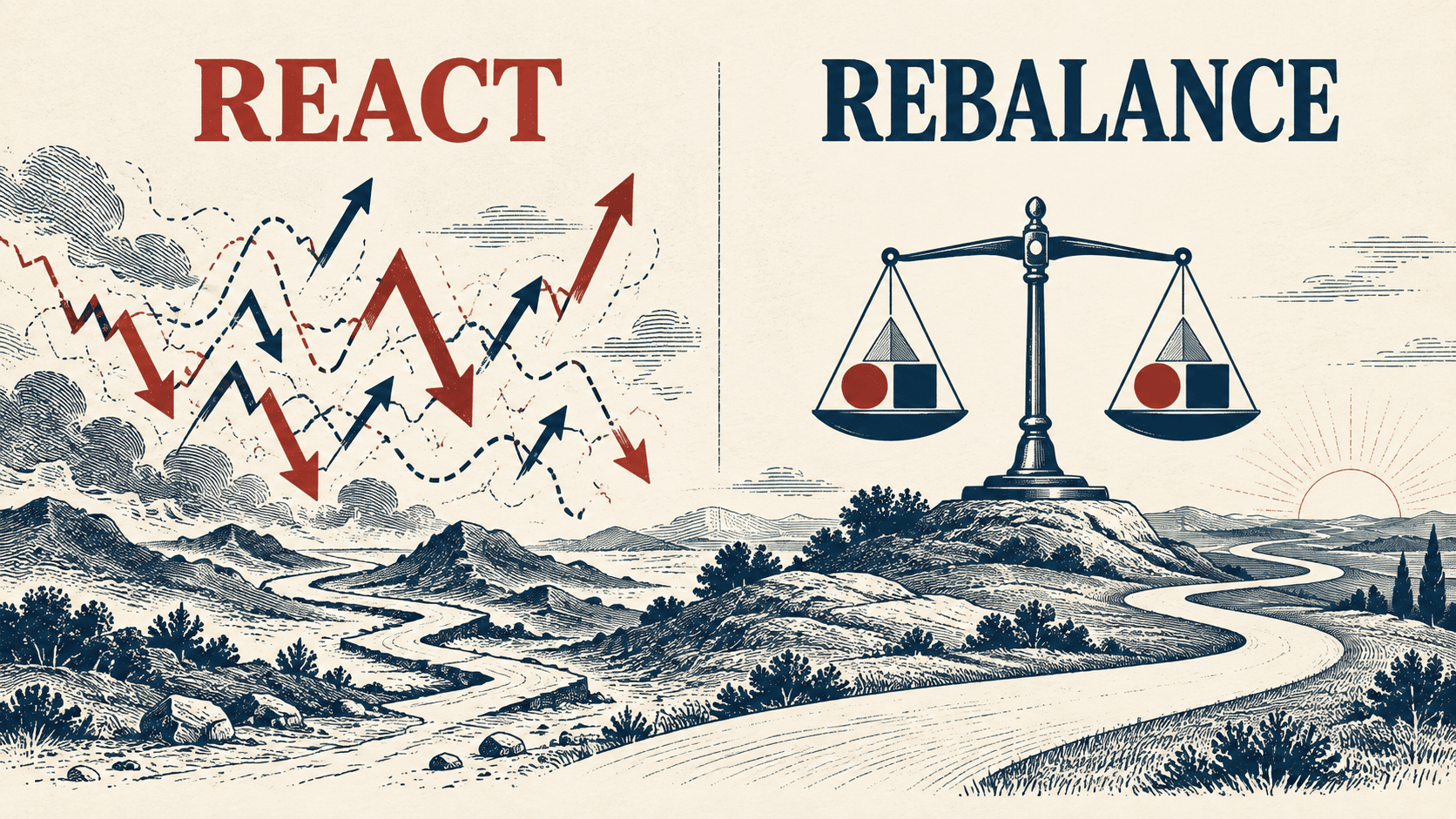
Rebalancing means bringing allocations back toward the chosen target after market moves change the mix. It is different from selling because of fear. A predetermined rebalancing rule can force an investor to address risk without pretending to know tomorrow’s prices.
Why “Do Nothing” Is Sometimes the Active Decision
During a volatile market, “do nothing” can sound passive. In a well-designed portfolio, it may instead be the result of earlier active work: establishing an emergency reserve, choosing an allocation, selecting a low-cost fund, setting contribution rules, and defining when rebalancing is appropriate.
That is the behavioral edge embedded in Buffett’s advice. It is not secret stock selection. It is refusing to confuse activity with progress.
The strategy becomes weak when investors use it as an excuse not to review their financial needs. It becomes strong when they use it to prevent short-term noise from overriding a plan built for a long horizon.
Our View: The Valuable Lesson Is Discipline, Not the Exact 90/10 Split
Buffett’s S&P 500 guidance is strongest when read as an argument against unnecessary complexity, high fees, and market-timing theater. It is weakest when turned into a slogan that erases an investor’s cash needs, time horizon, and ability to tolerate losses.
For volatile markets, the mature interpretation is clear: build an allocation you can live with, use diversified low-cost exposure where it fits, and let rebalancing—not panic or euphoria—govern the next move. Copying Buffett’s exact percentage without copying the patience and preparation behind it misses the point.
FAQ
1. What Is Warren Buffett’s 90/10 Investment Rule?
Buffett’s 90/10 approach refers to his instruction that 90% of the cash in his wife’s trust be invested in a very low-cost S&P 500 index fund and 10% in short-term U.S. government bonds.
2. Does Warren Buffett Recommend an S&P 500 Index Fund?
Yes. Buffett has repeatedly recommended a low-cost S&P 500 index fund for many non-professional investors because it offers broad equity exposure without requiring stock selection or high management fees.
3. Should I Invest in the S&P 500 Now or Wait for a Market Drop?
The answer depends less on a short-term forecast and more on whether the money is long-term, separate from emergency savings, and invested through a plan you can maintain during declines. No one can reliably identify the perfect entry point.
4. Is the S&P 500 Index Fund Safe?
An S&P 500 index fund spreads exposure across many large U.S. companies, but it can still fall sharply because it is an equity investment. Diversification reduces single-company risk; it does not remove market risk.
5. Is Buffett’s 90/10 Portfolio Suitable for Retirees?
Not automatically. Retirees may need to consider income needs, withdrawal timing, taxes, healthcare costs, and sequence-of-returns risk. A 90% stock allocation can be too volatile for some retirement situations.
Sources
- Berkshire Hathaway, 2013 Letter to Shareholders, published February 28, 2014.
- Berkshire Hathaway, 2016 Letter to Shareholders, published February 25, 2017.
- S&P Dow Jones Indices, S&P 500® index overview, accessed October 7, 2026.
- U.S. Securities and Exchange Commission, Investor.gov, Dollar Cost Averaging, accessed October 7, 2026.
- Vanguard, How to Invest a Lump Sum of Money, accessed October 7, 2026.
This content is provided for general informational purposes only and doesn't constitute financial, investment, legal, or tax advice. Any events, rewards, online promotions, or related information mentioned herein should not be considered a recommendation, solicitation, or invitation to purchase, sell, trade, or otherwise deal in any crypto assets. Crypto assets are highly volatile and may result in loss. The availability of WEEX services, products, and related events may vary by region. You are responsible for ensuring that your participation is in accordance with applicable local laws and regulations.
You may also like

Why Asia Fell Despite Records on Wall Street

Full Transcript of Dragonfly Managing Partner's Speech: Agents + Crypto, What's Real & What's Cope?

What Could the 2027 Social Security COLA Be? Latest Estimates, Formula, and Payment Impact

What Metaplanet Wanted to Prove by Selling and Repurchasing 10,000 Bitcoins

What is a Wallet in the Age of AI Agents? Three Domestic Operators Discuss
Abstract Announces Shutdown: With Brands and Users, Why Can't It Sustain a Chain?

Midterm Elections Approaching: What Really Matters in the Stock Market

Dennis Liu: Altcoin Season Has Not Yet Started

Why Is DIMO (DIMO) Crypto Rising? Vehicle Data Utility, Token Supply, and Liquidity Risks Explained
Why is DIMO rising? Examine vehicle-data utility, DIMO reward changes, token supply, FDV, liquidity risk, and proof needed for real adoption.

Why Is Monad (MON) Crypto Trending Today? Privacy Update Expectations and the November Token Unlock
Why is Monad MON trending today? Analyze privacy-update expectations, Open ecosystem momentum, the November 24 unlock, supply risk, and MON futures.
Why Is iExec RLC (RLC) Crypto Rising Today? Privacy Demand, Multichain Migration, and the Volume Test
Why is iExec RLC rising today? Examine RLC volume, confidential-computing utility, token supply, bridge migration, and the adoption evidence to watch.
Genius Group Buys 10 Bitcoins This Week at an Average Price of $85,364
Ethereum’s proposed 3x ETF could reach CME’s futures threshold with just $362 million

Sun Yuchen Shares Insights on Crypto Industry Trends, Emphasizing the Integration of AI and Digital Finance

Microsoft Stock Is Down Over the Past Year While Google and Apple Soared: Can Copilot's 30 Million Users Change That?

How Are RWA Assets Tokenized in Hong Kong?

Bitcoin: Strategy Estimates a Gain of $20.91 Billion in Q3, but Remains in the Red

LayerZero Unlock October 2026: Can ZRO Hold $2 Amid Whale Inflows?
Peter Thiel Interview: After Fifty Years of Stagnation, Is AI the Last Self-Salvation of Civilization?
AI Investment Also Favors the 'Winner Takes All'... Top 1% of Companies Spend 600 Times More Than Median Companies

Coinbase's Ryan VanGrack Discusses CFTC Approval Impact on Bitcoin

Sam Price Points Out Stablecoin Supply Surges by $713 Million

Is Bitcoin Anonymous and What Are the Legal Implications? What Does Blockchain Say About Your Transactions?

SNDK Stock Fell 3.8% After a 650% Rally: Does a Single-Digit P/E Make Sandisk Cheap or Just Cyclical?

Coinbase says it cut a 90-case AI support test from 1–2 weeks to 30–45 minutes

Chainalysis: South Korea's Crypto Economy Reaches $449.1 Billion, Leading East Asia; AI Token Trading Becomes the Main Theme

INTC Stock Drops After TSMC Terafab Talks: Is Intel's Biggest Outside Endorsement at Risk?

Bitcoin Holds at $86,000 as Dollar Reaches Highest Level in 18 Months

a16z Unveils the Truth Behind AI Boom: The Top 1% Support the Entire AI Narrative
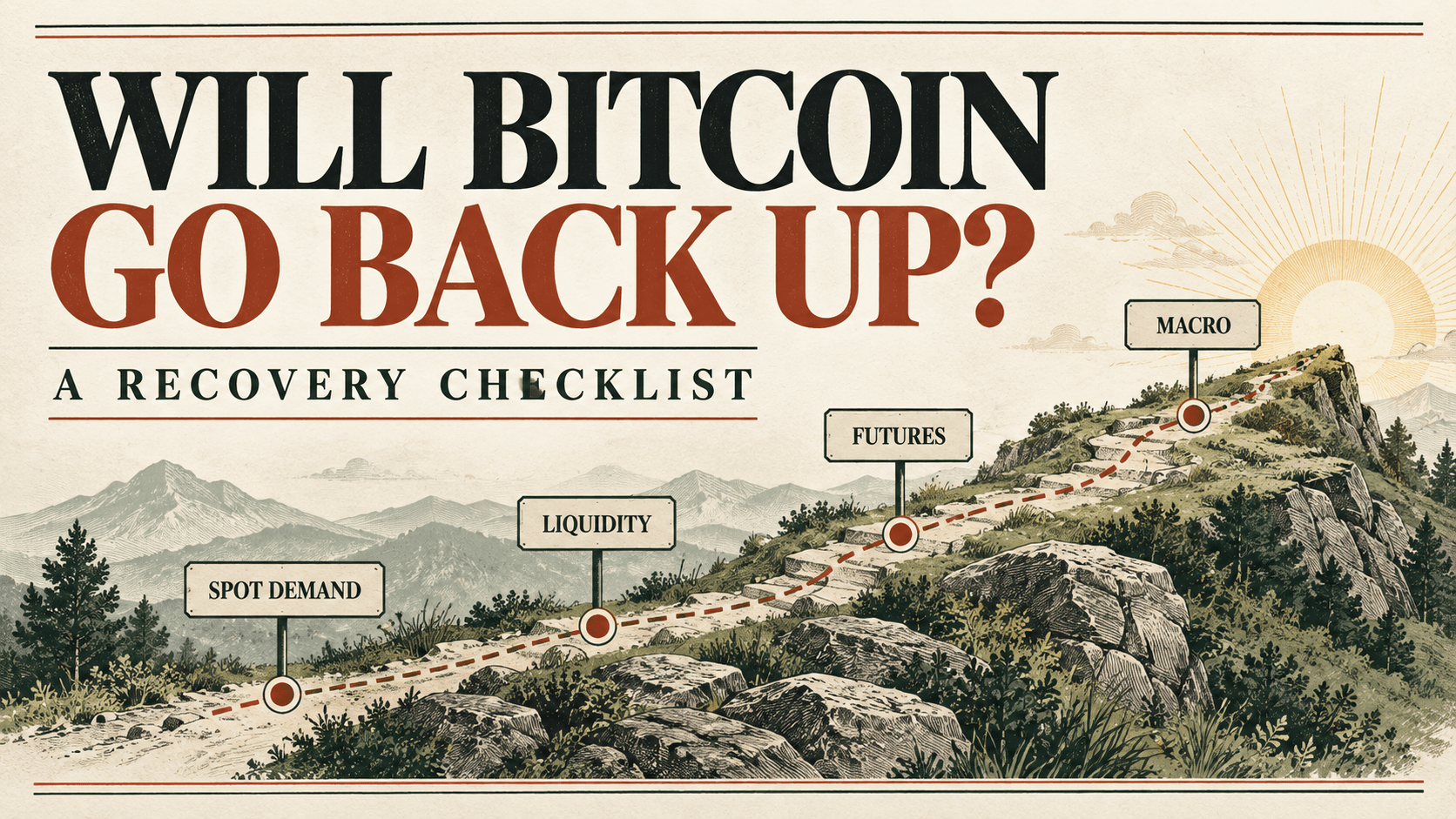
Will Bitcoin (BTC) Go Back Up in 2026? How to Tell a Real Recovery From a Short-Covering Bounce
Will Bitcoin go back up in 2026? Learn how spot demand, ETF flows, crypto liquidity, futures positioning and macro conditions shape a real BTC recovery.
Why Asia Fell Despite Records on Wall Street
Full Transcript of Dragonfly Managing Partner's Speech: Agents + Crypto, What's Real & What's Cope?
What Could the 2027 Social Security COLA Be? Latest Estimates, Formula, and Payment Impact
What Metaplanet Wanted to Prove by Selling and Repurchasing 10,000 Bitcoins
What is a Wallet in the Age of AI Agents? Three Domestic Operators Discuss
Abstract Announces Shutdown: With Brands and Users, Why Can't It Sustain a Chain?


