
GOOGL Q3 Earnings: Why Alphabet Fell Despite 103% Cloud Growth

 Prefer us on Google

Alphabet's Q3 2026 earnings delivered the strangest split of the season: GOOGL reported 25% revenue growth and a Google Cloud business that more than doubled, yet the stock suffered its worst day since the 2004 IPO. The reason sits below the revenue line. GAAP EPS fell to $2.12, free cash flow turned negative at -$9.07 billion, and AI capital expenditure hit $51.4 billion in a single quarter. This piece breaks down why growth and price split apart, how to read the EPS numbers without mixing GAAP and adjusted figures, whether Cloud can pay for the AI build-out, and what GOOGL traders on WEEX should check before acting.
The selloff showed up on WEEX too. A WEEX GOOGL futures snapshot taken after the results showed a 24-hour drop of 10.12%, close to the nearly 13% slide Nasdaq-listed shares posted on October 29. For anyone who wants exposure to that volatility, the GOOGL stock trading page and the GOOGL-USDT perpetual contract are the two WEEX entry points, and they work very differently (more on that below).
Earnings week also lines up with WEEX's Dice Rush: Wall Street Tycoon campaign, which runs until November 3, 2026 (UTC+8). Each day WEEX pairs two US stocks, users pick the one they expect to post the bigger percentage move, and dice earned through stock spot and stock futures trading tasks unlock rewards on a game board backed by a prize pool worth millions. It is a low-commitment way to put a view on post-earnings moves like GOOGL's into practice; eligibility excludes regions where derivatives trading is restricted.
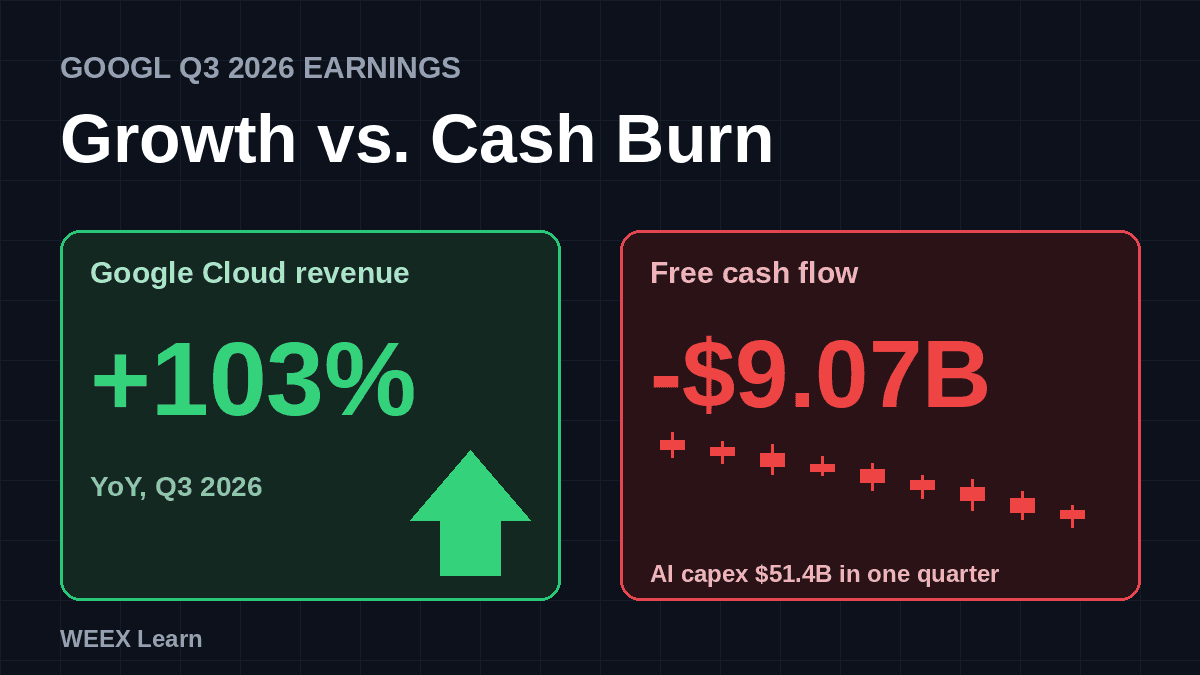
Alphabet Q3 2026 Earnings: The Numbers That Matter
Alphabet reported results for the quarter ended September 30, 2026, after the US close on October 28. The headline figures, from the company's release and the earnings call:
- Revenue: $127.58 billion, up 25% year over year, slightly below the LSEG consensus of $128.22 billion.
- Google Search and other: $63.35 billion, up 12%. That growth rate was 19% in Q1 and 17% in Q2, and analysts expected roughly $65 billion.
- YouTube ads: $11.21 billion, up 9%, against an estimate near $11.4 billion.
- Google Cloud: $30.71 billion, up 103%, with segment operating margin rising to 36.2% from 23.7% a year earlier.
- Operating income: $40.58 billion, up 30%, for a 31.8% operating margin.
- GAAP diluted EPS: $2.12, down from $2.87 a year earlier.
- Capital expenditure: $51.36 billion, more than double the $23.95 billion spent in Q3 2025.
- Free cash flow: -$9.07 billion, after -$5.86 billion in Q2 and +$24.46 billion a year ago.
Read the list top to bottom and the market's problem becomes obvious. The operating business got stronger, with operating income growing faster than revenue. Everything that happened after operating income, and everything that happened in the cash flow statement, got worse.
Why Did GOOGL Stock Fall After Strong Revenue Growth?
Three things hit at once, and they compound each other.
First, the core ad engine slowed. Search growth decelerated for the third straight quarter and missed estimates by about $1.5 billion, while YouTube ads also came in light. Management pointed to query growth running at its fastest pace in five years, driven by AI Mode and AI Overviews. The bearish reading is that more AI-driven queries are not yet turning into proportionally more ad dollars. That debate is unresolved, but a slowing Search line is the one number Alphabet's valuation is most sensitive to.
Second, cash flow went the wrong way. Free cash flow swung by roughly $33.5 billion versus the same quarter last year, and the extra $27.4 billion in capex explains most of that swing. Alphabet also bought back no stock in 2026 so far, raised $12.4 billion through at-the-market share sales in the quarter, sold $28.7 billion of notes, and now carries $125.1 billion in long-term debt. A company that once funded buybacks from surplus cash is now raising outside capital to fund its build-out.
Third, guidance pointed to more of the same. The 2026 capex range of $195 billion to $205 billion stayed in place, which implies Q4 spending of roughly $63 billion to $73 billion, and management said 2027 capex will increase significantly. Google also started renting third-party compute at the end of Q3, which it expects to weigh on Cloud margins in Q4.
The result on October 29: shares dropped nearly 13%, the steepest one-day fall since the IPO, erasing close to $500 billion of market value.
GAAP vs. Adjusted EPS: Don't Mix the Two Numbers
The phrase "Alphabet missed EPS" has been used loosely this week, and the details matter if you are comparing headlines.
- GAAP diluted EPS of $2.12 is the reported number. It includes an $8.66 billion loss on equity securities, mostly an unrealized markdown on Google's SpaceX stake after SpaceX's share price fell during the quarter. Alphabet says that loss cut EPS by $0.55.
- Adjusted EPS of $2.67 is LSEG's figure, which roughly equals GAAP EPS with that equity loss added back.
- Consensus of $3.02 is the adjusted estimate analysts were working from.
Two conclusions follow. Comparing $2.12 to $3.02 overstates the miss, because it sets a GAAP actual against an adjusted estimate. But stripping out SpaceX does not rescue the quarter either: even at $2.67, EPS landed about $0.35 short of expectations. The investment loss explains the drop from last year's $2.87, and it does not explain the whole gap to consensus. That residual shortfall is what kept the selloff going on October 29 rather than fading as a one-off accounting story.
-- Price
Can Google Cloud's 103% Growth Cover AI Capex?
Cloud is the strongest argument bulls have, and the numbers are genuinely impressive. Revenue of $30.71 billion means the unit has more than doubled in a year, growth accelerated from 63% in Q1 to 82% in Q2 to 103% in Q3, and the backlog reached $561 billion, with just over 55% expected to convert to revenue within 24 months. The Gemini app has reached 1 billion users, according to management.
The scale mismatch is the problem. Cloud generated about $11.1 billion of operating income in Q3. Annualize that and you get roughly $44 billion, against a 2026 capex budget of about $200 billion and a 2027 budget that is set to rise further. To be fair, that spending also serves Search, YouTube, and Google DeepMind, so Cloud is not the only payback channel. But it is the most visible one, and it is also the line where management just warned of margin pressure from third-party compute.
There is a second, slower cost. Roughly 65% of Q3 infrastructure spending went to servers and networking gear with useful lives of about six years. That spending flows through the income statement as depreciation for years, so today's capex becomes tomorrow's margin headwind even if revenue keeps climbing. The better reading of Q3 is not that the AI bet is failing. It is that the payback period just got longer and more expensive, and the market repriced GOOGL for that timeline.
How to Trade GOOGL on WEEX: Stock Page vs. Futures
WEEX offers two GOOGL routes, and they are not interchangeable.
The GOOGL stock trading page is WEEX's stock-category entry for Alphabet, quoted against USDT. It gives price exposure to GOOGL, but it is not a brokerage account and does not mean you hold registered Alphabet shares. The GOOGL-USDT perpetual is a derivatives contract: you can go long or short with leverage, positions carry funding payments, and a leveraged position can be liquidated. A futures position is not share ownership either.
A practical sequence for either route:
- Check the US market calendar. WEEX notes in its US stock perpetual listing announcements that these contracts trade 24/7, but liquidity varies by session, so spreads can widen sharply outside regular US hours.
- Confirm the contract status. When we checked the GOOGL perpetual page on October 30, it displayed a circuit-breaker notice under which only order cancellation was available, so verify a market is open for new positions before planning a trade.
- Choose position size before leverage. A 10% overnight move like October 29 wipes out a 10x long entirely.
- Use limit orders around the US open and close, when post-earnings gaps are most likely.
- Track funding on the perpetual if you hold for days. Crowded short positioning after a selloff can make funding move against shorts.
What traders usually miss is the gap risk. GOOGL's earnings reaction happened mostly in after-hours trading and at the next open, which is exactly when stock-linked contracts tend to see thin books. Stops placed close to the market can fill far below their trigger price in that window.
What GOOGL Traders Should Watch Next
The next leg for GOOGL depends on a short list of data points rather than on the headline revenue growth that already disappointed the market:
- The Q3 10-Q filing, due in the coming days, for detail on depreciation, debt, and equity-investment marks.
- Search growth in Q4, which management warned will face a tough comparison against last year's acceleration.
- Cloud margin, to see how much the shift to third-party compute dents the 36.2% Q3 level.
- The 2027 capex number, expected on the Q4 call. A figure well above $200 billion without a matching revenue lift would extend the cash-flow worry.
- Capital returns, including whether buybacks resume. The $0.22 quarterly dividend, payable December 14 to holders of record on December 7, was maintained.
The bottom line on GOOGL after Alphabet's Q3 earnings: the business is growing quickly, and Cloud is now a real profit engine, but investors are being asked to fund an AI build-out whose returns will arrive later than its costs. Until free cash flow turns back up or Search re-accelerates, expect GOOGL to trade more on capex headlines than on revenue beats. You can follow the price on WEEX's GOOGL stock page and join the Dice Rush stock event before it closes on November 3.
FAQ
1. Why did Alphabet stock drop after Q3 2026 earnings?
Search and YouTube revenue missed estimates, free cash flow turned negative at -$9.07 billion, and capex of $51.4 billion came with a warning that 2027 spending will rise significantly. Strong Cloud growth was not enough to offset those concerns.
2. Did Alphabet miss EPS expectations in Q3?
Yes, on a like-for-like basis. Adjusted EPS of $2.67 came in below the $3.02 consensus. GAAP EPS of $2.12 was further reduced by a $0.55-per-share loss on equity investments, mainly SpaceX.
3. How much is Alphabet spending on AI capex in 2026?
Alphabet guided to $195 billion to $205 billion in 2026 capital expenditure and spent $132.0 billion in the first nine months. Most of it goes to AI infrastructure, including servers, networking, and data centers.
4. Is trading GOOGL on WEEX the same as owning Alphabet shares?
No. The WEEX GOOGL stock page gives USDT-quoted price exposure, and the GOOGL-USDT perpetual is a leveraged derivative. Neither is a brokerage holding of registered Alphabet shares.
This content is provided for general informational purposes only and doesn't constitute financial, investment, legal, or tax advice. Any events, rewards, online promotions, or related information mentioned herein should not be considered a recommendation, solicitation, or invitation to purchase, sell, trade, or otherwise deal in any crypto assets. Crypto assets are highly volatile and may result in loss. The availability of WEEX services, products, and related events may vary by region. You are responsible for ensuring that your participation is in accordance with applicable local laws and regulations.
You may also like

Binance Hack Explained: What Is Confirmed, What Is Disputed and What Users Should Do Now
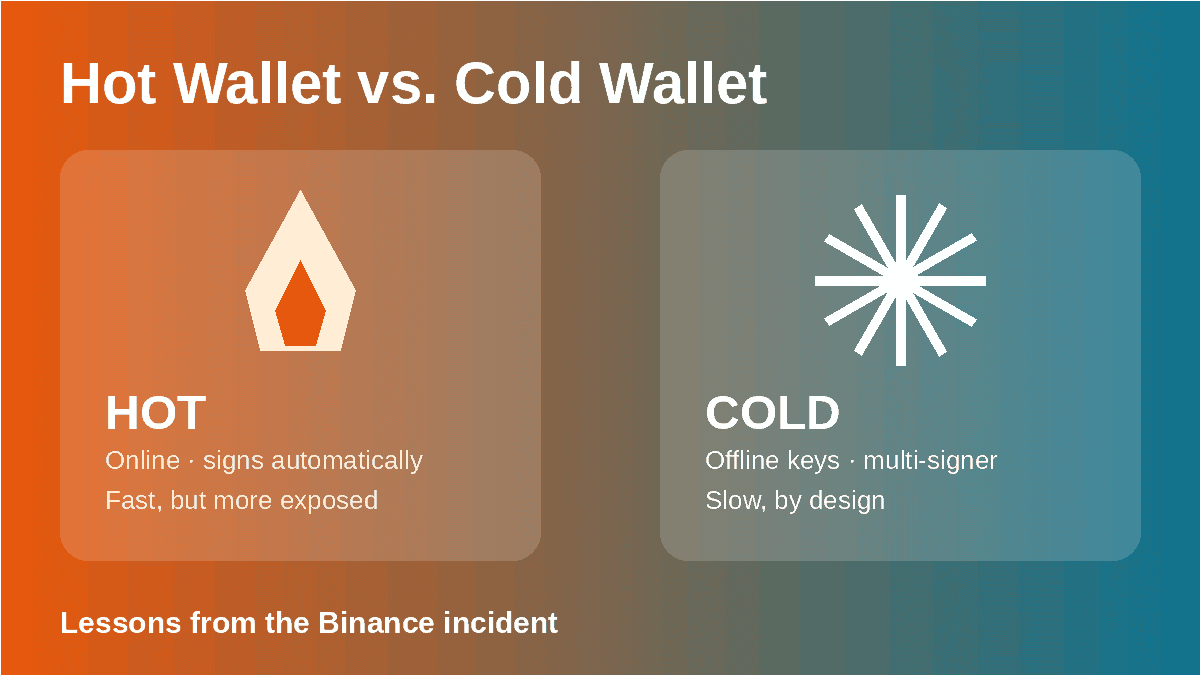
Hot Wallet Security Explained: Lessons From the Binance Incident

Binance Hack Scams: How to Spot Fake Refund and Recovery Offers
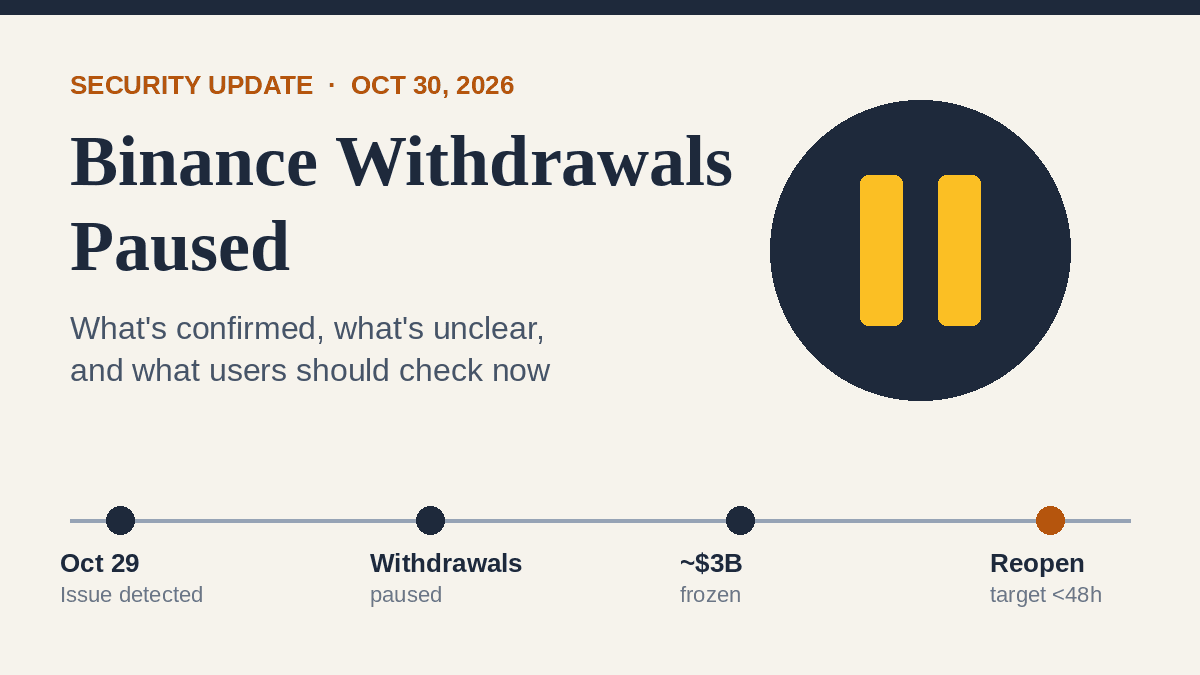
Binance Withdrawals Paused: What Users Should Check Right Now
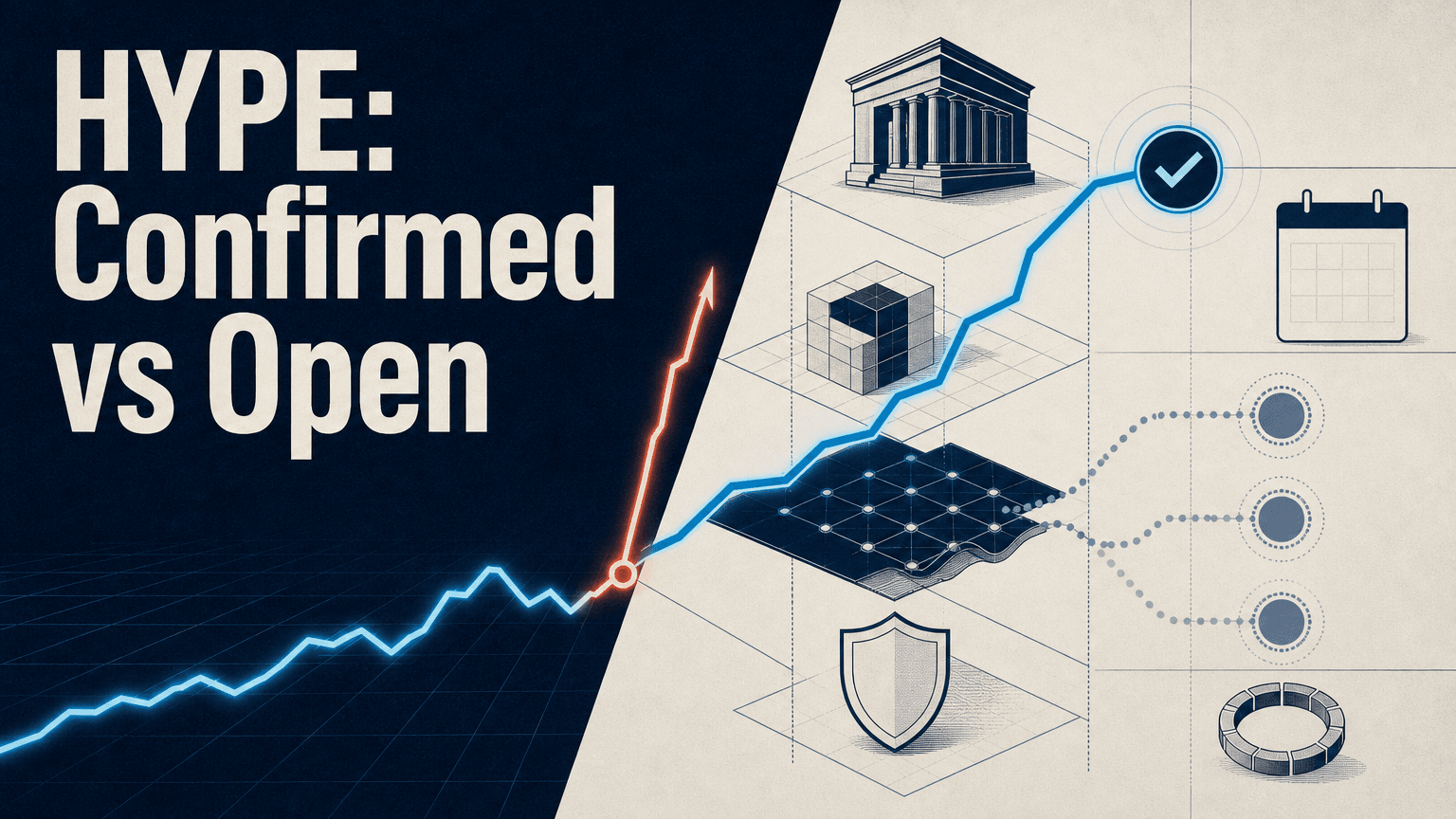
HYPE Price Jumps After ICE Backs trade[XYZ] on Hyperliquid: What Is Confirmed and What Is Not
Is XTruth Oil (XTO) Legit? Contract Checks, Payout Gaps and Liquidity Risks
United States Dividend Fund (USDF) October 30 Announcement and October 31 Date: What to Verify Before Believing Either Claim
United States Dividend Fund (USDF): Is There a Connection to Trump’s Dividend Plan?
Ripple National Trust Bank: Who Really Gains From OCC Approval
Hyperliquid US Entry: What Kraken's Payward Plan Actually Builds
How Do Stablecoin Issuers Make Money? The Business Behind a $1 Token

Robinhood RLUSD: What Ripple’s Partnership Means for XRP and the XRP Ledger
Why Unitree Stock Jumped: JPMorgan Upgrade, Physical AI Timelines and What Investors Should Check
SKHY Q3 Earnings: SK Hynix's 632% Profit Jump Is a Price Story
TSLA Barclays Upgrade: What the $450 Price Target Assumes
XRP After Ripple's OCC Charter: What the Bank Approval Changes
BTC Fights for $80K Before the Fed: Why Leverage Hasn't Flushed
AVGO and META Stock: What an $88B AI Financing Week Signals

Gold Price Back Above $4,000: Fed, Iran Risk and the Next Test

USDT Interest Rate 2026: Current APR and Earnings Calculator
Taiwan Crypto Regulations 2027: What Investors Need to Know
What Does the Kalshi–S&P Dow Jones Deal Mean? Event Contracts vs. Index Investing
Tokenized Stocks Explained: What to Check Before You Trade
CLS Stock After Q3 Earnings: Revenue Up 83%, 2027 Outlook and What Investors Should Check
Which WEEX Moves Cost You Auto Earn Interest? 9 Actions Checked
Bloom Crypto Bot Wallet Drains: What Happened and What Users Should Check
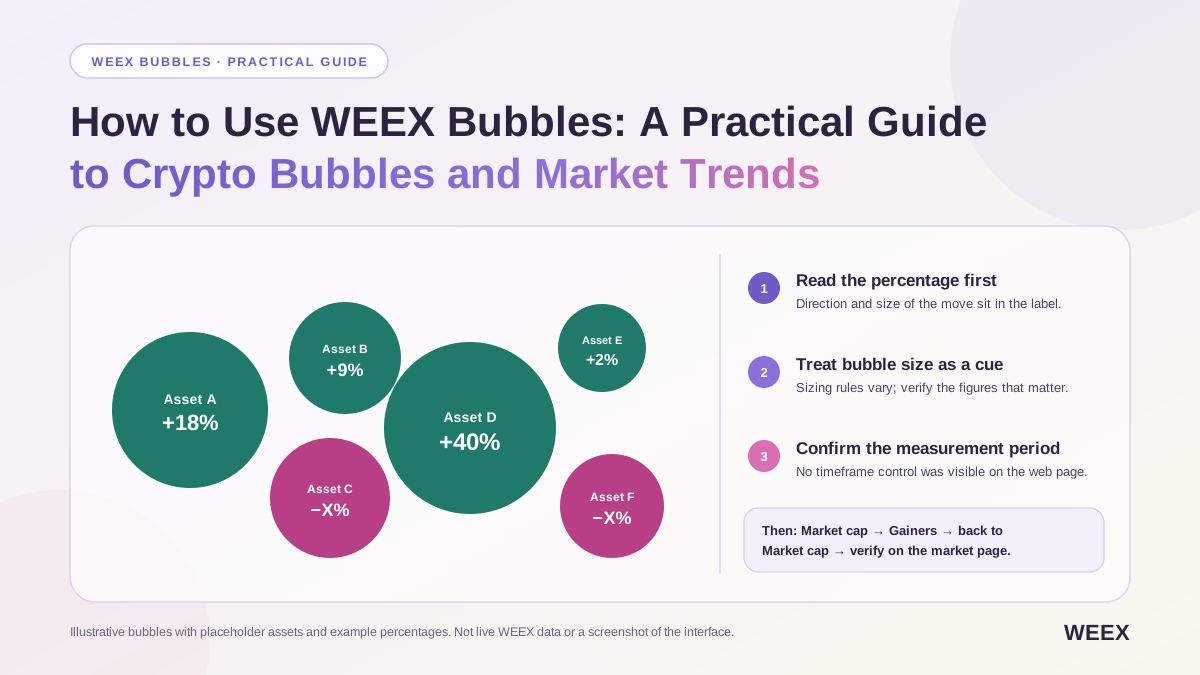
How to Use WEEX Bubbles: A Practical Guide to Crypto Bubbles and Market Trends

TSLA Stock After the Flying Roadster Reveal: What the Q3 Results, SpaceX Merger Talk and Analysts Say
SK Hynix Stock Before Q3 Earnings: Special Dividend Reports, HBM4 and What Investors Want to See on October 28
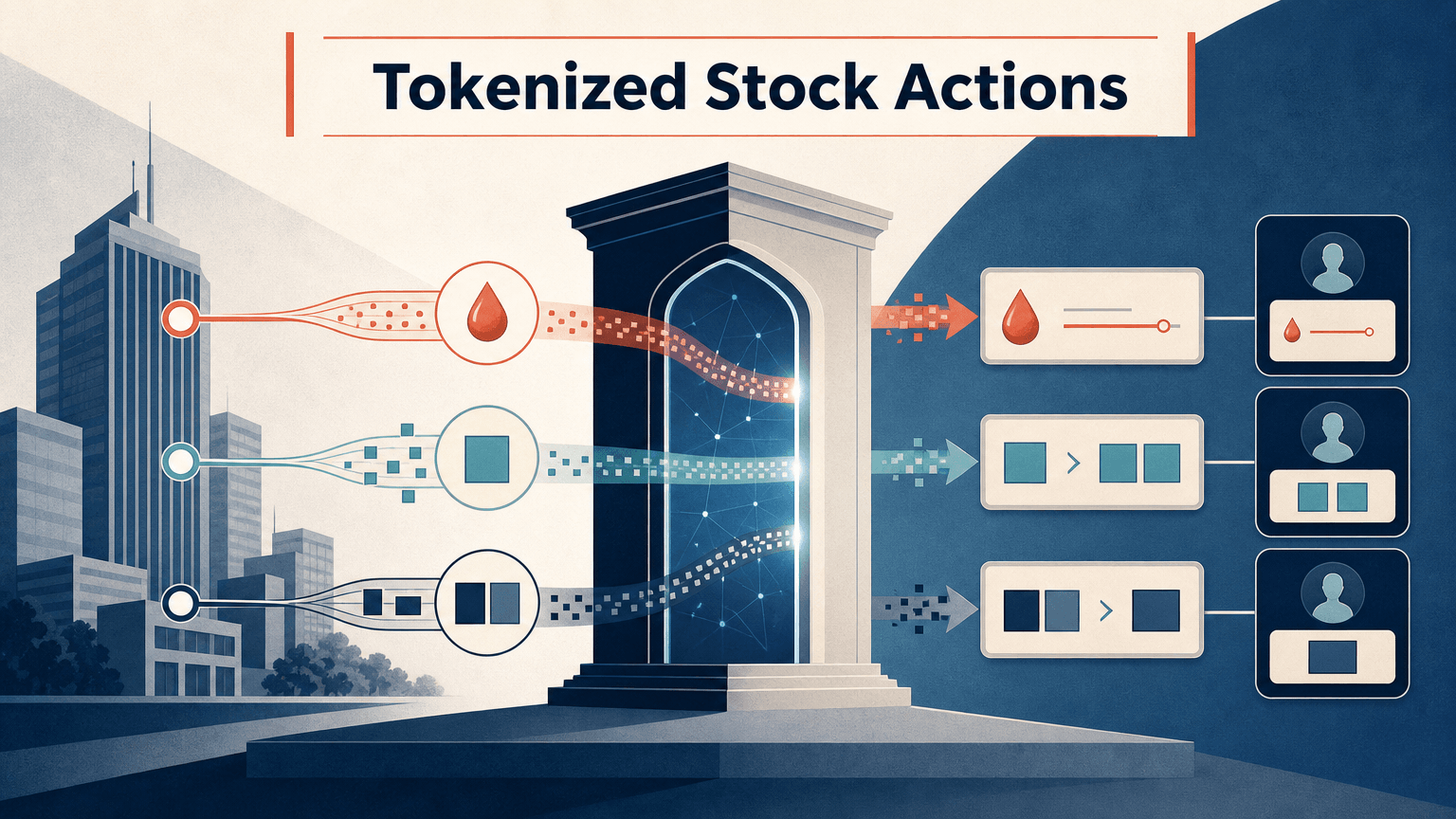
Corporate Actions for Tokenized Stocks: How Dividends, Splits and Mergers Are Handled
Binance Hack Explained: What Is Confirmed, What Is Disputed and What Users Should Do Now
Hot Wallet Security Explained: Lessons From the Binance Incident
Binance Hack Scams: How to Spot Fake Refund and Recovery Offers
Binance Withdrawals Paused: What Users Should Check Right Now
HYPE Price Jumps After ICE Backs trade[XYZ] on Hyperliquid: What Is Confirmed and What Is Not
Is XTruth Oil (XTO) Legit? Contract Checks, Payout Gaps and Liquidity Risks


