
Micron Earnings Sept. 30: Order Types and TP/SL on MU Perpetuals

 Prefer us on Google


Micron earnings land after the close on Wednesday 30 September 2026, with the call at 2:30 p.m. Mountain time, and the setup into the print is unusually stretched in both directions. Micron guided fiscal fourth-quarter revenue to about $50 billion plus or minus $1 billion, adjusted EPS of $31 plus or minus $1, and gross margin near 86%; Wall Street sits at $50.42 billion and $31.14 (TipRanks, 16 September). The stock closed at $926.55 on 16 September, down about 6% over five sessions and roughly 26% below its 52-week high of $1,255, on a market cap of $1.05 trillion, while the average analyst target is $1,563.93 and Goldman Sachs, at $1,100 and Hold, still expects a beat. A stock with a beta of 2.22 and that much disagreement priced in will not move quietly on the print. This guide covers how to use each order type on the WEEX MU-USDT perpetual, which ones survive an earnings gap and which ones do not, and how to set take-profit and stop-loss orders that fire on the price you intend.
What the Micron earnings setup looks like going in
Three facts define the trade. First, the bar is high but the valuation is not. Micron trades at about 6.3 times forward earnings against 19 times for the S&P 500 (Invezz, 16 September), which is a market pricing a memory cycle peak, not a growth stock. Goldman expects DRAM contract prices to rise about 50% sequentially this quarter and NAND around 60%, and models $51.9 billion in revenue and $32.54 in EPS, both above consensus. If Micron prints near that and guides the November quarter higher, the multiple has room to expand; if HBM pricing or China capacity commentary disappoints, a 6x multiple offers less support than it looks like, because the market is already assuming the earnings are temporary.
Second, the stock has been weak into the print. Down 6% in five days, negative in five of the past nine Septembers, and off 26% from the high, MU is arriving at earnings after a de-risking rather than a run-up. That tends to reduce the size of a sell-the-news move and increase the size of a relief move, but it does not remove either.
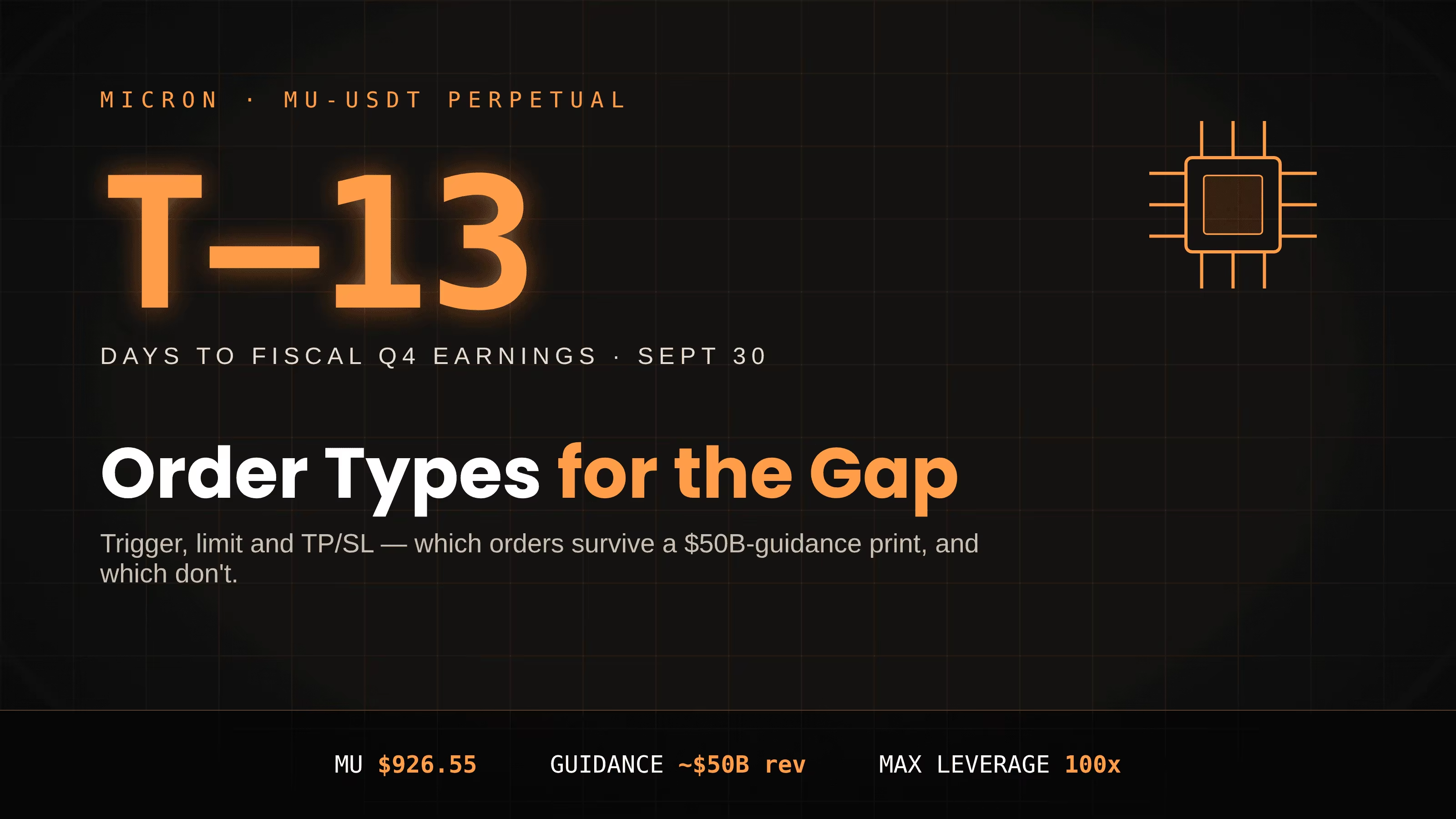
Third, the reference for a perpetual is the after-hours print, not the next day's open. The MU-USDT perpetual on WEEX trades 24/7, so the contract's index reprices within minutes of the 16:05 Eastern release, in an after-hours session where the cash stock is thin. That is where order-type choice decides outcomes.
How the MU-USDT perpetual trades around an earnings release
The MU-USDT perpetual on WEEX is a USDT-margined contract tracking Micron's share price through an index, with leverage up to 100x as of 17 September 2026 and no expiry. WEEX's US stock perpetuals trade around the clock, but liquidity varies by session, and the exchange warns that corporate actions and trading halts on the underlying can cause sharp moves or early settlement.
During an earnings release the practical sequence is: the cash market closes at 16:00, the release hits at about 16:05, after-hours trading in the shares reprices the index, and the perpetual's mark price follows. Liquidation on WEEX is calculated on mark price, using the margin rate formula (position margin + unrealized PnL) ÷ position value. A 10x position on MU has roughly 10% of margin cushion before maintenance requirements are consumed; Micron's larger post-earnings moves in the current cycle have exceeded that in either direction. The problem is not that the order book disappears; it is that the index moves before any resting order in the book can matter.
The four order types on WEEX and what each does in an earnings gap
WEEX's futures interface offers four order types, described in its guide to market, limit, trigger and trailing stop orders. Each has a specific job around a scheduled event.
- Market order. Fills immediately at the best available price. Right for closing a position when you need out now, wrong for opening one into a thin after-hours book, where the fill can land several dollars from the mark.
- Limit order. Rests at your price and fills only there or better. Right for entering at a level you have chosen in advance, for example a limit buy at $880 if MU sells off on the print and reaches a level you consider cheap. The risk is that the price gaps through the level without filling, or fills on the way to a much lower low.
- Trigger order. A conditional order that stays off the book until the mark or last price reaches your trigger, then submits as a market or limit order. This is the tool for earnings: a trigger buy above $960 enters a long only if the print sends MU higher, and a trigger sell below $890 enters a short only if it sends MU lower. Nothing is on the book before the release; the market chooses the direction and you take it.
- Trailing stop. Follows the price at a set distance and only moves in your favour. Right for protecting a position that is already working after the print, for example a long from $930 that trails by $40 as MU climbs toward $1,000. Wrong as the initial protection into the print itself, because the trailing distance is measured from the price path, and a gap skips the path.
The distinction that matters most is between orders that rest on the book and orders that trigger on the mark. A resting limit order is a commitment at a fixed price regardless of what the release says; a trigger order is a decision deferred until the release has spoken.
-- Price
Setting take-profit and stop-loss on MU before the print
WEEX allows a take-profit and stop-loss to be attached at order entry or added to an open position, and the TP/SL guide describes two trigger options, last price and mark price. WEEX's introduction to TP/SL in futures trading recommends mark price for medium-term positions because it is derived from the index and funding and is less exposed to short-term noise, and last price for short-term traders who want the trigger to match the tape.
For an earnings hold the guidance is direct.
- Put the stop-loss on mark price. Liquidation runs on mark price; a stop on the same scale fires before the exchange does. On an earnings gap, last price on a thin after-hours book can print far from the mark for a few seconds, and a last-price stop can be triggered by a print that the mark never reflected.
- Set the stop where the thesis is wrong, then check leverage against it. If a long from $926 is wrong below $860 (about 7% down, below the recent five-day sell-off range), the stop belongs near $860, and leverage must be low enough that the liquidation price sits well below $860, which on WEEX's tiers means roughly 5x or less in isolated margin.
- Set the take-profit at a level, not a percentage. Analysts' $1,100 (Goldman) and $1,563 (average) targets are levels the market will react to; a first take-profit near $1,000 and a second near $1,100 on a strong print gives the position a plan instead of a hope.
- Accept that a stop-loss limits the loss on a trend, not a jump. If MU opens after hours 15% lower, a stop at $860 fills wherever the first trade is, possibly $790. The only protection against a jump is position size and leverage, not the stop itself.
- Consider a reduced-size hold with trigger orders on both sides. A half-size long into the print with a trigger short below $880 converts a wrong call into a hedge instead of a liquidation.
Three earnings playbooks for the MU perpetual
Each of these is a set of orders, placed before 16:00 Eastern on 30 September, with nothing left to decide in the after-hours chaos.
- The breakout trader holds no position into the print. Trigger buy above $960 with a stop at $920 and a take-profit at $1,050; trigger sell below $890 with a stop at $930 and a take-profit at $820. One side fills, the other is cancelled. Leverage 5–10x is workable because the position only exists after the direction is known.
- The holder keeps a long from the mid-$900s at 3x or less in isolated margin, stop on mark price at $860, first take-profit at $1,000, second at $1,100, and a trailing stop of $40 activated only after the first take-profit fills. The low leverage is the whole strategy: the trade has to survive a 10% gap against it.
- The contrarian believes the stock is over-owned into a memory peak and fades strength. Trigger sell only if MU spikes above $1,000 and then loses $980 within the first hour after hours, stop at $1,020, take-profit at $930. The trigger-then-fail entry is the disciplined version of "sell the news"; shorting into the release itself, blind, is not.
What traders usually get wrong on Micron earnings
The first mistake is placing a market order at 16:06 Eastern. The after-hours book on a $1 trillion stock is thin in the first minutes, and the perpetual inherits that thinness; fills land far from the mark. The second is using a trailing stop as the initial protection into the print, which does nothing in a gap. The third is holding 20x or more into a scheduled binary event on a beta-2.2 stock, which turns a 5% adverse gap into a liquidation before the call has started. The fourth is ignoring funding: a leveraged long that pays funding for two weeks waiting for the print has already spent part of its edge.
Micron earnings on 30 September are a well-signposted event on a stock that moves a lot. The MU-USDT perpetual gives a trader every order type needed to trade it in either direction, and the ones that work are the ones placed before the release, triggered by the mark, and sized for a gap.
FAQ: Trading Micron earnings on the MU perpetual
1. When does Micron report fiscal Q4 2026 earnings?
After the market close on Wednesday 30 September 2026, with the conference call at 2:30 p.m. Mountain time. The MU-USDT perpetual reprices in after-hours trading, before the next cash-market open.
2. What did Micron guide for the quarter?
Revenue of about $50 billion plus or minus $1 billion, adjusted EPS of $31 plus or minus $1, and gross margin near 86%. Consensus sits at $50.42 billion and $31.14 (TipRanks, 16 September 2026).
3. Which order type is best for trading an earnings release on a perpetual?
A trigger order, because it stays off the book until the price confirms a direction after the release. A market order into the thin after-hours book and a trailing stop as initial protection are the two order types most likely to disappoint.
4. Should my MU stop-loss trigger on mark price or last price?
Mark price for a stop that protects against liquidation, because WEEX liquidates on mark price. Last price is for short-term take-profits at a specific chart level.
5. Does a stop-loss protect me from an earnings gap?
Only partly. A stop limits the loss on a move that trades through its level; if the index jumps past the stop, the order fills at the first available price. Position size and leverage are the protection against gaps.
6. What is the maximum leverage on the WEEX MU-USDT perpetual?
100x as of 17 September 2026. For a hold through earnings on a stock with a beta of 2.22, 3x or less keeps the liquidation price outside a plausible gap.
Risk Warning
Micron perpetual futures are leveraged derivatives on a volatile equity, and an earnings release can move the underlying by more than the margin cushion on a leveraged position within minutes of the print, in a thin after-hours session. Stop-loss and take-profit orders can fill far from their trigger prices during gaps, trigger orders can execute at prices worse than expected, and liquidation is calculated on mark price rather than the last traded price. Funding payments accumulate on positions held through settlement, corporate actions and trading halts can cause sharp moves or early settlement, and availability of US stock perpetuals is subject to regional restrictions. You may lose part or all of the margin you post, and in cross-margin mode losses can extend to your entire futures balance. Trade only with funds you can afford to lose and check current MU-USDT contract parameters on WEEX before placing orders.
This content is provided for general informational purposes only and doesn't constitute financial, investment, legal, or tax advice. Any events, rewards, online promotions, or related information mentioned herein should not be considered a recommendation, solicitation, or invitation to purchase, sell, trade, or otherwise deal in any crypto assets. Crypto assets are highly volatile and may result in loss. The availability of WEEX services, products, and related events may vary by region. You are responsible for ensuring that your participation is in accordance with applicable local laws and regulations.
You may also like
WEEX API Key Security: What a Leaked Key Can Still Do to You
Palantir Stock 24/7: How PLTR Perpetual Futures Really Price
HYPE Token Unlock and Leverage: What the $1.2B Number Hides

BitMEX Is Closing September 23, 2026: Timeline and How to Withdraw Before the Deadline

CoreWeave Stock (CRWV): The Debt Math Behind the AI Trade — and How to Trade It 24/7
Lumentum (LITE) Perpetual Futures: Why 25x Leverage Is the Limit
Lighter (LIT) Futures: Cross vs Isolated Margin on a 17% Range
SOL Perpetual Contracts: Mark Price, Index Price and Liquidation
XRP Futures: How to Long or Short XRP After the Clarity Act Vote
How to Test a Trading Strategy on WEEX Demo Before Going Live

CoinEx Is Closing: Shutdown Timeline and How to Withdraw Before September 29, 2026
Monero Futures Trading: The Liquidity Risk Guides Ignore
AVAX Futures: Trading the Avalanche RWA Catalyst With Leverage
SpaceX Stock Futures: Where to Put Stops on a 115% Range
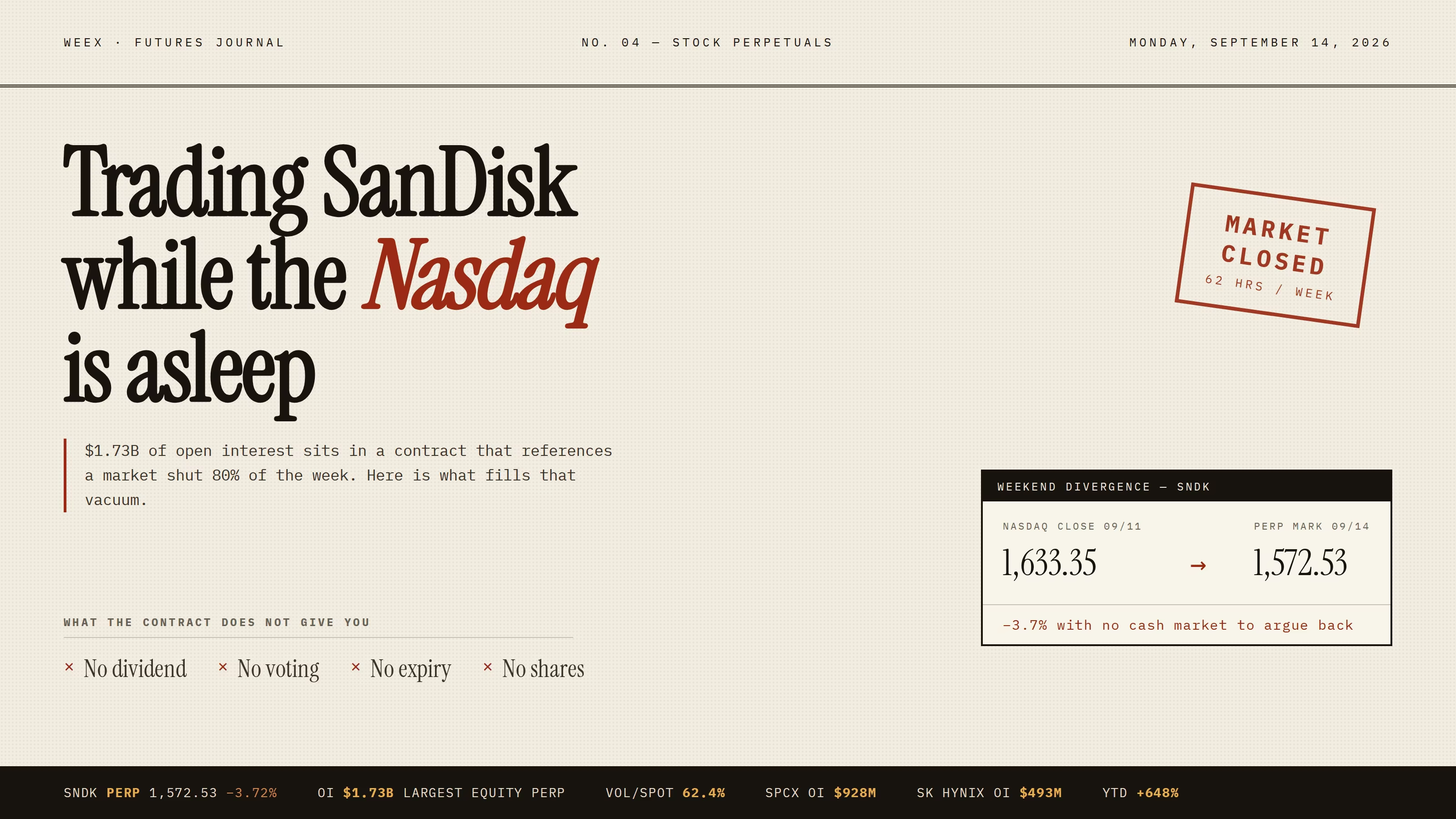
SanDisk Stock Perpetuals: Trading SNDK While Nasdaq Sleeps
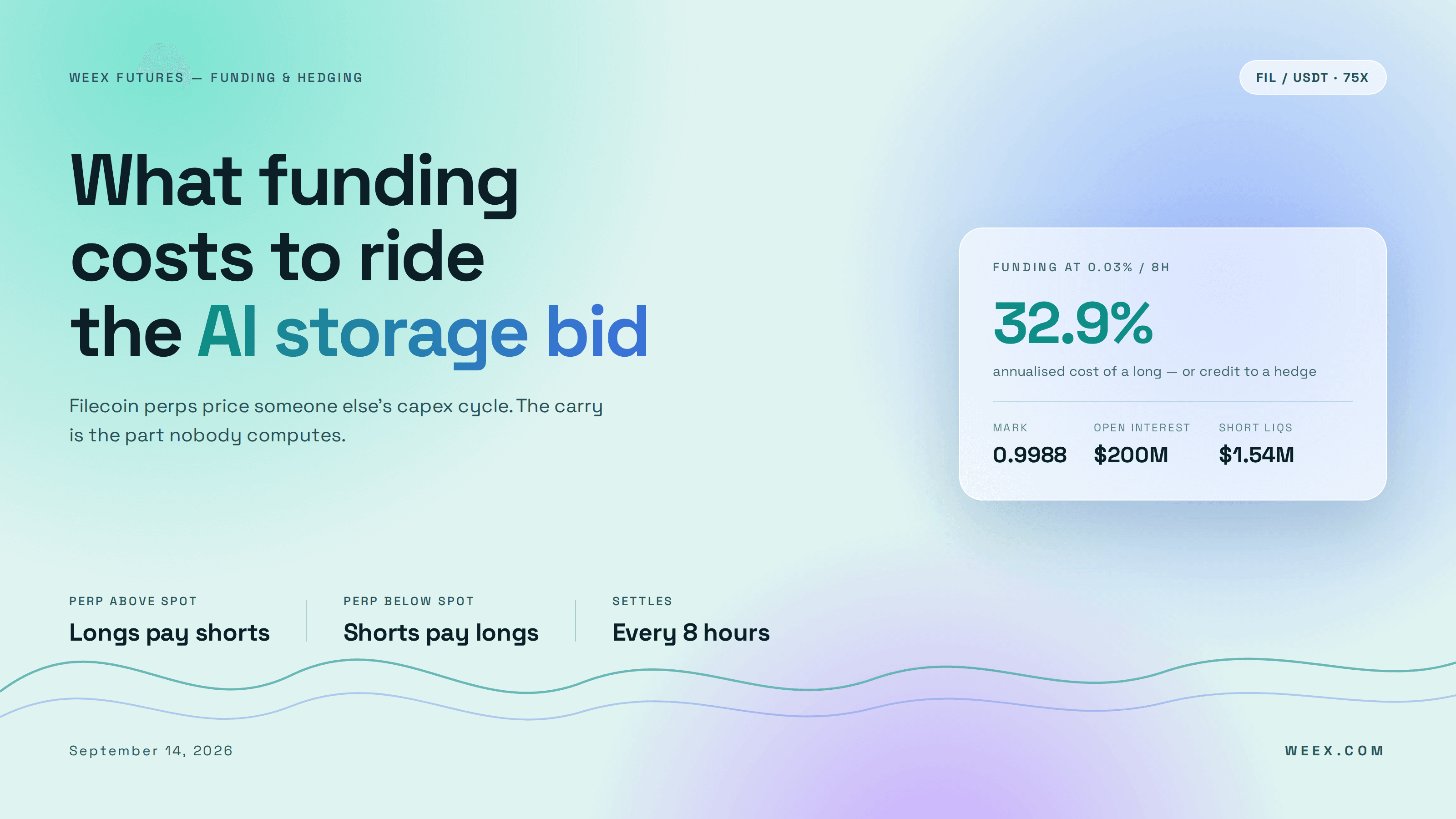
Filecoin Futures: What Funding Costs to Ride the AI Bid
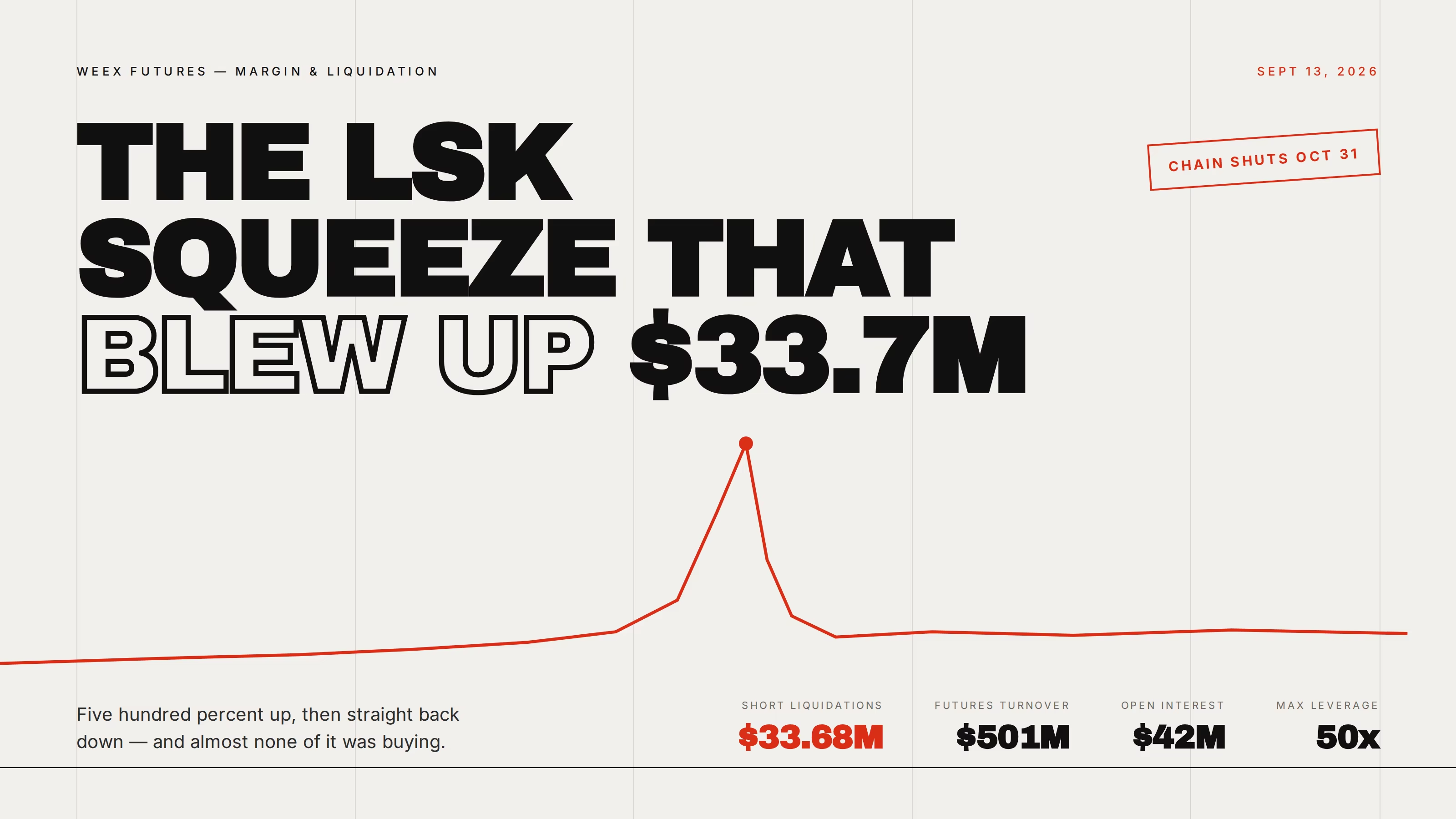
LSK Short Squeeze: How $33.7M of Bears Blew Up in a Day
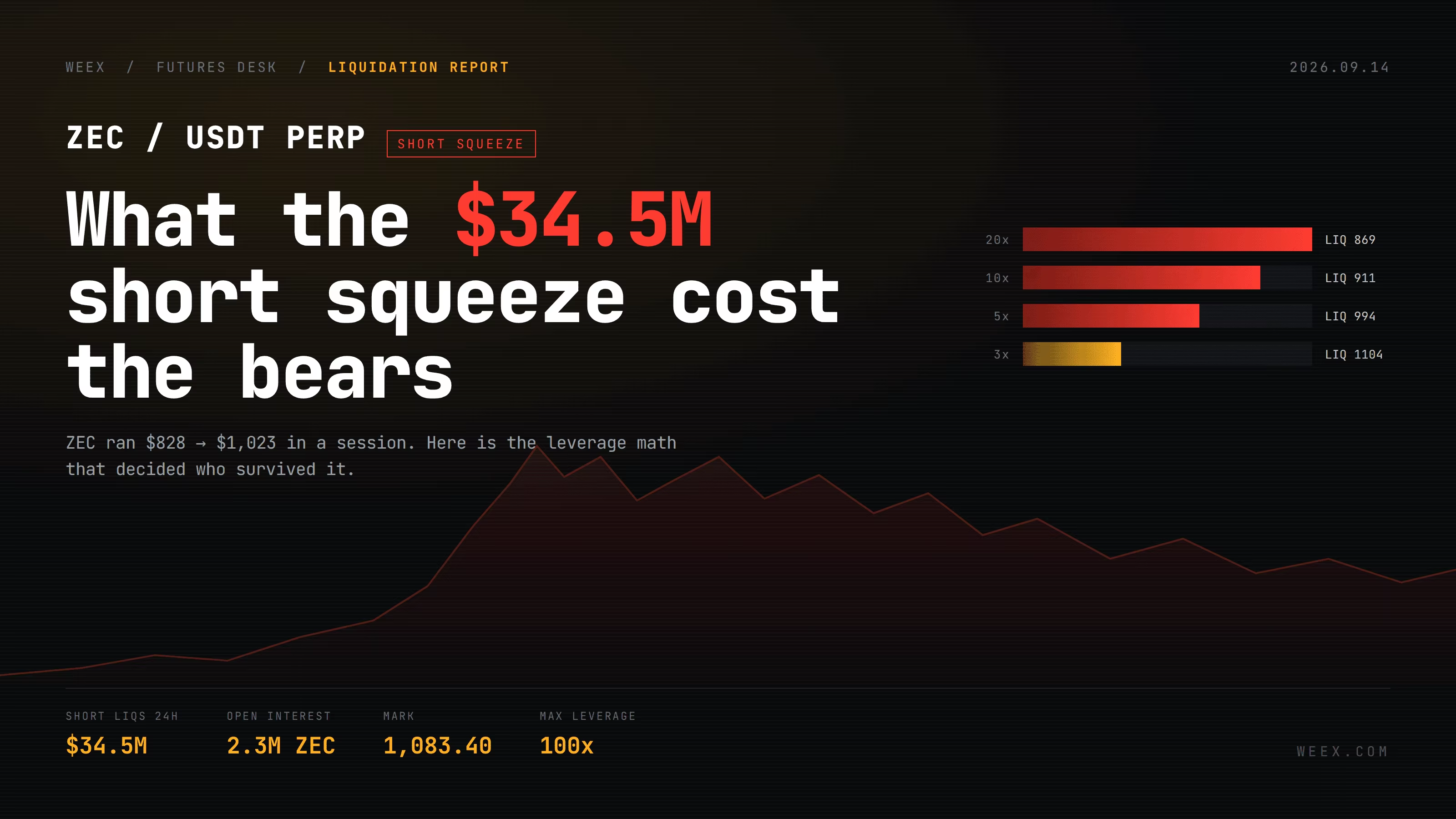
Zcash Futures: What the $34.5M Short Squeeze Cost the Bears
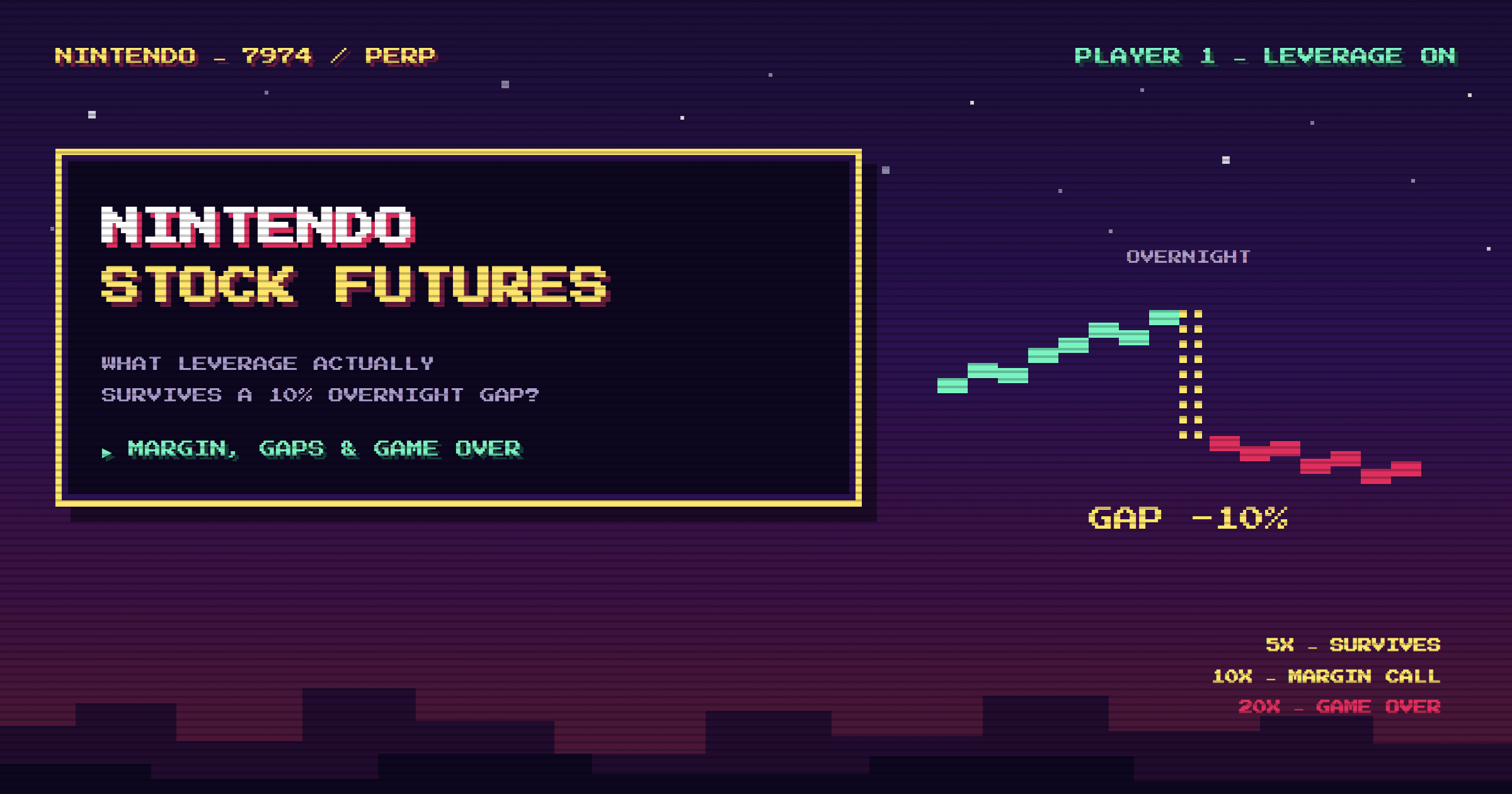
Nintendo Stock Futures: What Leverage Survives a 10% Gap
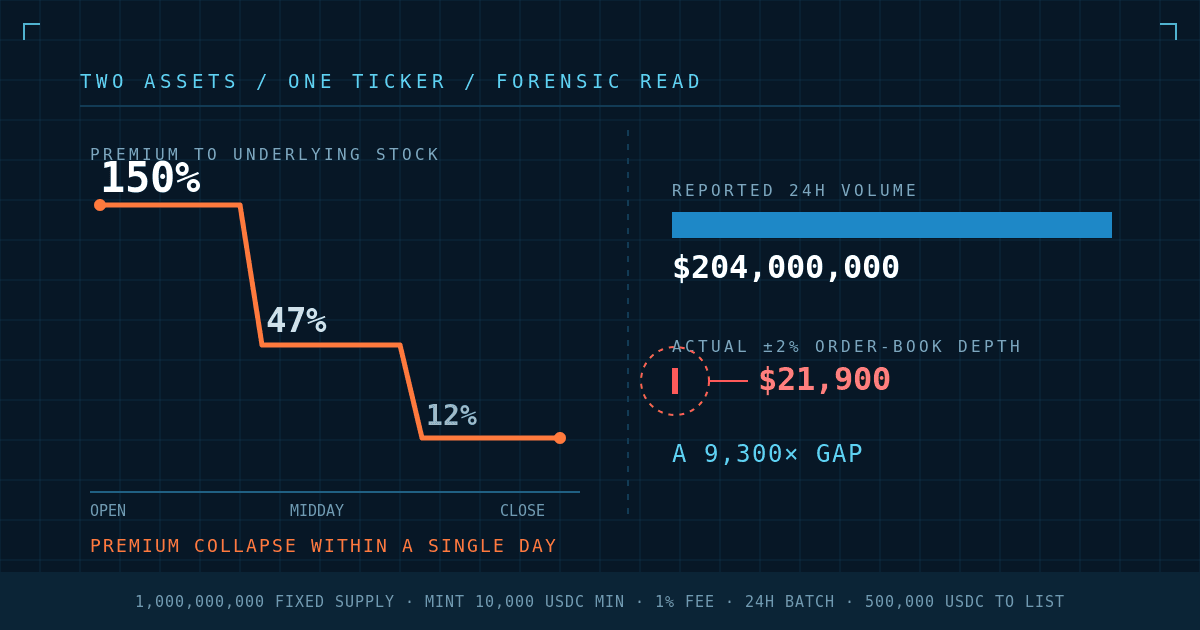
4Stock Explained: Why the Ticker Is Not the Backed Asset
Cathie Wood Robinhood Stock: What Her 2026 Trades Really Show
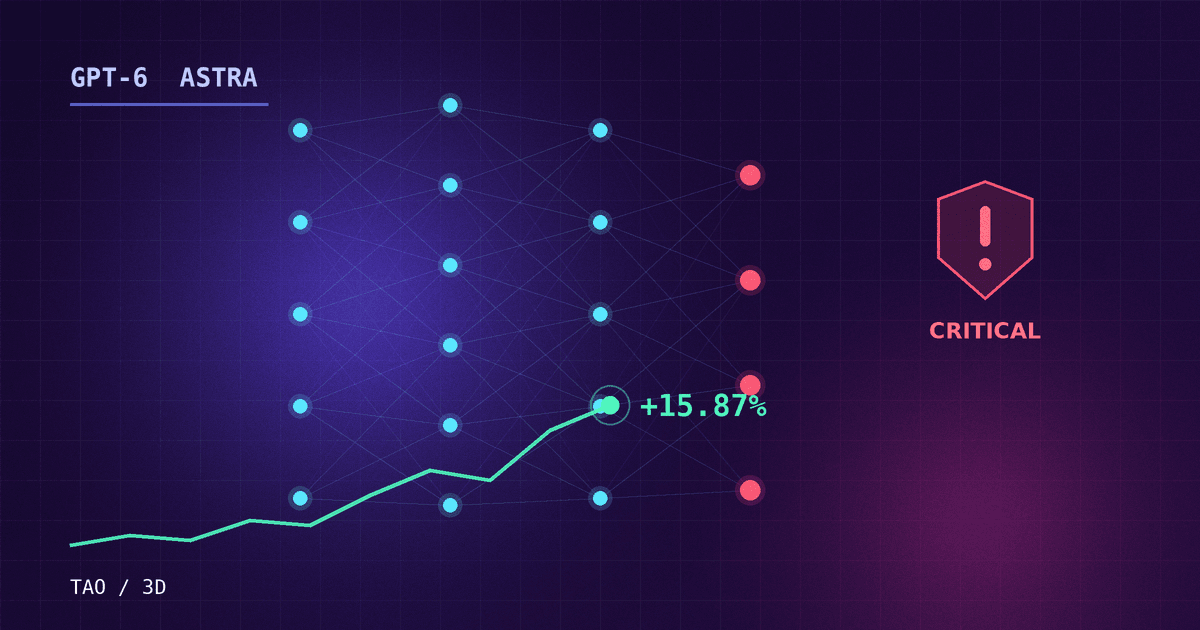
GPT-6 Astra and Crypto: The AI Token Bid and the Cyber Risk
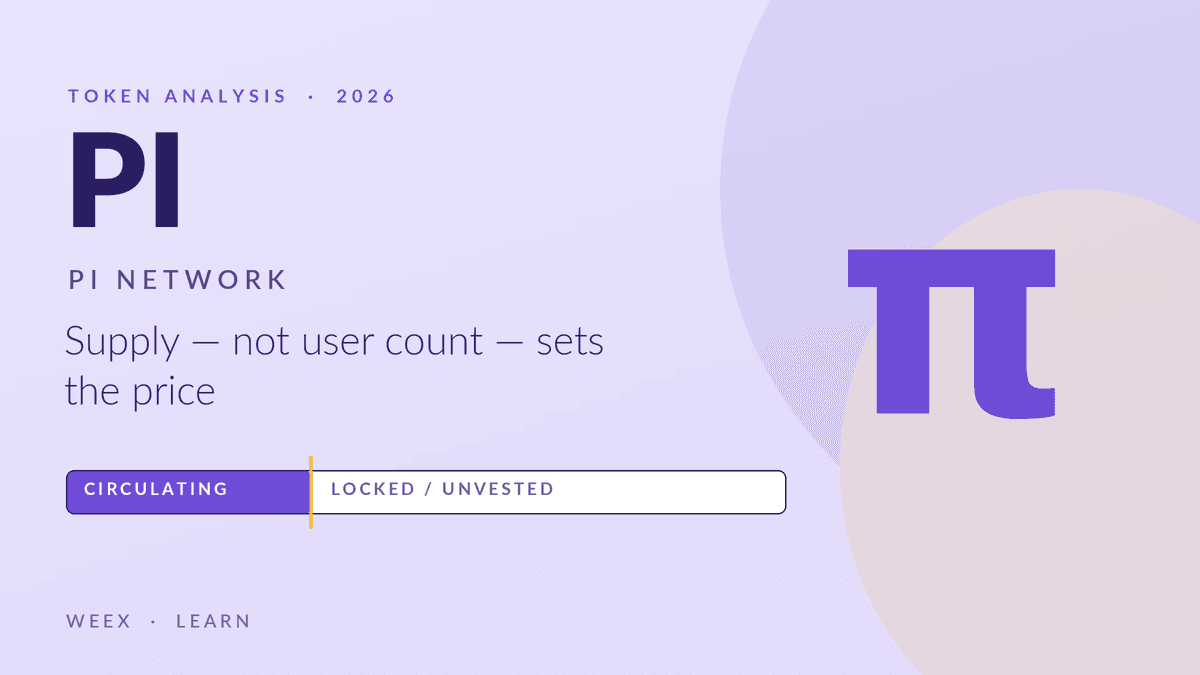
Pi Network in 2026: Why Supply, Not Users, Sets PI's Price
Amazon Stock and the Plane Crash: AMZN Pricing With NYSE Shut

NVIDIA Stock: What the $108B Q3 Guide Means for NVDA Next

PONS Robinhood Chain Token: What the Buyback Rally Rests On

PEP Stock Analysis: Why PEPon Trades Above PepsiCo Shares
Cathie Wood Nvidia Stock Purchase: What ARK's August Buys Show

Micron (MU) Earnings Date: When Q4 FY2026 Reports and What to Watch
Oracle (ORCL) Earnings Date: When Q1 FY2027 Reports and What to Watch
WEEX API Key Security: What a Leaked Key Can Still Do to You
Palantir Stock 24/7: How PLTR Perpetual Futures Really Price
HYPE Token Unlock and Leverage: What the $1.2B Number Hides
BitMEX Is Closing September 23, 2026: Timeline and How to Withdraw Before the Deadline
CoreWeave Stock (CRWV): The Debt Math Behind the AI Trade — and How to Trade It 24/7
Lumentum (LITE) Perpetual Futures: Why 25x Leverage Is the Limit


