
SOL Perpetual Contracts: Mark Price, Index Price and Liquidation

 Prefer us on Google


A SOL perpetual contract has three prices, and only one of them can liquidate you. The last price is what the chart shows and what your market order fills at. The index price is a volume-weighted average of SOL's spot price across major exchanges. The mark price is derived from the index plus a funding-based premium, and it is the price WEEX uses to calculate unrealized PnL, margin rate and liquidation. Traders who do not know this get closed out on days like 16 September 2026, when SOL dropped 5% to just above $97 in a few hours after the Senate blocked the Clarity Act, and the order book briefly printed well below where the mark price sat. This guide walks through what each price does on the WEEX SOL-USDT perpetual, how they interact with funding and margin, and how to place a stop that fires where you intended.
Why SOL is the right coin to learn perpetual mechanics on
Solana is liquid enough that the three prices normally stay within a few basis points of each other, and volatile enough that they separate at exactly the moments that matter. As of 17 September 2026 SOL trades at about $98.80 with a market cap of roughly $58 billion and 24-hour volume near $3.4 billion (CoinGecko). It is still 66% below its January 2025 all-time high of $293.31, but the flow picture has improved: US spot Solana ETFs have recorded eleven consecutive weeks of net inflows, including $11.01 million on 14 September, and weekly network revenue rose to $45.35 million from $32 million the week before (Invezz, 15 September).
Two scheduled factors add volatility. The Alpenglow upgrade, which cuts block finality from about 12 seconds to roughly 150 milliseconds, is rolling out in stages between August and October 2026, and the technical picture is a symmetrical triangle with support at $96.06 (the 200-period EMA), $98 and $100.71, and resistance at $104.82 and $110.60. When a coin sits inside a tightening range with a catalyst pending, wicks through support and resistance are common, and wicks are precisely where last price and mark price disagree.
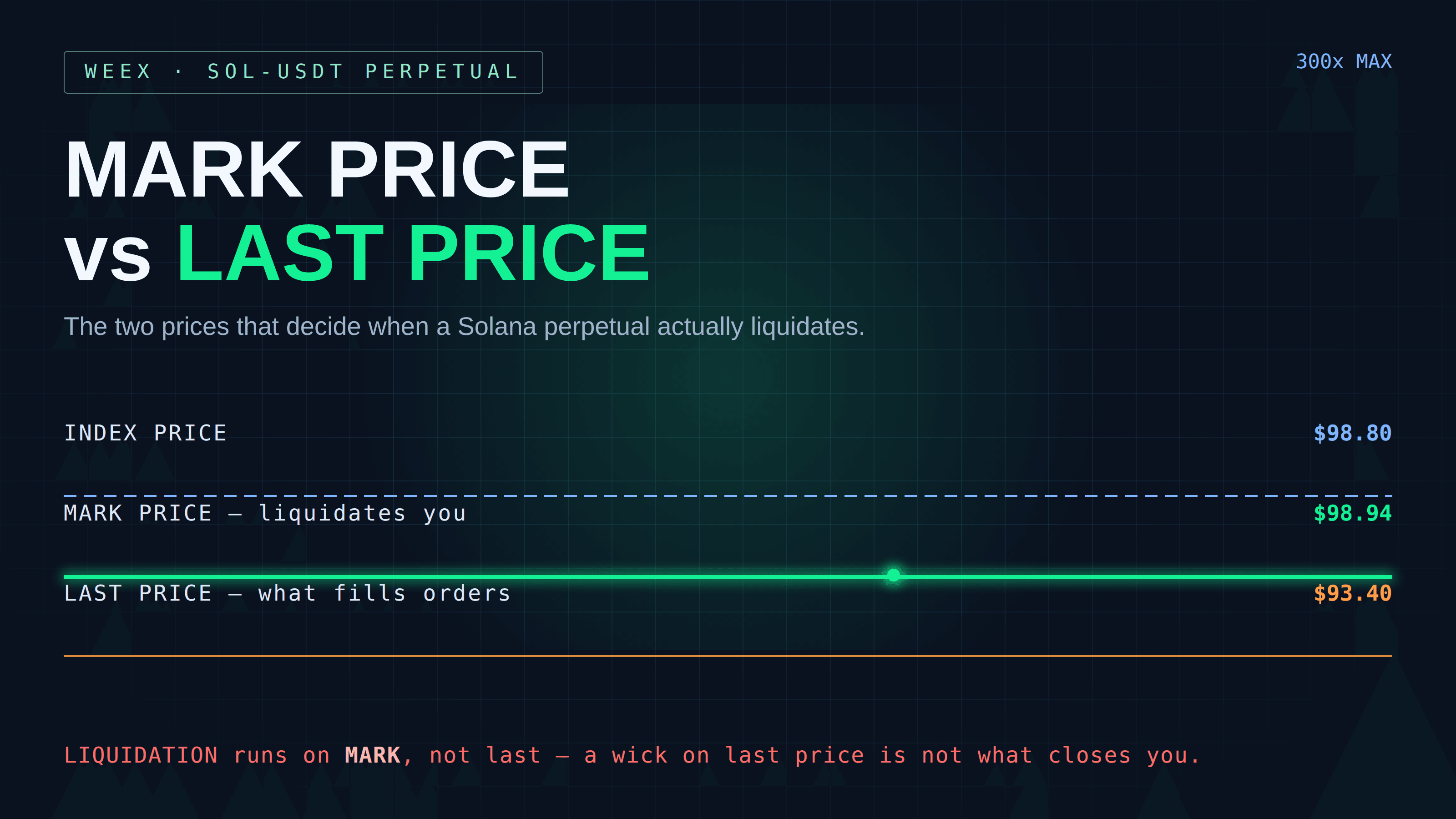
The three prices on a SOL-USDT perpetual and what each one does
Each price has one job. Confusing them is the root cause of most "I was liquidated above my stop" complaints.
- Index price: the reference spot price. It is built from SOL/USDT prices on several large spot exchanges, weighted by volume, so that no single venue's order book can move it. If one exchange flash-crashes, the index barely moves.
- Mark price: the fair value of the perpetual. WEEX and most exchanges compute it from the index price plus a moving average of the basis (the premium or discount of the perpetual over spot). The mark price is what decides your unrealized PnL, your margin rate and your liquidation. WEEX's own explainer on last price vs mark price describes it as the estimate of fair value designed to minimise the effect of short-term volatility or manipulation.
- Last price: the most recent trade on the WEEX SOL-USDT order book. Market orders fill here, limit orders sit here, and the candles on the default chart are drawn from it.
On a normal day the three prices differ by a fraction of a percent. On 16 September, when SOL fell 5% and Ether fell about the same in a sector-wide sell-off, thin bids on individual venues let the last price overshoot the mark price by more than the maintenance margin at high leverage. A trader with a stop on last price was closed on the overshoot; a trader with a stop on mark price, or with a lower leverage, stayed in.
How liquidation actually triggers on a Solana perpetual
WEEX defines margin rate as (position margin + unrealized PnL) ÷ position value, and liquidation is triggered when that rate falls to the maintenance margin rate for your position tier. Larger positions sit in higher tiers with a higher maintenance rate and a lower maximum leverage. The exact tier thresholds are not published as fixed numbers, which is one reason the calculator matters more than mental arithmetic.
Take a concrete example. You open a long of 50 SOL at a mark price of $98.80 with 20x leverage in isolated margin. Position value is $4,940 and your initial margin is $247. A 5% fall in mark price to $93.86 produces an unrealized loss of $247, which is your entire margin; in practice liquidation fires earlier, once the maintenance margin is consumed, so somewhere around $94.50–$95.00 depending on the tier. Notice that the 200-period EMA support at $96.06 sits above that level. A stop-loss at $95.50 on mark price closes the trade under your own control and keeps the remaining margin; without it, the exchange closes you and takes the liquidation fee.
Now change one variable: leverage of 5x instead of 20x. Initial margin rises to $988 and the liquidation price drops to roughly $80, a level SOL has not seen since the summer lows. Same coin, same entry, same market — the only difference is how much of the range you can survive. The Solana futures calculator on WEEX returns the liquidation price for any entry, size and leverage combination, and it is worth running both the long and the short version of the trade before choosing a side.
The SOL-USDT perpetual on WEEX offers leverage up to 300x as of 17 September 2026. At that level the liquidation price sits about 0.3% from entry, which is inside the normal gap between last price and mark price on a volatile day. Nobody should be using it for a directional hold.
-- Price
Funding: The price that connects the mark to the index
The mark price does not drift away from spot indefinitely because funding pulls it back. Every settlement period, longs pay shorts when the funding rate is positive and shorts pay longs when it is negative. WEEX calculates the funding fee as funding rate × position value, where position value is face value × number of lots × latest mark price, and the exchange does not take a cut; the payment moves directly between users. Settlement times vary by pair and are typically on the hour, so check the countdown on the contract page.
Two consequences follow for SOL traders. First, funding is charged on position value, not on margin, so it is independent of leverage: a $4,940 position pays the same funding at 5x as at 20x. Second, funding tells you which side is crowded. Persistently positive funding on SOL means longs are paying to hold, which is common during ETF-inflow rallies; a flip to negative after a sell-off like this week's means shorts are now paying, and a squeeze becomes more likely. Watching the funding rate alongside the mark-index gap is the closest thing to reading the market's positioning in real time.
How to set stops and take-profits that fire where you intended
WEEX lets you choose whether a take-profit or stop-loss triggers on last price or mark price. The choice should follow the reason for the order.
- Use mark price for stop-losses that protect against liquidation. Since liquidation is calculated on mark price, a stop on mark price sits on the same scale and fires before the exchange does. A stop on last price can be hit by a single wick that the mark price never reflected.
- Use last price for take-profits at a specific chart level, for example a limit exit at the $104.82 triangle resistance. You want the order to trigger when the market actually trades there, and the fill happens at last price anyway.
- Keep the stop well inside the liquidation price. If the calculator says liquidation is at $94.80, a stop at $94.90 gives no room for the trigger-to-fill delay; $95.50 or higher does.
- Consider a trigger order for entries. Instead of buying $98.80 now, a trigger order that opens a long only if mark price crosses $101 (above the 100-period EMA) means you enter with confirmation rather than inside the range.
The setup on WEEX takes a minute: open the SOL-USDT perpetual, set margin mode and leverage, enter the order, and expand the TP/SL panel before submitting. The trigger type selector sits next to the price field; the default is not always mark price, so check it every time.
What SOL perpetual traders usually get wrong
Three mistakes account for most of the avoidable losses on Solana perpetuals. The first is reading the last-price chart while managing a position that lives on mark price; the fix is to switch the chart to mark price when you have leverage on. The second is treating the liquidation price shown at entry as fixed. It moves as funding is paid or received and as position tiers change if you add size, so it needs rechecking after every adjustment. The third is holding a 20x position through a scheduled event, such as the Fed decision on 16 September or an Alpenglow activation announcement, as though the mark-last gap will stay at its quiet-day width. It will not.
The practical view is that SOL is a good coin for perpetuals because it is liquid, has clear levels and a visible catalyst calendar, but the same liquidity that keeps the three prices aligned on quiet days does nothing for you on the days that matter. Know which price liquidates you, put your stop on that price, and choose leverage so that your liquidation level sits well outside the range the market is actually trading.
FAQ: SOL perpetual contracts
1. What is the difference between mark price and last price on a SOL perpetual?
Last price is the most recent trade on the WEEX SOL-USDT order book. Mark price is the fair value derived from the spot index price and the funding basis, and it is the price used for unrealized PnL and liquidation.
2. Which price triggers liquidation on WEEX?
Mark price. WEEX calculates margin rate as (position margin + unrealized PnL) ÷ position value using mark price, and liquidates when the rate falls to the maintenance margin level for the position tier.
3. Why was I liquidated when the chart never touched my liquidation price?
Usually because the chart was drawn from last price while liquidation ran on mark price, or because funding payments and a change of position tier moved the liquidation level after you opened the trade.
4. How much leverage is available on the WEEX SOL-USDT perpetual?
Up to 300x as of 17 September 2026. Maximum leverage decreases for larger positions under the position-tier rules, and low leverage is the practical choice for directional holds.
5. Does the funding fee depend on my leverage?
No. WEEX charges funding as funding rate × position value, so two positions of the same notional size pay the same funding regardless of leverage or margin posted.
6. Should my stop-loss use mark price or last price?
For a protective stop, mark price, because it matches the liquidation calculation. For a take-profit at a chart level, last price is usually the better trigger.
Risk Warning
Solana and other crypto assets are volatile, and SOL perpetual contracts multiply that volatility through leverage: a 5% move against a 20x position consumes the full margin. Liquidation is calculated on mark price and can occur at a level different from the last traded price, stop-loss orders may fill below their trigger in fast markets, and funding payments accumulate for as long as a position stays open. Scheduled events such as network upgrades and macro announcements can widen the gap between mark and last price without warning. You may lose part or all of the margin you post, and in cross-margin mode the loss can extend to your whole futures balance. Trade only with funds you can afford to lose and verify current contract parameters on WEEX before opening a position.
This content is provided for general informational purposes only and doesn't constitute financial, investment, legal, or tax advice. Any events, rewards, online promotions, or related information mentioned herein should not be considered a recommendation, solicitation, or invitation to purchase, sell, trade, or otherwise deal in any crypto assets. Crypto assets are highly volatile and may result in loss. The availability of WEEX services, products, and related events may vary by region. You are responsible for ensuring that your participation is in accordance with applicable local laws and regulations.
You may also like

Circle's Arc Mainnet Is Live: Can It Actually Close the Gap With Tether's USDT?
Why Did the CLARITY Act Fail in the Senate, and What Happens Next for Crypto Regulation?
Lighter (LIT) Futures: Cross vs Isolated Margin on a 17% Range
What Is a Blockchain Explorer and How Does It Work?

Is SafePal Safe? A Look at Its Security Features

How to Set Up and Use SafePal Wallet?
Meme coin 龙虾 ($LOBSTER) Surges Past $200M: What’s Behind the Rally?
What Is SafePal Wallet? A Complete Beginner's Guide
WEEX Demo Trading: 50,000 USDT Practice Account, Rules and Limits
WEEX API Key Security: What a Leaked Key Can Still Do to You

TOKEN2049 Singapore Events 2026: Side Events, VIP Lounges and What to Do During TOKEN2049 Week
Lost Your 2FA Device? Here's What to Do Next
How to Install Trust Wallet Safely: What Most Guides Leave Out
Senate CLARITY Act Cloture Vote Today: Can Trump's Ethics Compromise Get 60 Votes?
Trust Wallet vs MetaMask: Which One Is Better for Beginners?
Trust Wallet Seed Phrase: How to Store It Safely and What Never to Do
Puebla Mexico Crypto Farm Seized: Is Bitcoin Mining Legal in Mexico?
What Is Trust Wallet? A Complete Beginner's Guide
AVAX Futures: Trading the Avalanche RWA Catalyst With Leverage
HYPE Token Unlock and Leverage: What the $1.2B Number Hides
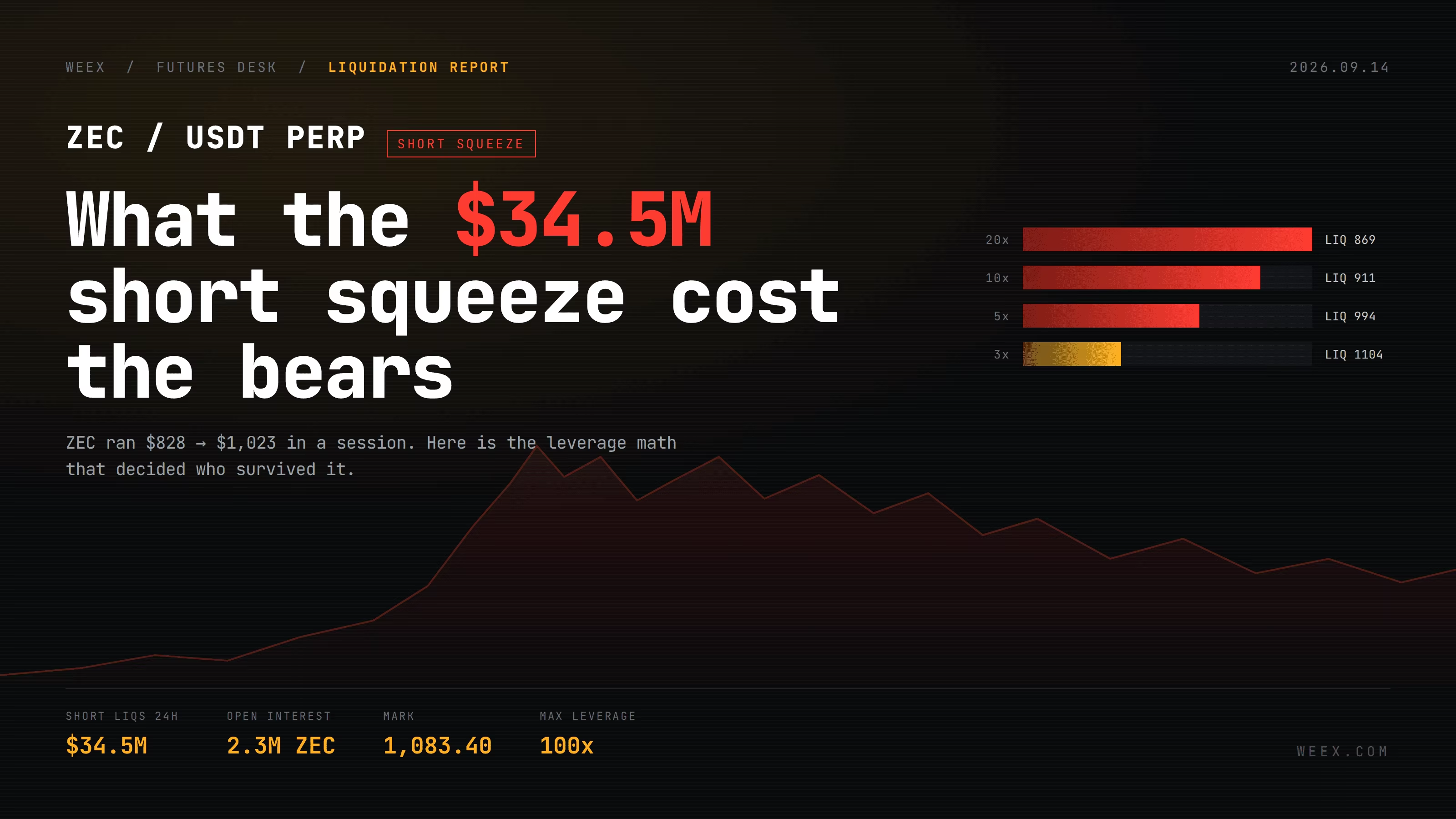
Zcash Futures: What the $34.5M Short Squeeze Cost the Bears
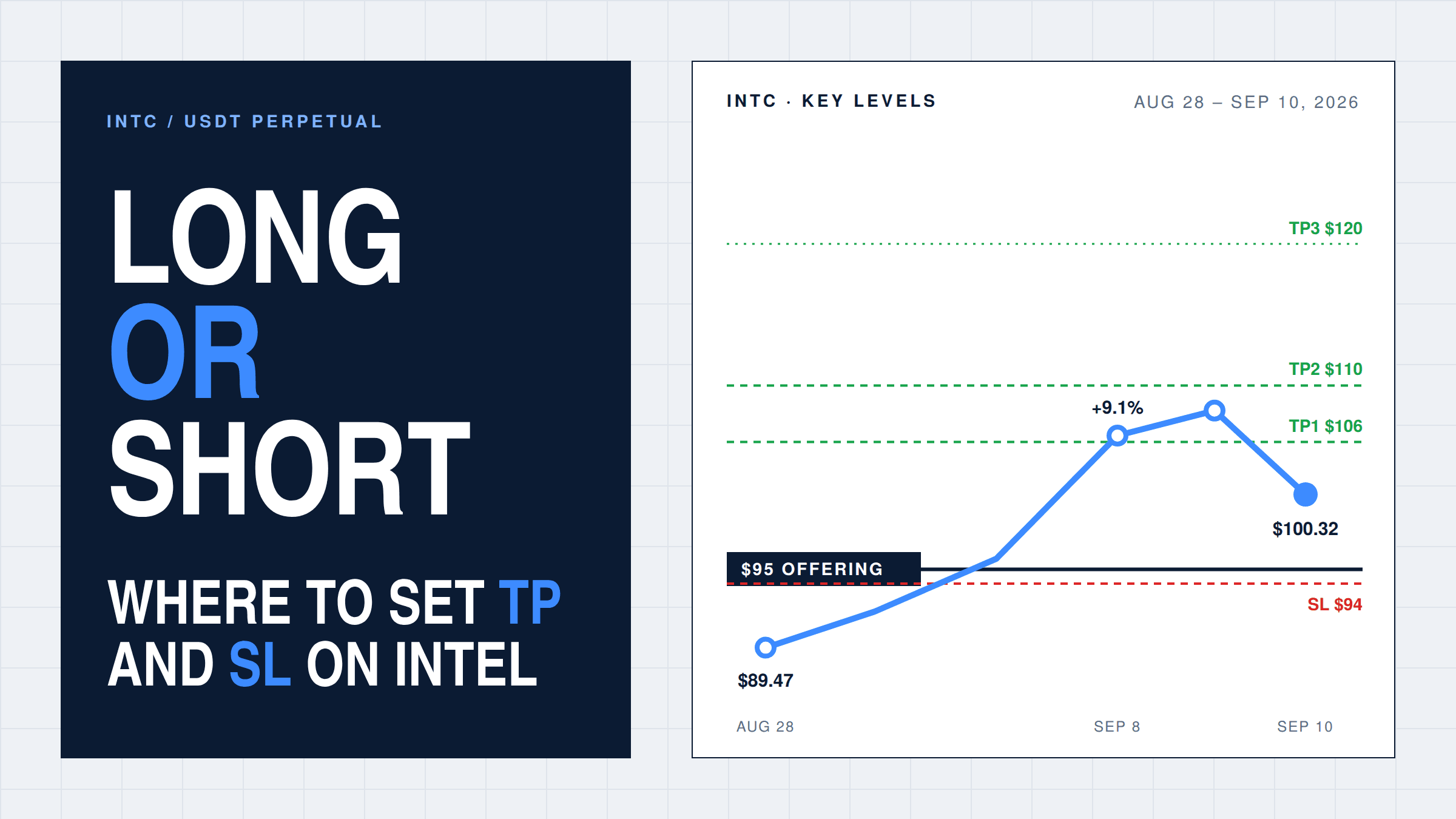
How to Short Intel Stock with Futures: Where to Set TP and SL
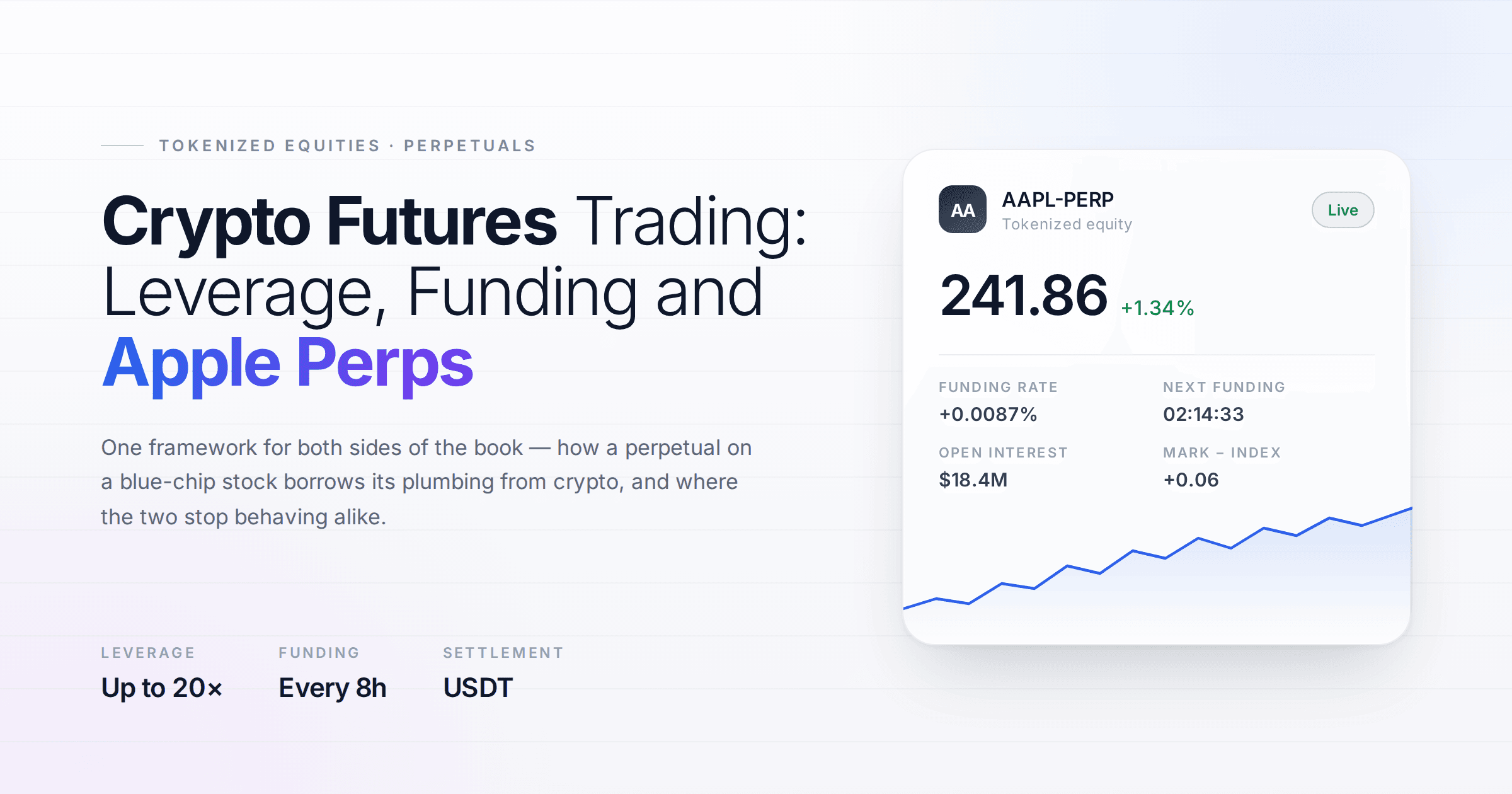
Crypto Futures Trading: Leverage, Funding and Apple Perps
How to Trade Tesla (TSLA) Stock Token with USDT on WEEX: A Trading Guide for Beginers in 2026
How to Trade NVIDIA (NVDA) Stock Token with USDT on WEEX
FOMO Token: Which One You're Actually Buying and the Risks
MU Stock Reclaims $1,000 Again: What's Actually Different This Time
Hunter Biden's LAPTOP Memecoin: What TRUMP's Trajectory Suggests Could Happen Next
XST Coin Price Fell Over 40% for Two Straight Days: What That Pattern Actually Means
Is The US Becoming The Crypto Capital? Brad Garlinghouse's Bold Predictions Explained
Circle's Arc Mainnet Is Live: Can It Actually Close the Gap With Tether's USDT?
Why Did the CLARITY Act Fail in the Senate, and What Happens Next for Crypto Regulation?
Lighter (LIT) Futures: Cross vs Isolated Margin on a 17% Range
What Is a Blockchain Explorer and How Does It Work?
Is SafePal Safe? A Look at Its Security Features
How to Set Up and Use SafePal Wallet?


