
What Is a Blockchain Explorer and How Does It Work?

 Prefer us on Google


A Blockchain Explorer is one of the most useful tools in crypto, yet many beginners do not know what it actually does. In simple terms, it lets anyone search public onchain data without needing permission, an account, or technical skills. As Chainlink explains, explorers act like search engines for blockchain networks, helping users verify transactions, check wallet balances, and monitor network activity in real time. This article explains what a blockchain explorer is, why it exists, what you can look up, and the most common misunderstandings around it.
Quick Answer
- A blockchain explorer is a public tool for searching blockchain data such as transactions, wallet addresses, blocks, and smart contracts.
- It works by reading data recorded on a blockchain and presenting it in a format humans can understand.
- Each blockchain usually has its own explorer, such as Etherscan for Ethereum, Solana Explorer or Solscan for Solana, and TRONSCAN for TRON.
- Explorers improve transparency, but they do not automatically reveal a real person’s identity behind every wallet.
What Is a Blockchain Explorer, in Plain English
If a blockchain is a giant public ledger, a blockchain explorer is the search window for that ledger. It helps you look up what happened onchain in a readable way. Instead of reading raw blockchain data directly, you can paste in a transaction hash, wallet address, token contract, or block number and quickly see the result.
This is why people often compare an explorer to a mix of Google and a bank statement viewer for crypto. It is not one single website. “Blockchain explorer” is a category of tools. Different networks have different explorers, and some chains have both official and third-party versions.
That distinction matters. Based on 2026 research highlighted by Eco, official explorers often support new protocol features first because they are maintained closer to the core network. Third-party explorers usually focus more on user interface, transaction decoding, token analytics, NFT views, validator data, and other advanced features. For a beginner, the key point is simple: both help you inspect public blockchain activity, but they may present the same data in different ways.
Why Blockchain Data Is Public in the First Place
Public blockchains work because many independent participants can verify the same ledger. That means transaction records, wallet activity, and block history are broadly visible to the network. Without that visibility, users would have a much harder time confirming whether funds arrived, whether a smart contract executed, or whether a validator produced a block correctly.
This openness is one reason crypto is described as transparent. You do not need to trust a single company to tell you whether a transfer happened. You can check it yourself. A blockchain explorer simply makes that process easier.
However, public does not mean fully identified. Most blockchains are better described as pseudonymous than anonymous. You can see wallet addresses and transaction flows, but not always the real-world identity behind them. That said, identity can sometimes be inferred or linked through exchanges, repeated activity patterns, or compliance tools. This is one reason explorers now overlap more with analytics and risk monitoring platforms, especially as regulators increase scrutiny around AML, sanctions screening, cross-border transfers, and privacy-enhancing tools in 2026.
-- Price
What You Can Search For (Transactions, Wallets, Contracts)
The most common use of a blockchain explorer is checking a transaction. If someone says they sent you BTC, ETH, SOL, or USDT, you can search the transaction ID and confirm whether it was broadcast, whether it succeeded, how many confirmations it has, and which addresses were involved.
You can also search wallet addresses. This usually shows current holdings, past transfers, token balances, and sometimes interactions with DeFi protocols, staking services, or NFT collections. For active traders, this can help with basic due diligence. For example, you might verify whether funds actually left your wallet, whether a token transfer reached the intended destination, or whether a contract address matches the official one shared by a project.
Smart contract pages are another major feature. On networks like Ethereum, explorers often show contract details, token supply data, transaction logs, and contract interactions. On Solana, explorers may also display account structures, validator information, and newer protocol-level features. Eco notes that the official Solana Explorer has been quick to support features such as transaction version 0, address lookup tables, priority fees, and state compression. That shows how explorers are no longer just simple lookup tools. They are increasingly important for developers, researchers, and power users.
Every Blockchain Has Its Own Explorer: A Quick Overview
There is no universal explorer that fully covers every chain in the same way. Each public blockchain tends to have its own main tools and data format. Ethereum users often rely on Etherscan. BNB Chain users often use BscScan. TRON users commonly use TRONSCAN. Solana users may check the official Solana Explorer or third-party options like Solscan. In the Cosmos ecosystem, Mintscan has been important enough that Cosmos Labs announced its acquisition in 2026, showing that explorer infrastructure has real strategic value.
Some explorers focus on broad, chain-level visibility, while others specialize. Helius highlighted that by 2026, there are more purpose-built explorers for bridge transfers, MEV activity, priority fees, arbitrage, and compressed NFTs. In other words, the market is moving from general browsing toward specialized workflows.
| Blockchain | Common Explorer Type | What Users Often Check |
|---|---|---|
| Bitcoin | Bitcoin block explorer | Transaction confirmations, wallet activity, block history |
| Ethereum | Ethereum explorer | ERC-20 transfers, smart contracts, gas activity |
| Solana | Official and third-party explorers | Transactions, validators, SPL tokens, protocol features |
| TRON | TRON explorer | TRX transfers, token activity, network metrics |
| Cosmos | Ecosystem explorer | Interchain activity, validators, chain-specific data |
3 Common Misconceptions About Blockchain Explorers
First, a blockchain explorer is not a wallet. It does not store your crypto. It only displays public blockchain data. You can inspect an address without controlling it.
Second, explorers do not prove a token is safe. They can help you verify contract addresses, token transfers, and supply information, but they cannot guarantee that a project is legitimate. Scams can still appear onchain.
Third, public data does not equal total clarity. An explorer can show flows between addresses, but context is not always obvious. That is why advanced platforms add labels, entity clustering, and sanctions screening. Global Ledger says its database covers millions of sanctioned wallet addresses and hundreds of thousands of entities and assets, which shows how much institutional demand now exists for the intelligence layer on top of raw explorer data.
This also matters for cross-chain activity. TRM Labs reported in 2026 that bridge-related activity grew 66% while mixer-related activity declined 37%. That suggests suspicious funds may increasingly move across chains instead of relying mainly on older obfuscation methods. For everyday users, the takeaway is not to become an investigator. It is to understand that explorer data is useful, but sometimes incomplete without broader context.
Why Blockchain Explorers Matter for Everyday Crypto Users
For beginners, a blockchain explorer offers something rare in finance: independent verification. You do not have to wait for a customer support reply to confirm whether a transfer happened. You can check the ledger yourself.
For traders, explorers help confirm deposits, withdrawals, token launches, smart contract interactions, and major wallet movements. For builders, they help debug transactions and monitor protocol behavior. For businesses and compliance teams, they support risk checks, address monitoring, and audit trails.
That wide range of use cases explains why explorers have become more important, not less. They sit at the center of transparency in crypto, even as their role expands into analytics, labeling, and cross-chain monitoring.
Conclusion
A blockchain explorer is best understood as a public search tool for blockchain data: simple enough for beginners to check a transaction, but powerful enough for developers, traders, and compliance teams to inspect far more. Once you understand that each chain has its own explorer and that the data is public but not always self-explanatory, you can use these tools with much more confidence.
FAQ
1. Is a blockchain explorer free to use?
In most cases, yes. Public explorers are generally available for anyone to use without registration, especially for basic searches like transactions, wallet addresses, and blocks.
2. Can a blockchain explorer show who owns a wallet?
Usually not by default. Explorers mainly show addresses and transaction history, while real-world identity may only become visible through labels, exchange links, or specialized analytics.
3. What is the difference between a wallet and a blockchain explorer?
A wallet lets you hold and send crypto. A blockchain explorer lets you view public blockchain records, even for wallets you do not own.
4. Why do different blockchains need different explorers?
Each blockchain has its own data structure, transaction format, and network rules. That is why Ethereum, Solana, TRON, Bitcoin, and Cosmos commonly use separate explorer tools.
5. Can I use a blockchain explorer to avoid scams?
It can help with basic checks, such as confirming a contract address or verifying whether a transaction succeeded. But it should be one part of your research, not a complete safety guarantee.
This content is provided for general informational purposes only and doesn't constitute financial, investment, legal, or tax advice. Any events, rewards, online promotions, or related information mentioned herein should not be considered a recommendation, solicitation, or invitation to purchase, sell, trade, or otherwise deal in any crypto assets. Crypto assets are highly volatile and may result in loss. The availability of WEEX services, products, and related events may vary by region. You are responsible for ensuring that your participation is in accordance with applicable local laws and regulations.
You may also like
Circle's Arc Mainnet Is Live: Can It Actually Close the Gap With Tether's USDT?

Why Did the CLARITY Act Fail in the Senate, and What Happens Next for Crypto Regulation?
Lighter (LIT) Futures: Cross vs Isolated Margin on a 17% Range
SOL Perpetual Contracts: Mark Price, Index Price and Liquidation
Is SafePal Safe? A Look at Its Security Features
How to Set Up and Use SafePal Wallet?

Meme coin 龙虾 ($LOBSTER) Surges Past $200M: What’s Behind the Rally?
What Is SafePal Wallet? A Complete Beginner's Guide
WEEX Demo Trading: 50,000 USDT Practice Account, Rules and Limits
WEEX API Key Security: What a Leaked Key Can Still Do to You

TOKEN2049 Singapore Events 2026: Side Events, VIP Lounges and What to Do During TOKEN2049 Week
Lost Your 2FA Device? Here's What to Do Next
How to Install Trust Wallet Safely: What Most Guides Leave Out
Senate CLARITY Act Cloture Vote Today: Can Trump's Ethics Compromise Get 60 Votes?
Trust Wallet vs MetaMask: Which One Is Better for Beginners?
Trust Wallet Seed Phrase: How to Store It Safely and What Never to Do
Puebla Mexico Crypto Farm Seized: Is Bitcoin Mining Legal in Mexico?
What Is Trust Wallet? A Complete Beginner's Guide
AVAX Futures: Trading the Avalanche RWA Catalyst With Leverage
HYPE Token Unlock and Leverage: What the $1.2B Number Hides
Zcash Futures: What the $34.5M Short Squeeze Cost the Bears
How to Short Intel Stock with Futures: Where to Set TP and SL
Crypto Futures Trading: Leverage, Funding and Apple Perps
How to Trade Tesla (TSLA) Stock Token with USDT on WEEX: A Trading Guide for Beginers in 2026
How to Trade NVIDIA (NVDA) Stock Token with USDT on WEEX
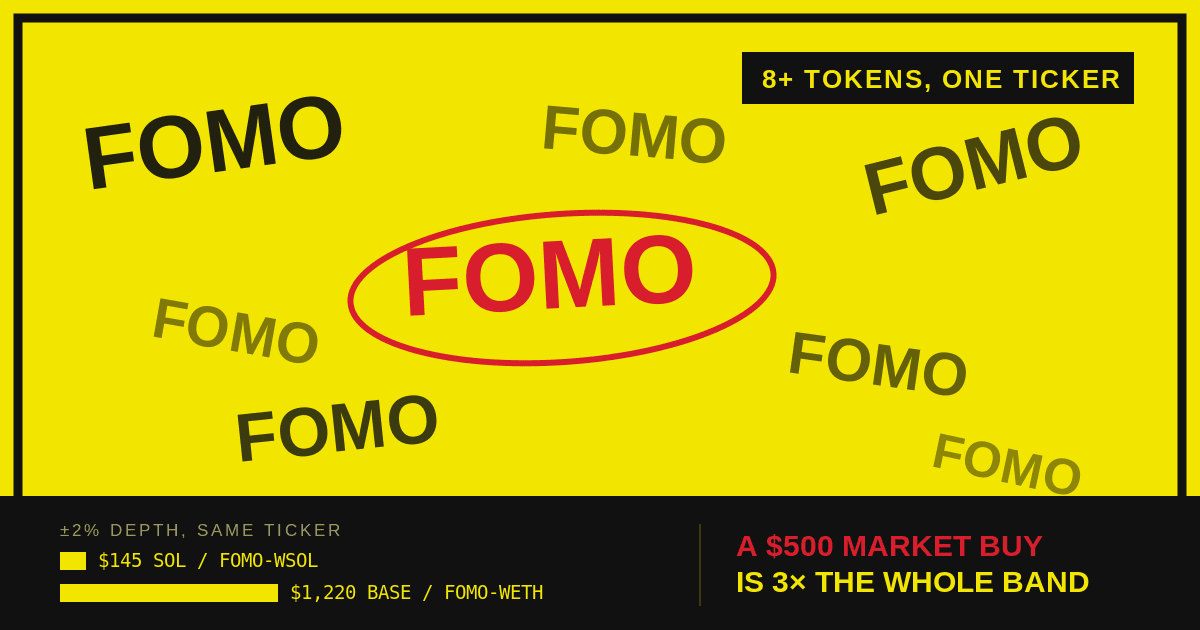
FOMO Token: Which One You're Actually Buying and the Risks
MU Stock Reclaims $1,000 Again: What's Actually Different This Time
Hunter Biden's LAPTOP Memecoin: What TRUMP's Trajectory Suggests Could Happen Next
XST Coin Price Fell Over 40% for Two Straight Days: What That Pattern Actually Means
Is The US Becoming The Crypto Capital? Brad Garlinghouse's Bold Predictions Explained
Circle's Arc Mainnet Is Live: Can It Actually Close the Gap With Tether's USDT?
Why Did the CLARITY Act Fail in the Senate, and What Happens Next for Crypto Regulation?
Lighter (LIT) Futures: Cross vs Isolated Margin on a 17% Range
SOL Perpetual Contracts: Mark Price, Index Price and Liquidation
Is SafePal Safe? A Look at Its Security Features
How to Set Up and Use SafePal Wallet?





