
US Pauses Iran Strikes: What the Ceasefire Signal Means for Oil Prices and Stock Markets

 Prefer us on Google
Iran's war with the United States has produced its most significant single day market event not through escalation but through its first pause, and the specific character of that pause tells investors something more nuanced than the 7% oil price decline and the broad market rally suggest on their own.
The Iran pause is not a ceasefire. It is not a diplomatic agreement. It is the United States refraining from additional strikes for a period while intermediaries continue exchanging messages between Washington and Tehran through back channels that have been active throughout the conflict. Understanding what the Iran situation has and has not resolved is more useful for investors repositioning after weeks of $90 plus oil than simply observing that markets have rallied and oil has fallen.
What the Pause Actually Is and What It Is Not
The distinction between a pause in strikes and an end to the conflict is the most important analytical point for any investor making portfolio decisions based on today's market reaction.
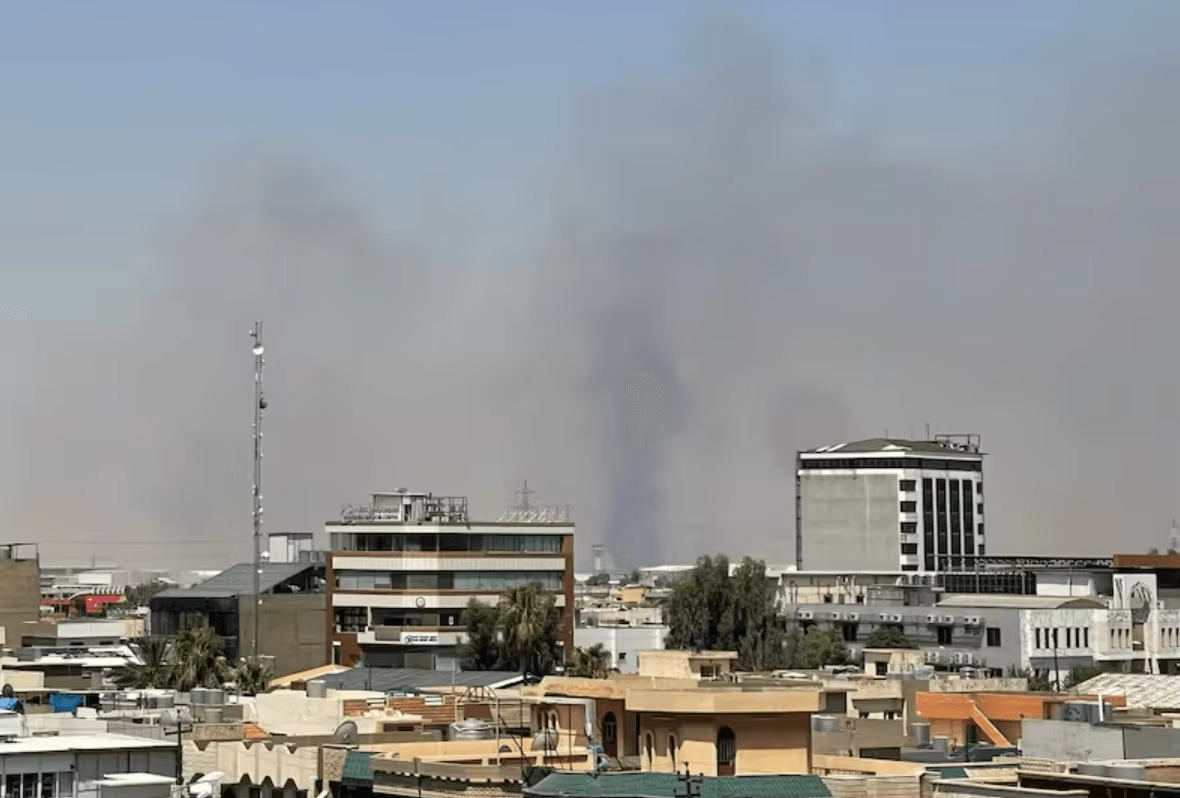
The US completed its ninth consecutive day of strikes on Iran before Iranian Foreign Ministry spokesman Esmail Baghaei lifted hopes for a diplomatic settlement, telling reporters that intermediaries had continued to exchange messages with Iran amid the latest round of US strikes, and that negotiations between the two adversaries could be pursued based on national interests.
A diplomatic spokesman stating that negotiations could be pursued based on national interests is not an agreement on terms. It is a signal that both sides have not yet concluded that military escalation is more valuable than a negotiated outcome. That signal is meaningful and markets are correct to price it as a positive development. It is not the same as a signed agreement that removes the supply disruption risk from the oil market or the geopolitical risk premium from equities.
The specific mechanism of the pause matters for evaluating its durability. The US paused strikes while intermediaries continue working rather than pausing in response to any Iranian concession. A pause that precedes successful negotiation looks identical to a pause that precedes renewed escalation in the days immediately after it begins. The market is pricing the probability distribution across those two outcomes, which is why Brent crude recovered from its initial 7% decline rather than continuing to fall toward pre-conflict levels.
Why Oil Did Not Fall as Much as the Pause Implied It Should
Brent crude's intraday behavior today is the most informative available signal about what the market actually believes the pause means for supply.
Oil sank after the US paused strikes against Iran, easing Middle East tensions, with Brent retreating by more than 7% in the initial few minutes of the session to dip below $90 a barrel, before trading near $92.
A 7% initial decline followed by a recovery to $92 rather than a sustained break below $90 tells investors that the market is not pricing a full resolution of the supply disruption that the conflict has created. The Strait of Hormuz has not reopened to normal commercial traffic. The insurance premiums that have been applied to vessels attempting to transit the strait during the conflict have not been removed. The supply that was physically disrupted during the conflict period does not return to the market instantly when strikes pause.
The specific dynamics of the partial oil price recovery after the initial decline reflect this physical market reality. Oil traders who understand the supply chain implications of a sustained Hormuz disruption are not treating the pause as equivalent to the conflict ending, because the physical infrastructure that routes oil from the Persian Gulf to global markets does not normalize as quickly as a diplomatic signal travels through financial markets.
The 50% year to date oil price increase that Brent has produced, even after today's decline, reflects the accumulated supply disruption that the conflict has created rather than only the fear premium that pauses and ceasefires can remove. Removing the fear premium does not remove the supply shortfall that has been building throughout the conflict.
The Houthi Escalation That Complicates the Relief Rally
Houthi militants in Yemen declared a maritime embargo against Saudi Arabia effective immediately, threatening to exacerbate the oil supply disruption triggered by Iran's attacks on tankers in the Strait of Hormuz.
The Houthi maritime embargo against Saudi Arabia arriving on the same day as the US pause is the specific development that most limits the extent to which today's market rally represents a genuine resolution of the geopolitical risk that has been suppressing equity markets and elevating oil prices.
Saudi Arabia is one of the world's largest oil exporters, and a Houthi maritime embargo that is enforced through attacks on Saudi-bound or Saudi originating vessels introduces a supply disruption vector that is independent of the US-Iran pause. Even if the US and Iran reach a full diplomatic resolution that reopens the Strait of Hormuz to commercial traffic, a functioning Houthi maritime embargo against Saudi Arabia could sustain oil supply disruption through a different mechanism.
The Houthis have threatened previously to close the Bab el-Mandeb Strait, which connects the Red Sea to the Gulf of Aden and serves as a critical chokepoint for commercial shipping between Europe and Asia. A Bab el-Mandeb closure combined with continued Hormuz restrictions would create a dual chokepoint scenario for global oil supply that the US-Iran pause alone cannot resolve.
For investors who are adjusting their portfolios based on today's Iran pause, the Houthi escalation is the specific risk that prevents a complete repositioning away from the defensive postures that the conflict period required. The geopolitical risk has partially resolved in one theater and simultaneously escalated in an adjacent one.
-- Price
What the Simultaneous Rally in Stocks, Gold and Bonds Reveals
Oil fell and bonds gained with stocks and gold as the US and Iran refrained from further strikes, triggering a relief rally across markets. The dollar weakened.
Stocks, gold, and bonds all rallying simultaneously on the same day is an unusual correlation that tells investors something specific about the nature of the relief being priced rather than confirming a straightforward risk on or risk off shift.
In a conventional risk on environment, stocks and commodities rally while bonds and gold decline as investors rotate from safety assets into growth assets. In a conventional risk-off environment, bonds and gold rally while stocks and commodities fall. Today's simultaneous rally across all four categories reflects something different: the removal of a specific and identifiable geopolitical risk premium that had been suppressing all asset classes rather than a shift in the fundamental growth versus safety allocation.
The geopolitical risk premium that the US-Iran conflict introduced affected every major asset class through different mechanisms. Stocks were suppressed by inflation concerns, rate cut expectation removal, and direct sector damage to companies whose costs or revenues were affected by oil above $90. Bonds were suppressed by the inflation trajectory that oil above $90 implied. Gold was suppressed relative to its typical war scenario performance by the competing dollar safe haven flows. When the specific geopolitical risk that suppressed all four asset classes partially resolves, all four can rally simultaneously because the suppression mechanism is being removed rather than any reallocation between asset classes occurring.
The simultaneous rally's specific implication for portfolio positioning is that investors who added defensive allocations specifically in response to the Iran conflict can partially reverse those positions as the specific risk they were hedging partially resolves. Investors who added defensive allocations for reasons unrelated to the Iran conflict, such as the Kimi K3 AI efficiency concerns that were driving KOSPI into bear market territory before the conflict escalated, should not interpret today's rally as resolving those separate concerns.
Which Sectors Reverse Most Directly From the Pause
The sectors that were most directly affected by oil above $90 are the ones whose reversal is most mechanically predictable from the pause rather than requiring any assessment of the diplomatic trajectory.
Airlines are the most direct beneficiary of oil price reduction because jet fuel costs represent one of the largest single line items in airline operating expenses. Airlines that had been pricing fuel hedges at elevated levels or that had been seeing fuel costs compress margins despite strong demand are the first recipients of improved economics from a sustained oil price reduction.
Consumer discretionary companies whose products or services involve significant transportation cost components benefit from oil price reduction through their supply chain economics rather than through direct fuel purchase. Retailers, logistics companies, and manufacturers with energy-intensive production processes all see cost relief that flows through to margins with a lag of weeks to quarters depending on their specific hedging and contract structures.
Energy stocks face the most complex reversal because lower oil prices reduce the revenue per barrel that energy companies receive while simultaneously reducing the operating cost advantage that higher oil prices create for efficient producers relative to marginal producers. Energy companies that had been benefiting from the extraordinary oil prices above $90 see revenue per barrel compression that partially offsets the cost reductions visible elsewhere in the economy.
The Korean and Japanese equity markets that were experiencing the specific energy import cost pressure from oil above $90 receive the most direct relief from today's oil price decline. South Korea and Japan import virtually all of their energy, which means oil price reduction directly improves their current account positions, reduces won and yen depreciation pressure, and relieves the specific headwind that had been compounding the KOSPI and Nikkei declines unrelated to the Iran conflict.
What Investors Should Actually Do With Today's Information
The practical portfolio question that today's Iran pause creates is different from the question that market rallies typically generate, because the partial nature of the resolution requires a partial rather than complete repositioning.
Investors who added energy sector exposure specifically to hedge against sustained oil above $90 have the clearest decision. The Iran pause reduces the probability of the scenario they were hedging, which justifies reducing but not eliminating the energy hedge. The Houthi maritime embargo and the physical supply disruption that has not yet normalized mean that oil does not immediately return to pre-conflict levels even if diplomatic progress continues.
Investors who had been avoiding Korean and Japanese equity exposure due to the energy import cost pressure have a more straightforward decision. Oil price reduction of 7% or more relieves the specific mechanism that made those markets vulnerable, and the relief is proportional to the oil price change rather than contingent on full diplomatic resolution.
Investors who were holding defensive positions in bonds and gold specifically for the Iran war geopolitical premium face the most complex decision. Today's simultaneous rally in both assets suggests the market is removing the geopolitical premium rather than rotating from one to the other. Reducing bond and gold positions that were sized specifically for Iran war geopolitical risk is consistent with the pause, while maintaining allocations that were sized for other reasons remains appropriate.
For those looking to participate in global financial markets, having access to the right trading platform matters. WEEX offers crypto and stock trading products, covering major global markets including US stocks and digital assets.
Conclusion
The Iran war pause is the most significant single development in the conflict since it began and the first event that has produced a meaningful reduction in the oil price and geopolitical risk premium that had been suppressing equity markets. The 7% initial oil decline and the simultaneous rally in stocks, gold, and bonds correctly price a partial resolution of the specific risk the conflict introduced.
What limits the extent of that repricing is equally specific. The pause is not a diplomatic agreement. The Hormuz supply disruption has not physically normalized. The Houthi maritime embargo against Saudi Arabia introduces a new escalation vector on the day the US-Iran pause is announced. And the 50% year-to-date oil price increase reflects accumulated supply disruption that diplomatic signals alone cannot reverse.
The investors best positioned to benefit from today's market moves are those who accurately separated the Iran-specific risk premium in their portfolios from other risks that today's pause does not address, and who can reduce the former while maintaining the latter without confusing a pause with the resolution that full normalization requires.
FAQ
1. What does the US pause in Iran strikes mean for oil prices?
The pause removes the fear premium associated with continued military escalation but does not resolve the physical supply disruption that the conflict has created. Brent crude fell more than 7% initially before recovering to approximately $92, reflecting the market's assessment that the pause is meaningful but not equivalent to conflict resolution. The Strait of Hormuz has not reopened to normal commercial traffic and the Houthi maritime embargo against Saudi Arabia introduces a new supply risk that partially offsets the Iran pause relief.
2. Why did stocks, gold, and bonds all rally simultaneously on the Iran pause?
The simultaneous rally across asset classes that typically move in opposite directions reflects the removal of a specific geopolitical risk premium that had been suppressing all asset classes through different mechanisms rather than a conventional risk-on rotation. Stocks were suppressed by inflation and rate concerns, bonds by the inflation trajectory oil above $90 implied, and gold by competing dollar safe haven flows. When the specific Iran risk partially resolves, all four can rally as the shared suppression mechanism is removed.
3. What is the Houthi maritime embargo against Saudi Arabia and why does it matter?
Houthi militants declared a maritime embargo against Saudi Arabia effective immediately on the same day as the US-Iran pause, threatening to sustain oil supply disruption through a mechanism independent of the US-Iran conflict resolution. The Houthis have also threatened to close the Bab el-Mandeb Strait connecting the Red Sea to the Gulf of Aden. A functioning Houthi embargo combined with incomplete Hormuz normalization could keep oil prices elevated even as the US-Iran diplomatic situation improves.
4. Which sectors benefit most from the Iran pause and lower oil prices?
Airlines benefit most directly as jet fuel cost reduction flows immediately to operating economics. Consumer discretionary companies with significant transportation cost exposure receive supply chain margin relief. Korean and Japanese equities benefit from current account position improvement as energy import costs decline, relieving the currency and equity market pressure that oil above $90 created for these energy importing economies.
5. Is the Iran war pause permanent or temporary?
The pause reflects ongoing diplomatic back channel activity rather than a concluded agreement. Iranian diplomatic signals indicated negotiations could be pursued based on national interests without specifying terms or timelines. A pause that precedes successful negotiation looks identical to a pause that precedes renewed escalation in the days immediately following it, which is why oil has recovered from its initial decline rather than continuing to fall toward pre-conflict levels.
This content is provided for general informational purposes only and doesn't constitute financial, investment, legal, or tax advice. Any events, rewards, online promotions, or related information mentioned herein should not be considered a recommendation, solicitation, or invitation to purchase, sell, trade, or otherwise deal in any crypto assets. Crypto assets are highly volatile and may result in loss. The availability of WEEX services, products, and related events may vary by region. You are responsible for ensuring that your participation is in accordance with applicable local laws and regulations.
You may also like

Gold Price vs Bitcoin: Which Is the Better Safe Haven When AI Stocks Crash?
Conflict Escalates, Oil Prices Moon: How Will Crypto React?
WEEX Reviews in 2026: App Ratings, Incidents and How to Read Them

Is WEEX Legal in Taiwan? FSC VASP Rules and the Public Register

Pump.fun (PUMP) Price Prediction: Attributed Scenarios, Tokenomics and Risks
Is SafePal Safe? A Look at Its Security Features
How to Set Up and Use SafePal Wallet?
Meme coin 龙虾 ($LOBSTER) Surges Past $200M: What’s Behind the Rally?
What Is SafePal Wallet? A Complete Beginner's Guide
What Is ArithFi (ATF)? Why It Is Not Listed on WEEX
What Is Block Street (BSB)? Tokenomics, Listings and the Unified Liquidity Layer
What Is Bitway (BTW)? Product, Tokenomics and the January WEEX Listing

What Is CHIP? USD.AI Governance, Tokenomics and the Ticker Collision
What Is Genius Terminal (GENIUS)? Product, Tokenomics and Trading Risks
What Is Janction (JCT)? AI Layer 2, Tokenomics and Risks
What Is Nexus (NEX)? The Verifiable-Computing Network, Tokenomics and Outlook
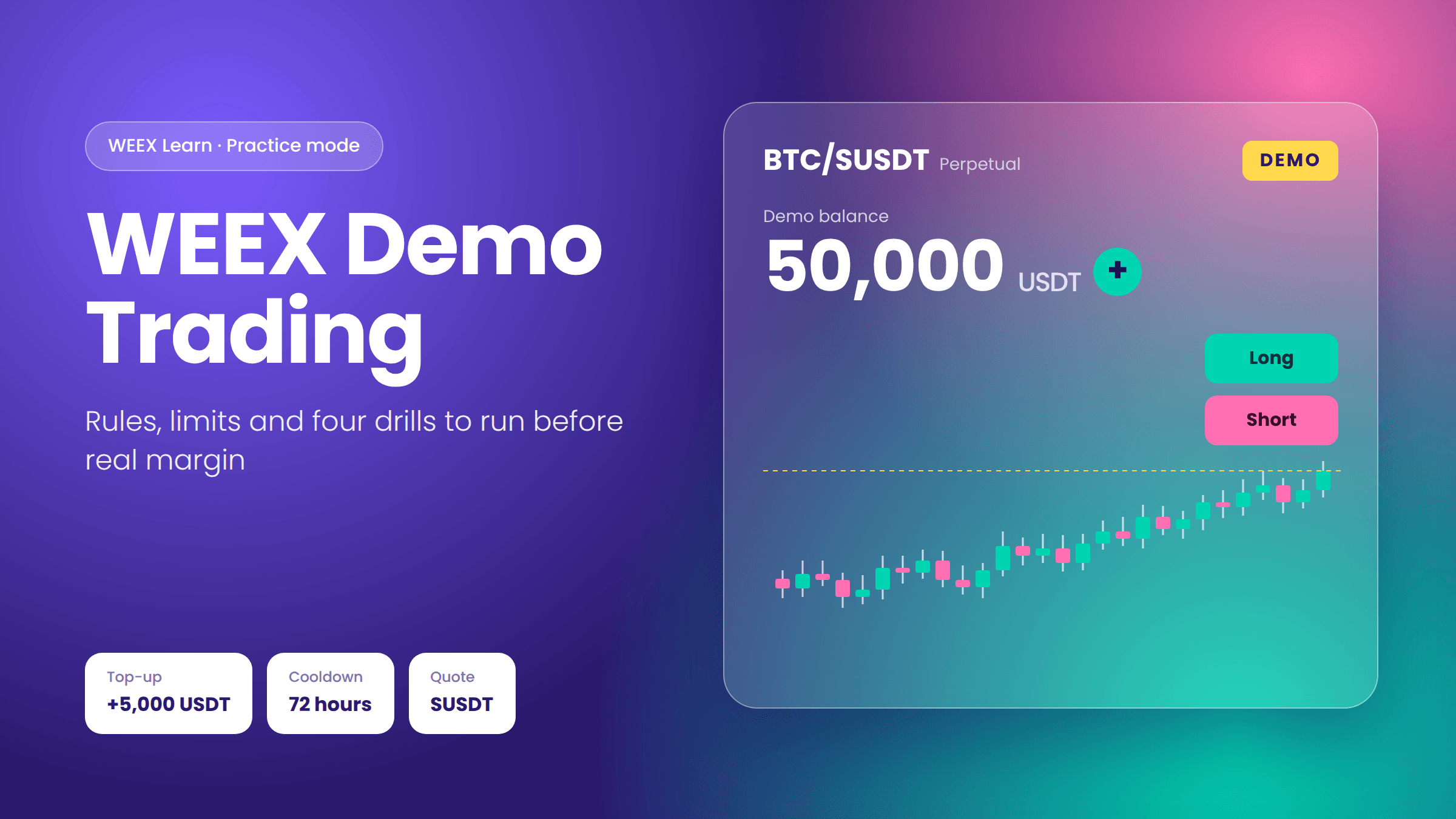
WEEX Demo Trading: 50,000 USDT Practice Account, Rules and Limits
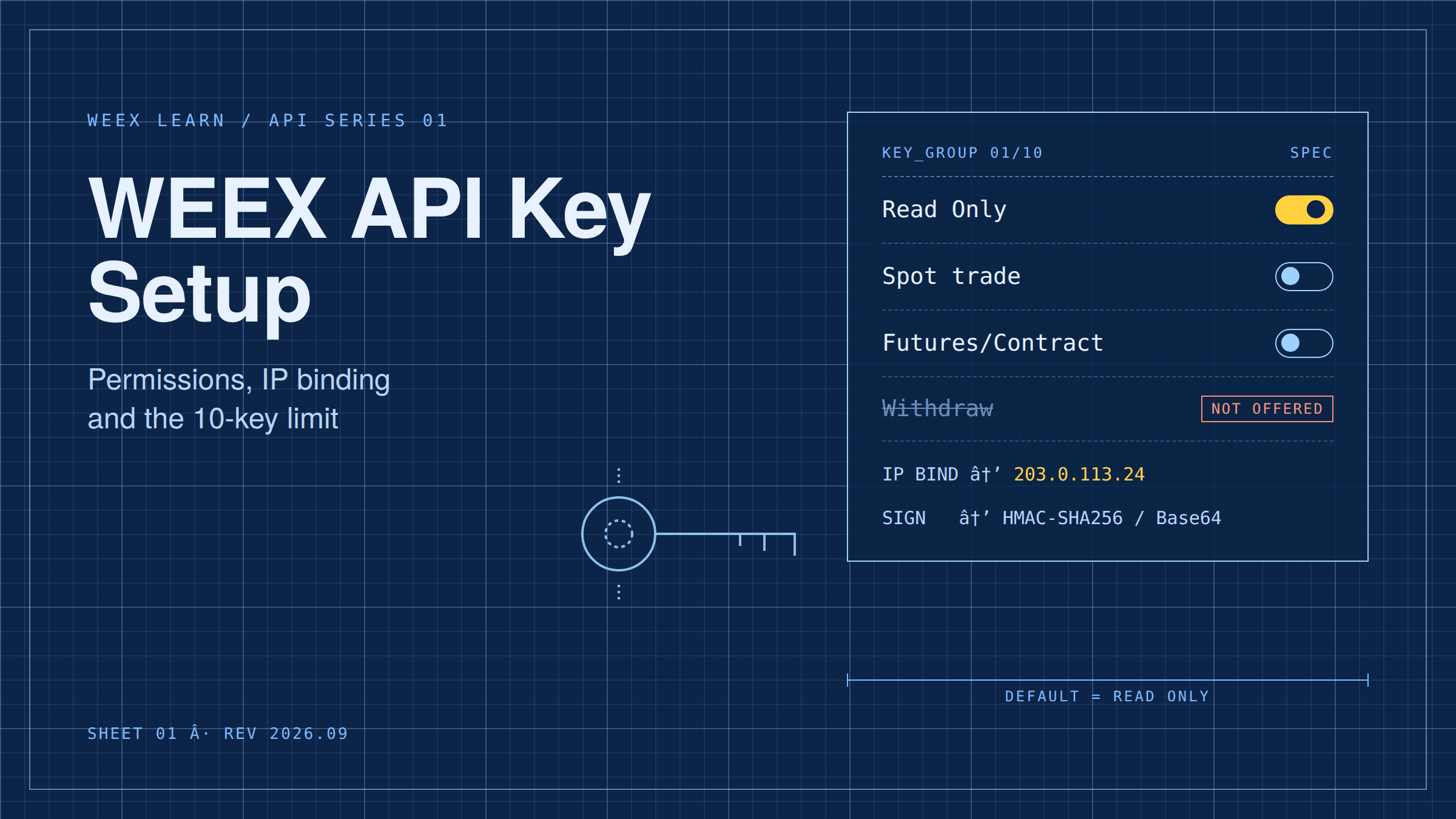
WEEX API Key Setup: Permissions, IP Binding and Key Limits
LONGARC Token Explained: Arc Chain Stock Memes, Contract, Risks

TOKEN2049 Singapore Events 2026: Side Events, VIP Lounges and What to Do During TOKEN2049 Week
Who Is Attending TOKEN2049 Singapore 2026? Top Speakers, Exchanges and Exhibitors to Watch

Lost Your 2FA Device? Here's What to Do Next
Is 2FA Enough to Keep Your Crypto Safe?
SMS 2FA vs Authenticator App: Which Is Actually Safer?
What Is 2FA? A Beginner's Guide
How to Install Trust Wallet Safely: What Most Guides Leave Out
Senate CLARITY Act Cloture Vote Today: Can Trump's Ethics Compromise Get 60 Votes?
Trust Wallet vs MetaMask: Which One Is Better for Beginners?
What Is Aptos (APT)? Complete Layer-1 Blockchain Guide
Trust Wallet Seed Phrase: How to Store It Safely and What Never to Do
Gold Price vs Bitcoin: Which Is the Better Safe Haven When AI Stocks Crash?
Conflict Escalates, Oil Prices Moon: How Will Crypto React?
WEEX Reviews in 2026: App Ratings, Incidents and How to Read Them
Is WEEX Legal in Taiwan? FSC VASP Rules and the Public Register
Pump.fun (PUMP) Price Prediction: Attributed Scenarios, Tokenomics and Risks
Is SafePal Safe? A Look at Its Security Features
Contents
Popular coins
Latest articles


