
Bitcoin and the Iran Crisis: Does Crypto Act as a Safe Haven When Oil Spikes?

 Prefer us on Google


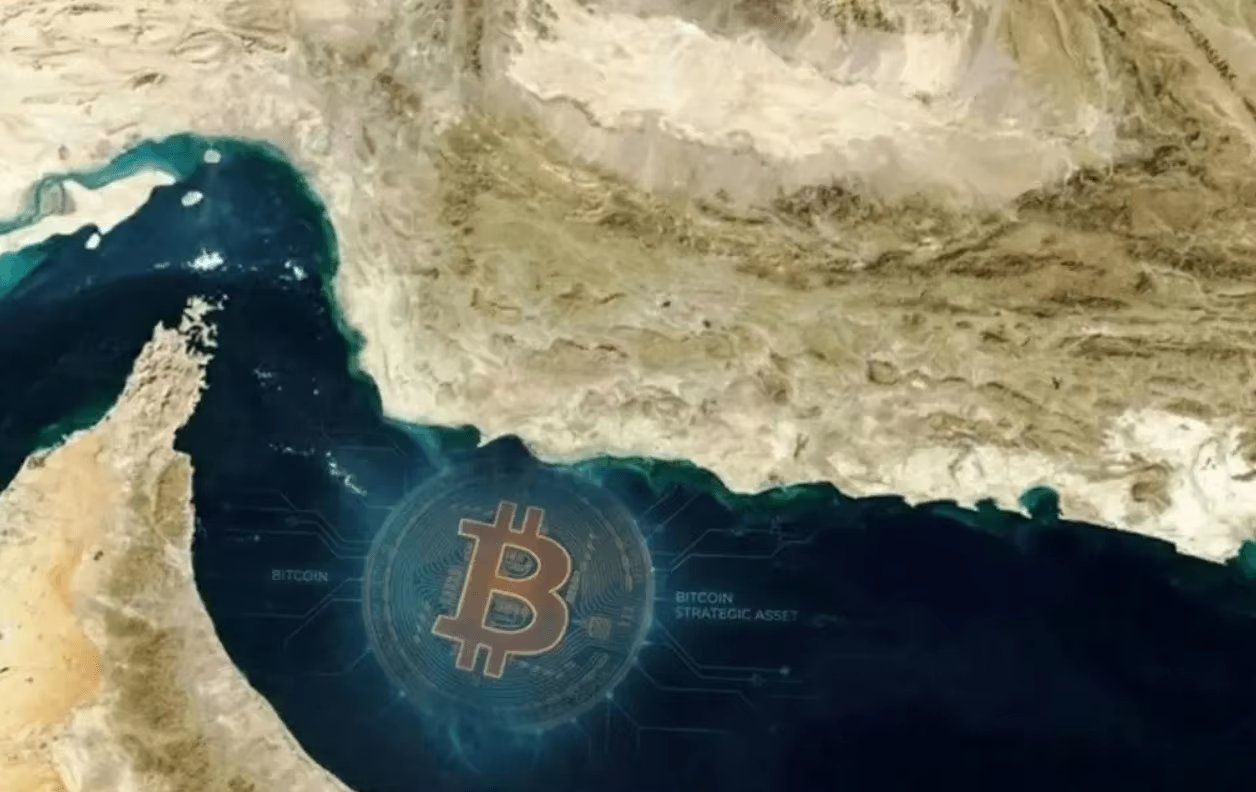
Every time a geopolitical crisis sends oil prices surging, the same question resurfaces in crypto communities and investment circles: is Bitcoin finally acting as digital gold, a store of value that rises when traditional markets fall and energy prices spike?
The Iran crisis and its recurring impact on oil prices through 2026 is the most sustained test of that thesis that crypto markets have faced in recent years. The conflict that began on February 28, sent oil to $120 at its peak, triggered multiple KOSPI circuit breakers, crashed the Indian rupee and Korean won, and reshaped global energy flows has been running long enough to produce meaningful data about how crypto actually behaves during oil price stress rather than how crypto advocates argue it should behave.
The honest answer is more complicated than either crypto bulls or crypto skeptics typically acknowledge.
What a Safe Haven Asset Actually Means
Before evaluating whether crypto acts as a safe haven during oil spikes, establishing what safe haven means precisely is necessary because the term is used loosely in ways that obscure rather than clarify.
A safe haven asset has two specific characteristics that define the category. The first is low or negative correlation with risk assets during periods of market stress. When stocks fall and sentiment deteriorates, a true safe haven rises or at minimum holds its value while everything else declines. The second is preservation of purchasing power during periods of currency debasement or inflation, which is the property that makes gold valuable during inflationary episodes rather than just during financial crises.
Gold satisfies both criteria historically. It tends to rise when equity markets fall during genuine financial stress events, and it tends to rise when inflation erodes the purchasing power of fiat currencies. US Treasury bonds satisfy the first criterion during deflationary stress but fail the second during inflationary episodes, which is why today's oil price spike is pushing Treasury yields higher rather than lower.
Bitcoin's safe haven claim rests on the second criterion more than the first. The argument is that Bitcoin, as a fixed-supply asset that no government can inflate, should preserve purchasing power when fiat currencies are debased and when inflation expectations rise. The Iran-driven oil price spike, which creates genuine inflation pressure, is exactly the scenario where that argument should be most visible in Bitcoin's price behavior if it is valid.
What Actually Happened to Crypto During the 2026 Iran Crisis
The February 28 outbreak of the US-Iran conflict provided the first major test of crypto's safe haven properties in the 2026 geopolitical environment, and the results were mixed in specific and informative ways.
In the immediate hours after the February 28 strikes, when oil prices began surging and equity markets in Asia opened sharply lower, Bitcoin initially fell alongside risk assets before recovering. That initial correlation with risk off selling is the pattern that crypto skeptics point to when arguing that Bitcoin is not a genuine safe haven. In acute market stress, investors who need liquidity sell what they can rather than what is logically connected to the stress event. Bitcoin's 24 hour liquidity and low transaction costs make it a convenient asset to sell during acute stress regardless of whether the thesis says it should rise.
However, over the weeks that followed, as oil prices settled at elevated levels and inflation expectations adjusted upward, Bitcoin demonstrated the inflation hedge characteristic more clearly. The sustained oil price elevation through March and April, which pushed headline inflation higher across most major economies and complicated central bank rate cut expectations, coincided with Bitcoin outperforming the assets most directly hurt by higher rates, particularly high-multiple technology stocks and long-duration bonds.
The pattern that emerged across the months of the Iran crisis is that Bitcoin behaves like a risk asset in the immediate hours and days of acute stress and begins behaving more like an inflation hedge over weeks and months as the sustained oil price impact on inflation expectations becomes clear.
Why Oil Spikes Create a Specific Crypto Dynamic
The specific transmission mechanism from oil price spikes to crypto markets is different from the mechanism that operates during financial crises or economic recessions, and understanding the difference helps explain why crypto's behavior during the Iran crisis is distinct from its behavior during other stress events.
During financial crises, the primary stress driver is credit risk and liquidity constraint. Banks face solvency concerns, credit markets freeze, and investors scramble for the most liquid and creditworthy assets. In that environment, Bitcoin tends to fall because it is perceived as a speculative asset that institutional investors sell when they need to reduce risk and raise cash. The March 2020 COVID crash, during which Bitcoin fell more than 50% in a matter of days before recovering dramatically, is the clearest example of this dynamic.
During oil price spikes driven by geopolitical supply disruptions, the primary stress driver is inflation rather than credit risk. Central banks face a dilemma between fighting inflation and supporting growth. Currencies of oil-importing nations weaken against the dollar and commodity currencies. Real interest rates, which account for inflation expectations, can fall even as nominal rates rise if inflation rises faster than nominal yields.
That specific environment, currency weakness and real rate compression in oil-importing economies, is where Bitcoin's inflation hedge thesis is most directly testable. Citizens in South Korea, India, and Japan watching their currencies weaken against the dollar while energy costs rise have a specific and rational reason to consider Bitcoin as a store of value that is not exposed to the same currency weakness affecting their domestic holdings.

The South Korean and Indian Crypto Demand Signal
South Korea and India are two of the world's most active retail crypto markets by trading volume relative to population. They are also two of the countries most severely affected by the Iran oil crisis because of their heavy dependence on Persian Gulf energy imports.
The correlation between Korean won weakness and Korean crypto trading volume during the peak of the Iran crisis in March and April was not coincidental. When the won depreciates against the dollar, Korean holders of won-denominated assets see their purchasing power declining in dollar terms. Bitcoin, as a dollar-denominated asset, provides a natural hedge against won weakness that Korean investors have historically used during periods of currency stress.
The same dynamic played out in India. Indian rupee weakness during the oil shock period was accompanied by elevated trading volumes on Indian crypto exchanges as retail investors sought exposure to assets not denominated in the depreciating rupee.
This is the safe haven mechanism that most directly validates Bitcoin's inflation and currency hedge thesis during oil price spikes. It is not a global institutional flight to Bitcoin as a digital gold equivalent. It is a local and rational response by citizens in oil-importing nations who are watching their currencies weaken and their energy costs rise simultaneously.
What Crypto Does Not Protect Against in an Oil Crisis
The safe haven argument for crypto during oil price spikes has genuine evidence behind it in specific geographies and over specific timeframes. It also has clear limits that investors should understand rather than ignore.
Bitcoin does not protect against the immediate equity market selloff that oil price spikes typically produce. The initial reaction to today's fresh Iran escalation in crypto markets was not a dramatic flight to Bitcoin. The crypto market's immediate response was more muted than either a strong safe haven would imply or a complete risk-asset correlation would produce. Crypto sat somewhere in the middle, which is the honest description of how it has behaved throughout the Iran crisis.
Bitcoin does not protect against the regulatory risk that geopolitical instability sometimes introduces. When governments face economic stress from oil price shocks, they occasionally look for additional tax revenue or impose capital controls that affect crypto markets directly. South Korea has periodically tightened crypto regulations during periods of won weakness, which creates a specific headwind for Korean crypto holders that partially offsets the currency hedge benefit.
Bitcoin does not protect against the correlation with technology stocks that has been one of the more persistent features of crypto market behavior in 2026. Nvidia, AMD, and other high-multiple technology stocks have been among the most actively traded assets alongside Bitcoin in institutional portfolios. When technology stocks sell off on oil-driven interest rate concerns, the institutional portfolios that hold both Bitcoin and technology stocks tend to reduce both simultaneously, creating a correlation that overrides the theoretical inflation hedge argument in the short term.
The Prediction Market Take on Crypto as a Safe Haven
Polymarket and Kalshi, the prediction market platforms that have been generating some of the most accurate probability estimates for the Iran conflict's trajectory, offer a useful additional perspective on the crypto safe haven question.
The crypto market and the prediction market for Iran conflict resolution are implicitly connected through the inflation channel. If prediction markets assign a high probability to near-term ceasefire and oil price normalization, the inflation hedge thesis for Bitcoin weakens and Bitcoin tends to track risk assets more closely. If prediction markets assign a low probability to near-term resolution, the sustained oil price elevation thesis strengthens and Bitcoin's inflation hedge properties become more relevant over the following weeks.
Today's escalation has pushed the prediction market probability of near-term ceasefire lower, which should theoretically support the Bitcoin inflation hedge thesis more than the risk-asset correlation thesis. Whether that theoretical support translates into Bitcoin price appreciation over the coming days and weeks is the specific test that the current escalation provides.
The Honest Verdict on Crypto as an Oil Crisis Safe Haven
The evidence from the 2026 Iran crisis produces a nuanced verdict that neither fully validates nor fully rejects the crypto safe haven thesis during oil price spikes.
Bitcoin behaves like a risk asset in the immediate hours of acute geopolitical stress, falling alongside equities as investors reduce risk across all speculative positions. That behavior contradicts the safe haven thesis in the short term and is the data point that skeptics emphasize.
Over weeks and months, as sustained oil prices elevate inflation expectations and weaken the currencies of oil-importing nations, Bitcoin demonstrates meaningful inflation and currency hedge properties that are specifically visible in the elevated trading volumes and price support from Korean, Indian, and other oil-importing nation retail markets. That behavior supports a partial safe haven thesis that is geographically specific and timeframe dependent.
The most accurate framing is that Bitcoin is a partial and imperfect safe haven during oil price spikes. It is safer than oil-importing nation currencies over extended periods of oil price elevation. It is not safer than gold or US Treasuries in the immediate hours of acute stress. And it carries its own volatility and regulatory risks that pure safe haven assets like gold do not.
For investors evaluating crypto's role during the Iran crisis, the relevant question is not whether Bitcoin is a perfect safe haven but whether it provides useful diversification against the specific risks that oil price spikes create for their existing portfolio. For holders of Korean won, Indian rupee, or other oil-importing nation currencies, the answer has been meaningfully yes during the sustained phase of the 2026 Iran crisis. For holders of US dollar assets, the answer is more ambiguous and more dependent on the timeframe under consideration.
For those looking to participate in global financial markets, having access to the right trading platform matters. WEEX offers crypto and stock trading products, covering major global markets including US stocks and digital assets.
Conclusion
Bitcoin's behavior during the 2026 Iran oil crisis has produced the most sustained real-world test of the crypto safe haven thesis that the asset class has faced. The verdict is partial validation rather than clear confirmation or clear rejection.
Crypto fell alongside risk assets in the immediate hours of acute stress, contradicting the strongest version of the safe haven claim. Crypto demonstrated meaningful inflation and currency hedge properties over weeks and months as sustained oil prices elevated inflation expectations and weakened oil-importing nation currencies, providing partial validation of the thesis in specific geographies and timeframes.
The Iran crisis has not resolved the safe haven debate. It has provided evidence that Bitcoin occupies a specific and imperfect middle ground between pure risk asset and pure safe haven, performing more like the latter during sustained inflation stress and more like the former during acute liquidity stress. That nuanced reality is more useful to investors than either the bullish safe haven narrative or the skeptical pure-risk-asset narrative fully captures.
FAQ
1. Does Bitcoin act as a safe haven when oil prices spike?
Partially and imperfectly. Bitcoin tends to fall alongside risk assets in the immediate hours of acute geopolitical stress but demonstrates meaningful inflation and currency hedge properties over weeks and months as sustained oil prices elevate inflation expectations. The safe haven behavior is most visible in oil-importing nations like South Korea and India where local currency weakness creates specific demand for dollar-denominated assets like Bitcoin.
2. How has Bitcoin performed during the 2026 Iran oil crisis?
Bitcoin initially fell alongside equities when the conflict began in February before recovering and demonstrating partial inflation hedge characteristics during the sustained elevated oil price period. The pattern of initial risk-asset correlation followed by inflation hedge behavior has repeated with each escalation in the ongoing conflict.
3. Why do South Korean and Indian crypto markets show elevated activity during oil price spikes?
South Korea and India are among the world's most oil-import-dependent economies. When oil prices spike, their currencies weaken against the dollar. Citizens in those countries have a rational incentive to hold assets that are not exposed to local currency weakness, and Bitcoin as a dollar-denominated asset provides that exposure. The correlation between won and rupee weakness and elevated crypto trading volumes in those markets has been consistent throughout the Iran crisis.
4. What are the limits of crypto as a safe haven during oil crises?
Bitcoin does not protect against immediate equity market selloffs that oil price spikes produce. It does not protect against regulatory responses that governments sometimes impose during economic stress. And its correlation with high-multiple technology stocks in institutional portfolios can override the inflation hedge thesis in the short term when institutional investors reduce risk across all speculative positions simultaneously.
5. Is gold or Bitcoin a better safe haven during oil price spikes?
Gold has demonstrated more consistent safe haven properties during oil price spikes historically because it has both low correlation with risk assets during acute stress and inflation hedge characteristics during sustained oil price elevation. Bitcoin demonstrates the inflation hedge characteristic meaningfully but fails the acute stress test more frequently than gold does. For investors specifically concerned about sustained inflation from oil prices rather than acute market stress, Bitcoin provides a higher volatility alternative to gold with similar directional properties over multi week timeframes.
Disclaimer
For informational purposes only. Not financial advice. Any activities, rewards, campaigns, or promotions mentioned do not constitute an offer, solicitation, or recommendation to buy, sell, or trade crypto assets. Crypto assets are highly volatile and may lose value. WEEX services, products, or campaigns may not be available in all regions. Users are responsible for complying with applicable local laws before participating
Disclaimer: This content is provided for general branding and informational purposes only and doesn't constitute financial, investment, legal, or tax advice. Any events, rewards, online events, or related information mentioned herein should not be considered a recommendation, solicitation, or invitation to purchase, sell, trade, or otherwise deal in any crypto assets or to use any services. Crypto assets are highly volatile and may result in loss. WEEX services and online events may not be available in all regions and are subject to applicable laws, regulations, and eligibility requirements. You are responsible for ensuring that your use of WEEX services complies with local laws and for carefully assessing the risks before participating in any crypto-related activities.
You may also like

Introducing Cash Cat ($CASHCAT): Robinhood Chain Meme Token and Price Prediction
Cash Cat is a Robinhood Chain meme token drawing attention after a fast market debut, a 1B supply, and sharp price swings.
LLY Stock Forecast: Can AI and Weight Loss Drugs Drive More Growth?
This article maps how Eli Lilly’s GLP-1 weight-loss franchise and AI-driven R&D could influence LLY’s traditional equity and…
CASHCAT Airdrop: How to Earn Up to 50,000 USDT in Rewards on WEEX
This guide breaks down how the CASHCAT Airdrop works on WEEX, the rewards on the table, and a…
What Is SOXS ETF? The 3X Bear Semiconductor ETF Explained
This guide breaks down SOXS—the Direxion Daily Semiconductor Bear 3X Shares—so you understand what a 3x inverse semiconductor…
Trust Wallet Transaction Stuck or Failed? Here's How to Fix It
A stuck or failed transaction in Trust Wallet is one of the most common problems crypto users encounter and one of the most misunderstood. The cause is almost always related to gas fees or network congestion rather than anything wrong with your wallet. This guide explains why transactions get stuck or fail, how to fix each situation, and how to prevent it from happening again.
Trust Wallet vs MetaMask: Which One Is Better for Beginners?
Trust Wallet and MetaMask are the two most widely used self-custody crypto wallets in the world. They serve different primary purposes and suit different types of crypto users. This guide compares them directly on the dimensions that matter most for beginners making their first wallet choice.

Trust Wallet Seed Phrase: How to Store It Safely and What Never to Do
Your Trust Wallet seed phrase is the single most important piece of information associated with your crypto holdings. Every security measure in the world is irrelevant if your seed phrase is compromised. This guide focuses entirely on storage methods, the specific mistakes that lead to loss, and the habits that protect your seed phrase over the long term.

O Airdrop for New Users: Earn USDT Rewards on WEEX
New to trading O and looking for USDT rewards? This guide explains how the WEEX O Airdrop for…
How to Install Trust Wallet Safely: What Most Guides Leave Out
Most Trust Wallet installation guides tell you where to download the app and how to save your recovery phrase. Few explain the specific mistakes that result in lost funds, compromised wallets, and successful phishing attacks during the setup process. This guide focuses on what those other guides skip.

Samsung Stock vs SK Hynix Stock: Which Korean Memory Giant Is the Better Buy Right Now?
Samsung stock and SK Hynix stock are the two largest memory companies in the world and the two dominant forces in the AI memory boom of 2026. This guide compares the two specifically on the variables that matter for the buy decision rather than on company history or general descriptions.
What Is Trust Wallet? A Complete Beginner's Guide
Trust Wallet is a self custody crypto wallet used by more than 200 million people across more than 100 blockchains. This guide explains what Trust Wallet actually is, how it works, what is new in 2026, and what beginners need to know before using it.
Is Samsung Stock a Buy After Falling 15% From Its All Time High?
Samsung stock is trading approximately 15% below its all time high despite reporting the highest quarterly operating profit ever recorded by a technology company. This guide focuses on the buy decision specifically, examining what the 15% discount actually represents and whether the business case justifies buying at current levels.

How to Buy Samsung Stock: What Non-Korean Investors Need to Know
Samsung Electronics has no US-listed ADR and no direct equivalent to SKHY on any major Western exchange. Non-Korean investors who want Samsung exposure have four main options, each with different cost structures, accessibility levels, and risk profiles. This guide explains each option precisely and what the tradeoffs actually are.

Samsung Stock Falls 7% on Record Profit: Why 1800% Earnings Growth Was Not Enough
Samsung stock fell roughly 7% on July 7 after reporting Q2 operating profit of approximately $58 billion, a 19 fold increase from the same quarter a year earlier. The result beat analyst estimates. The stock fell anyway. This guide explains the specific mechanism that produced that outcome and what it means for investors watching the July 30 full earnings report.
Why Oil Prices Are Rising Again: The Iran Hormuz Crisis and What It Means for Your Portfolio
Oil prices surged more than 3% after the US and Iran exchanged fresh strikes and issued conflicting statements about whether the Strait of Hormuz remains open. Brent crude climbed toward $79 a barrel. This guide explains what the Strait of Hormuz crisis actually is, why it moves oil prices, and what the current escalation means for different parts of an investment portfolio.
Iran Crisis and Stock Markets: Which Sectors Win and Which Lose?
The Iran Hormuz crisis has been reshaping sector performance since February 2026. Not all stocks react the same way when oil prices spike. Some sectors benefit directly and immediately. This guide maps which sectors win, which lose, and why the current crisis is producing unusual patterns in some categories.
KOSPI Crash and SKHY: Why South Korean Stocks Fall While US-Listed ADRs Hold
The KOSPI fell more than 8% and triggered a circuit breaker on July 13 while SKHY held near $168 on Nasdaq. The same company's shares moving in opposite directions on two exchanges on the same day is not a contradiction. It is the result of three distinct mechanisms operating simultaneously. This guide explains each one.
What Is a KOSPI Circuit Breaker and Why Has It Triggered Seven Times in 2026?
The KOSPI circuit breaker triggered for the seventh time in 2026 on July 13, halting all South Korean stock trading for 20 minutes after the index fell more than 8%. This guide explains what the circuit breaker is, why it keeps triggering, and what it reveals about the specific structure of the Korean market.
SK Hynix Stock Price Prediction 2026–2030: Can SKHY Reach $500?
SK Hynix stock price is trading at approximately $168 after its Nasdaq debut. Getting to $500 by 2030 requires roughly 198% appreciation over four years. This guide examines what the path to $500 actually requires across four years and three independent growth drivers that operate on different timelines.

SK Hynix Stock Price History: From $40 to $168 in One Year, What Drove the Rally?
SK Hynix stock price was trading near $40 per Korean share equivalent less than a year ago. Today SKHY trades at $168 on Nasdaq after the largest foreign ADR listing in history. This guide maps what drove each phase and what it means for where SK Hynix stock price goes next.
Should You Still Buy SKHY? What SK Hynix Stock's 13% IPO Gain Tells Investors
SK Hynix stock price opened at $170 on July 10 and closed at $168.01, representing a 13% gain from the $149 IPO price. The stock is now trading under its permanent SKHY ticker after switching from SKHYV. This guide focuses on whether the 13% first day gain changes the buy decision and what the current SK Hynix stock price implies about the investment case.
SK Hynix Stock Falls 13% in Korea as SKHY Surges in the US: What Just Happened?
SK Hynix stock fell more than 13% on the Korea Exchange on Monday, triggering a circuit breaker that briefly suspended trading of the entire KOSPI index. This guide explains why the same company's shares moved in opposite directions on two exchanges simultaneously and what it means for investors holding either.
SK Hynix Stock in Korea: Price, Drivers, and How to Buy It
SK Hynix stock (KRX: 000660) is Korea's most valuable listed company on the AI memory boom. See the price, drivers, risks, and how foreign investors can buy it.
Stock Futures Explained: What They Are and How to Trade Them
Stock futures let traders lock in an index price today and preview the market open. Learn how stock futures work, how to read them, and their risks.
BATRA Stock: Price, Forecast, and How to Trade Atlanta Braves Holdings in 2026
BATRA stock explained — Atlanta Braves Holdings price, share classes, 2026 forecast, and how to trade equity exposure via tokenized stocks.
TSMC Stock (TSM): Price, 2026 Forecast, and How to Get Exposure
TSMC stock trades near $434 in July 2026. See TSM's valuation, dividend, analyst price targets, how to buy it, and the key risks before you invest.
GDWR Coin (Global Digital Water Reserve): Legit or Hype?
Is GDWR coin legit? Global Digital Water Reserve is a Solana narrative token with no water backing. See its price, supply, risks, and how to buy safely.

USOH Crypto Scam or Legit? A Complete Risk Analysis
Is USOH Crypto legit or a scam? Explore United States Oil Holdings, its tokenized oil reserve claims, on-chain data, key risks, and investment considerations.
GDWR Crypto Scam or Legit? A Complete Risk Analysis
Is GDWR Crypto legit or a scam? Learn what Global Digital Water Reserve is, review its on-chain data, risk factors, and whether the project is backed by real-world water assets.
AI Stock Outlook: Will Iran Tensions Change the Market Outlook?
Explore how Iran tensions, rising oil prices, interest rates, and Big Tech AI spending could shape the next phase of the AI stock rally.
Introducing Cash Cat ($CASHCAT): Robinhood Chain Meme Token and Price Prediction
Cash Cat is a Robinhood Chain meme token drawing attention after a fast market debut, a 1B supply, and sharp price swings.
LLY Stock Forecast: Can AI and Weight Loss Drugs Drive More Growth?
This article maps how Eli Lilly’s GLP-1 weight-loss franchise and AI-driven R&D could influence LLY’s traditional equity and…
CASHCAT Airdrop: How to Earn Up to 50,000 USDT in Rewards on WEEX
This guide breaks down how the CASHCAT Airdrop works on WEEX, the rewards on the table, and a…
What Is SOXS ETF? The 3X Bear Semiconductor ETF Explained
This guide breaks down SOXS—the Direxion Daily Semiconductor Bear 3X Shares—so you understand what a 3x inverse semiconductor…
Trust Wallet Transaction Stuck or Failed? Here's How to Fix It
A stuck or failed transaction in Trust Wallet is one of the most common problems crypto users encounter and one of the most misunderstood. The cause is almost always related to gas fees or network congestion rather than anything wrong with your wallet. This guide explains why transactions get stuck or fail, how to fix each situation, and how to prevent it from happening again.
Trust Wallet vs MetaMask: Which One Is Better for Beginners?
Trust Wallet and MetaMask are the two most widely used self-custody crypto wallets in the world. They serve different primary purposes and suit different types of crypto users. This guide compares them directly on the dimensions that matter most for beginners making their first wallet choice.

Contents
Latest articles






Latest coin listings on WEEX


