
What Is Trust Wallet? A Complete Beginner's Guide

 Prefer us on Google



Trust Wallet is the app that more than 200 million people use to hold crypto without trusting anyone else with it. The name is both a product and a philosophy. When you use Trust Wallet, you are the only person who controls your assets. No company, no exchange, no bank can freeze your funds, restrict your withdrawals, or access your holdings without your private key.
Originally built by Viktor Radchenko. The wallet's code is open source, its security model is audited, and its governance is increasingly community driven through the Trust Wallet Token.
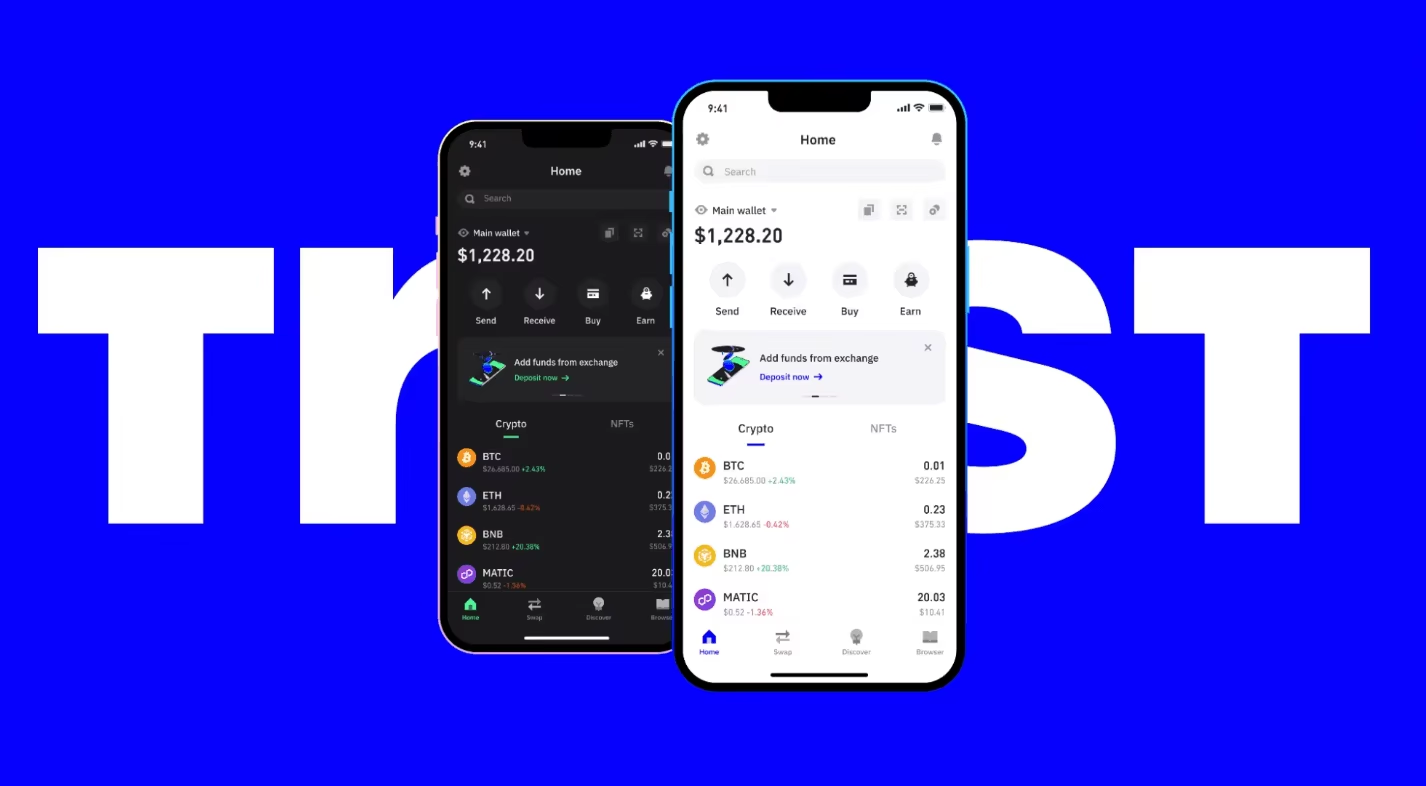
What Self Custody Actually Means
The most important thing Trust Wallet does is give you control of your private keys. Understanding what that means in practice is more useful than the abstract principle.
When you create a wallet in Trust Wallet, the app generates a 12 word recovery phrase. That phrase is the master key to everything in your wallet. It is generated on your device and stored only on your device. Trust Wallet never sees it, never stores it, and cannot recover it if you lose it. The words are not transmitted to any server when you create your wallet.
This is fundamentally different from keeping crypto on an exchange. When you hold Bitcoin on Coinbase, Coinbase holds the private keys and you have an account balance. You trust Coinbase not to go bankrupt, not to freeze withdrawals, and not to be hacked in ways that affect your funds. When FTX collapsed in 2022, users who held funds on the exchange lost access to them immediately. Users who held the same assets in self-custody wallets like Trust Wallet were completely unaffected because no central party controlled their assets.
The trade off is responsibility. If you lose your 12-word recovery phrase and your device, your crypto is gone permanently. Trust Wallet cannot help you recover it. Nobody can. The security of your crypto is entirely your own responsibility, which is both the most empowering and the most demanding aspect of self-custody.
Trust Wallet Classic vs Trust Wallet SWIFT
In 2026, Trust Wallet operates as two distinct wallet experiences rather than one, and understanding the difference is the first practical decision every new user faces.
Trust Wallet Classic is the traditional setup that experienced crypto users will recognize. You create a wallet using a 12 word recovery phrase, store that phrase securely offline, and use it to restore your wallet on any device. Classic supports every blockchain Trust Wallet covers and gives users the maximum control and maximum responsibility that self custody entails.
Trust Wallet SWIFT is a newer setup designed to reduce the friction of traditional self custody. Instead of a recovery phrase, SWIFT uses passkeys and account abstraction technology, meaning your wallet access is tied to biometric authentication like Face ID or a passkey stored in your device's secure element. Account abstraction is a technical framework that allows smart-contract-based wallets to offer features like social recovery, flexible gas payment, and simpler onboarding without sacrificing the principle that the user controls the assets.
For beginners who find the concept of a 12 word recovery phrase intimidating, SWIFT offers a more familiar experience closer to logging into a mobile banking app. For experienced users who want maximum compatibility with every blockchain and dApp, Classic remains the more robust choice. The right option depends on how much of your crypto life you intend to conduct through Trust Wallet and how comfortable you are with traditional key management.
What You Can Actually Do With Trust Wallet
Trust Wallet is not only a place to store crypto. In 2026, the wallet has expanded into a full Web3 platform with features that go considerably beyond simple asset storage.
Storing assets is the foundation. Trust Wallet supports more than 10 million digital assets across more than 100 blockchains including Bitcoin, Ethereum, BNB Smart Chain, Solana, Polygon, Avalanche, Arbitrum, Base, and many others. Adding a new blockchain or custom token takes a few seconds. The home screen shows your portfolio across all chains in a single unified view.
Swapping tokens within the wallet lets you exchange one cryptocurrency for another without using a separate exchange. The swap feature aggregates prices from multiple decentralized exchanges to find the best rate and executes the transaction directly from your wallet. In 2026, Trust Wallet updated the swap interface to show popular tokens automatically before you search and allows dollar-amount input so you can say swap $10 into USDT rather than calculating token quantities manually.
Staking lets you earn rewards on supported assets by participating in network validation. Trust Wallet supports staking for multiple proof of stake blockchains directly within the app, with rewards accumulating in your wallet without any custodial risk because your assets remain in your own wallet throughout the staking process.
Earning on stablecoins is one of the newest features. Trust Wallet's Stablecoin Earn product lets you put USDT, USDC, DAI, and other stablecoins to work through on-chain protocols, earning daily rewards while maintaining full self-custody and the ability to withdraw at any time.
Accessing dApps through Trust Wallet's built-in browser lets you interact with decentralized finance protocols, NFT marketplaces, Web3 games, and any other application built on blockchain technology without leaving the wallet. The browser connects your wallet to dApps the same way MetaMask connects in a desktop browser, but from a mobile interface.
Trading perpetual futures is now available directly within Trust Wallet through integration with Hyperliquid, one of the most liquid decentralized perpetual futures platforms. Trust Wallet users can access Hyperliquid's trading with zero markup on fees through July 2026, with more than $36 million already traded through the integration.
Prediction markets arrived in 2026 through Trust Wallet's integration of Hyperliquid HIP-4 outcome contracts, making Trust Wallet the first major wallet to provide access to native prediction markets directly in the app with no KYC and no separate account required.
Tokenized stocks including NVIDIA, Tesla, and SpaceX are accessible through Trust Wallet via bStocks on BNB Chain, giving users 24/7 access to tokenized US equity exposure without a brokerage account. SPCXB, tokenized SpaceX exposure, launched on Trust Wallet in July 2026.
How Trust Wallet Handles Security
Security is where Trust Wallet's decisions have the most direct consequences for users, and understanding the security model honestly requires acknowledging both its strengths and its documented limitations.
The core security strength is that your private keys never leave your device. Trust Wallet uses AES encryption to protect keys stored on your device. The open-source Wallet Core library that handles cryptographic operations has been independently audited multiple times. The Security Scanner automatically filters out potential scam tokens from search results, reducing one of the most common ways beginners lose funds.
The documented limitation is the browser extension. Trust Wallet disclosed a security incident in December 2025 related to its browser extension that required compensation for affected users. The incident is the most important security context for 2026 users to understand. Trust Wallet's official guidance after the incident, which security researchers and independent reviewers have consistently echoed, is to separate activities by risk level. High-value long-term holdings belong in cold storage or hardware wallet setups. Frequent dApp interactions and smaller active trading balances are appropriate for the hot wallet environment that Trust Wallet provides.
The specific risk that browser extensions create is that they are exposed to the broader browser environment, where malicious websites, compromised extensions, and sophisticated phishing attacks can potentially interact with wallet signing functions in ways that mobile-only wallets are less exposed to. Using Trust Wallet primarily as a mobile app rather than as a desktop browser extension reduces exposure to this category of risk.
The 12-word recovery phrase remains the most important security responsibility for every Trust Wallet user. Writing it down on paper, storing it in multiple secure physical locations, and never entering it into any website or app that asks for it are the three most important security habits for any self-custody wallet user.
What Is Trust Wallet Token and Do You Need It
Trust Wallet Token, ticker TWT, is the governance token of the Trust Wallet ecosystem. Holding TWT gives users the ability to vote on proposals that affect Trust Wallet's development, new features, supported blockchains, and ecosystem decisions.
For most beginners, TWT is not necessary to use Trust Wallet. The core wallet functions, storing assets, swapping, staking, and accessing dApps, are all available without holding any TWT. You do not need TWT to create a wallet, send crypto, or interact with any dApp.
TWT becomes relevant for users who want to participate in Trust Wallet's governance decisions or who are interested in the token as a speculative asset based on Trust Wallet's growth. TWT staking, where users lock TWT to earn a percentage yield, has recently offered elevated rates that attracted attention in the community. However, staking yield rates in crypto are highly variable and should not be taken as indicative of sustainable returns.
Trust Wallet vs MetaMask
The three most commonly compared self-custody wallets for beginners are Trust Wallet, MetaMask and each serves a slightly different primary use case.
MetaMask is the dominant wallet for Ethereum and EVM-compatible blockchain interactions. Its browser extension is deeply integrated with the Ethereum dApp ecosystem, making it the default choice for DeFi protocols, NFT marketplaces, and Ethereum-specific applications. Its weakness is limited support for non-EVM blockchains like Bitcoin and Solana, which requires separate wallets for users who operate across multiple blockchain ecosystems.
Trust Wallet's distinguishing characteristic is breadth across more than 100 blockchains in a single mobile-first interface. For users who operate across Bitcoin, Ethereum, BNB Chain, Solana, and other ecosystems simultaneously and want to manage all of them in one place, Trust Wallet covers more ground than either MetaMask or Coinbase Wallet without requiring multiple separate wallets.
The practical choice for most beginners comes down to which blockchain ecosystem they are primarily entering. Ethereum and DeFi first, MetaMask. Coinbase user transitioning to self-custody, Coinbase Wallet. Multi-chain user who wants one app for everything, Trust Wallet.
What Is New in Trust Wallet in 2026
Several developments in 2026 have expanded what Trust Wallet does beyond the traditional wallet category.
The AI Agent Kit is the most forward-looking addition. Trust Wallet launched the Trust Wallet Agent Kit, a developer toolkit that allows AI agents to hold value, pay for their own compute, and transact across more than 30 blockchains while maintaining user self-custody. The kit supports AI-powered payment agents that can execute complex strategies like dollar-cost averaging and limit orders autonomously based on rules set by the user. This is the infrastructure that connects self-custody crypto to the agentic AI trend that is reshaping technology in 2026.
Limit orders on swaps arrived in 2026, letting users set a target price for any token swap and have the transaction execute automatically when the market reaches that price. This feature existed previously only on centralized exchanges and represents a meaningful upgrade to the decentralized trading experience within the wallet.
The Robinhood Chain integration, announced in July 2026, gives Trust Wallet users the ability to send, receive, and store assets built on Robinhood's new blockchain directly from the self-custody interface.
TrustConnect SDK launched as a free open-source library for developers building Web3 applications, removing the dependency on paid wallet connection infrastructure that had previously created barriers for smaller development teams.
For those looking to participate in global financial markets, having access to the right trading platform matters. WEEX offers crypto and stock trading products, covering major global markets including US stocks and digital assets.
Conclusion
Trust Wallet is the most widely used self-custody crypto wallet in the world, and its 200 million user base reflects both its accessibility and its breadth across more than 100 blockchains. For beginners who want to hold crypto without trusting a centralized exchange, Trust Wallet provides the most complete single-app solution available in 2026.
The key concepts every Trust Wallet user must understand are the 12-word recovery phrase responsibility, the security distinction between mobile and browser extension use, the difference between Trust Wallet Classic and SWIFT, and the expanding range of features that now go far beyond simple asset storage into swapping, staking, earning, perpetual trading, prediction markets, and tokenized stocks.
Self-custody is both more powerful and more demanding than exchange custody. Trust Wallet provides the tools. The responsibility is yours.
FAQ
1. What is Trust Wallet?
Trust Wallet is a self-custody cryptocurrency wallet used by more than 200 million people that supports more than 10 million digital assets across more than 100 blockchains. It allows users to store, swap, stake, and access Web3 applications while maintaining full control of their private keys without any third party having access to their funds.
2. Is Trust Wallet safe?
Trust Wallet's core security model is sound for users who protect their 12-word recovery phrase and use the mobile app rather than the browser extension for high-value holdings. The browser extension has had documented security incidents and should be used only for smaller active balances rather than long-term storage. High-value holdings are best kept in cold storage with Trust Wallet used for active Web3 interactions.
3. What is the difference between Trust Wallet Classic and SWIFT?
Trust Wallet Classic uses a traditional 12-word recovery phrase and provides maximum blockchain compatibility. Trust Wallet SWIFT uses passkeys and account abstraction for a simpler onboarding experience without a recovery phrase. Classic suits experienced crypto users while SWIFT reduces friction for beginners who find recovery phrase management intimidating.
4. Does Trust Wallet support Bitcoin?
Yes. Trust Wallet supports Bitcoin alongside more than 100 other blockchains including Ethereum, BNB Smart Chain, Solana, Polygon, Avalanche, Arbitrum, and Base. This multi-chain breadth in a single interface is one of Trust Wallet's primary advantages over wallets like MetaMask that focus primarily on Ethereum and EVM-compatible chains.
5. What is the Trust Wallet Token?
Trust Wallet Token, ticker TWT, is the governance token of the Trust Wallet ecosystem. It allows holders to vote on proposals affecting Trust Wallet's development and features. TWT is not required to use any of Trust Wallet's core functions and is relevant primarily for users interested in governance participation or as a speculative crypto asset.
Disclaimer: This content is provided for general branding and informational purposes only and doesn't constitute financial, investment, legal, or tax advice. Any events, rewards, online events, or related information mentioned herein should not be considered a recommendation, solicitation, or invitation to purchase, sell, trade, or otherwise deal in any crypto assets or to use any services. Crypto assets are highly volatile and may result in loss. WEEX services and online events may not be available in all regions and are subject to applicable laws, regulations, and eligibility requirements. You are responsible for ensuring that your use of WEEX services complies with local laws and for carefully assessing the risks before participating in any crypto-related activities.
You may also like
Introducing Cash Cat ($CASHCAT): Robinhood Chain Meme Token and Price Prediction
Cash Cat is a Robinhood Chain meme token drawing attention after a fast market debut, a 1B supply, and sharp price swings.
LLY Stock Forecast: Can AI and Weight Loss Drugs Drive More Growth?
This article maps how Eli Lilly’s GLP-1 weight-loss franchise and AI-driven R&D could influence LLY’s traditional equity and…
CASHCAT Airdrop: How to Earn Up to 50,000 USDT in Rewards on WEEX
This guide breaks down how the CASHCAT Airdrop works on WEEX, the rewards on the table, and a…
What Is SOXS ETF? The 3X Bear Semiconductor ETF Explained
This guide breaks down SOXS—the Direxion Daily Semiconductor Bear 3X Shares—so you understand what a 3x inverse semiconductor…
Trust Wallet Transaction Stuck or Failed? Here's How to Fix It
A stuck or failed transaction in Trust Wallet is one of the most common problems crypto users encounter and one of the most misunderstood. The cause is almost always related to gas fees or network congestion rather than anything wrong with your wallet. This guide explains why transactions get stuck or fail, how to fix each situation, and how to prevent it from happening again.
Trust Wallet vs MetaMask: Which One Is Better for Beginners?
Trust Wallet and MetaMask are the two most widely used self-custody crypto wallets in the world. They serve different primary purposes and suit different types of crypto users. This guide compares them directly on the dimensions that matter most for beginners making their first wallet choice.

Trust Wallet Seed Phrase: How to Store It Safely and What Never to Do
Your Trust Wallet seed phrase is the single most important piece of information associated with your crypto holdings. Every security measure in the world is irrelevant if your seed phrase is compromised. This guide focuses entirely on storage methods, the specific mistakes that lead to loss, and the habits that protect your seed phrase over the long term.

O Airdrop for New Users: Earn USDT Rewards on WEEX
New to trading O and looking for USDT rewards? This guide explains how the WEEX O Airdrop for…
How to Install Trust Wallet Safely: What Most Guides Leave Out
Most Trust Wallet installation guides tell you where to download the app and how to save your recovery phrase. Few explain the specific mistakes that result in lost funds, compromised wallets, and successful phishing attacks during the setup process. This guide focuses on what those other guides skip.

Samsung Stock vs SK Hynix Stock: Which Korean Memory Giant Is the Better Buy Right Now?
Samsung stock and SK Hynix stock are the two largest memory companies in the world and the two dominant forces in the AI memory boom of 2026. This guide compares the two specifically on the variables that matter for the buy decision rather than on company history or general descriptions.
Is Samsung Stock a Buy After Falling 15% From Its All Time High?
Samsung stock is trading approximately 15% below its all time high despite reporting the highest quarterly operating profit ever recorded by a technology company. This guide focuses on the buy decision specifically, examining what the 15% discount actually represents and whether the business case justifies buying at current levels.
How to Buy Samsung Stock: What Non-Korean Investors Need to Know
Samsung Electronics has no US-listed ADR and no direct equivalent to SKHY on any major Western exchange. Non-Korean investors who want Samsung exposure have four main options, each with different cost structures, accessibility levels, and risk profiles. This guide explains each option precisely and what the tradeoffs actually are.

Samsung Stock Falls 7% on Record Profit: Why 1800% Earnings Growth Was Not Enough
Samsung stock fell roughly 7% on July 7 after reporting Q2 operating profit of approximately $58 billion, a 19 fold increase from the same quarter a year earlier. The result beat analyst estimates. The stock fell anyway. This guide explains the specific mechanism that produced that outcome and what it means for investors watching the July 30 full earnings report.
Why Oil Prices Are Rising Again: The Iran Hormuz Crisis and What It Means for Your Portfolio
Oil prices surged more than 3% after the US and Iran exchanged fresh strikes and issued conflicting statements about whether the Strait of Hormuz remains open. Brent crude climbed toward $79 a barrel. This guide explains what the Strait of Hormuz crisis actually is, why it moves oil prices, and what the current escalation means for different parts of an investment portfolio.
Iran Crisis and Stock Markets: Which Sectors Win and Which Lose?
The Iran Hormuz crisis has been reshaping sector performance since February 2026. Not all stocks react the same way when oil prices spike. Some sectors benefit directly and immediately. This guide maps which sectors win, which lose, and why the current crisis is producing unusual patterns in some categories.
Bitcoin and the Iran Crisis: Does Crypto Act as a Safe Haven When Oil Spikes?
Oil prices surged more than 3% on July 13 after fresh US-Iran strikes raised new questions about Strait of Hormuz access. Bitcoin and crypto markets responded with characteristic ambiguity. This guide examines whether crypto genuinely acts as a safe haven during oil price shocks, what the historical evidence says, and what the Iran crisis specifically reveals about crypto's role in a geopolitical stress environment.
KOSPI Crash and SKHY: Why South Korean Stocks Fall While US-Listed ADRs Hold
The KOSPI fell more than 8% and triggered a circuit breaker on July 13 while SKHY held near $168 on Nasdaq. The same company's shares moving in opposite directions on two exchanges on the same day is not a contradiction. It is the result of three distinct mechanisms operating simultaneously. This guide explains each one.
What Is a KOSPI Circuit Breaker and Why Has It Triggered Seven Times in 2026?
The KOSPI circuit breaker triggered for the seventh time in 2026 on July 13, halting all South Korean stock trading for 20 minutes after the index fell more than 8%. This guide explains what the circuit breaker is, why it keeps triggering, and what it reveals about the specific structure of the Korean market.
SK Hynix Stock Price Prediction 2026–2030: Can SKHY Reach $500?
SK Hynix stock price is trading at approximately $168 after its Nasdaq debut. Getting to $500 by 2030 requires roughly 198% appreciation over four years. This guide examines what the path to $500 actually requires across four years and three independent growth drivers that operate on different timelines.

SK Hynix Stock Price History: From $40 to $168 in One Year, What Drove the Rally?
SK Hynix stock price was trading near $40 per Korean share equivalent less than a year ago. Today SKHY trades at $168 on Nasdaq after the largest foreign ADR listing in history. This guide maps what drove each phase and what it means for where SK Hynix stock price goes next.
Should You Still Buy SKHY? What SK Hynix Stock's 13% IPO Gain Tells Investors
SK Hynix stock price opened at $170 on July 10 and closed at $168.01, representing a 13% gain from the $149 IPO price. The stock is now trading under its permanent SKHY ticker after switching from SKHYV. This guide focuses on whether the 13% first day gain changes the buy decision and what the current SK Hynix stock price implies about the investment case.
SK Hynix Stock Falls 13% in Korea as SKHY Surges in the US: What Just Happened?
SK Hynix stock fell more than 13% on the Korea Exchange on Monday, triggering a circuit breaker that briefly suspended trading of the entire KOSPI index. This guide explains why the same company's shares moved in opposite directions on two exchanges simultaneously and what it means for investors holding either.
SK Hynix Stock in Korea: Price, Drivers, and How to Buy It
SK Hynix stock (KRX: 000660) is Korea's most valuable listed company on the AI memory boom. See the price, drivers, risks, and how foreign investors can buy it.
Stock Futures Explained: What They Are and How to Trade Them
Stock futures let traders lock in an index price today and preview the market open. Learn how stock futures work, how to read them, and their risks.
BATRA Stock: Price, Forecast, and How to Trade Atlanta Braves Holdings in 2026
BATRA stock explained — Atlanta Braves Holdings price, share classes, 2026 forecast, and how to trade equity exposure via tokenized stocks.
TSMC Stock (TSM): Price, 2026 Forecast, and How to Get Exposure
TSMC stock trades near $434 in July 2026. See TSM's valuation, dividend, analyst price targets, how to buy it, and the key risks before you invest.
GDWR Coin (Global Digital Water Reserve): Legit or Hype?
Is GDWR coin legit? Global Digital Water Reserve is a Solana narrative token with no water backing. See its price, supply, risks, and how to buy safely.

USOH Crypto Scam or Legit? A Complete Risk Analysis
Is USOH Crypto legit or a scam? Explore United States Oil Holdings, its tokenized oil reserve claims, on-chain data, key risks, and investment considerations.
GDWR Crypto Scam or Legit? A Complete Risk Analysis
Is GDWR Crypto legit or a scam? Learn what Global Digital Water Reserve is, review its on-chain data, risk factors, and whether the project is backed by real-world water assets.

AI Stock Outlook: Will Iran Tensions Change the Market Outlook?
Explore how Iran tensions, rising oil prices, interest rates, and Big Tech AI spending could shape the next phase of the AI stock rally.
Introducing Cash Cat ($CASHCAT): Robinhood Chain Meme Token and Price Prediction
Cash Cat is a Robinhood Chain meme token drawing attention after a fast market debut, a 1B supply, and sharp price swings.
LLY Stock Forecast: Can AI and Weight Loss Drugs Drive More Growth?
This article maps how Eli Lilly’s GLP-1 weight-loss franchise and AI-driven R&D could influence LLY’s traditional equity and…
CASHCAT Airdrop: How to Earn Up to 50,000 USDT in Rewards on WEEX
This guide breaks down how the CASHCAT Airdrop works on WEEX, the rewards on the table, and a…
What Is SOXS ETF? The 3X Bear Semiconductor ETF Explained
This guide breaks down SOXS—the Direxion Daily Semiconductor Bear 3X Shares—so you understand what a 3x inverse semiconductor…
Trust Wallet Transaction Stuck or Failed? Here's How to Fix It
A stuck or failed transaction in Trust Wallet is one of the most common problems crypto users encounter and one of the most misunderstood. The cause is almost always related to gas fees or network congestion rather than anything wrong with your wallet. This guide explains why transactions get stuck or fail, how to fix each situation, and how to prevent it from happening again.
Trust Wallet vs MetaMask: Which One Is Better for Beginners?
Trust Wallet and MetaMask are the two most widely used self-custody crypto wallets in the world. They serve different primary purposes and suit different types of crypto users. This guide compares them directly on the dimensions that matter most for beginners making their first wallet choice.
Contents
Latest articles


Latest coin listings on WEEX


