
Samsung Stock vs SK Hynix Stock: Which Korean Memory Giant Is the Better Buy Right Now?

 Prefer us on Google



Samsung stock and SK Hynix stock are not interchangeable AI memory plays. Samsung stock and SK Hynix stock serve different investment purposes, carry different risk profiles, and are accessible through completely different mechanisms for non-Korean investors. Samsung stock vs SK Hynix stock is therefore not a simple better or worse question. It is a question about which investment better matches a specific investor's objectives, accessibility constraints, and view of where the AI memory cycle goes from here.
The comparison has become more directly actionable since July 10, when SK Hynix's SKHY ADR began trading on Nasdaq at $149 and is now trading near $168. For the first time, non-Korean investors can place Samsung stock and SK Hynix stock side by side and ask which one to own, because both are now accessible through a standard US brokerage account, albeit through different mechanisms.
The Business Comparison That Actually Matters
Both companies manufacture DRAM and NAND flash memory. Both benefit from the AI infrastructure buildout that has made memory the most supply-constrained component in the global technology supply chain. Both have delivered extraordinary financial results in 2026 that most investors would not have considered plausible twelve months ago.
The differences that actually matter for the investment comparison are in product mix, competitive positioning, and margin quality rather than in the broad strokes of what each company does.
SK Hynix is the undisputed leader in HBM, the high-bandwidth memory that powers Nvidia's AI accelerators and that commands pricing premiums of 40% to 50% above conventional DRAM. SK Hynix holds approximately 58% of global HBM revenue, with Samsung holding approximately 21% and Micron the remaining portion. The HBM leadership is the primary reason SK Hynix's operating margins exceeded Samsung's in recent quarters despite Samsung being the larger company overall. HBM is the highest-margin product in the memory industry, and SK Hynix owns more of it than anyone else.
Samsung's competitive advantage sits in a different part of the memory landscape. Samsung is the world's largest NAND flash producer by volume, with a market share that no competitor currently threatens meaningfully. Samsung also leads in total DRAM volume, even if SK Hynix leads in HBM specifically. For investors who believe AI workloads will require both memory and storage expansion simultaneously, requiring both HBM capacity and enterprise SSD capacity, Samsung's broader product portfolio captures both dimensions more completely than SK Hynix does.
The HBM gap between the two companies is the most important variable for the investment comparison and the one most likely to change over the next eighteen months. Samsung has been closing its HBM qualification gap with Nvidia and has received qualification for HBM4E alongside SK Hynix for the Vera Rubin GPU platform. If Samsung wins a meaningfully larger share of the next generation of Nvidia GPU HBM allocations, the margin gap between the two companies narrows and the investment case for Samsung versus SK Hynix shifts.
The Valuation Comparison at Current Prices
Comparing valuations between Samsung stock and SK Hynix stock requires accounting for the different ways each trades and the different information available about each.
Samsung stock at current Korean Exchange prices implies a forward earnings multiple of approximately 10 to 12 times on fiscal 2026 estimates, reflecting both the extraordinary earnings trajectory and the accessibility discount that Korean only listing creates. That multiple is compressed relative to comparable US-listed semiconductor businesses, which is the specific opportunity for investors who can access Samsung directly.
SK Hynix stock through SKHY at $168 trades at approximately 8 to 10 times forward earnings on the same fiscal 2026 estimate basis, which is compressed relative to Micron at approximately 25 times for the same reason: the Korean exchange accessibility discount that has been building for years and that the Nasdaq listing is only beginning to close.
On a pure forward multiple comparison, Samsung and SK Hynix are similarly valued relative to their own earnings trajectories, both trading at dramatic discounts to comparable US-listed businesses. The valuation gap that exists between the two is more about product mix and growth trajectory than about absolute multiple level.
SK Hynix's higher HBM revenue concentration means its earnings are growing faster than Samsung's on a percentage basis because HBM pricing premiums are expanding the total revenue per unit of memory shipped more dramatically than Samsung's blended product mix allows. A faster earnings growth rate at the same multiple implies a higher stock price in twelve months, which is the specific argument for SK Hynix over Samsung if the HBM leadership is sustained.
Samsung's broader product mix means its earnings are more diversified across memory and storage categories, which provides more stability but less leverage to the specific HBM premium that is driving the most extraordinary returns in the memory sector. A more stable earnings trajectory at the same multiple implies less volatility and more predictable but lower growth, which is the specific argument for Samsung over SK Hynix for investors who prioritize predictability.
The Accessibility Factor That Changes the Comparison
Before July 10, the Samsung versus SK Hynix comparison was primarily a business quality comparison because both were accessible only through Korean exchange mechanisms.
After July 10, the comparison includes an accessibility dimension that materially changes the practical investment decision for most non-Korean investors.
SKHY on Nasdaq can be bought in thirty seconds through any US brokerage account with no special permissions, no currency conversion mechanics, and no Korean market hours constraint. Samsung requires a Korean brokerage relationship, OTC Pink navigation, or ETF exposure, each with the specific tradeoffs and limitations described in the accessibility guide.
For retail investors who do not have Korean exchange access established, SKHY's Nasdaq listing makes SK Hynix the far more practical choice regardless of any view about Samsung's versus SK Hynix's relative business quality. Accessibility matters as much as valuation for investors who cannot actually execute a trade.
For institutional investors and sophisticated retail investors who already have KRX access or who can establish it without significant friction, the accessibility advantage of SKHY disappears and the comparison returns to pure business quality and valuation.
The Catalyst Calendar Comparison
Both Samsung and SK Hynix report full Q2 earnings on July 29 and July 30 respectively, making the next three weeks a period when both stocks will have major fundamental catalysts arriving within 24 hours of each other.
For Samsung, the July 30 full report needs to deliver semiconductor division margin data, HBM revenue contribution specifics, and Q3 guidance that the preliminary figures could not provide. The stock is 15% below its all-time high partly because of the information gap that the preliminary announcement left open. July 30 closes that gap.
For SK Hynix through SKHY, the July 29 report arrives as the first earnings event the stock has experienced as a US-listed security. The expected result, revenue roughly doubling from Q1's already extraordinary level, represents the highest quarterly earnings in SK Hynix's history if delivered as consensus projects. The specific market question is whether SKHY can avoid the Samsung pattern of falling on an earnings beat because the result was only modestly above the elevated consensus.
The specific risk difference between the two earnings events is that Samsung's consensus expectations have already been reset downward by the preliminary announcement and the subsequent profit-taking. SK Hynix's consensus expectations heading into July 29 remain at the extraordinary level that was set before any results were available. Samsung therefore faces a lower bar on July 30 than SK Hynix faces on July 29, which is a specific near-term risk advantage for Samsung over SK Hynix around the earnings catalyst window.
The Currency Risk Comparison
One dimension of the Samsung versus SK Hynix comparison that investment analyses frequently underweight is the different currency risk each investment carries for non-Korean investors.
Samsung stock on the Korean Exchange is denominated in Korean won. The won has faced periodic devaluation pressure throughout the Iran crisis because South Korea imports more than 80% of its crude oil, and oil price spikes directly pressure the won through the energy import bill. An investor holding Samsung Korean shares during a period of won weakness sees their dollar-equivalent returns reduced even if the won-denominated Samsung price is unchanged.
SKHY is denominated in US dollars. The underlying SK Hynix business generates revenue in won, which means the same currency exposure exists at the business level, but the ADR pricing mechanism provides a dollar-denominated investment experience that does not require the investor to monitor the won-dollar exchange rate directly in the same way that direct Korean share ownership does.
For US-based investors specifically, SKHY's dollar denomination is a practical simplification that Samsung's Korean listing cannot match. For investors who actively hedge currency exposure or who are comfortable with won-dollar dynamics, the currency dimension is manageable for either investment. For investors who prefer to hold dollar-denominated assets without active currency management, SKHY has a structural advantage over Samsung that is independent of any business quality comparison.
Which One for Which Investor
Rather than a single definitive answer to which Korean memory giant is the better buy, the comparison produces three specific investor profiles with three specific answers.
For the US retail investor who wants AI memory exposure with maximum accessibility and minimum setup friction, SKHY is the clear answer. It trades on Nasdaq, requires no special brokerage permissions, is denominated in dollars, and provides exposure to the company with the highest HBM revenue concentration in the industry. The accessibility advantage of SKHY over Samsung is decisive for this investor profile regardless of any view about relative business quality.
For the sophisticated investor with Korean exchange access who believes Samsung's HBM market share gain trajectory will close the gap with SK Hynix through 2027, Samsung at its current 15% discount from the all-time high offers a specific opportunity. The valuation is compressed, the product breadth is greater, the NAND leadership adds a dimension of AI storage exposure that SKHY does not capture, and the accessibility discount that has suppressed the multiple relative to comparable US-listed businesses represents potential upside if Samsung eventually launches its own ADR.
For the investor who wants maximum leverage to the pure HBM story and is willing to accept higher concentration risk and the leveraged ETF mechanics involved, SKUU provides amplified SKHY exposure for short-term tactical positioning around the July 29 earnings catalyst. This profile is the highest risk of the three and the most dependent on getting the specific earnings catalyst timing correct.
The Answer That Depends on One Variable
If forced to name a single variable that determines whether Samsung or SK Hynix is the better buy right now, it is Samsung's HBM market share trajectory over the next four quarters.
If Samsung closes the HBM gap with SK Hynix meaningfully through 2027, winning a larger portion of Nvidia's next GPU platform HBM allocations, the margin gap between the two companies narrows, Samsung's earnings growth accelerates toward SK Hynix's pace, and the valuation discount that Samsung currently carries relative to SK Hynix compresses. In that scenario Samsung is the better buy from current prices because it offers more valuation upside from a lower starting multiple.
If Samsung's HBM market share gains are slower than management's own timeline implies, SK Hynix maintains its leadership into 2027, and the margin premium that HBM leadership generates continues to favor SK Hynix earnings growth. In that scenario SKHY is the better buy because its HBM concentration means its earnings are compounding faster than Samsung's blended product mix allows.
Neither scenario is confirmed by currently available data. July 29 and July 30 earnings will provide the first serious data points for evaluating which trajectory is playing out.
For those looking to participate in global financial markets, having access to the right trading platform matters. WEEX offers crypto and stock trading products, covering major global markets including US stocks and digital assets.
Conclusion
Samsung stock versus SK Hynix stock is the most important comparison in the AI memory investment landscape in July 2026, and it does not have a single correct answer that applies to all investors.
SKHY wins on accessibility, dollar denomination, HBM revenue concentration, and pure leverage to the highest-margin product in the memory industry. Samsung wins on product breadth, NAND flash leadership, the potential for HBM market share gains that would close the margin gap, and the accessibility discount that compressed its multiple relative to comparable US businesses in ways that SKHY's Nasdaq listing has already begun to close for SK Hynix.
The specific investor who benefits most from each depends on their brokerage access, currency preference, conviction about Samsung's HBM catch-up timeline, and appetite for the concentration risk that SKHY's HBM focus entails versus the broader diversification that Samsung's product portfolio provides.
July 29 and July 30 are where both companies make their most important statements of 2026. The comparison looks different after those two days than it does today.
FAQ
1. Is Samsung stock or SK Hynix stock the better buy right now?
For US retail investors without Korean exchange access, SKHY wins on accessibility alone. For sophisticated investors with KRX access who believe Samsung's HBM market share will close the gap with SK Hynix through 2027, Samsung offers a compressed valuation and broader product exposure. The single variable that determines the answer is Samsung's HBM market share trajectory over the next four quarters.
2. What is the main difference between Samsung and SK Hynix?
SK Hynix leads in HBM with approximately 58% revenue share versus Samsung's approximately 21%, giving SK Hynix higher margins and faster earnings growth in the AI memory cycle's highest-value segment. Samsung leads in total NAND flash volume and overall DRAM volume, providing broader product diversification that captures both memory and storage dimensions of AI infrastructure expansion.
3. Why can I buy SKHY but not Samsung on the Nasdaq?
Samsung has no US-listed ADR and has not pursued SEC filing obligations that a formal ADR structure requires. SK Hynix completed the largest foreign ADR listing in history on July 10, giving it Nasdaq accessibility that Samsung's Korean-only listing does not provide. Samsung is accessible through KRX direct access, OTC Pink SSNLF, or Korean-focused ETFs like EWY.
4. How do Samsung and SK Hynix compare on valuation?
Both trade at significant discounts to comparable US-listed semiconductor businesses because of the Korean exchange accessibility discount that both have historically carried. Samsung trades at approximately 10 to 12 times forward earnings and SK Hynix through SKHY at approximately 8 to 10 times, making both dramatically cheaper than Micron at approximately 25 times despite comparable or superior financial performance.
5. When do Samsung and SK Hynix report Q2 2026 full earnings?
SK Hynix reports July 29 and Samsung reports July 30. Both events arrive within 24 hours of each other, making the final week of July the most concentrated fundamental catalyst window for the AI memory sector in 2026. Samsung faces a lower consensus bar than SK Hynix because the preliminary announcement already reset expectations, which is a near-term risk advantage for Samsung around the earnings catalyst.
Disclaimer: This content is provided for general branding and informational purposes only and doesn't constitute financial, investment, legal, or tax advice. Any events, rewards, online events, or related information mentioned herein should not be considered a recommendation, solicitation, or invitation to purchase, sell, trade, or otherwise deal in any crypto assets or to use any services. Crypto assets are highly volatile and may result in loss. WEEX services and online events may not be available in all regions and are subject to applicable laws, regulations, and eligibility requirements. You are responsible for ensuring that your use of WEEX services complies with local laws and for carefully assessing the risks before participating in any crypto-related activities.
You may also like
Introducing Cash Cat ($CASHCAT): Robinhood Chain Meme Token and Price Prediction
Cash Cat is a Robinhood Chain meme token drawing attention after a fast market debut, a 1B supply, and sharp price swings.
LLY Stock Forecast: Can AI and Weight Loss Drugs Drive More Growth?
This article maps how Eli Lilly’s GLP-1 weight-loss franchise and AI-driven R&D could influence LLY’s traditional equity and…
CASHCAT Airdrop: How to Earn Up to 50,000 USDT in Rewards on WEEX
This guide breaks down how the CASHCAT Airdrop works on WEEX, the rewards on the table, and a…
What Is SOXS ETF? The 3X Bear Semiconductor ETF Explained
This guide breaks down SOXS—the Direxion Daily Semiconductor Bear 3X Shares—so you understand what a 3x inverse semiconductor…
Trust Wallet Transaction Stuck or Failed? Here's How to Fix It
A stuck or failed transaction in Trust Wallet is one of the most common problems crypto users encounter and one of the most misunderstood. The cause is almost always related to gas fees or network congestion rather than anything wrong with your wallet. This guide explains why transactions get stuck or fail, how to fix each situation, and how to prevent it from happening again.
Trust Wallet vs MetaMask: Which One Is Better for Beginners?
Trust Wallet and MetaMask are the two most widely used self-custody crypto wallets in the world. They serve different primary purposes and suit different types of crypto users. This guide compares them directly on the dimensions that matter most for beginners making their first wallet choice.
Trust Wallet Seed Phrase: How to Store It Safely and What Never to Do
Your Trust Wallet seed phrase is the single most important piece of information associated with your crypto holdings. Every security measure in the world is irrelevant if your seed phrase is compromised. This guide focuses entirely on storage methods, the specific mistakes that lead to loss, and the habits that protect your seed phrase over the long term.
O Airdrop for New Users: Earn USDT Rewards on WEEX
New to trading O and looking for USDT rewards? This guide explains how the WEEX O Airdrop for…
How to Install Trust Wallet Safely: What Most Guides Leave Out
Most Trust Wallet installation guides tell you where to download the app and how to save your recovery phrase. Few explain the specific mistakes that result in lost funds, compromised wallets, and successful phishing attacks during the setup process. This guide focuses on what those other guides skip.
What Is Trust Wallet? A Complete Beginner's Guide
Trust Wallet is a self custody crypto wallet used by more than 200 million people across more than 100 blockchains. This guide explains what Trust Wallet actually is, how it works, what is new in 2026, and what beginners need to know before using it.
Is Samsung Stock a Buy After Falling 15% From Its All Time High?
Samsung stock is trading approximately 15% below its all time high despite reporting the highest quarterly operating profit ever recorded by a technology company. This guide focuses on the buy decision specifically, examining what the 15% discount actually represents and whether the business case justifies buying at current levels.
How to Buy Samsung Stock: What Non-Korean Investors Need to Know
Samsung Electronics has no US-listed ADR and no direct equivalent to SKHY on any major Western exchange. Non-Korean investors who want Samsung exposure have four main options, each with different cost structures, accessibility levels, and risk profiles. This guide explains each option precisely and what the tradeoffs actually are.
Samsung Stock Falls 7% on Record Profit: Why 1800% Earnings Growth Was Not Enough
Samsung stock fell roughly 7% on July 7 after reporting Q2 operating profit of approximately $58 billion, a 19 fold increase from the same quarter a year earlier. The result beat analyst estimates. The stock fell anyway. This guide explains the specific mechanism that produced that outcome and what it means for investors watching the July 30 full earnings report.
Why Oil Prices Are Rising Again: The Iran Hormuz Crisis and What It Means for Your Portfolio
Oil prices surged more than 3% after the US and Iran exchanged fresh strikes and issued conflicting statements about whether the Strait of Hormuz remains open. Brent crude climbed toward $79 a barrel. This guide explains what the Strait of Hormuz crisis actually is, why it moves oil prices, and what the current escalation means for different parts of an investment portfolio.
Iran Crisis and Stock Markets: Which Sectors Win and Which Lose?
The Iran Hormuz crisis has been reshaping sector performance since February 2026. Not all stocks react the same way when oil prices spike. Some sectors benefit directly and immediately. This guide maps which sectors win, which lose, and why the current crisis is producing unusual patterns in some categories.
Bitcoin and the Iran Crisis: Does Crypto Act as a Safe Haven When Oil Spikes?
Oil prices surged more than 3% on July 13 after fresh US-Iran strikes raised new questions about Strait of Hormuz access. Bitcoin and crypto markets responded with characteristic ambiguity. This guide examines whether crypto genuinely acts as a safe haven during oil price shocks, what the historical evidence says, and what the Iran crisis specifically reveals about crypto's role in a geopolitical stress environment.
KOSPI Crash and SKHY: Why South Korean Stocks Fall While US-Listed ADRs Hold
The KOSPI fell more than 8% and triggered a circuit breaker on July 13 while SKHY held near $168 on Nasdaq. The same company's shares moving in opposite directions on two exchanges on the same day is not a contradiction. It is the result of three distinct mechanisms operating simultaneously. This guide explains each one.
What Is a KOSPI Circuit Breaker and Why Has It Triggered Seven Times in 2026?
The KOSPI circuit breaker triggered for the seventh time in 2026 on July 13, halting all South Korean stock trading for 20 minutes after the index fell more than 8%. This guide explains what the circuit breaker is, why it keeps triggering, and what it reveals about the specific structure of the Korean market.
SK Hynix Stock Price Prediction 2026–2030: Can SKHY Reach $500?
SK Hynix stock price is trading at approximately $168 after its Nasdaq debut. Getting to $500 by 2030 requires roughly 198% appreciation over four years. This guide examines what the path to $500 actually requires across four years and three independent growth drivers that operate on different timelines.
SK Hynix Stock Price History: From $40 to $168 in One Year, What Drove the Rally?
SK Hynix stock price was trading near $40 per Korean share equivalent less than a year ago. Today SKHY trades at $168 on Nasdaq after the largest foreign ADR listing in history. This guide maps what drove each phase and what it means for where SK Hynix stock price goes next.
Should You Still Buy SKHY? What SK Hynix Stock's 13% IPO Gain Tells Investors
SK Hynix stock price opened at $170 on July 10 and closed at $168.01, representing a 13% gain from the $149 IPO price. The stock is now trading under its permanent SKHY ticker after switching from SKHYV. This guide focuses on whether the 13% first day gain changes the buy decision and what the current SK Hynix stock price implies about the investment case.
SK Hynix Stock Falls 13% in Korea as SKHY Surges in the US: What Just Happened?
SK Hynix stock fell more than 13% on the Korea Exchange on Monday, triggering a circuit breaker that briefly suspended trading of the entire KOSPI index. This guide explains why the same company's shares moved in opposite directions on two exchanges simultaneously and what it means for investors holding either.
SK Hynix Stock in Korea: Price, Drivers, and How to Buy It
SK Hynix stock (KRX: 000660) is Korea's most valuable listed company on the AI memory boom. See the price, drivers, risks, and how foreign investors can buy it.
Stock Futures Explained: What They Are and How to Trade Them
Stock futures let traders lock in an index price today and preview the market open. Learn how stock futures work, how to read them, and their risks.
BATRA Stock: Price, Forecast, and How to Trade Atlanta Braves Holdings in 2026
BATRA stock explained — Atlanta Braves Holdings price, share classes, 2026 forecast, and how to trade equity exposure via tokenized stocks.
TSMC Stock (TSM): Price, 2026 Forecast, and How to Get Exposure
TSMC stock trades near $434 in July 2026. See TSM's valuation, dividend, analyst price targets, how to buy it, and the key risks before you invest.
GDWR Coin (Global Digital Water Reserve): Legit or Hype?
Is GDWR coin legit? Global Digital Water Reserve is a Solana narrative token with no water backing. See its price, supply, risks, and how to buy safely.
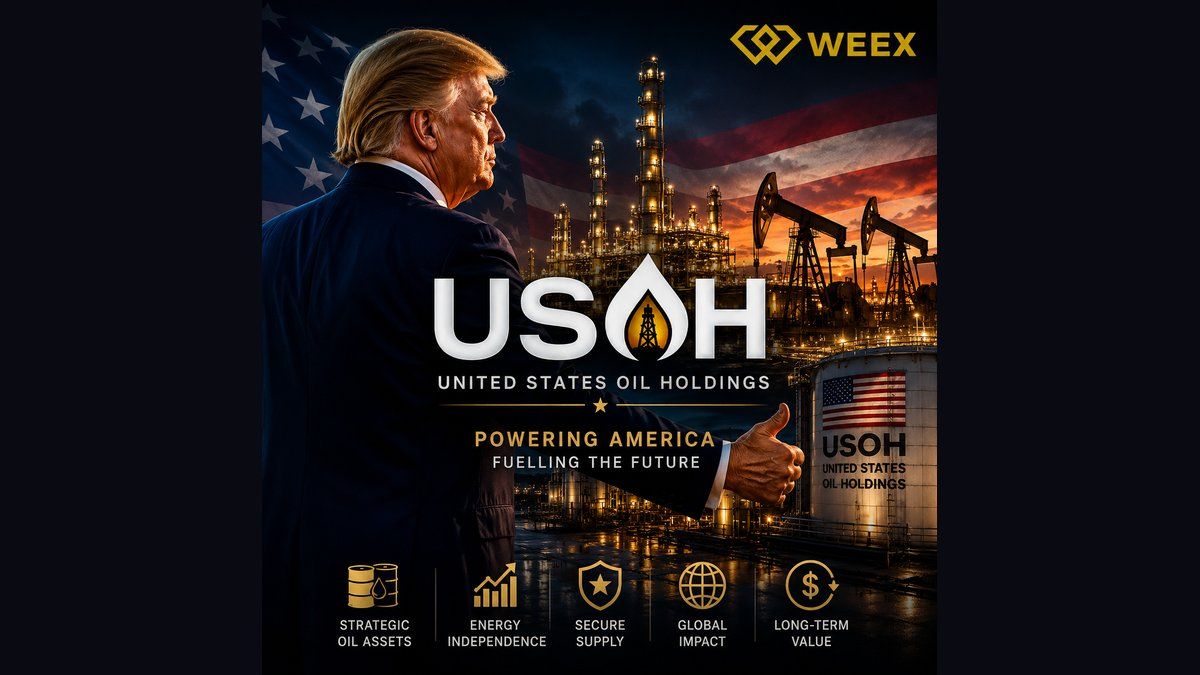
USOH Crypto Scam or Legit? A Complete Risk Analysis
Is USOH Crypto legit or a scam? Explore United States Oil Holdings, its tokenized oil reserve claims, on-chain data, key risks, and investment considerations.
GDWR Crypto Scam or Legit? A Complete Risk Analysis
Is GDWR Crypto legit or a scam? Learn what Global Digital Water Reserve is, review its on-chain data, risk factors, and whether the project is backed by real-world water assets.
AI Stock Outlook: Will Iran Tensions Change the Market Outlook?
Explore how Iran tensions, rising oil prices, interest rates, and Big Tech AI spending could shape the next phase of the AI stock rally.
Introducing Cash Cat ($CASHCAT): Robinhood Chain Meme Token and Price Prediction
Cash Cat is a Robinhood Chain meme token drawing attention after a fast market debut, a 1B supply, and sharp price swings.
LLY Stock Forecast: Can AI and Weight Loss Drugs Drive More Growth?
This article maps how Eli Lilly’s GLP-1 weight-loss franchise and AI-driven R&D could influence LLY’s traditional equity and…
CASHCAT Airdrop: How to Earn Up to 50,000 USDT in Rewards on WEEX
This guide breaks down how the CASHCAT Airdrop works on WEEX, the rewards on the table, and a…
What Is SOXS ETF? The 3X Bear Semiconductor ETF Explained
This guide breaks down SOXS—the Direxion Daily Semiconductor Bear 3X Shares—so you understand what a 3x inverse semiconductor…
Trust Wallet Transaction Stuck or Failed? Here's How to Fix It
A stuck or failed transaction in Trust Wallet is one of the most common problems crypto users encounter and one of the most misunderstood. The cause is almost always related to gas fees or network congestion rather than anything wrong with your wallet. This guide explains why transactions get stuck or fail, how to fix each situation, and how to prevent it from happening again.
Trust Wallet vs MetaMask: Which One Is Better for Beginners?
Trust Wallet and MetaMask are the two most widely used self-custody crypto wallets in the world. They serve different primary purposes and suit different types of crypto users. This guide compares them directly on the dimensions that matter most for beginners making their first wallet choice.
Contents
Latest articles


Latest coin listings on WEEX


