
SK Hynix Stock Price History: From $40 to $168 in One Year, What Drove the Rally?

 Prefer us on Google


SK Hynix stock price at $168 on its first week of Nasdaq trading looks like a simple AI memory success story from the outside. SK Hynix stock price at $40 equivalent twelve months ago looked like a cyclical semiconductor company emerging from one of the worst memory downturns in industry history. SK Hynix stock price getting from one to the other required a specific sequence of events that did not feel inevitable at each stage, and understanding that sequence is the most useful framework available for evaluating where the stock goes from $168.
The 300% plus journey was not a straight line. It was four distinct phases, each with a different primary driver, and each phase setting up the conditions that made the next phase possible. Mapping those phases tells investors not just what happened but why, which is the only foundation for a view on what comes next.
Phase One: The HBM Inflection Point
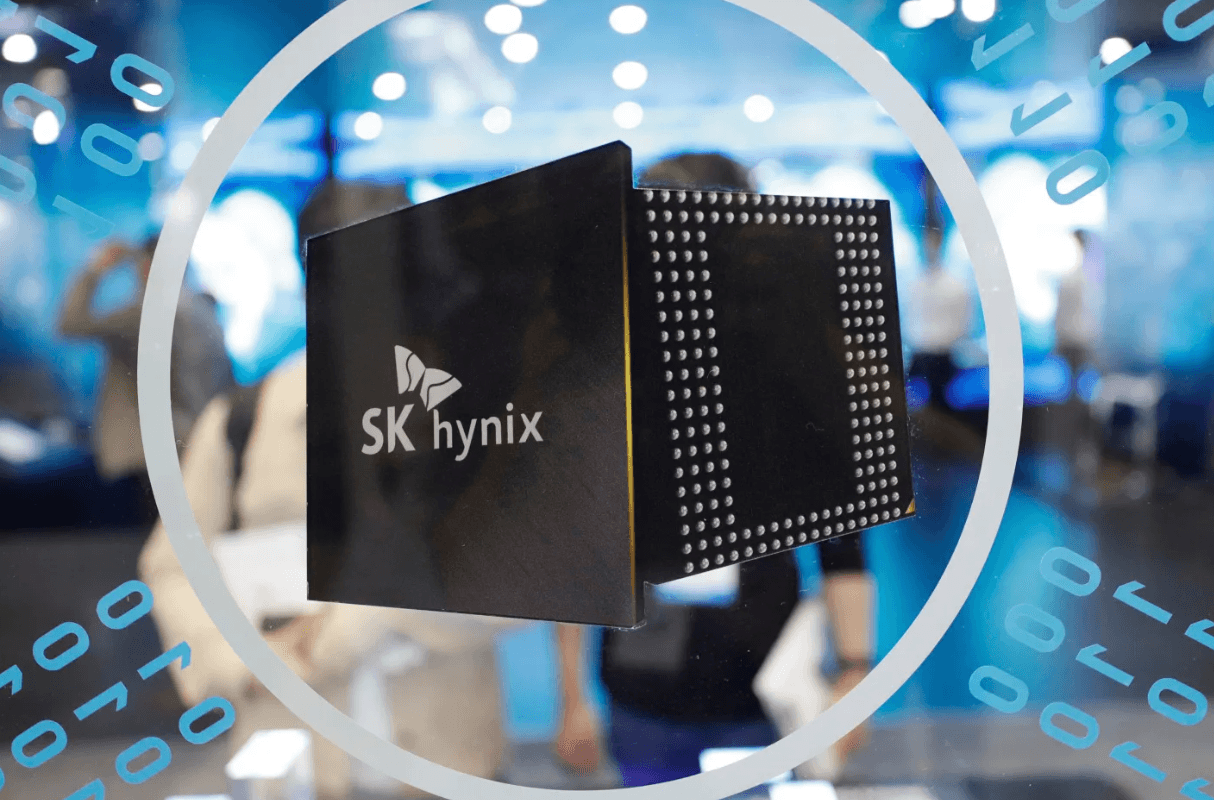
The starting point for SK Hynix stock price's extraordinary journey was not a market discovery of something new. It was a belated recognition of something SK Hynix had been building for years that suddenly became the most critical bottleneck in the most important technology buildout of the decade.
High-bandwidth memory had been in development since SK Hynix first commercialized it in partnership with AMD for graphics applications in 2013. For most of its existence, HBM was a specialty product used in high-performance computing applications that represented a small fraction of the memory market. The economics were demanding, the production volumes were modest, and the premium pricing was real but limited by a narrow addressable market.
What changed was Nvidia's H100 and H200 GPU architectures, which made HBM the essential component for AI training at the scales that large language models required. When a single Nvidia H100 contains 80 gigabytes of HBM and requires six stacked HBM2e dies, and when Nvidia needs to ship tens of thousands of these GPUs per quarter to hyperscaler customers, the demand for HBM production capacity went from specialty niche to critical global constraint in the space of approximately eighteen months.
SK Hynix was the only company with sufficient HBM production capacity and qualification to serve that demand at scale when it emerged. Samsung was behind on HBM qualification. Micron was further behind still. SK Hynix held approximately 70% of HBM market revenue when AI GPU demand began accelerating, which is the single most important fact about why SK Hynix stock price began its journey from $40.
Phase Two: The Earnings Confirmation That Silenced the Bears
The first phase of SK Hynix stock price recovery was driven by anticipation rather than confirmed financial results. The second phase arrived when the financial results began confirming that the HBM demand story was flowing through to the income statement at a pace that exceeded even optimistic expectations.
SK Hynix's 2025 financial results showed a transformation that was difficult to model in advance. Revenue grew dramatically as HBM pricing commanded the kind of premium that commodity DRAM had never achieved. Operating margins expanded toward levels that exceeded Nvidia's in the same period, which was the single most striking data point for investors who had been accustomed to thinking of memory companies as inherently cyclical low-margin businesses.
The operating margin comparison with Nvidia deserves specific attention because it captures what had changed about SK Hynix's business more precisely than revenue growth alone. When a memory company generates higher operating margins than the world's most valuable semiconductor company, the multiple the market assigns to its earnings needs to be reconsidered. The gradual market recognition that SK Hynix's HBM margins were structurally different from historical DRAM margins was the primary driver of multiple expansion through the second phase of the rally.
Each quarterly earnings report through 2025 added a layer of confirmation that made the next expansion in SK Hynix stock price more defensible than speculative. By the time the company was posting quarterly operating profits that exceeded the entire annual profit of previous record years, the multiple the market had been applying to Korean-exchange-listed SK Hynix shares was still dramatically below where comparable US-listed businesses with similar margin profiles traded.
Phase Three: The Supply Constraint That Made the Market Accept a Higher Multiple
The third phase of SK Hynix stock price appreciation was driven by a growing consensus that the supply constraint underpinning HBM pricing was structural rather than cyclical, and that the timeline for normalization was measured in years rather than quarters.
Memory markets have a specific and well documented history of boom bust cycles. Demand surges, companies invest in new capacity, capacity arrives in excess of demand, prices collapse, companies cut back, supply normalizes, and the cycle begins again. Investors who had lived through previous cycles, including the 2023 downturn that produced Micron's record annual losses, were understandably skeptical that HBM would be different this time.
What changed the consensus was the combination of several supply-side realities that accumulated through 2025 and into 2026. HBM production requires fundamentally different manufacturing processes from standard DRAM. The stacking technology, the through-silicon vias, the thermal management challenges, and the specialized packaging requirements create a production complexity that cannot be solved simply by dedicating more DRAM capacity to HBM. Building competitive HBM production requires years of process development, not months of capacity allocation.
Samsung's struggles to achieve Nvidia qualification for its HBM products, despite being the world's largest memory manufacturer by volume, was the most visible confirmation that HBM supply could not simply be manufactured at will. If Samsung with its extraordinary resources took years to close the gap with SK Hynix and still commanded only a fraction of the HBM revenue share, the supply constraint was real and the timeline for normalization was longer than cyclical skeptics assumed.
CEO Kwak Noh-jung's statement last week that the global memory shortage could last into the next decade is the most recent and most specific public expression of this supply constraint thesis from the person with the most direct visibility into the demand and production pipeline.
Phase Four: The Nasdaq Listing and the Accessibility Premium
The fourth and most recent phase of SK Hynix stock price appreciation has a specific mechanism that the previous three phases did not: the removal of the accessibility barrier that had kept most global institutional capital from directly owning the world's leading HBM producer.
For the fourteen years between SK Hynix's restructuring and its Nasdaq listing, the company was accessible only through the Korean Stock Exchange. That access required Korean brokerage relationships, Korean won settlement, Korean exchange hours, and Korean language research and investor relations. Most global institutional funds, including the largest US and European technology-focused funds, were structurally excluded from building meaningful positions in SK Hynix regardless of their fundamental conviction about the HBM story.
HSBC documented the consequence of this exclusion precisely. Micron has traded at an average 35% premium to SK Hynix over the past thirteen years. That premium was not driven by superior financial performance. It was driven by accessibility. Micron is on NYSE. Every US fund can own it. SK Hynix was on KRX. Most global funds could not.
The Nasdaq listing that priced at $149 and opened at $170 on July 10 removed that accessibility barrier. The $26.5 billion raised in the largest foreign ADR listing in history is partially a reflection of what global institutional capital had been waiting to invest in SK Hynix directly the moment it became accessible. The stock's ability to hold at $168 while Korean shares fell 13% and triggered a circuit breaker is the most concrete early evidence that US institutional demand for SKHY is genuine and deep rather than speculative and thin.
What Each Phase Reveals About What Comes Next
Mapping the four phases of SK Hynix stock price history is not purely a retrospective exercise. Each phase reveals something specific about what the next phase of appreciation requires.
The HBM inflection point phase is complete. The market fully understands that SK Hynix is the leading HBM producer and that HBM is the critical bottleneck in AI infrastructure. That recognition is in the price.
The earnings confirmation phase is ongoing. Each quarterly report adds a layer of financial validation that either sustains or challenges the multiple the market has assigned. July 29 is the next earnings confirmation event, and it carries more weight than usual because it is the first result SK Hynix will report as a US-listed company, meaning the audience for the confirmation is dramatically larger than it was for any previous quarterly report.
The supply constraint consensus phase is maturing. Management's increasingly specific public statements about demand exceeding capacity into the next decade are the most recent iteration of this phase. The risk is that new capacity from Samsung or Micron arrives faster than current market share data suggests, which would challenge the supply constraint thesis before the demand timeline CEO Kwak described has played out.
The accessibility premium phase is in its earliest stages. The $168 current price is below the Korean equivalent rather than above it, which means the premium that HSBC estimated would be assigned to US-listed SK Hynix has not yet materialized. The gradual accumulation of global institutional positions in SKHY over the next twelve to eighteen months is the mechanism through which that premium closes, and the July 29 earnings confirmation is the most important single catalyst for accelerating that accumulation.
The $40 to $168 Journey in One Number
If a single number captures the significance of SK Hynix stock price's journey from $40 equivalent to $168, it is the change in operating margin that drove the first three phases.
When SK Hynix stock price was near $40, the company was posting operating margins consistent with a commodity memory business emerging from a downturn. When SK Hynix stock price reached $168, the company was posting operating margins that exceeded Nvidia's in the same quarter. The journey from commodity memory company to highest-margin AI infrastructure supplier in the world is the journey from $40 to $168, and understanding it that way makes the next chapter of the story clearer than any chart pattern or technical analysis can.
The question is not whether $168 can reach $230. The question is whether a company generating Nvidia-level operating margins in a supply constrained market with management saying demand exceeds capacity even if doubled deserves to trade at the Korean discount that $168 implies or at the US peer premium that the accessibility the Nasdaq listing provides should eventually produce.
For those looking to participate in global financial markets, having access to the right trading platform matters. WEEX offers crypto and stock trading products, covering major global markets including US stocks and digital assets.
Conclusion
SK Hynix stock price went from $40 equivalent to $168 in approximately twelve months through four distinct phases that each required the previous phase to establish its foundation. The HBM inflection point created the demand story. The earnings confirmation made the demand story financially real. The supply constraint consensus made the demand story durable rather than cyclical. The Nasdaq listing made the demand story accessible to the global institutional capital that had been watching from the Korean exchange sidelines.
At $168, the first three phases are largely complete and reflected in the price. The fourth phase, the accessibility premium closing from the current slight discount to Korean equivalent toward the premium that US-listed comparable businesses command, is the primary remaining driver of SK Hynix stock price appreciation from current levels. July 29 earnings is the first major test of whether that premium begins closing on the timeline the most bullish analysts have modeled.
FAQ
1. How did SK Hynix stock price go from $40 to $168 in one year?
Four distinct phases drove the journey: the recognition of SK Hynix's HBM market leadership as AI GPU demand surged, quarterly earnings confirmation that HBM margins were structurally different from historical DRAM margins, a growing supply constraint consensus that the shortage would last years rather than quarters, and the Nasdaq listing that removed the accessibility barrier keeping most global institutional capital from directly owning SK Hynix.
2. What was SK Hynix stock price before the AI memory boom?
SK Hynix stock price in Korean share equivalent was near $40 approximately twelve months ago, reflecting a commodity memory company emerging from the 2023 downturn that produced record losses across the memory industry. The HBM inflection point driven by Nvidia GPU demand was the catalyst that began the transition from $40 toward current levels.
3. Why did SK Hynix stock price outperform other memory companies?
SK Hynix held approximately 70% of HBM revenue share when AI GPU demand began accelerating, because it was the only company with sufficient production capacity and Nvidia qualification at scale. Samsung struggled with HBM qualification despite being the world's largest memory manufacturer, confirming that HBM supply could not simply be manufactured at will and validating SK Hynix's structural competitive advantage.
4. What does SK Hynix stock price history tell us about where it goes next?
The first three phases of the rally are complete and reflected in the current price. The fourth phase, the accessibility premium closing from the current slight discount to Korean equivalent toward the premium that US-listed peers like Micron command, is the primary remaining driver. July 29 earnings is the first major catalyst for whether that premium begins closing on the timeline analysts have modeled.
5. What is the current SK Hynix stock price and where do analysts think it is going?
SK Hynix stock price is approximately $168 under the permanent SKHY ticker on Nasdaq. The Korean analyst consensus implies a SKHY equivalent of approximately $230, with the most bullish analysts targeting approximately $341. HSBC estimated the US listing would eventually produce a 20% premium above the Korean equivalent, implying a target near $200 based on current Korean share levels.
Disclaimer
For informational purposes only. Not financial advice. Any activities, rewards, campaigns, or promotions mentioned do not constitute an offer, solicitation, or recommendation to buy, sell, or trade crypto assets. Crypto assets are highly volatile and may lose value. WEEX services, products, or campaigns may not be available in all regions. Users are responsible for complying with applicable local laws before participating
Disclaimer: This content is provided for general branding and informational purposes only and doesn't constitute financial, investment, legal, or tax advice. Any events, rewards, online events, or related information mentioned herein should not be considered a recommendation, solicitation, or invitation to purchase, sell, trade, or otherwise deal in any crypto assets or to use any services. Crypto assets are highly volatile and may result in loss. WEEX services and online events may not be available in all regions and are subject to applicable laws, regulations, and eligibility requirements. You are responsible for ensuring that your use of WEEX services complies with local laws and for carefully assessing the risks before participating in any crypto-related activities.
You may also like
Introducing Cash Cat ($CASHCAT): Robinhood Chain Meme Token and Price Prediction
Cash Cat is a Robinhood Chain meme token drawing attention after a fast market debut, a 1B supply, and sharp price swings.
LLY Stock Forecast: Can AI and Weight Loss Drugs Drive More Growth?
This article maps how Eli Lilly’s GLP-1 weight-loss franchise and AI-driven R&D could influence LLY’s traditional equity and…
CASHCAT Airdrop: How to Earn Up to 50,000 USDT in Rewards on WEEX
This guide breaks down how the CASHCAT Airdrop works on WEEX, the rewards on the table, and a…
What Is SOXS ETF? The 3X Bear Semiconductor ETF Explained
This guide breaks down SOXS—the Direxion Daily Semiconductor Bear 3X Shares—so you understand what a 3x inverse semiconductor…
Trust Wallet Transaction Stuck or Failed? Here's How to Fix It
A stuck or failed transaction in Trust Wallet is one of the most common problems crypto users encounter and one of the most misunderstood. The cause is almost always related to gas fees or network congestion rather than anything wrong with your wallet. This guide explains why transactions get stuck or fail, how to fix each situation, and how to prevent it from happening again.
Trust Wallet vs MetaMask: Which One Is Better for Beginners?
Trust Wallet and MetaMask are the two most widely used self-custody crypto wallets in the world. They serve different primary purposes and suit different types of crypto users. This guide compares them directly on the dimensions that matter most for beginners making their first wallet choice.

Trust Wallet Seed Phrase: How to Store It Safely and What Never to Do
Your Trust Wallet seed phrase is the single most important piece of information associated with your crypto holdings. Every security measure in the world is irrelevant if your seed phrase is compromised. This guide focuses entirely on storage methods, the specific mistakes that lead to loss, and the habits that protect your seed phrase over the long term.
O Airdrop for New Users: Earn USDT Rewards on WEEX
New to trading O and looking for USDT rewards? This guide explains how the WEEX O Airdrop for…
How to Install Trust Wallet Safely: What Most Guides Leave Out
Most Trust Wallet installation guides tell you where to download the app and how to save your recovery phrase. Few explain the specific mistakes that result in lost funds, compromised wallets, and successful phishing attacks during the setup process. This guide focuses on what those other guides skip.
Samsung Stock vs SK Hynix Stock: Which Korean Memory Giant Is the Better Buy Right Now?
Samsung stock and SK Hynix stock are the two largest memory companies in the world and the two dominant forces in the AI memory boom of 2026. This guide compares the two specifically on the variables that matter for the buy decision rather than on company history or general descriptions.
What Is Trust Wallet? A Complete Beginner's Guide
Trust Wallet is a self custody crypto wallet used by more than 200 million people across more than 100 blockchains. This guide explains what Trust Wallet actually is, how it works, what is new in 2026, and what beginners need to know before using it.
Is Samsung Stock a Buy After Falling 15% From Its All Time High?
Samsung stock is trading approximately 15% below its all time high despite reporting the highest quarterly operating profit ever recorded by a technology company. This guide focuses on the buy decision specifically, examining what the 15% discount actually represents and whether the business case justifies buying at current levels.
How to Buy Samsung Stock: What Non-Korean Investors Need to Know
Samsung Electronics has no US-listed ADR and no direct equivalent to SKHY on any major Western exchange. Non-Korean investors who want Samsung exposure have four main options, each with different cost structures, accessibility levels, and risk profiles. This guide explains each option precisely and what the tradeoffs actually are.
Samsung Stock Falls 7% on Record Profit: Why 1800% Earnings Growth Was Not Enough
Samsung stock fell roughly 7% on July 7 after reporting Q2 operating profit of approximately $58 billion, a 19 fold increase from the same quarter a year earlier. The result beat analyst estimates. The stock fell anyway. This guide explains the specific mechanism that produced that outcome and what it means for investors watching the July 30 full earnings report.
Why Oil Prices Are Rising Again: The Iran Hormuz Crisis and What It Means for Your Portfolio
Oil prices surged more than 3% after the US and Iran exchanged fresh strikes and issued conflicting statements about whether the Strait of Hormuz remains open. Brent crude climbed toward $79 a barrel. This guide explains what the Strait of Hormuz crisis actually is, why it moves oil prices, and what the current escalation means for different parts of an investment portfolio.
Iran Crisis and Stock Markets: Which Sectors Win and Which Lose?
The Iran Hormuz crisis has been reshaping sector performance since February 2026. Not all stocks react the same way when oil prices spike. Some sectors benefit directly and immediately. This guide maps which sectors win, which lose, and why the current crisis is producing unusual patterns in some categories.
Bitcoin and the Iran Crisis: Does Crypto Act as a Safe Haven When Oil Spikes?
Oil prices surged more than 3% on July 13 after fresh US-Iran strikes raised new questions about Strait of Hormuz access. Bitcoin and crypto markets responded with characteristic ambiguity. This guide examines whether crypto genuinely acts as a safe haven during oil price shocks, what the historical evidence says, and what the Iran crisis specifically reveals about crypto's role in a geopolitical stress environment.
KOSPI Crash and SKHY: Why South Korean Stocks Fall While US-Listed ADRs Hold
The KOSPI fell more than 8% and triggered a circuit breaker on July 13 while SKHY held near $168 on Nasdaq. The same company's shares moving in opposite directions on two exchanges on the same day is not a contradiction. It is the result of three distinct mechanisms operating simultaneously. This guide explains each one.
What Is a KOSPI Circuit Breaker and Why Has It Triggered Seven Times in 2026?
The KOSPI circuit breaker triggered for the seventh time in 2026 on July 13, halting all South Korean stock trading for 20 minutes after the index fell more than 8%. This guide explains what the circuit breaker is, why it keeps triggering, and what it reveals about the specific structure of the Korean market.
SK Hynix Stock Price Prediction 2026–2030: Can SKHY Reach $500?
SK Hynix stock price is trading at approximately $168 after its Nasdaq debut. Getting to $500 by 2030 requires roughly 198% appreciation over four years. This guide examines what the path to $500 actually requires across four years and three independent growth drivers that operate on different timelines.
Should You Still Buy SKHY? What SK Hynix Stock's 13% IPO Gain Tells Investors
SK Hynix stock price opened at $170 on July 10 and closed at $168.01, representing a 13% gain from the $149 IPO price. The stock is now trading under its permanent SKHY ticker after switching from SKHYV. This guide focuses on whether the 13% first day gain changes the buy decision and what the current SK Hynix stock price implies about the investment case.
SK Hynix Stock Falls 13% in Korea as SKHY Surges in the US: What Just Happened?
SK Hynix stock fell more than 13% on the Korea Exchange on Monday, triggering a circuit breaker that briefly suspended trading of the entire KOSPI index. This guide explains why the same company's shares moved in opposite directions on two exchanges simultaneously and what it means for investors holding either.
SK Hynix Stock in Korea: Price, Drivers, and How to Buy It
SK Hynix stock (KRX: 000660) is Korea's most valuable listed company on the AI memory boom. See the price, drivers, risks, and how foreign investors can buy it.
Stock Futures Explained: What They Are and How to Trade Them
Stock futures let traders lock in an index price today and preview the market open. Learn how stock futures work, how to read them, and their risks.
BATRA Stock: Price, Forecast, and How to Trade Atlanta Braves Holdings in 2026
BATRA stock explained — Atlanta Braves Holdings price, share classes, 2026 forecast, and how to trade equity exposure via tokenized stocks.
TSMC Stock (TSM): Price, 2026 Forecast, and How to Get Exposure
TSMC stock trades near $434 in July 2026. See TSM's valuation, dividend, analyst price targets, how to buy it, and the key risks before you invest.
GDWR Coin (Global Digital Water Reserve): Legit or Hype?
Is GDWR coin legit? Global Digital Water Reserve is a Solana narrative token with no water backing. See its price, supply, risks, and how to buy safely.

USOH Crypto Scam or Legit? A Complete Risk Analysis
Is USOH Crypto legit or a scam? Explore United States Oil Holdings, its tokenized oil reserve claims, on-chain data, key risks, and investment considerations.
GDWR Crypto Scam or Legit? A Complete Risk Analysis
Is GDWR Crypto legit or a scam? Learn what Global Digital Water Reserve is, review its on-chain data, risk factors, and whether the project is backed by real-world water assets.
AI Stock Outlook: Will Iran Tensions Change the Market Outlook?
Explore how Iran tensions, rising oil prices, interest rates, and Big Tech AI spending could shape the next phase of the AI stock rally.
Introducing Cash Cat ($CASHCAT): Robinhood Chain Meme Token and Price Prediction
Cash Cat is a Robinhood Chain meme token drawing attention after a fast market debut, a 1B supply, and sharp price swings.
LLY Stock Forecast: Can AI and Weight Loss Drugs Drive More Growth?
This article maps how Eli Lilly’s GLP-1 weight-loss franchise and AI-driven R&D could influence LLY’s traditional equity and…
CASHCAT Airdrop: How to Earn Up to 50,000 USDT in Rewards on WEEX
This guide breaks down how the CASHCAT Airdrop works on WEEX, the rewards on the table, and a…
What Is SOXS ETF? The 3X Bear Semiconductor ETF Explained
This guide breaks down SOXS—the Direxion Daily Semiconductor Bear 3X Shares—so you understand what a 3x inverse semiconductor…
Trust Wallet Transaction Stuck or Failed? Here's How to Fix It
A stuck or failed transaction in Trust Wallet is one of the most common problems crypto users encounter and one of the most misunderstood. The cause is almost always related to gas fees or network congestion rather than anything wrong with your wallet. This guide explains why transactions get stuck or fail, how to fix each situation, and how to prevent it from happening again.
Trust Wallet vs MetaMask: Which One Is Better for Beginners?
Trust Wallet and MetaMask are the two most widely used self-custody crypto wallets in the world. They serve different primary purposes and suit different types of crypto users. This guide compares them directly on the dimensions that matter most for beginners making their first wallet choice.
Contents
Latest articles



Latest coin listings on WEEX


