
What Is the Digital Asset Tax Certainty Act? All You Have to Know About The The New U.S. Crypto Tax Bill

 Prefer us on Google
- The Digital Asset Tax Certainty Act is a proposed U.S. federal law, not a rule currently in force.
- The House Ways and Means Committee approved the amended bill on September 16, 2026, by a 38–5 vote.
- The proposal addresses small crypto payments, mining and staking income, trader accounting, charitable donations, and anti-abuse rules.
- It would extend wash-sale and constructive-sale rules to qualifying digital asset transactions.
- The final language, effective dates, thresholds, and implementation requirements may change before enactment.
- Crypto holders should continue following current tax rules unless and until new legislation takes effect.
What Is the Digital Asset Tax Certainty Act?
The Digital Asset Tax Certainty Act has become one of the most important U.S. cryptocurrency tax proposals of 2026. Known as H.R. 10357, the bill seeks to update federal tax rules covering everyday crypto payments, mining and staking, digital asset traders, charitable donations, and several anti-abuse provisions.
On September 16, 2026, the U.S. House Committee on Ways and Means approved an amended version of the bill by a vote of 38–5 and ordered it to be reported favorably to the full House of Representatives. That represents meaningful progress, but it does not mean the proposal has become law.
The bill must still pass the House and Senate in compatible forms and receive presidential approval before its provisions can take effect. Its language may also change during that process.
For cryptocurrency users, the proposal matters because it attempts to answer a practical question that has remained unresolved for years: should every use of a digital asset—from paying for coffee to receiving staking rewards—be handled under tax rules originally written for conventional property and financial instruments?
What Is the Digital Asset Tax Certainty Act?
The Digital Asset Tax Certainty Act is a broad tax proposal intended to clarify how digital assets should be treated under the U.S. Internal Revenue Code.
According to the House Ways and Means Committee’s summary, the bill is designed to reduce compliance barriers for routine cryptocurrency use while bringing digital assets within several tax rules already applied to traditional financial assets.
The proposal covers multiple activities rather than focusing on only one issue. These include:
- using cryptocurrency for small purchases;
- trading digital assets as a business;
- receiving assets through mining or staking;
- donating qualifying digital assets to charities;
- selling and repurchasing assets around a tax loss;
- managing derivatives and other complex positions.
This makes the bill different from narrower proposals that address only transaction reporting or a single tax exemption.

Has the Digital Asset Tax Certainty Act Passed?
Not yet.
During its September 16 markup, the House Ways and Means Committee approved a substitute amendment and then voted 38–5 to report H.R. 10357 favorably to the House. The committee’s official markup record confirms that the proposal advanced in amended form.
This is one stage of the legislative process, not final passage.
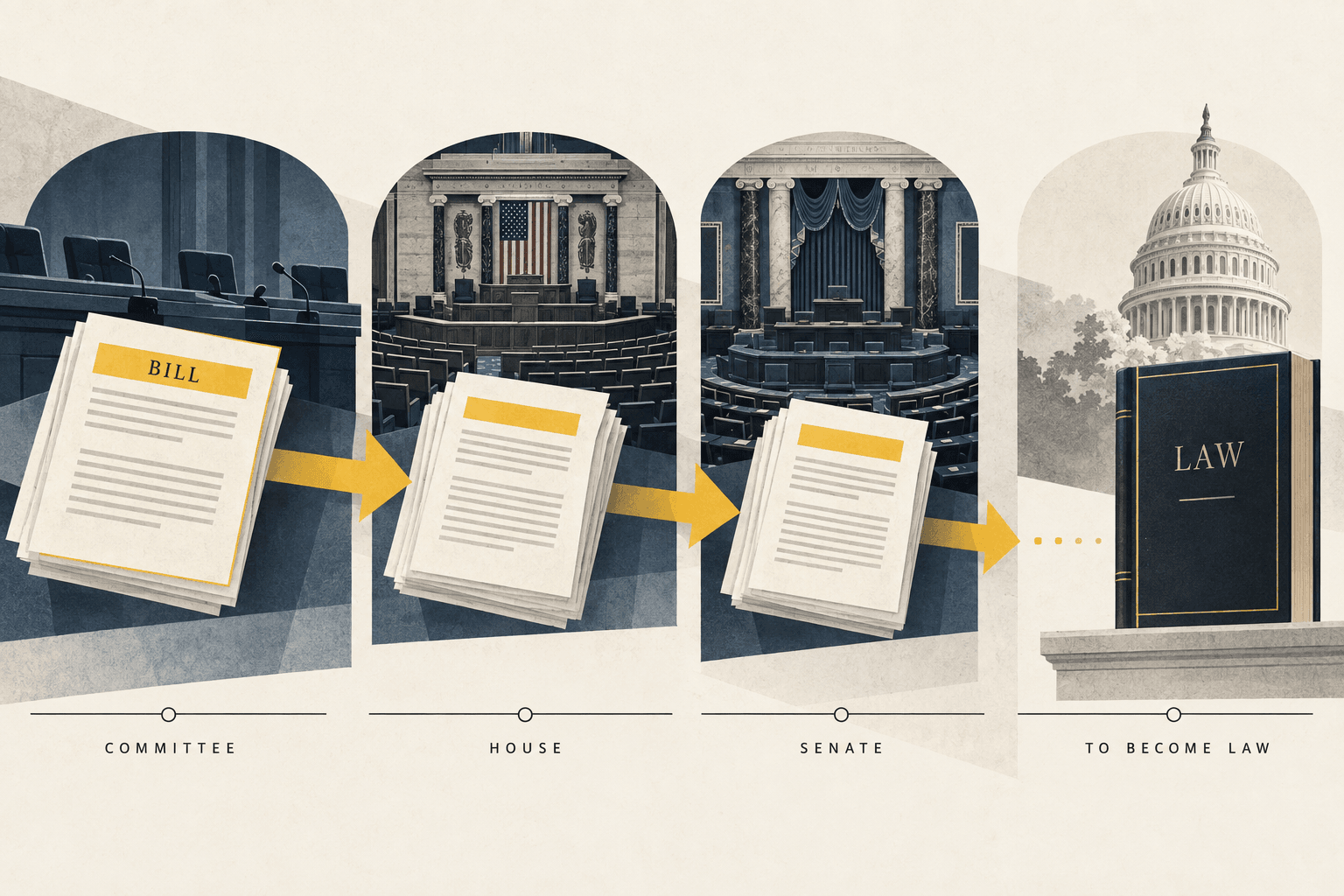
The next major steps may include:
- Consideration and a vote in the full House of Representatives.
- Consideration by the Senate, which could approve, reject, or amend the proposal.
- Reconciliation of any differences between House and Senate versions.
- Presentation of the final bill to the president.
- Regulatory guidance from the Treasury Department and IRS if the bill becomes law.
Until those steps are completed, taxpayers remain subject to existing federal tax requirements.
That distinction is especially important for anyone seeing headlines that describe the committee vote as the arrival of “new crypto tax rules.” The vote advanced a proposal; it did not immediately change the tax treatment of cryptocurrency.
How Could the Bill Affect Small Crypto Payments?
One of the bill’s main goals is to reduce the tax and reporting burden associated with small, routine digital asset transactions.
Under the existing general framework, spending cryptocurrency can create a taxable disposal. A user may need to compare the asset’s value at the time of payment with its cost basis, even when the cryptocurrency was used to buy an inexpensive product or service.
This creates friction for digital assets used as a medium of exchange. A person paying for a meal with cryptocurrency could face a capital gain or loss calculation that would not arise when spending U.S. dollars.
The committee says H.R. 10357 would remove certain tax barriers affecting routine digital asset payments. However, users should confirm the final statutory language before relying on any exemption. The relevant transaction limits, asset definitions, recordkeeping conditions, and effective date will determine how useful the provision becomes in practice.
A small-transaction exemption could make crypto payments easier to administer, but it would not necessarily make every cryptocurrency transaction tax-free. Larger disposals, investment sales, conversions, and transactions outside the final exemption would still need separate consideration.
What Would Change for Crypto Traders?
The proposal would allow eligible digital asset dealers and traders to use mark-to-market accounting.
Mark-to-market treatment generally values covered positions at fair market value at the end of the tax year and recognizes resulting gains or losses as though the positions had been sold. It can simplify some accounting questions, but it can also accelerate the recognition of taxable income.
This treatment would not automatically apply to every retail investor. Tax law distinguishes among investors, traders, and dealers, and those classifications depend on facts such as the nature, frequency, continuity, and business purpose of a person’s activities.
The proposal therefore should not be read as permission for all crypto holders to choose whichever accounting method produces the lowest bill. Eligibility rules and future IRS guidance would still matter.
Active traders should also remember that transaction records remain essential. Platforms such as WEEX can provide access to trading activity, but users are responsible for maintaining the records needed under the rules that apply in their jurisdiction. Exported histories should be checked for deposits, withdrawals, internal transfers, fees, realized results, and any transactions conducted on other platforms or wallets.
Would the Wash-Sale Rule Apply to Crypto?
The committee summary says the bill would extend existing anti-abuse provisions, including wash-sale and constructive-sale rules, to digital assets.
A wash sale generally involves selling an asset at a loss and acquiring the same or a substantially identical asset within a restricted period. When the rule applies, the immediate loss deduction can be disallowed and incorporated into the tax basis of the replacement position.
Digital assets have historically occupied a different position from stocks and securities under the federal wash-sale framework. Extending the rule would reduce the opportunity to realize a crypto loss for tax purposes while quickly rebuilding substantially the same position.
Important implementation questions remain:
- How will the law define a covered digital asset?
- What makes two tokens “substantially identical”?
- How will wrapped assets and liquid staking tokens be treated?
- Will purchases across different wallets and exchanges be aggregated?
- How will decentralized finance transactions be identified?
- When will the new rule begin to apply?
These details could materially affect portfolio rebalancing and tax-loss harvesting. Traders should not assume that changing exchanges or wallets would place a repurchase outside the rule if the final legislation evaluates the taxpayer’s overall activity.
How Could Mining and Staking Taxes Change?
The bill also attempts to clarify the tax treatment of mining and staking.
This is a difficult area because mining and staking can involve several economically distinct events:
- A participant performs validation or computational work.
- The participant becomes entitled to a reward.
- The reward is distributed or made accessible.
- The market value changes.
- The participant later sells, exchanges, or spends the asset.
Tax uncertainty often centers on when income should be recognized and how the taxpayer should establish the cost basis used to calculate a later gain or loss.
A workable rule would need to address concepts such as receipt, control, transfer restrictions and the ability to sell or use a reward. It may also need to distinguish direct network rewards from services offered through exchanges, pooled validators, liquid staking protocols or custodial arrangements.
The committee describes the proposal as clarifying the treatment of mining and staking, but taxpayers should wait for the enacted text and implementing guidance before changing how they report these activities.
What Does the Bill Mean for Crypto Donations?
H.R. 10357 would also seek greater parity between certain digital asset donations and donations of publicly traded securities.
At present, donating appreciated cryptocurrency may require additional documentation, including qualified appraisal requirements in some circumstances. The administrative burden can discourage relatively straightforward charitable transfers.
The proposal would allow many commonly traded digital assets to qualify for streamlined treatment similar to publicly traded securities. If enacted with appropriate safeguards, this could make it easier for charities to accept digital assets and for donors to substantiate eligible contributions.
However, the final result will depend on how a qualifying digital asset is defined. Liquidity, price transparency, exchange availability, custody and valuation may all influence which assets receive streamlined treatment.
Donors would still need to verify the charity’s eligibility, document the transfer and comply with applicable deduction limits.
Why Does the Proposal Matter Beyond Tax Reporting?
Clearer tax treatment can influence how digital assets are used.
When every payment, reward or portfolio adjustment creates uncertain reporting obligations, users may avoid otherwise legitimate activity. Businesses may also hesitate to support digital asset payments if compliance costs are disproportionate to transaction values.
More predictable rules could support:
- routine digital asset payments;
- standardized exchange and wallet records;
- clearer treatment of validation rewards;
- better integration with tax software;
- more consistent charitable giving;
- improved compliance among users who currently find the rules difficult to interpret.
At the same time, clarity does not always mean lower taxes. Extending wash-sale, constructive-sale and other anti-abuse provisions could limit strategies previously available to cryptocurrency investors.
The proposal therefore combines potential administrative relief with tighter alignment between crypto and traditional financial asset rules.
What Should Crypto Users Do Now?
The most important step is to separate legislative proposals from rules already in force.
Crypto users should continue to:
- preserve complete transaction histories;
- record transfers between personal wallets and exchange accounts;
- track the cost basis of purchased assets;
- document fees and transaction dates;
- distinguish transfers from taxable disposals;
- retain records of staking, mining and other rewards;
- consult a qualified tax professional when their situation is complex.
Users should also follow the full House and Senate process rather than relying on social media summaries. A committee-approved proposal can still be amended, delayed, combined with another bill or fail to become law.
For traders using multiple platforms, recordkeeping should be consolidated across the entire portfolio. Looking at one exchange in isolation may cause internal transfers to be mistaken for income or disposals.
Conclusion
The Digital Asset Tax Certainty Act is a significant attempt to modernize U.S. tax rules for cryptocurrency and other digital assets.
Its provisions could reduce the burden associated with small crypto payments, clarify mining and staking treatment, expand accounting options for eligible traders, streamline some charitable donations, and extend established anti-abuse rules to digital assets.
But H.R. 10357 remains proposed legislation. The September 16 committee vote moved it forward; it did not make the bill law.
The next versions of the text—and any eventual Treasury or IRS guidance—will determine how much changes for ordinary holders, professional traders, miners, validators and businesses.
This article is for general information only and does not constitute tax, legal or investment advice. Tax treatment depends on individual circumstances and applicable law.
FAQ
Is the Digital Asset Tax Certainty Act Already Law?
No. The House Ways and Means Committee approved an amended version and ordered it reported to the full House, but it must complete the remaining legislative process before becoming law.
What Is H.R. 10357?
H.R. 10357 is the bill number assigned to the Digital Asset Tax Certainty Act, a proposal addressing several aspects of U.S. federal digital asset taxation.
Would Small Crypto Purchases Become Tax-Free?
The proposal seeks to reduce tax barriers for small, routine digital asset transactions. The final exemption threshold, qualifying conditions and effective date must be confirmed from any enacted version.
Would the Wash-Sale Rule Apply to Bitcoin and Other Crypto?
The committee summary says the bill would apply wash-sale rules to digital assets. The final definitions will determine which assets and repurchases are covered.
How Would the Bill Affect Staking Rewards?
It aims to clarify the tax treatment of mining and staking. The precise income-recognition rules will depend on the final statutory language and subsequent implementation guidance.
This content is provided for general informational purposes only and doesn't constitute financial, investment, legal, or tax advice. Any events, rewards, online promotions, or related information mentioned herein should not be considered a recommendation, solicitation, or invitation to purchase, sell, trade, or otherwise deal in any crypto assets. Crypto assets are highly volatile and may result in loss. The availability of WEEX services, products, and related events may vary by region. You are responsible for ensuring that your participation is in accordance with applicable local laws and regulations.
You may also like

Circle's Arc Mainnet Is Live: Can It Actually Close the Gap With Tether's USDT?

Federal Reserve Interest Rates: Why Kevin Warsh Just Broke From Trump for the First Time

Why Did the CLARITY Act Fail in the Senate, and What Happens Next for Crypto Regulation?

This Week's WEEX Airdrops: Rules and Checks (17 September 2026)
15 Notable Robinhood Chain Protocols: Which Assets Trade on WEEX?

BTCB2 and XBT: Why Exchange Notation Can Mislead
Stonkfly Fruit-Fly Brain Bitcoin Experiment: What It Shows and Does Not Prove

Vietnam Decree 284 on Crypto Assets: Scope, Effective Date and Compliance
Vietnam VASP Licence: How the Crypto Licensing Regime Works and How to Verify a Platform

Crypto Tax in Vietnam: What Is Documented and What Remains Unsettled
What Is a Funding Rate? How Perpetual Futures Charge Longs and Shorts
Perpetual Futures for Beginners: Margin, Funding and Liquidation Explained

How Does WEEX KYC Verification Work? A Taiwan User Guide
Spot Trading for Beginners: From Deposit and Order to Holding
What Is USDT? A Taiwan Beginner's Guide to Use, Deposits and Risk
Macro Protocol (MTP): Listing Status and a Safe Verification Guide

Airdrops This Week (September 17-23, 2026): Official Conditions and Safety Checks
What Is a Blockchain Explorer and How Does It Work?
What the LUSD Attack Shows About DeFi Risk
What the Grok 4.7 Announcement Means for Users

How to Read a Bitcoin Short-Liquidation Map
New Coins on WEEX: How to Check Listings, Pages and Risks
SEI: The Trading-Focused Blockchain and Its Token on WEEX
Shiba Inu (SHIB): What to Check Before Trading on WEEX
RENDER: The Render Network Token and Trading on WEEX
Lisk Chain Shutdown October 31: How to Move LSK Safely
Grok 4.7 Explained: How to Check Release and Performance Claims
What Is BONK? WEEX Spot and 1000BONK Futures Status and Risk Checks
What Is BRETT? WEEX Spot and Futures Status and Risk Checks
What Is FLOKI? WEEX Spot and 1000FLOKI Futures Status and Risk Checks
Circle's Arc Mainnet Is Live: Can It Actually Close the Gap With Tether's USDT?
Federal Reserve Interest Rates: Why Kevin Warsh Just Broke From Trump for the First Time
Why Did the CLARITY Act Fail in the Senate, and What Happens Next for Crypto Regulation?
This Week's WEEX Airdrops: Rules and Checks (17 September 2026)
15 Notable Robinhood Chain Protocols: Which Assets Trade on WEEX?
BTCB2 and XBT: Why Exchange Notation Can Mislead


